
Why Table Saws Matter

Table saws are often framed simply as cutting tools, yet their role within woodworking systems is more structural than that description suggests. They establish a controlled reference plane where material, motion, and alignment intersect. Misunderstandings typically arise from focusing on the blade alone, rather than the coordinated interaction between the table surface, fence, and feed direction that governs consistency and repeatability.

This explainer examines how table saws function as alignment systems rather than standalone cutters. It breaks down the relationships between key components, the mechanics of guided cutting, and the factors that influence accuracy and control. By the end, the reader will understand how these elements work together to define precision within a broader workflow.

By: Review Streets Research Lab
Updated: April 19, 2026
Explainer · 8–12 min read
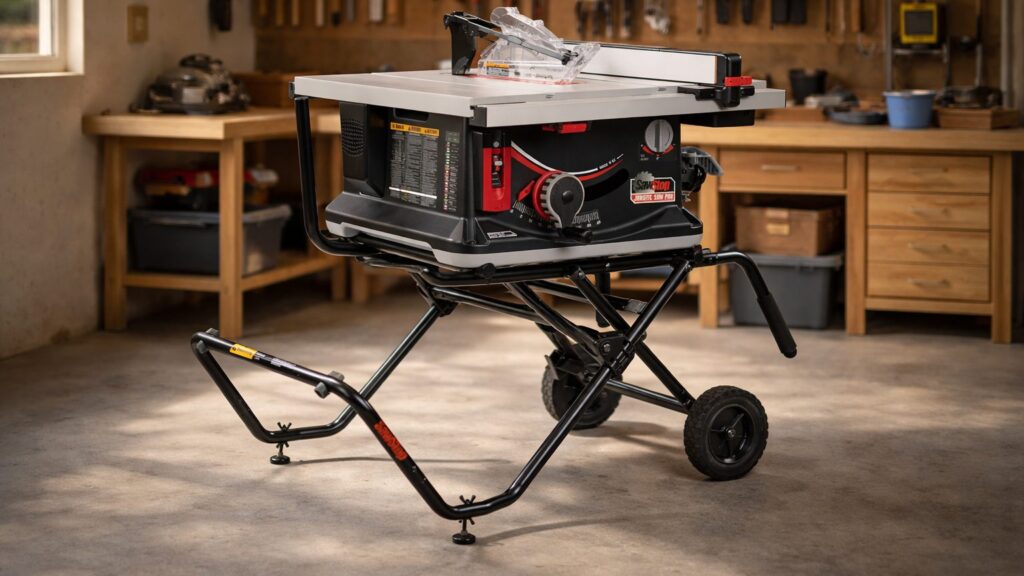
SawStop JSS-120A60 beginner table saw
What You’ll Learn

Why Table Saws Matter

A focused explanation of how table saws shape workflow, alignment, and material control within broader woodworking systems and repeatable cutting processes.

  • How the table, blade, and fence establish a controlled cutting system
  • Why material support and feed direction influence stability during each cut
  • How alignment affects cut accuracy, repeatability, and overall workflow consistency
  • What makes rip cuts and crosscuts behave differently on the table
  • Why blade position matters within the saw’s broader reference structure
  • How table saws organize stock preparation across multi-step woodworking processes
  • What supporting components do to manage guidance, spacing, and material movement

Tip: Think of a table saw as a reference system first, with the blade serving one role inside it.

Definitions

Key Parts That Make a Table Saw Matter

Before the broader role becomes clear, it helps to understand how the main parts create guidance, control, and repeatable relationships during cutting.

Table Surface

The table is the saw’s main reference plane, supporting the workpiece while defining its relationship to the blade. Its flatness and stability affect how material moves and stays aligned through the cut.

  • Support: Holds stock level so the cut path stays consistent
  • Reference: Establishes the baseline for fence and blade positioning
  • Movement: Reduces tipping or shifting as material feeds forward

Fence

The fence creates a fixed guide that controls distance between the workpiece and blade. Its job is not simply restraint, but repeatable positioning across multiple passes and identical dimensions.

  • Spacing: Sets the width of a rip cut accurately
  • Parallelism: Keeps the workpiece tracking consistently beside the blade
  • Repeatability: Allows the same setup to produce matching pieces

Blade

The blade performs the material removal, but its importance depends on how it interacts with the surrounding system. It cuts within a guided path shaped by alignment, support, and feed control.

  • Cut path: Defines where material is separated during the pass
  • Exposure: Blade height changes how the teeth enter the stock
  • Interaction: Works predictably only when guidance remains stable

Arbor and Drive System

This system transfers rotational force from the motor to the blade while keeping the blade mounted in a fixed orientation. It links power delivery to stability, which directly affects cut consistency.

  • Transfer: Carries rotational force from motor to cutting edge
  • Mounting: Holds the blade in a stable working position
  • Continuity: Helps maintain smooth rotation through changing load

Miter Slots and Guides

These features provide controlled paths for jigs, gauges, and other guiding elements across the table. They help define direction, especially when the fence is not the primary reference.

  • Direction: Keeps guided movement consistent across the table surface
  • Alignment: Supports square or angled travel relative to the blade
  • Coordination: Extends the saw’s reference system beyond the fence

Feed Path

The feed path is the movement route the workpiece follows as it passes through the blade. It matters because cut quality depends on how material enters, stays supported, and exits without deviation.

  • Entry: The workpiece meets the blade under controlled orientation
  • Travel: Steady motion helps preserve alignment during cutting
  • Exit: Continued support prevents drift after the blade passes through

Tip: A table saw matters because each component defines position and movement within one coordinated cutting system.

Power Path

How Material Control Moves Through a Table Saw

A table saw matters because it organizes cutting around a fixed path, not just a spinning blade. Material is supported, guided, and separated through a sequence of controlled relationships.

  • The table establishes a flat reference surface for stable material movement
  • The fence sets a repeatable position relative to the blade
  • The blade removes material along a defined cutting path
  • The feed path keeps stock moving through the cut under control
  • Outfeed support helps preserve alignment as the cut finishes

When each stage remains coordinated, the saw behaves as a reliable system rather than a single cutting point.

Motors

Rotation Matters Only When the Blade Stays in a Stable System

The blade’s rotation creates the cutting action, but rotation alone does not explain why a table saw is important. What matters is how that motion is held within a fixed structure that governs entry, travel, and exit.

  • Rotation provides continuous cutting motion at a fixed point in space
  • Stability keeps that motion predictable relative to the table and fence
  • Consistency depends on the blade returning the same path across repeated cuts

In practical terms, cutting becomes reliable only when rotation is paired with controlled positioning throughout the system.

Gearing

Guidance Matters More Than the Blade by Itself

The blade separates material, but the surrounding guidance system determines where and how that separation happens. This is why the fence, slots, and table surface matter more than the cutting edge alone.

  • The fence controls width by setting a fixed lateral reference
  • Miter slots support guided movement when the fence is not the reference
  • Surface flatness helps stock stay level as it approaches the blade
  • Parallel relationships reduce unwanted drift during the cut

Real cutting behavior depends on guidance because precision comes from controlled movement, not from blade motion in isolation.

Heat Management

Cutting Stability Changes When Resistance Builds Through the Pass

A table saw is affected by more than initial contact between blade and stock. As material moves through the cut, resistance changes the demands on the system and can alter how smoothly the process continues.

  • Dense stock increases the load carried through the blade path
  • Binding creates extra resistance when alignment shifts during feeding
  • Uneven support changes pressure as material enters or leaves the table

These forces matter because the saw’s importance lies in maintaining control even as cutting conditions change across the pass.

User Control

Operator Input Is Part of the System, Not Separate From It

A table saw depends on controlled human input as much as fixed mechanical references. Feed pressure, stock orientation, and pacing influence how effectively the system maintains alignment during cutting.

  • Steady feed keeps the workpiece moving without disrupting its reference path
  • Consistent orientation helps the stock stay aligned against the guiding surface
  • Balanced pressure prevents tipping, twisting, or lifting during the cut

The saw’s real significance becomes clear when human control and machine structure work together as one process.

Quick Reality Check

Where Table Saws Matter — and Where Their Role Narrows

A practical balance: where table saws provide real structural value, and where their role becomes more limited within a broader workflow.

Where Table Saws Matter Most

Table saws matter most when cutting depends on stable support, fixed guidance, and repeatable spacing between the workpiece and blade.

That system becomes especially important during repeated rip cuts, where the table and fence preserve the same reference relationship across multiple passes.

Where Their Role Narrows

Table saws matter less when the cutting task depends on mobility, irregular stock handling, or guidance systems built around a different reference path.

In those cases, the table-and-fence structure provides less advantage because the material cannot move through the saw in a stable, controlled feed path.

Common Myths

Misconceptions About Why Table Saws Matter

Table saws are often reduced to simple cutting tools, which hides the larger system of guidance, support, and repeatable control they provide.

Table saws matter only because of the blade

The blade performs the cut, but the saw’s broader importance comes from how the table, fence, and feed path control material around it. Without those fixed relationships, the blade has motion but not guided precision.

Any flat surface can do the same job

A flat surface alone does not create a cutting system. What matters is the coordinated alignment between support, guidance, and blade position, which allows material to move through a stable and repeatable path.

Accuracy comes from operator skill alone

Operator input matters, but it works inside a mechanical reference structure. The table and fence reduce variation by holding the workpiece to fixed positions that limit drift during the cut.

All cuts behave the same on a table saw

Different cuts rely on different reference systems and material movements. A rip cut depends heavily on fence guidance, while other cuts may depend more on slots, gauges, or changing support conditions.

Power is what makes the saw important

Power affects how the blade keeps moving under resistance, but it does not explain the saw’s structural role. The real significance comes from controlling position, direction, and spacing throughout the cutting process.

Tip: Think about a table saw as a reference framework that guides material through a cut, not as a blade acting on its own.

FAQ

Frequently Asked Questions About Why Table Saws Matter

Quick answers to common questions about how table saws create control, alignment, and repeatable cutting relationships within woodworking systems.

What makes a table saw more than just a cutter?

A table saw combines a cutting edge with fixed references that control how material approaches and passes through the blade. The table, fence, and feed path turn cutting into a guided system rather than a freehand action.

Why does the fence matter so much?

The fence sets a stable distance between the workpiece and blade, which determines cut width and repeatability. Its importance comes from holding that relationship consistently across the full length of the pass.

Does the blade alone determine cutting accuracy?

No. The blade defines the cutting path, but accuracy depends on how well the material is supported and guided before, during, and after contact. A precise blade inside a poorly controlled system still produces variable results.

Why is the table surface such an important part?

The table surface acts as the main support and reference plane for the workpiece. It matters because stable support keeps material level and predictable as it moves through the cut, reducing unwanted changes in orientation.

How do miter slots change how the saw works?

Miter slots provide an alternate guidance path across the table when the fence is not the primary reference. They allow movement to stay aligned to the blade through guided accessories and controlled travel.

Why do repeated cuts highlight the saw’s importance?

Repeated cuts reveal whether the system can return the same spacing and path without drift. That repeatability comes from fixed relationships between the table, fence, blade, and workpiece movement, not from the cut itself.

Does operator input still matter on a table saw?

Yes, because the operator supplies the feed force and maintains stock contact with the reference surfaces. The machine provides structure, but the final behavior depends on how steadily material is introduced and carried through the system.

Why do some cuts feel less controlled than others?

Control changes when support, guidance, or resistance changes during the pass. Longer stock, shifting balance, or reduced reference contact can alter how the workpiece travels, even when the blade path stays fixed.

Tip: When a cut behaves unexpectedly, trace the reference chain first: support surface, guiding contact, blade path, and feed movement.

Bottom Line

Table saws matter because they create a controlled system for guided cutting. The table, fence, blade, and feed path work together to hold position and movement in stable relationships throughout the cut.

Once that system is clear, it becomes easier to understand why table saw behavior depends on reference, support, and controlled material movement.

Next Steps

Go Deeper or Explore Related Paths

If you want to continue from the core concept, these pages extend the topic through broader roundups, direct category matchups, and decision frameworks.

Table Saw Roundups

A broader category view that shows how different table saw types are organized across use cases, formats, and intended workflows.

Table Saw Comparisons

Focused side-by-side pages that clarify how specific design differences change control, capacity, and cutting behavior in practical use.

Table Saw Buying Guides

Structured guides that connect the underlying mechanics to selection criteria, helping readers interpret features in a clearer decision context.

Quick Summary

Why Table Saws Matter

  • Table saws create a fixed system for support, guidance, and cutting
  • The fence controls repeatable spacing between material and blade path
  • The table surface stabilizes stock throughout entry, travel, and exit
  • Accuracy depends on reference relationships, not blade motion alone
  • Operator input and machine structure work together during each pass