Why Track Cars Fitment Matters

Fitment on a track car means more than whether a part bolts into place. Wheels must clear the brakes and suspension, tires need room as the chassis moves, and the driver must be able to operate the controls without interference. A component that fits a parked car can still be unsuitable when steering, suspension movement, heat, and circuit loads are involved.

Good fitment preserves the intended relationships between components. That matters when changing wheel sizes, brakes, ride height, seats, or cooling equipment: solving one clearance problem can introduce another elsewhere. Check the exact vehicle, fitted equipment, and intended event before treating a compatibility listing as a complete answer.

By: Review Streets Research Lab
Updated: October 1, 2026
Explainer · 8-12 min read
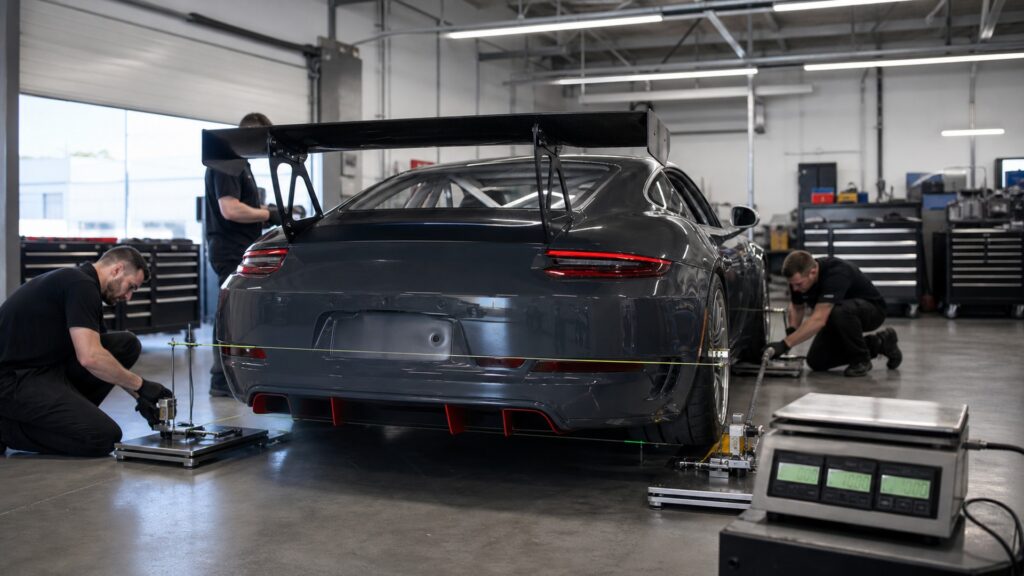
track cars explainer hero image for Review Streets
What You'll Learn

What Has to Fit When the Car Is Moving

A practical look at wheel, brake, suspension, and cockpit compatibility on a circuit-focused vehicle.

  • Distinguish mounting compatibility from operating clearance.
  • Understand why wheel diameter alone cannot establish brake clearance.
  • Account for suspension travel and steering movement.
  • Treat driver position and safety equipment as a coordinated installation.
  • Verify modifications against the exact car and event.

Tip: A fitment claim should name the vehicle configuration and any conditions attached to the installation.

Definitions

Six Fitment Checks That Serve Different Purposes

These terms separate attachment, movement, and driver access instead of treating them as one measurement.

Mounting compatibility

Agreement between the component and the attachment it is designed to use.

  • Example: a wheel matched to the correct hub and specified fastening hardware
  • Check: verify application details and installation instructions
  • Limit: matching a bolt pattern does not establish every other dimension

Brake clearance

Space between the wheel and the brake assembly.

  • Example: wheel spokes clearing a larger caliper
  • Check: use approved measurements or the brake supplier's fitment information
  • Limit: two wheels of equal diameter can have different internal shapes

Dynamic clearance

Room for parts throughout their expected movement.

  • Example: a tire remaining clear of surrounding components as the suspension moves
  • Check: have clearance assessed through the relevant steering and suspension range
  • Limit: a parked-car inspection alone is incomplete

Wheel offset

The position of the wheel mounting face relative to its centerline.

  • Example: a different offset placing the wheel farther inward or outward
  • Check: confirm the supported wheel specification for the configuration
  • Limit: moving the wheel can alter other clearances and vehicle behavior

Driver accommodation

The fit between the driver, seat, controls, and required equipment.

  • Example: a seated driver operating pedals and steering without obstruction
  • Check: check the driving position with the equipment required for the event
  • Limit: a seat that fits the cabin may not fit the driver or restraint system

System compatibility

The ability of connected components to work together in their intended arrangement.

  • Example: a brake change considered alongside wheel clearance and cooling
  • Check: review the complete combination rather than individual product labels
  • Limit: several individually compatible parts may not be compatible together

Tip: Clearance, fastening, load suitability, and driver access are separate questions; passing one does not settle the rest.

Wheels and brakes

A Wheel Can Bolt On and Still Hit the Caliper

The wheel must attach correctly and provide room around the fitted brakes. Larger brake components can occupy space that the original wheel never had to accommodate. Tire Rack explains that brake clearance depends on the wheel and brake combination, including the space behind the spokes. Diameter is useful information, but it is not a complete fitment test.

  • Confirm the exact brake package, including modifications.
  • Check the wheel supplier's application information.
  • Use the brake manufacturer's specified clearance-check method.

For example, retaining the same nominal wheel diameter after a brake upgrade does not establish that the old wheels still clear the new calipers.

Movement

Clearance Must Survive Steering and Suspension Travel

A tire sits in one position when the car is parked. Steering and suspension movement change its relationship to the body and nearby components. Lowering the car, changing wheel width, or choosing a different tire can change that relationship again. A qualified assessment needs to consider the combination in motion, not simply the appearance at rest.

  • Check the actual tire dimensions and approved wheel pairing.
  • Include steering and suspension movement in the assessment.
  • Investigate rubbing marks or contact rather than accepting them.

A tire that appears neatly tucked under a fender may still contact something when the suspension compresses. Appearance does not show the full operating space.

Connected changes

One Modification Can Change Several Interfaces

Brake, suspension, and wheel changes interact. A clearance remedy at one location can move a problem to another. Spacers, altered ride height, or a different wheel specification therefore need an application-specific assessment of fastening, clearance, and the resulting setup. Do not assume an added part is a neutral correction simply because it creates visible space.

  • Record the full fitted specification.
  • Follow supported combinations and installation requirements.
  • Recheck affected systems after a change.

If a proposed wheel change clears the caliper but places the tire too close to the body, the fitment problem has moved rather than disappeared.

Cockpit

The Driver and Required Equipment Must Fit Together

Seat position affects reach to the wheel and pedals, visibility, and available space. Event equipment can change those needs. Seats, mounts, restraints, and any rollover protection must be considered together with applicable rules and the vehicle's road or competition role. A seat installation is not complete merely because its brackets attach to the floor.

  • Verify control access and unobstructed operation.
  • Check the supported seat, mounting, and restraint combination.
  • Use qualified installation and the organizer's requirements.

A driver may fit comfortably without event equipment yet lack adequate space in the required configuration. Identify that issue before arriving at the circuit.

Verification

Check the Completed Car, Not Just the Parts List

Compatibility information is the starting point. The completed vehicle still needs inspection for correct installation, secure mounting, unobstructed movement, and changes caused by use. Record what was installed so future wheel, brake, or service decisions are based on the current car rather than its original specification.

  • Keep part numbers and installation records.
  • Arrange the required pre-event inspection.
  • Reassess fitment when another connected component changes.

A later brake or suspension modification can invalidate an earlier wheel fitment decision. Treat the vehicle specification as a connected set of choices.

Quick Reality Check

What a Fitment Check Can and Cannot Establish

Mechanical compatibility is necessary, but it does not certify the whole car for every activity.

A useful check establishes

The component is appropriate for the exact application and installed as specified.

Required movement and driver access remain unobstructed.

It does not establish

That the car meets every event rule or is suitable for every circuit condition.

That a performance claim, appearance, or shared model name proves compatibility.

Common Myths

Fitment Assumptions That Miss Important Details

A single matching dimension rarely describes the full installation.

The bolt pattern is the whole wheel-fitment check

It addresses one interface. Brake clearance, wheel dimensions, load suitability, and specified hardware still need attention.

If nothing rubs while parked, the fit is finished

Steering and suspension movement can reveal interference that is absent at rest.

A spacer is an automatic fix

It changes the installation and must be assessed for the specific application, including fastening and other clearances.

A seat that fits the cabin fits the driver

Driver reach, required equipment, and compatibility with mounts and restraints are separate checks.

Tip: Ask which checks support a fitment claim and which configuration was actually evaluated.

FAQ

Questions Before Changing Track-Car Components

Resolve compatibility before buying or installing the next part.

What information should I give a supplier?

Provide the exact model and year, brake package, current wheels and tires, suspension changes, and intended use. Include relevant modifications rather than relying on the original trim name.

Does fitment matter on an unmodified car?

Yes. Replacement components still need the correct specification, and condition or prior repairs can affect the installed result.

Can a wheel of the same diameter fit differently?

Yes. Width, offset, spoke shape, and internal clearance can differ.

Who should assess a complicated combination?

Use the relevant component manufacturers and a qualified installer familiar with the application, then confirm the organizer's inspection requirements.

When should fitment be checked again?

After changes to connected components, after relevant repairs, or when contact marks, looseness, or abnormal behavior suggest a problem.

Bottom Line

Track-car fitment is the compatibility of the complete installation throughout its intended movement and use.

Confirm mounting, operating clearance, and driver accommodation together. A part that attaches successfully has passed only the first check.

Next Steps

Go Deeper or Compare Your Options

Use these Review Streets paths to compare related categories and practical next decisions.

Vehicles

Explore vehicle categories and their intended uses.

Track Cars

Review track-car choices and preparation topics.

Further reading: Tire Rack on wheel and brake clearance; NASA HPDE requirements and preparation.