Why Track Cars Maintenance Role Matters

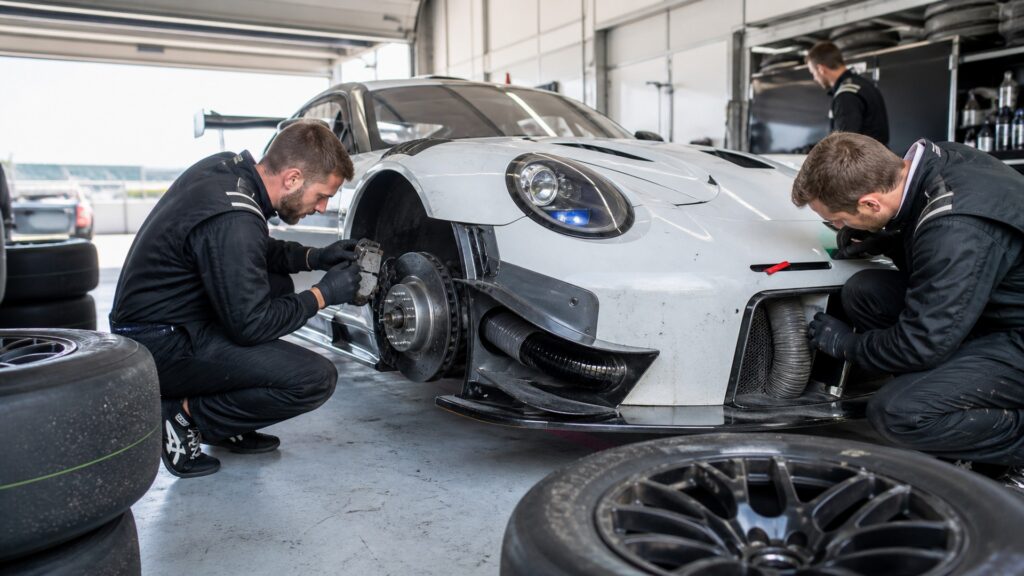
Maintenance matters on a track car because repeated circuit sessions can expose wear, heat-related limits, and mechanical problems that ordinary road mileage does not describe well. Brakes, tires, fluids, cooling systems, and suspension components must be suitable for the actual use and remain in sound condition. Passing an entry inspection does not freeze that condition for the rest of the day.

Build the plan around the exact vehicle, its preparation, the event requirements, and qualified technical guidance. Keep road-service obligations where applicable, then add the inspections and work specified for circuit use. A useful record tracks sessions, findings, and changes as well as mileage, without inventing one maintenance interval for every track car.

By: Review Streets Research Lab
Updated: October 1, 2026
Explainer · 8-12 min read
track cars explainer hero image for Review Streets
What You'll Learn

Maintain the Car for Repeated Sessions

Preparation, monitoring, and follow-up each catch different problems.

  • Use vehicle-specific circuit guidance and current event requirements.
  • Inspect actual wear instead of relying on mileage alone.
  • Treat changed braking, steering, or warning behavior as a reason to seek assessment.
  • Record session use and completed work.
  • Recheck condition before returning to ordinary road duties where applicable.

Tip: A technical inspection is a required checkpoint where specified, not a guarantee that every component will remain fit indefinitely.

Definitions

Maintenance Concepts for Circuit Use

These terms connect the workload with a useful service decision.

Duty cycle

The pattern and intensity of operation imposed on the vehicle.

  • Example: Repeated sessions create a different workload from a short commute.
  • Check: Describe the intended use to the service provider.
  • Limit: Equal mileage does not imply equal component demand.

Pre-event inspection

A condition check performed before participation under the relevant requirements.

  • Example: The organizer’s technical form guides the required checks.
  • Check: Use the current form and appropriate qualified help.
  • Limit: Passing once does not rule out later wear or damage.

Consumable condition

The measured state of parts or materials that wear through use.

  • Example: Tire and brake findings guide whether further use is appropriate.
  • Check: Use the applicable limits and inspection methods.
  • Limit: A visual impression or average lifespan is not enough.

Thermal suitability

The ability of the specified components and fluids to operate within required temperature conditions.

  • Example: Circuit guidance calls for particular preparation of a fitted brake system.
  • Check: Use exact specifications and supported procedures.
  • Limit: A product marketed for racing is not automatically compatible.

Post-session check

A review of condition and behavior after a period of running.

  • Example: A new vibration is recorded and investigated before further participation.
  • Check: Follow safe inspection procedures and event direction.
  • Limit: A symptom disappearing in the paddock does not prove its cause is resolved.

Service log

A record of use, inspections, repairs, settings, and findings.

  • Example: Notes link a handling change to recent work or an incident.
  • Check: Record enough detail to support later diagnosis.
  • Limit: A log supports judgment but does not replace physical inspection.

Tip: Connect each maintenance action to a specification, observed condition, or qualified diagnosis.

The preparation plan

Start with the Vehicle and the Intended Event

A road car used occasionally on a circuit, a modified track car, and a competition vehicle can require different preparation. Confirm the event’s rules and the manufacturer or specialist guidance for the actual configuration. Identify who will inspect it and what records or forms must be completed before arrival.

  • Use the correct model-year and equipment guidance.
  • Check event-specific inspection requirements.
  • Resolve uncertain modifications or service history before participation.

A preparation recommendation for one brake package or powertrain may not apply to another. The useful question is what this car needs for this activity, not what a similar-looking vehicle received.

Brakes and tires

Base Decisions on Condition and Appropriate Specifications

Brakes and tires repeatedly convert or transmit substantial forces during circuit use. Inspect them using the applicable requirements, with qualified help where necessary. Check compatibility and condition together; fitting a different component without understanding its application can introduce a new problem rather than solve an old one.

  • Use approved specifications for fluids and replacement parts.
  • Record wear findings and any damage.
  • Investigate changed braking feel, vibration, or tire behavior.

Do not copy another driver’s pressure, pad choice, or service interval as a universal answer. The vehicle, tire, conditions, and intended use determine which guidance is relevant.

Fluids and temperature

Treat Cooling and Lubrication as Part of Readiness

Sustained running can place demands on cooling and lubrication that differ from routine travel. Follow the vehicle’s circuit-use instructions for checks, fluids, and any required preparation. Keep intake and cooling provisions in the prescribed condition, and respond to warnings according to the manual and event procedures.

  • Verify required fluids and service history.
  • Use specified checking methods and safe access procedures.
  • Have leaks or abnormal temperature behavior assessed.

A temperature warning should lead to the prescribed response, not an assumption that a track car is expected to tolerate it. The warning may identify a condition that needs investigation before another session.

Mechanical condition

Review the Running Gear After Changes or Incidents

Suspension, steering, wheels, and attachment points need attention to condition and correct assembly. Recent work, contact, or new behavior can justify additional inspection. Use documented specifications and a qualified provider rather than making improvised adjustments in response to an unexplained symptom.

  • Tell the technician about impacts or unusual behavior.
  • Retain records of alignment and relevant component work.
  • Check that modifications remain suitable for the intended event.

If a new vibration follows a curb strike, the next step is an appropriate inspection. Changing a setting to mask the sensation does not establish that the wheel or suspension is sound.

Close the loop

Use Session Records to Plan Follow-Up Work

Record the amount and type of running, observed changes, and work completed. After the event, address findings before the next use and restore any road-use configuration required by the vehicle’s instructions. Budget for actual consumable use and scheduled work rather than assuming a season will follow a fixed universal cost.

  • Keep dates, mileage, session notes, and service findings together.
  • Separate routine replacement from diagnostic repair.
  • Confirm readiness again after corrective work.

A clear record can show whether a symptom began after a particular change or developed gradually. That evidence helps the next inspection focus on the cause instead of repeating guesses.

Quick Reality Check

Preparation and Diagnosis Serve Different Purposes

Both belong in a track-car maintenance plan.

Preparation establishes…

That prescribed work and required inspections have been completed.

That the known configuration is suitable for the intended use.

Diagnosis investigates…

Why a warning, leak, vibration, or control change occurred.

What repair or further inspection is supported by the findings.

Common Myths

Misconceptions About Track-Car Maintenance

A performance label is not a substitute for documented condition.

Does low mileage prove a track car has little wear?

No. The pattern and intensity of use can matter as much as distance.

Does passing technical inspection cover the whole event?

It establishes a checkpoint, but condition can change during use.

Are racing fluids or parts always better?

Only suitable specifications and applications should be used. A label alone does not establish compatibility.

Can a warning be ignored because the car still feels fast?

No. Follow the prescribed response and obtain assessment before assuming continued use is appropriate.

Tip: Use measured condition and vehicle-specific requirements rather than generic track-day folklore.

FAQ

Questions for the Service Provider

Give enough context to assess the actual workload.

What should I provide before an inspection?

The vehicle specification, modifications, service records, event requirements, and a description of intended use.

How often should consumables be replaced?

Use applicable requirements, measured condition, and qualified guidance for that component and duty; there is no universal interval for all track cars.

What should I record after a session?

Note abnormal behavior, warnings, relevant conditions, and subsequent findings without distracting yourself while driving.

What if the car also returns home on public roads?

Confirm it is fit for that use and follow any required restoration or inspection steps; arrange another transport method if readiness is uncertain.

Bottom Line

Track-car maintenance preserves predictable operation under repeated circuit demands.

Use exact specifications, inspect real condition, investigate symptoms, and let documented use guide the next service decision.

Next Steps

Go Deeper or Compare Your Options

Use these Review Streets paths to compare related categories and practical next decisions.

Vehicles

Compare related performance vehicles against the same intended road or circuit use.

Specialty Vehicles

Compare related performance vehicles against the same intended road or circuit use.

Track Cars

Explore track-focused vehicles against your event, driver-development, and ownership requirements.

Further reading: NASA HPDE preparation and inspection; Porsche event preparation guidance; Example of configuration-specific track preparation. Use the owner’s manual for the exact vehicle’s instructions and limits.