Why Track Cars Safety Factors Matters

Safety factors matter in track cars because closed-course driving places the driver, vehicle, and event procedures into one interdependent system. Sound mechanical condition, compatible occupant protection, clear communication, and appropriate instruction all matter. More performance or more safety-looking hardware cannot substitute for a coherent setup and responsible participation.

Begin with the specific event and the driver’s experience level. Confirm the current rules, complete the required inspections, and use equipment appropriate to the vehicle and activity. Track-focused does not mean risk-free, and a car accepted at one event may need a different assessment for another format.

By: Review Streets Research Lab
Updated: October 1, 2026
Explainer · 8-12 min read
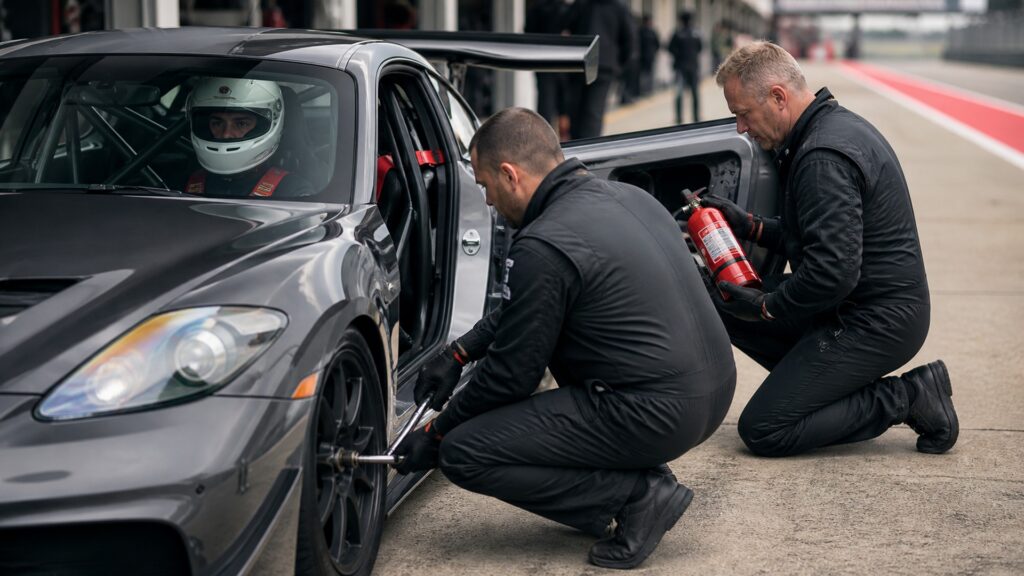
track cars explainer hero image for Review Streets
What You'll Learn

Build Safety Around the Whole Event

Preparation and conduct need to agree with the vehicle’s configuration.

  • Confirm eligibility and current event requirements.
  • Assess mechanical condition before and during participation.
  • Treat seats, restraints, and protective equipment as compatible systems.
  • Use the correct experience group and instruction.
  • Respond to flags, warnings, and changed conditions as directed.

Tip: A modification should be evaluated for the complete occupant-protection arrangement, not judged by appearance alone.

Definitions

Six Parts of a Track-Car Safety Assessment

Each part addresses a different source of uncertainty.

Event compliance

Meeting the organizer’s applicable vehicle, driver, and equipment requirements.

  • Example: A participant completes the required technical inspection.
  • Check: Use current information for the actual event.
  • Limit: Compliance with one program does not establish acceptance everywhere.

Mechanical readiness

The vehicle’s condition and preparation for the intended use.

  • Example: Brakes, tires, and relevant systems are checked against requirements.
  • Check: Use qualified inspection and vehicle-specific guidance.
  • Limit: An earlier inspection does not guarantee unchanged condition.

Occupant-protection compatibility

Agreement among seats, restraints, mounting, and required protective equipment.

  • Example: A specialist assesses whether a proposed change suits the complete arrangement.
  • Check: Confirm appropriate application and event acceptance.
  • Limit: Adding one racing component can create a mismatch elsewhere.

Driver readiness

Preparation, attention, and skill appropriate to the session.

  • Example: A novice participates with the required instruction.
  • Check: Choose the proper group and follow the program’s guidance.
  • Limit: Power and experience claims do not replace demonstrated readiness.

Track communication

The signals and procedures used to coordinate participants.

  • Example: Drivers respond to flags and permitted passing instructions.
  • Check: Learn the briefing and venue procedures before entering.
  • Limit: Road-driving habits alone do not explain track-specific communication.

Abnormal-condition response

The prescribed action when the car, driver, or environment is no longer operating normally.

  • Example: A warning or changed brake response leads to the appropriate event procedure.
  • Check: Follow officials and vehicle instructions.
  • Limit: Continuing to test the symptom can increase exposure to a problem.

Tip: These elements work together; none is a substitute for the others.

The right program

Match the Event to the Driver and Car

Instructed driving, open sessions, time trials, and racing can impose different requirements. Confirm that both the driver and vehicle are eligible for the intended activity. Read the current rules and attend the required briefing rather than relying on a previous event’s procedures.

  • Enter the group appropriate to experience and approval.
  • Confirm technical and protective-equipment requirements.
  • Clarify unfamiliar rules before participation.

A driver progressing from an instructed group should follow the organizer’s approval process. A more capable car does not itself justify entering a more advanced session.

Condition before capability

Make the Inspection Relevant to the Actual Use

Mechanical checks should address the configuration and circuit workload. Use the event’s requirements and vehicle-specific preparation guidance, with qualified service where needed. Investigate leaks, damage, warnings, or changed control response instead of assuming the car is ready because it drove normally to the venue.

  • Review recent work and any unusual behavior.
  • Confirm required brake, tire, and running-gear condition.
  • Reassess readiness when something changes during the day.

A vibration developing during a session changes the evidence available about the car. Its earlier inspection remains useful history, but it cannot explain away the new symptom.

Protection as a system

Do Not Add Restraint Hardware in Isolation

Seats, belts or harnesses, mounting arrangements, rollover protection where required, and personal equipment need compatible applications. Obtain qualified guidance before altering the original occupant-protection system. A component described as racing equipment is not automatically a suitable addition to an otherwise unchanged road car.

  • Check the complete system and installation requirements.
  • Confirm the organizer accepts the intended arrangement.
  • Use equipment in the condition and certification required for the event.

Replacing one item can change how the occupant is held and what other protection is needed. Assessing the complete arrangement is more useful than assuming each individually impressive part adds independent safety.

The driver and communication

Treat Briefings and Instruction as Essential Equipment

Flags, passing rules, pit procedures, and communication methods allow drivers and officials to coordinate. Learn them for the venue and group. Use instruction appropriate to experience, remain attentive, and recognize when fatigue or distraction makes continued participation unsuitable.

  • Attend required briefings and instruction.
  • Follow group-specific passing and communication rules.
  • Ask officials about unfamiliar situations while off track.

A driver who knows the car well may still be unfamiliar with the event’s procedures. Familiarity with the vehicle does not replace understanding how this session is organized.

When conditions change

Use the Prescribed Response Instead of Improvising

Weather, grip, mechanical behavior, and driver condition can change during an event. Follow the organizer’s directions and the vehicle’s warning guidance. If an abnormal condition occurs, use the communicated procedure to reduce exposure and obtain help rather than attempting to diagnose it while continuing at pace.

  • Know how to respond to warnings and official signals.
  • Follow venue instructions for stopping, exiting, or seeking assistance.
  • Have the cause assessed before assuming another session is appropriate.

The correct response to a problem depends on where it occurs and the event’s procedures. Learning those procedures beforehand is more useful than relying on a generic improvised reaction.

Quick Reality Check

Hardware and Conduct Provide Different Protections

Both must suit the intended activity.

Appropriate hardware supports…

Vehicle control and occupant protection within its design and installation limits.

A configuration that can meet the relevant technical requirements.

Appropriate conduct supports…

Predictable interaction with other participants and officials.

Timely response to changing conditions, warnings, and personal limits.

Common Myths

Misconceptions About Track-Car Safety

Avoid treating any single safeguard as a complete solution.

Does track-ready mean risk-free?

No. Condition, preparation, driver behavior, and event controls remain essential.

Is any racing harness an automatic improvement?

No. It must suit the complete seating, mounting, and protection arrangement and be accepted for the activity.

Does one passed inspection establish permanent readiness?

No. Wear, damage, or changed behavior can require reassessment.

Can a skilled road driver skip track instruction?

Follow the program’s entry and progression requirements; track procedures and skills need appropriate preparation.

Tip: Use current requirements and qualified guidance rather than assumptions about equipment or experience.

FAQ

Questions Before Entering the Session

Resolve uncertainty while there is time to act on the answer.

Which rules apply to my car?

The current rules for the specific organizer, venue, group, and activity, along with relevant vehicle guidance.

Who should assess restraint modifications?

Use qualified specialists familiar with the vehicle and activity, and confirm event acceptance.

What if I notice a new warning or control change?

Follow the prescribed vehicle and event response and seek assessment before deciding on further use.

What should I know from the briefing?

The required communication, flags, passing rules, pit procedures, and response to incidents or abnormal conditions.

Bottom Line

Track-car safety depends on compatible equipment, sound condition, prepared drivers, and clear event procedures.

Treat the whole arrangement as one system and reassess whenever the car, conditions, or driver readiness changes.

Next Steps

Go Deeper or Compare Your Options

Use these Review Streets paths to compare related categories and practical next decisions.

Vehicles

Compare related performance vehicles against the same intended road or circuit use.

Specialty Vehicles

Compare related performance vehicles against the same intended road or circuit use.

Track Cars

Explore track-focused vehicles against your event, driver-development, and ownership requirements.

Further reading: NASA HPDE structure and requirements; SCCA participation guidance; Porsche participation and preparation requirements. Use the owner’s manual for the exact vehicle’s instructions and limits.