Why Training Clothing Movement Pattern Matters

Training clothing can feel fine while standing still and fail as soon as the workout starts. Squats, hinges, lunges, overhead presses, rotation, and lateral drills all pull fabric in different directions. Movement pattern matters because clothing has to stay mobile, covered, and settled through the positions the workout actually uses. The best test is not how the garment looks on a hanger; it is how it behaves at the deepest, widest, highest, and fastest parts of the session.

By: Review Streets Research Lab
Updated: September 17, 2026
Explainer · 8-12 min read
training clothing movement pattern explainer hero image for Review Streets
What You'll Learn

What You'll Learn

A practical guide to how gym movements affect stretch, coverage, waistband behavior, seams, hems, and garment stability.

  • Why squats and hinges stress waistbands, seat fabric, and thigh openings
  • How overhead pressing changes shirt length, armholes, and torso coverage
  • Why lunges and lateral drills need stretch in more than one direction
  • How rotation can pull seams, hems, and waistbands off their resting position
  • Where riding up, sliding down, or twisting becomes a workout problem
  • How to test clothing through the actual movement range before buying

Tip: Try the movement that creates the most stretch or coverage demand before judging fit.

Key Concepts

Key Concepts That Define Training Clothing Movement Pattern

Squat And Hinge Range

The hip and knee positions used in squats, deadlifts, hip hinges, and similar lower-body work.

Example: leggings that stay covered at the bottom of a squat.

Why it matters: seat fabric, thigh openings, and waistbands are under the most stretch here.

Watch for: fabric sheerness, waistband rolling, or shorts binding at the hip crease.

Overhead Reach

Arm positions that lift the shirt, sports bra, or jacket while the shoulders move above the head.

Example: a training top that stays down during an overhead press.

Why it matters: short hems and tight shoulders can expose the torso or restrict the press.

Watch for: sleeves pulling, hems riding up, or neckline shifting.

Rotation And Twisting

Movements where the torso, hips, or shoulders turn while the clothing tries to stay in place.

Example: a top that does not twist around the waist during medicine-ball rotations.

Why it matters: rotating fabric can pull seams into pressure points.

Watch for: side seams drifting or waistbands turning.

Lateral Movement

Side-to-side movement such as lateral lunges, skaters, shuffles, and agility drills.

Example: shorts with enough side opening for a lateral lunge.

Why it matters: many garments stretch forward and back better than they stretch sideways.

Watch for: hem restriction, inner-thigh bunching, or brief coverage gaps.

Garment Recovery

The ability of fabric and elastic to return to shape after being stretched by repeated reps.

Example: tights that do not sag after several squat sets.

Why it matters: poor recovery can make clothing slide, bag, or lose coverage during the workout.

Watch for: knees bagging out or waistbands loosening mid-session.

Coverage At End Range

Coverage when the body reaches the deepest, widest, or highest position in an exercise.

Example: a shirt that still covers the torso at full overhead reach.

Why it matters: end range is where fit problems usually appear first.

Watch for: gapping, transparency, riding up, or tugging between reps.

Tip: Judge each garment in motion, not only by size, fabric label, or mirror fit.

Squats And Hinges Reveal Fit Problems Quickly

Deep hip flexion asks clothing to stretch across the seat, thighs, and waistband at the same time. Fabric that feels comfortable while walking may become restrictive or sheer at the bottom of a squat.

  • Squat to the depth used in training.
  • Check whether the waistband rolls or slides.
  • Look for fabric transparency under stretch.
  • Make sure shorts or leggings do not pinch at the hip crease.

Lower-body range is one of the fastest ways to find clothing that looks right but trains poorly.

Overhead Work Tests Shirt Length And Shoulder Mobility

Presses, pull-ups, wall balls, and overhead carries can lift a shirt or bind across the shoulders. A good training top should move with the arms without forcing constant readjustment.

  • Reach overhead before buying.
  • Check whether the hem rises above the waistband.
  • Move the arms forward, sideways, and overhead.
  • Avoid shoulder seams that pull against pressing positions.

Overhead fit is about staying covered and mobile at the same time.

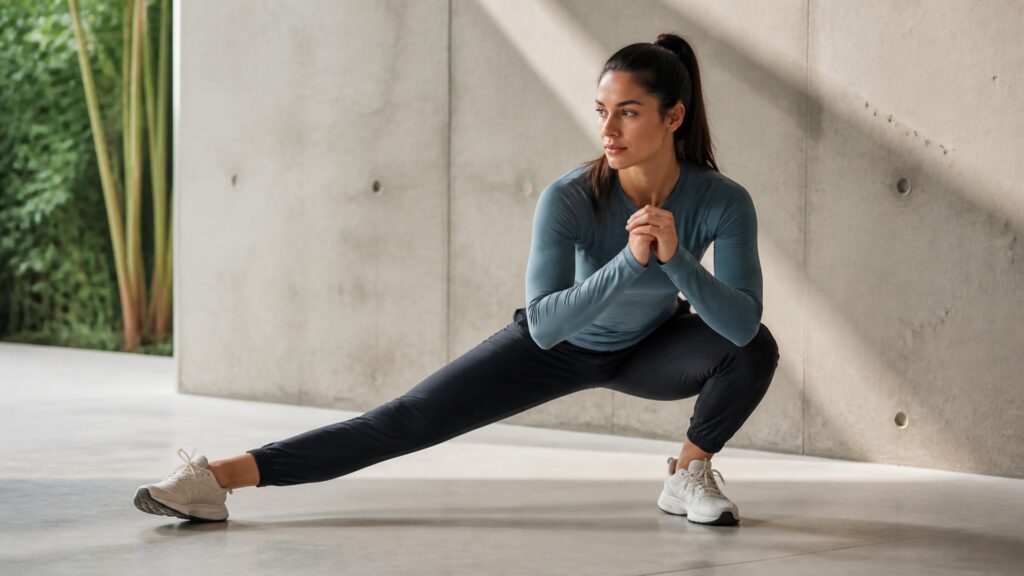
Lunges And Lateral Drills Need Multi-Direction Stretch

Side-to-side work creates different strain than running or cycling. Shorts, tights, and liners need enough give for wide stances and quick direction changes.

  • Test lateral lunges, not only forward lunges.
  • Check side hems and inner-thigh seams.
  • Make sure liners stay put.
  • Look for four-way stretch when drills move in several directions.

A garment that handles straight-line movement may still fail during lateral work.

Rotation Can Pull Clothing Out Of Place

Rotational exercises can turn waistbands, shift tops, and move seams into high-friction spots. The issue is usually not size alone; it is how the garment anchors while the body turns.

  • Try trunk rotations or woodchop motions.
  • Watch whether side seams drift.
  • Check whether the waistband twists.
  • Look for smooth seam placement around the ribs and hips.

Rotational comfort depends on both stretch and how well the garment stays oriented.

Repeated Movement Shows Whether Fabric Recovers

A single stretch test does not show how clothing behaves after ten minutes of work. Elastic, fabric weight, and construction determine whether the garment keeps returning to its intended position.

  • Repeat several reps before judging fit.
  • Notice sagging at the knees or seat.
  • Check whether hems creep upward.
  • Choose recovery over a barely-there standing fit.

Good movement fit lasts through the set, not just the first rep.

Where Movement Fit Helps And Where It Has Limits

Movement testing helps reveal restriction, riding up, transparency, and coverage problems before they interrupt a workout.

What Movement Testing Shows

It shows whether clothing can handle the positions used in the workout. It can reveal waistband, hem, seam, and coverage problems that standing fit hides.

What It Does Not Decide

It does not replace fabric durability, heat, or wash-care considerations. It does not prove that one garment is right for every body or every training style.

Common Myths

Common Myths

If it fits while standing, it fits for training

Training fit depends on squatting, reaching, rotating, lunging, and repeating movements under real conditions.

More compression always means better movement support

Too much compression can restrict hip, shoulder, or torso motion if the pattern needs more range.

Stretch fabric solves every fit issue

Stretch helps, but seam placement, waistband design, fabric recovery, and coverage still matter.

Loose clothing always moves better

Extra fabric can ride up, twist, snag, or bunch during fast changes in body position.

Tip: Treat strong claims as starting points for comparison, not final answers.

FAQ

FAQ

How should training clothing be tested for movement?

Try the deepest squat, widest lunge, highest reach, and fastest transition used in the workout.

Why do waistbands matter so much?

Waistbands sit at the point where many movements fold, extend, rotate, and brace. Poor waistband behavior can cause constant adjustment.

What is the biggest sign of poor movement fit?

Restriction, riding up, sliding down, twisting, or loss of coverage during the actual exercise are stronger warning signs than standing comfort.

Are looser clothes better for mobility?

Sometimes, but loose fabric can shift or bunch. The best option gives range without creating extra movement in the garment.

What is the practical takeaway?

Choose clothing that stays comfortable and covered through the movements the workout uses most.

Bottom Line

Bottom Line

Movement fit is the difference between clothing that looks comfortable and clothing that trains comfortably. The best choice holds its shape, coverage, and mobility through squats, hinges, lunges, overhead work, rotation, and repeated reps.

Next Steps

Go Deeper or Compare Your Options

Use these Review Streets paths to compare related categories and practical next decisions.

Training Clothing

Compare training clothing after checking how it moves through real exercises.