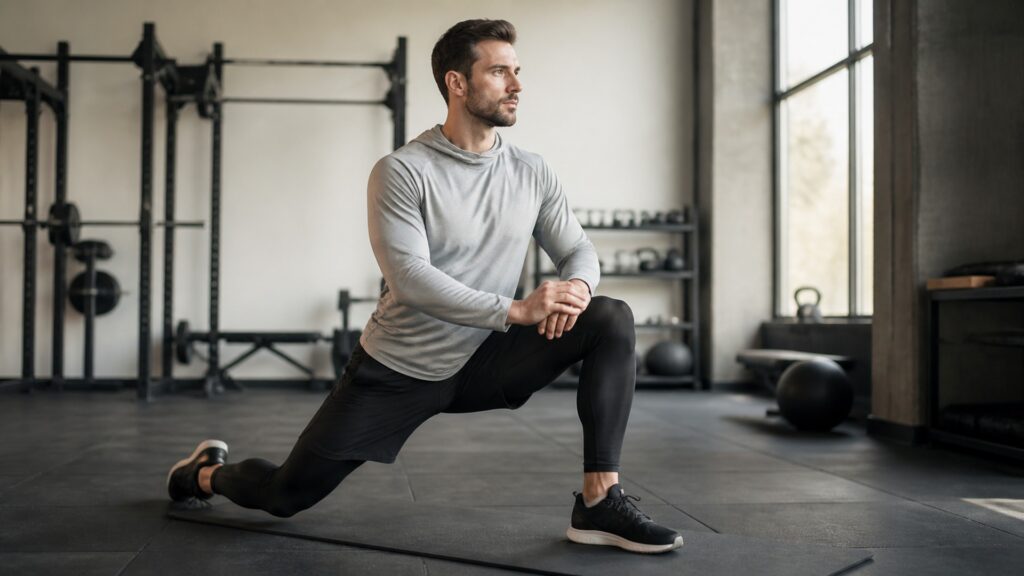
Stretch body fabric
The workout role influence of stretch body fabric comes from its ability to control stretch, airflow, moisture movement, and resistance to wear at the input or starting-condition stage.
- Why it matters: It links stretch body fabric to where training hoodies belongs within a week of training rather than what it can do in isolation.
- Check: For training hoodies, evaluate stretch body fabric: test the material under heat, sweat, load, and repeated movement, then judge whether it adds a useful stimulus, skill, measurement, or convenience without crowding out recovery.
- Do not assume: Stretch body fabric resolves the whole issue; adding equipment or sessions without defining the problem they are meant to solve remains a risk.
Hood and neckline
The workout role influence of hood and neckline comes from its ability to coordinate the component's contribution at stage 2 of the training hoodies system.
- Why it matters: It links hood and neckline to where training hoodies belongs within a week of training rather than what it can do in isolation.
- Check: For training hoodies, evaluate hood and neckline: observe how hood and neckline changes setup, control, or feedback during realistic use, then judge whether it adds a useful stimulus, skill, measurement, or convenience without crowding out recovery.
- Do not assume: Hood and neckline resolves the whole issue; adding equipment or sessions without defining the problem they are meant to solve remains a risk.
Sleeves and cuffs
The workout role influence of sleeves and cuffs comes from its ability to coordinate the component's contribution at stage 3 of the training hoodies system.
- Why it matters: It links sleeves and cuffs to where training hoodies belongs within a week of training rather than what it can do in isolation.
- Check: For training hoodies, evaluate sleeves and cuffs: observe how sleeves and cuffs changes setup, control, or feedback during realistic use, then judge whether it adds a useful stimulus, skill, measurement, or convenience without crowding out recovery.
- Do not assume: Sleeves and cuffs resolves the whole issue; adding equipment or sessions without defining the problem they are meant to solve remains a risk.
Front closure or pullover panel
The workout role influence of front closure or pullover panel comes from its ability to set fit, retention, and how quickly the user can secure or release the item at the contact or feedback stage.
- Why it matters: It links front closure or pullover panel to where training hoodies belongs within a week of training rather than what it can do in isolation.
- Check: For training hoodies, evaluate front closure or pullover panel: check tension and release while reproducing the intended movement, then judge whether it adds a useful stimulus, skill, measurement, or convenience without crowding out recovery.
- Do not assume: Front closure or pullover panel resolves the whole issue; adding equipment or sessions without defining the problem they are meant to solve remains a risk.
Pockets
For Training Hoodies, the workout role influence of pockets comes from its ability to separate equipment so weight, access, moisture, and contamination are easier to manage at the repeatability and durability stage.
- Why it matters: It links pockets to where training hoodies belongs within a week of training rather than what it can do in isolation.
- Check: For training hoodies, evaluate pockets: pack the actual load and verify access without emptying the whole bag, then judge whether it adds a useful stimulus, skill, measurement, or convenience without crowding out recovery.
- Do not assume: In training hoodies, pockets resolves the whole issue; adding equipment or sessions without defining the problem they are meant to solve remains a risk.
Hem and ventilation zones
The workout role influence of hem and ventilation zones comes from its ability to control stretch, airflow, moisture movement, and resistance to wear at the maintenance, storage, or release stage.
- Why it matters: It links hem and ventilation zones to where training hoodies belongs within a week of training rather than what it can do in isolation.
- Check: For training hoodies, evaluate hem and ventilation zones: test the material under heat, sweat, load, and repeated movement, then judge whether it adds a useful stimulus, skill, measurement, or convenience without crowding out recovery.
- Do not assume: Hem and ventilation zones resolves the whole issue; adding equipment or sessions without defining the problem they are meant to solve remains a risk.