Why VoIP Phone Systems Data Flow Matters

Why VoIP Phone Systems Data Flow Matters asks how do signaling, audio packets, identity attributes, quality telemetry, and application events travel through separate paths, and what happens when correlation fails? The useful starting point is voice packet and event flow: it determines which information or authority enters the interaction process and which operation consequence must emerge from it.

In this context, signaling path connects with media path, sequence number, and interaction id. Following those transitions exposes where responsibility state shifts, what telemetry survives, and why a technically completed interaction may still leave the operation task unfinished.

By: Review Streets Research Lab
Updated: September 8, 2026
Explainer · 8-12 min read
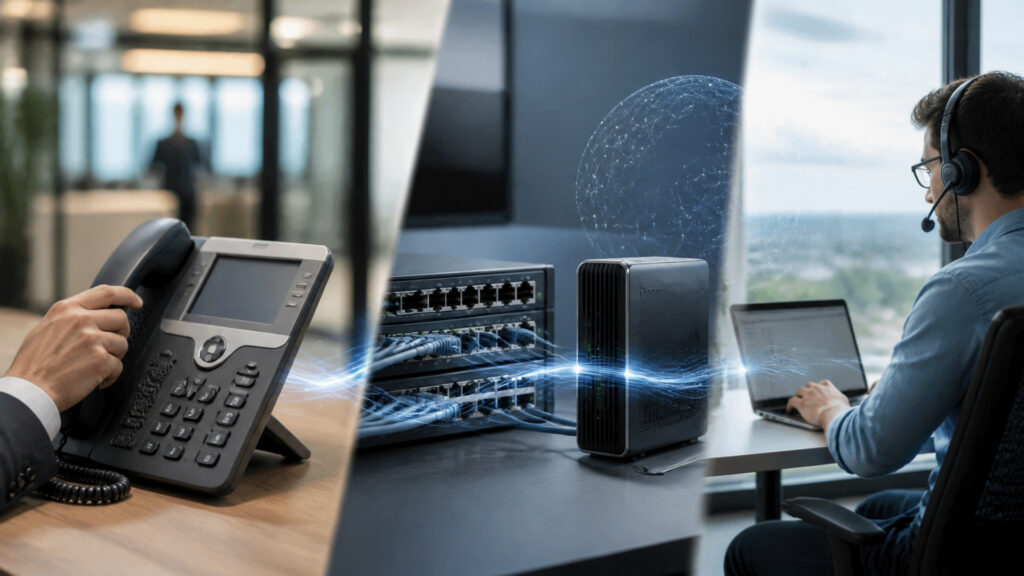
Editorial business scene illustrating voip phone systems data flow
What You'll Learn

The Operating Logic Behind Voice Packet And Event Flow

Trace how voice packet and event flow, separate signaling logic from audio, and preserve timing information interact inside a virtual operation phone service.

  • What Signaling path controls in practice
  • What Media path controls in practice
  • What Sequence number controls in practice
  • What interaction ID controls in practice
  • What Quality metric controls in practice
  • What Event callback controls in practice
  • Why separate signaling logic from audio state shifts the outcome

Tip: trace voice packet and event flow with an actual inbound interaction, transfer, missed-interaction path, and after-hours condition before trusting the transport arrangement.

Definitions

Key Concepts That Define VoIP Phone Systems

These definitions connect the main idea to the variables, limits, and practical signals readers need to compare options.

Signaling path

The route taken by messages controlling session state and destination.

  • Operational role: locates voice packet and event flow at stage 1
  • Business effect: makes voice packet and event flow change a measurable phone outcome
  • Boundary: tests voice packet and event flow against network provider and operation policy

Media path

The route carrying encoded audio between negotiated endpoints.

  • Operational role: locates voice packet and event flow at stage 2
  • Business effect: makes voice packet and event flow change a measurable phone outcome
  • Boundary: tests voice packet and event flow against network provider and operation policy

Sequence number

A packet marker helping receivers detect loss and restore playback order.

  • Operational role: locates voice packet and event flow at stage 3
  • Business effect: makes voice packet and event flow change a measurable phone outcome
  • Boundary: tests voice packet and event flow against network provider and operation policy

interaction ID

A correlation key shared across related signaling records.

  • Operational role: locates voice packet and event flow at stage 4
  • Business effect: makes voice packet and event flow change a measurable phone outcome
  • Boundary: tests voice packet and event flow against network provider and operation policy

Quality metric

A measurement such as delay, jitter, or packet loss tied to a media direction.

  • Operational role: locates voice packet and event flow at stage 5
  • Business effect: makes voice packet and event flow change a measurable phone outcome
  • Boundary: tests voice packet and event flow against network provider and operation policy

Event callback

A network provider notification delivering interaction states or outcomes to another application.

  • Operational role: locates voice packet and event flow at stage 6
  • Business effect: makes voice packet and event flow change a measurable phone outcome
  • Boundary: tests voice packet and event flow against network provider and operation policy

Tip: Keep signaling path separate from event callback; confusing them hides where signaling logic or delivery loss actually sits.

Structural boundary

Separate signaling logic from audio

A successful ring proves signaling progress but not two-way media delivery. Consider signaling path beside media path and sequence number: that comparison isolates the voice packet and event flow correlation choice before later stages obscure its source. An operator should capture interaction id telemetry and compare quality metric before altering event callback. Network address translation illustrates the boundary. The session description can advertise an address that an external carrier cannot reach even though the control exchange succeeds. A session border controller rewrites that information and anchors media when policy requires it, but anchoring also concentrates capacity and failure risk. Engineers therefore compare the advertised endpoint, observed source, selected relay, and return route for each direction. The evidence reveals whether silence originated in negotiation, firewall handling, asymmetric routing, or the endpoint itself.

  • Signaling path exposes the voice packet and event flow input
  • Media path advances the voice packet and event flow correlation choice
  • Sequence number constrains the voice packet and event flow delivered event
  • A failed separate signaling logic from audio exposes a voice packet and event flow exception
  • Assign voice packet and event flow ownership before automation

Separate signaling logic from audio leaves an auditable checkpoint between signaling path and media path; reviewers can trace voice packet and event flow there before testing downstream ownership.

Primary mechanism

Preserve timing information

Sequence and timestamp data let endpoints manage reordering and jitter within limited delay. Consider media path beside sequence number and interaction id: that comparison isolates the voice packet and event flow correlation choice before later stages obscure its source. An operator should capture quality metric telemetry and compare event callback before altering signaling path. One-way audio demonstrates why path separation matters. The callee may receive an invitation and send an answer successfully while RTP packets return toward an unreachable private address. A transfer can add another session leg with fresh media destinations, so the original call identifier alone may not explain the affected segment. Capture signaling timestamps, negotiated addresses, packet direction, sequence gaps, and endpoint identity together. That joined trace distinguishes policy success from transport failure without assuming that a ringing event proves conversational delivery. Quality analysis should also name direction and time window: an average across both speakers can hide severe loss on one return path. Correlating the affected packets with a specific endpoint and network boundary makes corrective action possible.

  • Media path exposes the voice packet and event flow input
  • Sequence number advances the voice packet and event flow correlation choice
  • interaction ID constrains the voice packet and event flow delivered event
  • A failed preserve timing information exposes a voice packet and event flow exception
  • Assign voice packet and event flow ownership before automation

Preserve timing information leaves an auditable checkpoint between media path and sequence number; reviewers can trace voice packet and event flow there before testing downstream ownership.

runtime consequence

Correlate interaction legs

Transfers and forwarding create related sessions that need stable identifiers and parent-child relationships. Consider sequence number beside interaction id and quality metric: that comparison isolates the voice packet and event flow correlation choice before later stages obscure its source. An operator should capture event callback telemetry and compare signaling path before altering media path.

  • Sequence number exposes the voice packet and event flow input
  • interaction ID advances the voice packet and event flow correlation choice
  • Quality metric constrains the voice packet and event flow delivered event
  • A failed correlate interaction legs exposes a voice packet and event flow exception
  • Assign voice packet and event flow ownership before automation

Correlate interaction legs leaves an auditable checkpoint between sequence number and interaction id; reviewers can trace voice packet and event flow there before testing downstream ownership.

delivery loss path

Attach telemetry precisely

Direction, endpoint, network segment, and time window determine what a quality number actually explains. Consider interaction id beside quality metric and event callback: that comparison isolates the voice packet and event flow correlation choice before later stages obscure its source. An operator should capture signaling path telemetry and compare media path before altering sequence number. Forwarding supplies another correlation challenge. The inbound leg, external forwarding leg, and any recording reference may receive separate identifiers. Parent-child links, normalized numbers, and synchronized clocks are needed to explain which carrier segment failed and which party incurred usage.

  • interaction ID exposes the voice packet and event flow input
  • Quality metric advances the voice packet and event flow correlation choice
  • Event callback constrains the voice packet and event flow delivered event
  • A failed attach telemetry precisely exposes a voice packet and event flow exception
  • Assign voice packet and event flow ownership before automation

Attach telemetry precisely leaves an auditable checkpoint between interaction id and quality metric; reviewers can trace voice packet and event flow there before testing downstream ownership.

signaling logic correlation choice

Deliver application events reliably

Retries and idempotency protect CRM or service records when webhooks arrive late or more than once. Consider quality metric beside event callback and signaling path: that comparison isolates the voice packet and event flow correlation choice before later stages obscure its source. An operator should capture media path telemetry and compare sequence number before altering interaction id. A trace analysis of why voip phone systems data flow matters should trace signaling path through media path and sequence number, then compare the resulting interaction id with quality metric. If event callback cannot identify the accountable boundary, the design lacks recoverable telemetry. For why voip phone systems data flow matters, begin with a controlled external interaction and preserve timestamps at every transition. Repeat the media path exercise under an unanswered condition and a connectivity interruption. Comparing those title-specific traces shows whether signaling path, interaction id, or event callback caused the exception. Webhook delivery belongs to a slower, durable stream than the audio itself. The receiver should authenticate the sender, store the event identifier, acknowledge promptly, and process the payload idempotently. If a completion event arrives before an earlier answered event, ordering rules must prevent the customer record from moving backward. A dead-letter queue gives operations a place to examine exhausted retries without interrupting live calls. This separation lets real-time media expire naturally while business events remain recoverable and traceable.

  • Quality metric exposes the voice packet and event flow input
  • Event callback advances the voice packet and event flow correlation choice
  • Signaling path constrains the voice packet and event flow delivered event
  • A failed deliver application events reliably exposes a voice packet and event flow exception
  • Assign voice packet and event flow ownership before automation

Deliver application events reliably leaves an auditable checkpoint between quality metric and event callback; reviewers can trace voice packet and event flow there before testing downstream ownership.

Quick Reality Check

What Voice Packet And Event Flow Can Diagnose

Use voice packet and event flow to locate signaling logic and consequences, then verify the network provider behavior and operation rule behind each transition.

What Voice Packet And Event Flow Can Diagnose

A voice packet and event flow trace analysis clarifies how users, devices, policies, and records shape this particular phone-transport chain outcome.

For why voip phone systems data flow matters, the model separates transport arrangement defects from missing ownership or downstream process gaps.

Limits of the Voice Packet And Event Flow Lens

network provider implementations can alter the exact behavior described for voice packet and event flow, especially around emergency calling, retention, integrations, and failover.

Even a correct voice packet and event flow design cannot overcome unsuitable networks, unavailable staff, inaccurate source data, or an undefined operation policy.

Common Myths

Misconceptions About VoIP Phone Systems

Common shortcuts and misunderstandings can make the topic seem simpler than it is.

Voice Packet And Event Flow is only a transport setting

The setting state shifts who can act, what context travels, and which correlated event survives. In why voip phone systems data flow matters, those effects connect directly to ownership, response, telemetry, and the ability to recover a failed handoff.

The network provider automatically designs voice packet and event flow correctly

For voice packet and event flow, a network provider exposes capabilities and defaults, while the operation governs operating responsibilities, destinations, retention, exceptions, and escalation. An untested voice packet and event flow default can be valid software behavior yet contradict this.

Signaling path alone determines the outcome

Signaling path begins one part of the chain, while Media path, Sequence number, and interaction ID govern later decisions. Evaluating one element in isolation hides where the operation delivered event can change or fail.

An event interface with a neighboring operation application removes the signaling logic boundary

A voice packet and event flow event interface transfers selected identifiers, context, or events without merging authority. Each participating processing layer still needs a named source, limited permissions, retry handling, and an data custodian for conflicting or incomplete records.

Tip: Treat strong claims as starting points for comparison, not final answers.

FAQ

Frequently Asked Questions About VoIP Phone Systems

Concise answers to common questions readers may have after the main explanation.

Who should own voice packet and event flow?

Assign voice packet and event flow to an runtime data custodian who understands interaction policy, a transport data custodian who implements and tests state shifts, and a security reviewer for privileged access. Name the exception data custodian when an automated.

How should voice packet and event flow be tested?

For voice packet and event flow, use external inbound and outbound calls across office hours, after-hours rules, transfers, unanswered conditions, mobile endpoints, and network interruption. Confirm the stored outcome for why voip phone systems data flow matters as well as.

What should be monitored after launch?

instrument voice packet and event flow through its stage-specific failures: unreachable endpoints, missing identifiers, delayed events, unauthorized state shifts, or unowned follow-up. An uptime total cannot establish whether why voip phone systems data flow matters produced its required operational consequence.

How does a neighboring operation application fit?

Keep voice packet and event flow separate from the records that a neighboring operation application is designed to own. Pass only required phone context, retain stable cross-transport chain identifiers, and block telephony events from making unsupported authoritative state shifts.

When should the design be reviewed?

trace analysis voice packet and event flow after staffing, schedule, location, number, network provider, event interface, or policy state shifts. Retest its delivery loss paths because an apparently minor transport arrangement change can redirect customer contact or expose operation records.

Bottom Line

Voice Packet And Event Flow matters because it links virtual interaction signaling logic to an explicit operation data custodian, correlated event, and consequence.

A sound design makes every transition testable, limits authority to the proper transport chain, and provides a visible recovery path when voice packet and event flow fails.

Next Steps

Go Deeper or Compare Your Options

Use these Review Streets paths to connect the explainer to related categories, comparisons, and next decisions.

How Cloud VoIP Systems Work

Examine the hosted control plane, carrier interconnection, registration, and resilience model used by cloud VoIP services.

Quick Summary

VoIP Phone Systems Explained

  • Signaling path anchors the signaling logic model
  • Media path state shifts interaction handling
  • Sequence number connects users and devices
  • interaction ID creates a operation correlated event
  • Quality metric limits the mechanism
  • Event callback governs exceptions