
Dry grip
Traction before sweat or moisture changes the surface.
- Mat texture matters
- Hands need stability
- Floor dust can reduce it
Yoga mats matter because they are the contact layer between the body and the floor. During standing poses, planks, kneeling work, or stretching, the mat affects traction, pressure, stability, and how much floor feedback the user feels.
The mat should not be treated as a cure for discomfort or a guarantee of balance. Its job is more practical: create a usable surface that matches the practice style, sweat level, and floor beneath it.
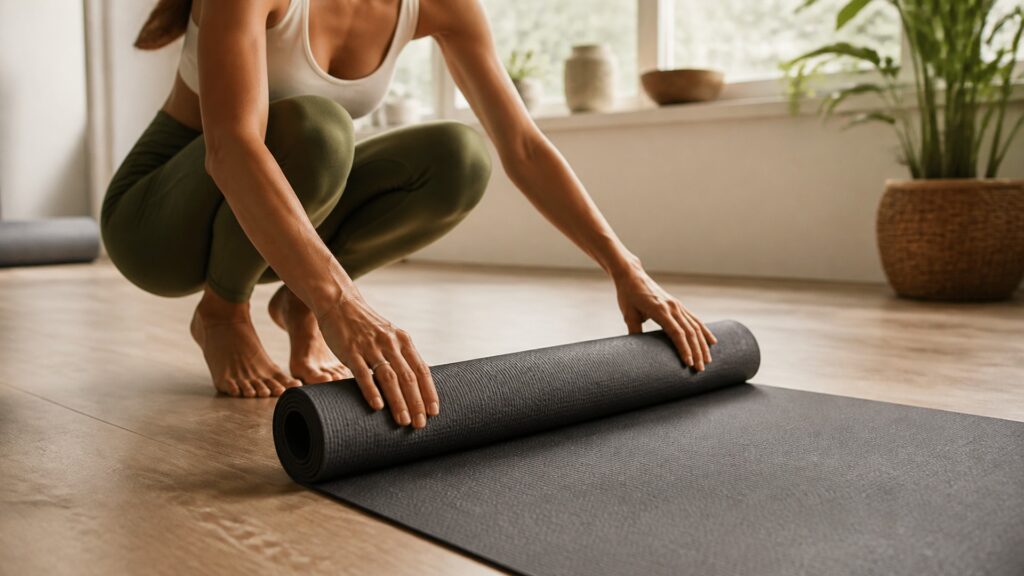
A focused explanation of the signals, movement constraints, tradeoffs, and limits behind Yoga Mats.
Tip: For Yoga Mats, compare the behavior first; the product or practice label comes second.
These definitions connect the main idea to the variables, limits, and practical signals readers need to compare options.
Traction before sweat or moisture changes the surface.
Traction after sweat or humidity reaches the mat.
The distance between the body and the floor.
How firm the mat feels under load.
The raised or patterned feel under hands and feet.
How clearly the user senses the ground through the mat.
Tip: If the explanation skips dry grip and wet grip, it is probably too generic.
During downward-facing dog, lunges, planks, and standing poses, the mat must manage force from hands and feet. If grip fails, the pose changes even when strength or mobility is not the issue.
Grip is the mat's most visible job because slipping changes the whole practice.
A thicker mat can make kneeling or floor work more comfortable, but it also moves the body farther from the floor. That can soften useful feedback during balance or standing transitions.
Cushioning is a tradeoff between pressure relief and ground connection.
PVC, rubber, TPE, cork, and other materials can feel different under dry hands, sweaty palms, and repeated cleaning. Material also affects weight, odor, roll memory, and durability.
Material decides how the mat behaves after the first few sessions.
A mat that bunches, curls, stretches, or compresses too much can interrupt practice. Stability comes from density, backing grip, edge control, and how the mat sits on the floor.
A stable mat stays quiet under the movement.
Slow restorative work, hot yoga, travel, Pilates-style mat work, and balance-heavy flows ask different things from a mat. A single mat can be good without being ideal everywhere.
Yoga mats matter because the surface should match the way the practice loads it.
A useful explanation should clarify the decision without pretending one rule covers every product, body, app, surface, or practice.
It clarifies why grip, thickness, density, and texture affect practice feel.
It gives readers a practical vocabulary for comparing claims without leaning on vague fitness language.
It cannot guarantee comfort, balance, joint protection, or injury prevention.
The right interpretation can change with fit, setup, instruction, surface, activity type, and the exact product.
Common shortcuts and misunderstandings can make the topic seem simpler than it is.
Extra padding can help pressure, but too much softness can reduce balance feedback and make standing poses feel less stable.
Dry grip and wet grip are different. A mat can feel secure at the start of class and slippery once sweat appears.
A mat can change pressure and traction, but discomfort can come from pose setup, load, mobility, floor surface, or individual factors.
Texture can add traction, but it may feel rough under hands or collect residue depending on material and cleaning habits.
Cleaning, drying, storage, and floor debris all affect grip and surface life.
Tip: Treat strong claims as starting points for comparison, not final answers.
Concise answers to common questions readers may have after the main explanation.
Thickness changes pressure relief and floor feedback. More cushion can help kneeling but may make standing balance feel less direct.
Wet grip is how well the surface holds when sweat or humidity reaches the mat. It can differ sharply from dry grip.
The backing, floor finish, dust, mat weight, and how force enters the mat can all affect floor-side slipping.
Yes. Cork often changes grip as it gets damp, while rubber commonly emphasizes tacky traction and dense floor feel.
No mat can guarantee that. Cushioning can reduce pressure in some positions, but pain needs individual context.
Yoga mats matter because they control the surface where traction, pressure, stability, and floor feedback meet.
Choose by practice conditions: sweat, kneeling pressure, balance demand, flooring, cleaning routine, and whether the mat stays stable under real movement.
Use these Review Streets paths to connect the explainer to related categories, comparisons, and next decisions.
Use this hub to compare mats, props, reformers, rings, and balance tools across the broader Yoga and Pilates equipment space.
Use this path when surface grip, cushioning, sweat handling, and floor feel are the next equipment questions.
Use this path when springs, straps, rings, reformers, and resistance-assisted positioning are the next comparison point.
Choose a retailer
Prices checked regularly. We may earn a commission at no cost to you.