
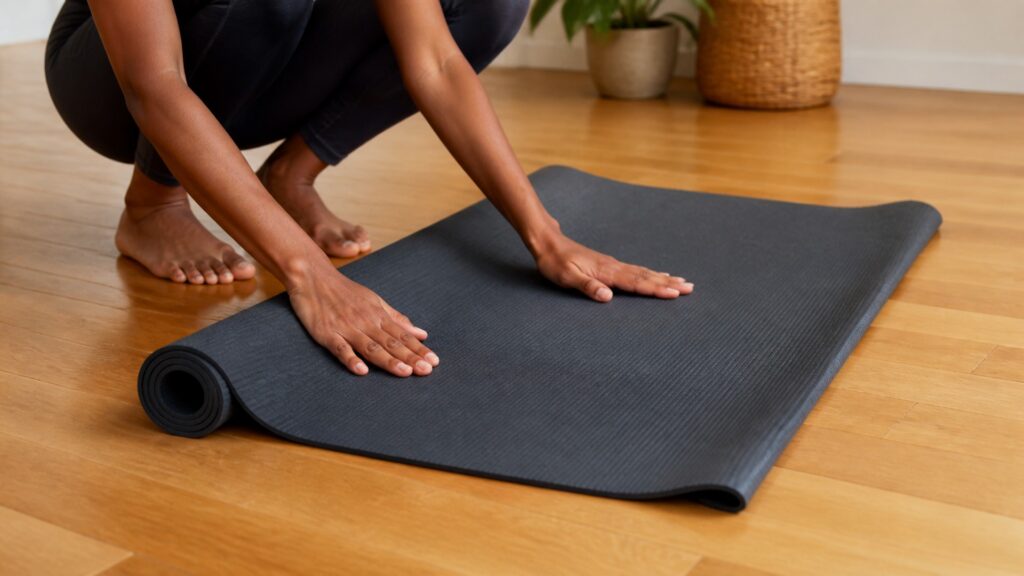
Why Yoga Mats Safety Factors Matters

Safety factors matter in yoga mats because the surface affects slipping, joint pressure, balance, hygiene, and confidence. A mat that is too slick, too worn, too soft, or too small can make ordinary poses harder to control.

A yoga mat does not make every movement safe, but it can reduce avoidable problems when it fits the practice. The safest mat is one that stays flat, grips well, supports contact points, and is kept clean enough for regular use.

By: Review Streets Research Lab
Updated: October 6, 2026
Explainer · 8-12 min read
yoga mats safety factors explainer hero image for Review Streets
What You'll Learn

How Mat Choice Affects Safer Practice

A practical look at traction, cushioning, wear, hygiene, floor grip, and when a mat is no longer helping.

  • Why slipping is a real safety issue
  • How cushioning can protect joints but reduce balance
  • When worn mats should be replaced
  • Why floor-side grip matters
  • How cleaning affects traction and hygiene
  • What warning signs mean the mat is not suitable

Tip: Use heart rate as one signal inside the workout, then confirm it with effort, pacing, recovery, and how the session actually feels.

Definitions

Key Concepts Behind Yoga Mats Safety Factors Matters

These terms keep the heart rate data tied to practical training decisions instead of isolated numbers.

Grip Surface

Grip surface is the mat texture and material that help hands and feet stay planted.

  • Example: a textured rubber mat during downward-facing dog
  • Check: test grip with dry and slightly sweaty hands
  • Limit: too much texture can feel rough for floor work

Cushioning

Cushioning is the mat thickness and density that reduce pressure on joints.

  • Example: extra padding under knees in kneeling poses
  • Check: press into the mat and see whether joints feel supported
  • Limit: too much softness can reduce balance

Stability

Stability is how steady the mat feels during standing poses and transitions.

  • Example: a firm mat that does not bunch during lunges
  • Check: try stepping and pivoting on the surface
  • Limit: very plush mats may feel less stable

Floor Boundary

A floor boundary is the defined practice area the mat creates.

  • Example: using the mat edges to position hands and feet
  • Check: choose length and width that fit the user's body
  • Limit: a mat cannot replace enough room around the body

Portability

Portability is how easy the mat is to roll, carry, store, and clean.

  • Example: taking a lightweight mat to class
  • Check: compare weight, roll size, and cleaning needs
  • Limit: very light mats may slide or wear faster

Practice Fit

Practice fit is how well the mat matches the user's yoga, mobility, Pilates, or floor-work routine.

  • Example: choosing a firmer mat for standing balance and a thicker mat for floor comfort
  • Check: match material and thickness to the main use
  • Limit: one mat may not be ideal for every style

Tip: Heart rate data gets more useful when the sensor signal, workout context, and training goal all line up.

Traction

Grip Helps Prevent Slips

Hands and feet need reliable contact during poses and transitions. A slick mat can make the user tense up or slide out of position.

  • Check grip before demanding poses.
  • Clean sweat, dust, and residue.
  • Replace mats that stay slick after cleaning.

Traction is a safety feature, not just a comfort feature.

Cushion

Padding Should Support Without Destabilizing

Cushioning can reduce pressure on knees, wrists, and hips. Too much softness can make standing poses and transitions less stable.

  • Choose cushion for the user's joints and practice style.
  • Use firmer mats for balance-heavy sessions.
  • Add local padding when only one area needs help.

Safe cushioning balances comfort and control.

Wear

Old Mats Can Become Less Predictable

Mats can compress, flake, curl, stretch, or lose traction. Those changes affect safety even when the mat still looks usable at a glance.

  • Check for curling edges.
  • Watch for cracking or shedding.
  • Replace mats that move or bunch during practice.

A worn surface can create avoidable distractions.

Hygiene

Cleaning Affects Both Health And Grip

Sweat, oils, dust, and cleaning residue can change how the mat feels. Hygiene also matters when mats are shared or used on public floors.

  • Follow the material's cleaning guidance.
  • Let mats dry fully before rolling.
  • Avoid slippery residue from harsh cleaners.

A clean mat should feel usable, not coated.

Setup

The Practice Area Still Matters

A good mat cannot fix a cluttered or slippery practice area. The floor underneath, space around the mat, and nearby objects all affect safety.

  • Use the mat on a flat surface.
  • Clear space around transitions.
  • Avoid placing mats on unstable layers.

The mat is part of the setup, not the whole setup.

Quick Reality Check

Where Safety Factors Help And Where They Stop

A good mat reduces preventable surface problems, but it does not replace appropriate movement choices.

Where They Help

They reduce slipping, pressure, bunching, and hygiene issues.

They help users choose a mat that matches balance and floor-work needs.

Where They Fall Short

They cannot make painful poses safe.

They cannot replace instruction, medical guidance, or enough practice space.

Common Myths

Misconceptions About Yoga Mat Safety

A mat can support safer practice, but only when it fits and is maintained.

Any mat is safer than the floor

A slick, curled, or unstable mat can create its own problems.

More cushion always means safer

Too much softness can make balance less stable.

Cleaning is only about smell

Cleaning also affects traction and hygiene.

A premium mat lasts forever

All mats can wear out or lose the features that made them useful.

Tip: Treat unusual readings as reasons to check the situation, not as commands to ignore your body.

FAQ

Frequently Asked Questions About Yoga Mat Safety

Short answers for using heart rate data in real training decisions.

What makes a yoga mat safer?

Reliable grip, suitable cushioning, flat edges, floor stability, and clean material all help.

When should I replace a yoga mat?

Replace it when it stays slick, curls, flakes, compresses unevenly, or bunches during practice.

Can a mat be too thick?

Yes. Extra cushion can reduce stability for standing and balance work.

How often should I clean a yoga mat?

Clean it based on use, sweat, and material guidance, and let it dry fully.

What is the practical takeaway?

A safe yoga mat should stay flat, grip well, support contact points, and match the practice.

Bottom Line

Safety factors matter because a yoga mat directly affects traction, pressure, stability, and hygiene.

The safest mat is maintained well and matched to the user's real practice style.

Next Steps

Go Deeper or Compare Your Options

Use these Review Streets paths to compare related categories and practical next decisions.