
Why Yoga Props Training Function Matters

Training function matters in yoga props because each prop should have a job in the session. A block, strap, bolster, or blanket should improve access, support, alignment, comfort, or control rather than simply adding equipment.

The right yoga prop makes the practice easier to understand. It can reduce strain, help the user hold a shape, create a useful cue, or make a position repeatable enough to practice consistently.

By: Review Streets Research Lab
Updated: October 6, 2026
Explainer · 8-12 min read
yoga props training function explainer hero image for Review Streets
What You'll Learn

How Props Become Training Tools

A practical guide to matching yoga props to support, reach, alignment, comfort, progression, and session goals.

  • Why every prop needs a clear purpose
  • How props support range without forcing it
  • Where alignment cues improve practice quality
  • When comfort support helps consistency
  • How props can support progression
  • What to avoid when props distract from the session

Tip: Choose the prop that solves the practice need in front of the user: reach, support, comfort, alignment, or a steadier setup.

Definitions

Key Concepts Behind Yoga Props Training Function Matters

These terms keep yoga props tied to practical support decisions instead of treating every accessory as interchangeable.

Support Point

A support point is the part of the body or pose that needs extra help from a prop.

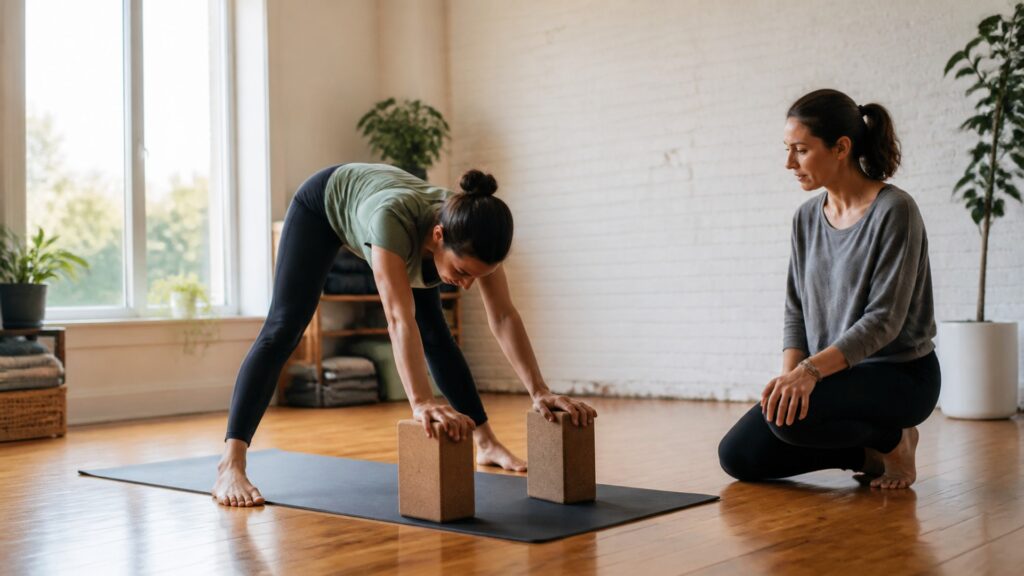
  • Example: a block under the hand in a standing fold
  • Check: identify where the body is straining or losing position
  • Limit: support should not force a painful range

Range Aid

A range aid helps the user reach or hold a position without forcing mobility.

  • Example: a strap used to extend reach in a hamstring stretch
  • Check: keep the movement smooth and controlled
  • Limit: a prop cannot replace gradual mobility work

Comfort Support

Comfort support reduces pressure during longer holds or floor positions.

  • Example: a blanket under knees or a bolster under the torso
  • Check: confirm the pose feels calmer without collapsing
  • Limit: too much softness can blur alignment

Alignment Cue

An alignment cue is feedback from a prop that helps the user place the body more clearly.

  • Example: a block between the thighs to track leg position
  • Check: use the cue only when it improves the pose
  • Limit: props should not turn the session into clutter

Pose Access

Pose access is the ability to practice a position at a usable level today.

  • Example: raising the floor with blocks so the spine can stay longer
  • Check: choose the simplest prop that makes the pose workable
  • Limit: access still depends on the user's body and instruction

Setup Stability

Setup stability is how secure the prop feels under load or during transitions.

  • Example: a firm block that does not wobble under the hand
  • Check: test the prop before committing weight
  • Limit: unstable setups can create risk instead of support

Tip: Yoga props work best when the user knows what problem the prop is solving before adding it to the pose.

Purpose

Every Prop Should Have A Job

A prop becomes useful when it solves a clear training problem. The job may be support, reach, comfort, alignment, or a better starting position.

  • Choose the prop after naming the need.
  • Avoid adding tools out of habit.
  • Remove the prop when it no longer helps.

Training function starts with purpose.

Range

Props Help Range Stay Controlled

A strap or block can let the user work inside a usable range instead of forcing the body into a shape it cannot hold well yet.

  • Use straps to extend reach.
  • Use blocks to reduce distance to the floor.
  • Keep breathing and control steady.

Good range support makes practice repeatable.

Alignment

Props Can Give Clear Body Feedback

A block, wall, strap, or blanket can create feedback that helps the user sense placement. The cue should make the movement simpler, not more confusing.

  • Use one cue at a time.
  • Pick firm props for clear feedback.
  • Stop using the cue if it changes the pose's purpose.

Useful feedback helps the user self-correct.

Comfort

Support Can Improve Consistency

Props can reduce pressure and make longer holds more practical. Comfort matters when it lets the user practice without bracing or avoiding the position.

  • Pad sharp pressure points.
  • Support the torso in restorative positions.
  • Keep the setup stable and easy to repeat.

Comfort is functional when it supports regular practice.

Progression

Props Can Scale A Pose Over Time

A prop can make a pose accessible today and then change as the user's control improves. That makes the prop part of progression, not a permanent label.

  • Change block height gradually.
  • Use less strap assistance when range improves.
  • Keep the goal focused on control.

The prop can adapt as the user adapts.

Quick Reality Check

Where Training Function Helps And Where It Can Distract

Props support practice when they solve a clear need, but they can distract when added without purpose.

Where It Helps

It connects each prop to access, support, alignment, comfort, or progression.

It helps users choose fewer tools with better reasons.

Where It Falls Short

It cannot replace instruction for complex or painful positions.

It can overcomplicate a simple session when every pose gets extra equipment.

Common Myths

Misconceptions About Yoga Prop Training Function

A useful prop is measured by the job it performs, not by how advanced it looks.

Props make practice less effective

Props can make practice more effective by improving control and access.

Only beginners need props

Many experienced users use props to refine alignment or support recovery.

Every pose needs a prop option

Some poses are clearer without extra tools.

A prop should force deeper range

A prop should support usable range, not force it.

Tip: A prop is useful when it makes the practice clearer, more supported, or easier to repeat with control.

FAQ

Frequently Asked Questions About Yoga Prop Training Function

Short answers for choosing and using yoga props in real practice.

Why does training function matter for yoga props?

It keeps the prop tied to a specific job instead of treating accessories as decoration.

What is the most useful prop function?

It depends on the session, but support, reach, and alignment cues are common needs.

Can props help progression?

Yes. Props can scale a pose so the user practices with control and changes support over time.

Can too many props hurt the session?

They can distract or slow practice if they are not solving a real need.

What is the practical takeaway?

Choose props by function: support, reach, alignment, comfort, or progression.

Bottom Line

Training function matters because yoga props should make a specific part of practice clearer or more supported.

The best props improve control without turning the session into a pile of equipment.

Next Steps

Go Deeper or Compare Your Options

Use these Review Streets paths to compare related categories and practical next decisions.