
Windshield Components Buying Guide for High-Mileage Vehicle Repairs
Mileage does not wear glass like a bearing, but years of impacts, wiper abrasion, prior replacements, body repairs, corrosion, leaks, and sensor work accumulate around the windshield system.
Separate repairable glass damage from aging moldings, prior urethane work, corrosion, water paths, sensor mounting, camera faults, body movement, and accumulated collision history before repair or replacement. Keep the mileage-glass recommendation conditional until prior installation quality, sensor and camera hardware, and repair sequence agree with the final check.
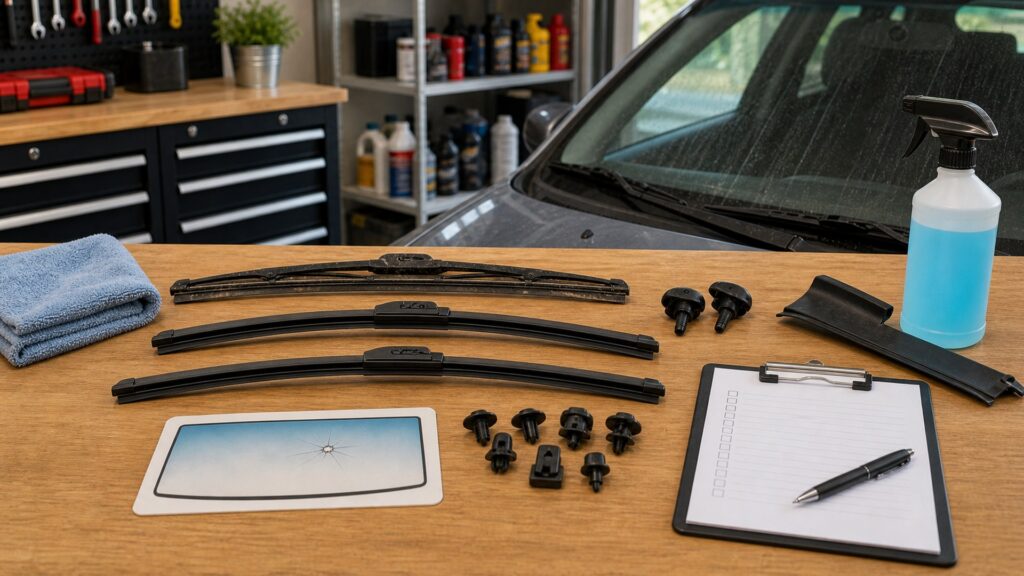
Buying framework
Build the high-mileage windshield repair decision
Damage history establishes need; moldings and cowl controls an interface, and repair sequence defines completion.
Capture the starting condition: Open the mileage-glass file with damage history, vehicle or surface identity, photographs, operating conditions, prior work, and the owner’s actual outcome requirement.
Separate cause from symptom: Interpret prior installation quality beside sensor and camera hardware; do not let the easiest visible defect substitute for diagnosis of the surrounding system.
Map material and equipment limits: Reconcile pinch-weld condition with moldings and cowl, then apply current vehicle, tool, chemical, surface, or component instructions before selecting equipment.
Price the completed workflow: Combine sensor and camera hardware, companion materials, access, setup, labor, verification, cleanup, downtime, and water and wind evidence instead of comparing one shelf price.
Define the finish line: Specify stop conditions for adas status and retain the mileage-glass evidence produced by repair sequence before release or storage.
Who this is for
Situations that reshape high-mileage windshield repair
Vehicle condition, surface, work area, prior service, and failure consequence change which mileage-glass evidence matters most.
Original glass with scattered damage: Map chips, pits, scratches, edge condition, wiper arcs, optical distortion, and crack history. Assess repair eligibility individually rather than treating a high odometer as a replacement criterion.
Previously replaced windshield: Inspect glass identity, reveal, moldings, urethane appearance, cowl fit, water and wind complaints, camera bracket, sensor pads, calibration records, and paint damage from the earlier removal.
Vehicle with collision history: Review roof, pillar, cowl, body-opening geometry, weld or paint work, and alignment before new glass. A distorted or corroded opening cannot be corrected by a thicker urethane bead.
Recurring leak or wind noise: Separate blocked drains, cowl seams, roof accessories, body seams, doors, molding aerodynamics, glass bond, and HVAC condensation. Water appearance at the dash does not identify its entry path.
Aging ADAS-equipped vehicle: Check camera mounting, optical zone, covers, faults, ride height, alignment, prior calibrations, and windshield specification. Replace or calibrate only under the current vehicle procedure.
What to pay attention to
Specifications governing high-mileage windshield repair
Read damage history, moldings and cowl, and adas status as connected gates; passing one does not waive another.
Condition and compatibility
Damage history, Prior installation quality, Pinch-weld condition, Moldings and cowl.
Process and verification
Sensor and camera hardware, Water and wind evidence, ADAS status, Repair sequence.
Damage history: Build a dated map of impacts, crack growth, repairs, prior replacements, collisions, leaks, wind noise, wiper damage, and calibration events. The sequence often distinguishes current damage from legacy workmanship.
Prior installation quality: Assess glass markings, fit, reveal, urethane trim, molding attachment, cowl contact, interior damage, adhesive contamination, and retained records from prior installation. Photograph evidence before disturbing trim.
Pinch-weld condition: Inspect accessible pinch-weld edges for corrosion, cut paint, loose urethane, body filler, distortion, and moisture pathways. Define qualified corrosion or body repair before another bonded installation.
Moldings and cowl: Check upper and side moldings, clips, spacers, cowl panels, drains, washer plumbing, wiper sweep, hood clearance, and missing fasteners. Old peripheral parts can create noise or water symptoms independent of glass.
Sensor and camera hardware: Confirm camera bracket, mirror mount, rain or light sensor, optical pad, heater, antenna, HUD, connector, and cover condition. A high-mileage repair plan must preserve the exact feature set.
Water and wind evidence: Diagnose water and wind with controlled methods that protect electronics and interior materials. Record location, direction, weather, speed, HVAC state, and previous sealant attempts instead of flooding the vehicle indiscriminately.
ADAS status: Save pre-scan status, camera faults, alignment or ride-height concerns, glass compatibility, required static or dynamic calibration, equipment coverage, and successful post-service results.
Avoid these traps
Errors that undermine high-mileage windshield repair
These mileage-glass shortcuts confuse appearance, pressure, price, or a single symptom with a complete safe result.
Blaming mileage alone: Age and exposure increase risk, but replacement needs actual damage, optical, retention, feature, or leakage evidence. Do not discard safe serviceable glass because the odometer is large.
Smearing sealant over the reveal: Surface sealant can hide the entry path, contaminate future bonding, trap moisture, and leave corrosion untreated. Diagnose the path and repair the designed system.
Ignoring old cut paint: Removal scratches at the pinch weld can become corrosion beneath moldings. A new windshield should not be bonded over compromised substrate without the required repair.
Replacing glass to cure every rattle: Cowl clips, mirror covers, camera housings, trim, dashboard contact, and body hardware can mimic windshield noise. Localize the source before cutting a sound bond.
Calibrating around the wrong glass: Calibration cannot make an incompatible optical zone, bracket, HUD construction, or camera mount correct. Verify the glass and hardware first.
Decision guidance
Choose by the unresolved condition
Branch on the remaining mileage-glass uncertainty, then close it with compatible materials, controlled procedure, and retained verification.
If a chip is potentially repairable: Use current repair criteria for size, type, depth, location, contamination, edge proximity, and technology zones; act promptly while preserving safe vision.
If the prior bond is suspect: Choose a qualified replacement assessment that includes glass identity, opening condition, urethane system, moldings, corrosion contingency, and ADAS scope.
If water appears only after rain: Trace exterior entry paths and drains under controlled conditions before blaming HVAC condensation or the glass bond. Protect modules and carpet during testing.
If camera warnings followed earlier glass work: Retrieve faults and prior calibration records, confirm glass and bracket compatibility, inspect the optical interface, and follow OEM diagnostic and calibration steps.
If several age-related defects coexist: Sequence body corrosion, opening repair, correct glass and hardware, retention materials, cure, calibration, water or wind verification, and documentation as one repair.
Ownership & compatibility
Preserve a usable work record
The mileage-glass record should explain what was selected, how it was used, and what proved the result.
Save identity and condition: File damage history, part or equipment identity, markings, settings, photographs, seller, date, mileage or hours, and invoice together with prior installation quality.
Record materials and procedure: Link pinch-weld condition to moldings and cowl with chemical, dilution, tool, surface, environment, instruction revision, technician, and stop-condition notes.
Keep setup and verification outputs: Attach the mileage-glass output for adas status, including calibration, cure, moisture, finish, operational, scan, or inspection evidence as applicable.
Track later performance: Connect future damage, leaks, warnings, marring, residue, odor, moisture, tool faults, or claims to repair sequence and the original work file.
FAQ
Windshield Components high-mileage windshield repair FAQ
Answers about damage history, equipment boundaries, procedure, evidence, and follow-up.
How should repairability on older glass be evaluated?
Why does prior replacement quality matter?
What evidence supports pinch-weld corrosion?
When should water-leak diagnosis change the plan?
Can wiper abrasion be handled routinely?
What mistake is common with camera brackets?
How is calibration after replacement verified?
What should be recorded about molding reuse?
When does completion records need specialist help?
Bottom line
Complete high-mileage windshield repair without a missing link
Identity, controlled interfaces, correct procedure, and measured outcome must tell the same mileage-glass story.
Identify: Begin with damage history and preserve prior installation quality.
Match: Cross-check pinch-weld condition against moldings and cowl.
Control: Manage sensor and camera hardware while documenting water and wind evidence.
Verify: Finish adas status and save repair sequence.
Reading Shortcuts
Confirm application and condition first.
Decision Reminders
Checks to complete before committing.
- Confirm the exact application: Cross-check vehicle, engine, housing, and original part.
- Preserve removed-part clues: Contamination and damage can identify another fault.
- Keep the work clean: Keep downstream openings protected.
- Follow the procedure: Respect pressure, fluids, torque, priming, and resets.
- Inspect interfaces: Seals, caps, connectors, threads, and fittings must agree.
- Verify before release: Check leaks, warnings, starting, idle, and road behavior.
Glossary Snippets
Terms used in this decision.
When to Use a Top 10 Review
Use rankings after application and service scope are documented.
- Application confirmed: Filter with exact engine and interface evidence.
- Duty identified: Compare parts for the real interval and environment.
- Evidence published: Rank construction, testing, traceability, and support.
- Job scope complete: Include seals, fluids, tools, and verification.
Already down to 2–3 options? A Comparison is usually faster.
When to Use a Comparison
Compare finalists for the same verified application.
- Interfaces: Match dimensions, seals, valves, fittings, and connectors.
- Performance evidence: Compare documented efficiency, capacity, and service claims.
- Included content: List every seal, cap, sensor, boot, and fitting.
- Installed outcome: Price fluids, labor, priming, disposal, and downtime.
Still building a shortlist? Start with a Top 10.