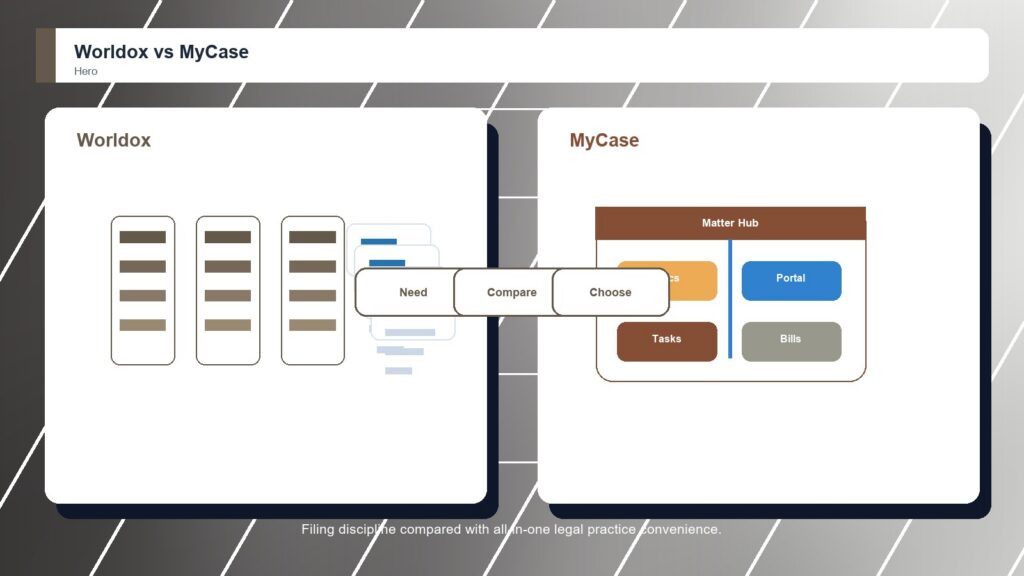
Both platforms can reduce scattered legal documents, but the better choice depends on the firm's dominant pain. Worldox treats document organization as the main event. MyCase treats documents as one part of a complete practice-management workspace. That keeps the choice practical.
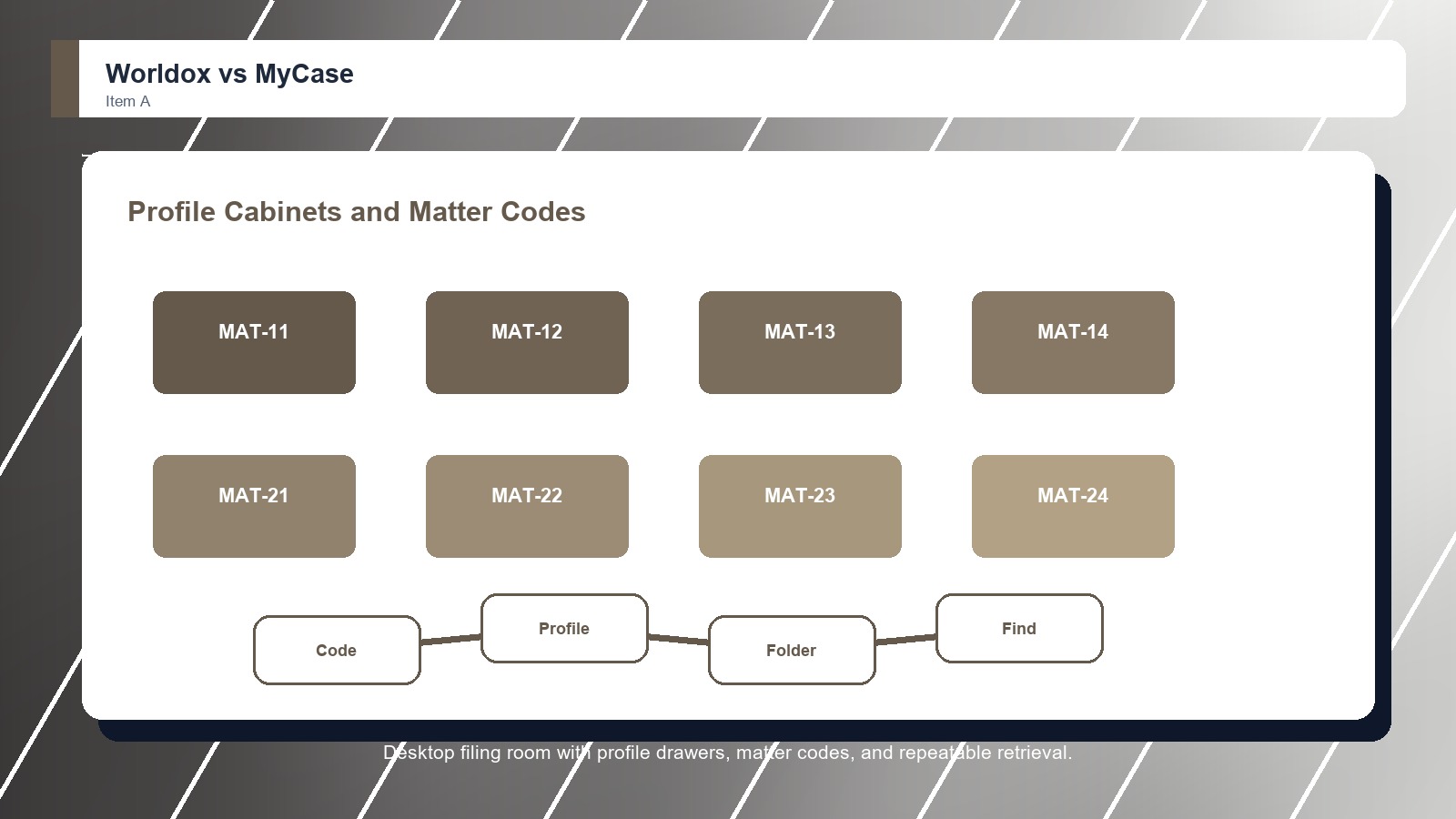
File Discipline: Worldox gives firms more structure for repeatable filing and retrieval. That makes it stronger when users need predictable document behavior across matters, teams, and long-running client files rather than a loose attachment area. That keeps the choice practical. That matters during rollout.
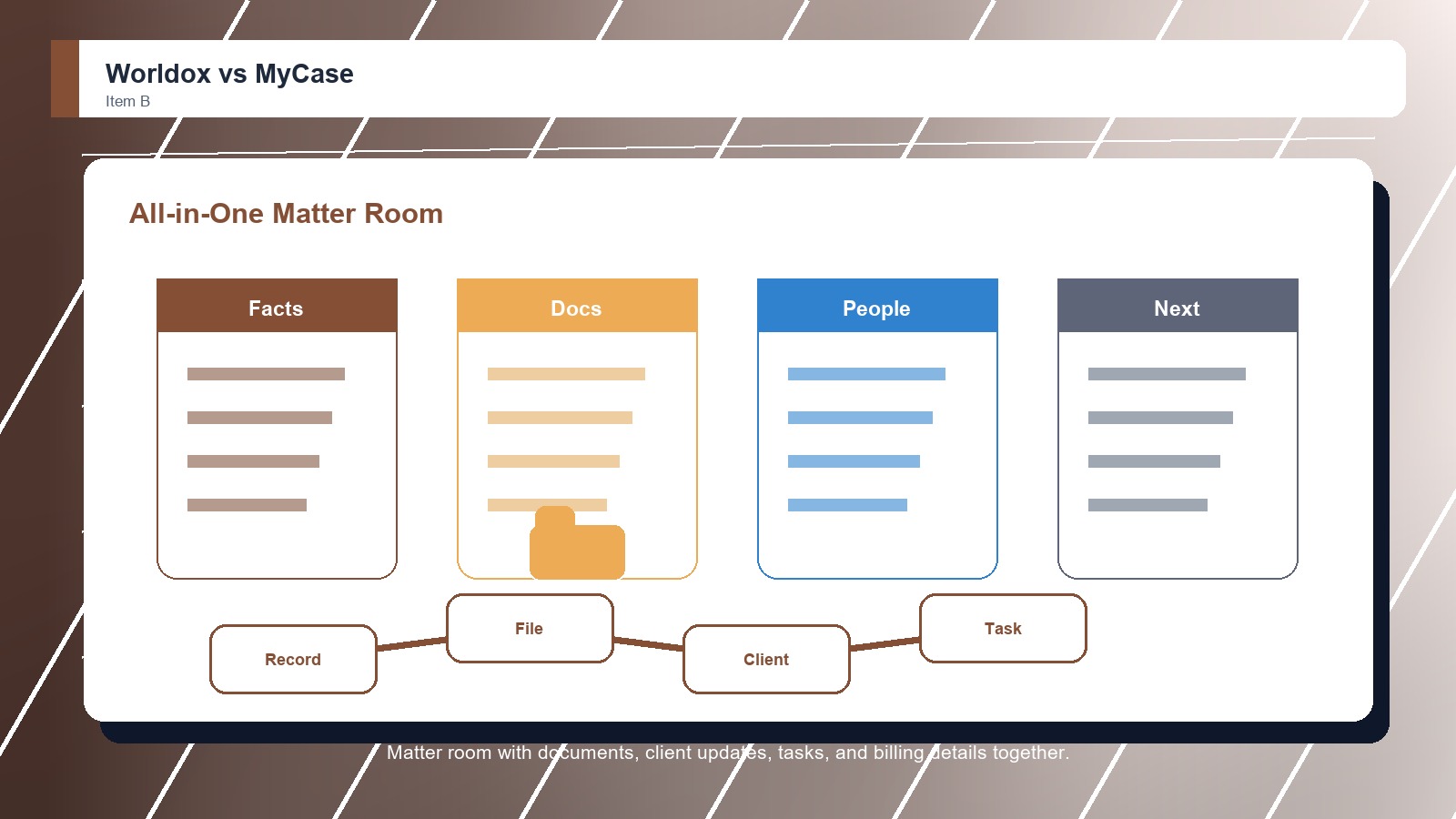
All-in-One Convenience: MyCase is more convenient when a firm wants document storage connected to the rest of the case record. It can reduce tool switching even though it does not match Worldox for specialist DMS depth. That keeps the choice practical. That matters during rollout.
Decision Trigger: Choose based on the complaint you hear most often. If users cannot find or trust documents, Worldox is the better answer. If users jump between too many systems, MyCase may solve the larger frustration. That keeps the choice practical. That matters during rollout.
Demo evidence: Buyers should make Worldox and MyCase show the same live workflow, using familiar files and real permission examples. A controlled demo reveals whether the stronger product advantage appears in daily work or only in vendor positioning. That keeps the choice practical.
Governance check: The winner should also fit the team's control model. For legal document management software platforms, that means administrators can explain access, sharing, retention, exports, and exceptions clearly enough that staff do not create parallel folders or side workflows. That keeps the choice practical.
Adoption reality: The practical choice depends on who will keep the system orderly after launch. If attorneys, staff, managers, or external partners cannot follow the filing and sharing routine, even the better-rated option can lose value quickly. That keeps the choice practical.