
Yoga & Pilates Equipment Buying Guide for Flexibility Training
Flexibility work asks more from equipment than a soft place to sit. A mat has to grip during slow holds, props need enough density to support reach without tipping, and straps or bands should help you control range instead of pulling you past it.
This guide focuses on yoga and Pilates gear for people building a practical mobility kit at home, carrying props to class, or upgrading pieces that no longer feel stable. Start with support, traction, and repeatable setup first before spending on specialized wheels, rings, or extra cushions.
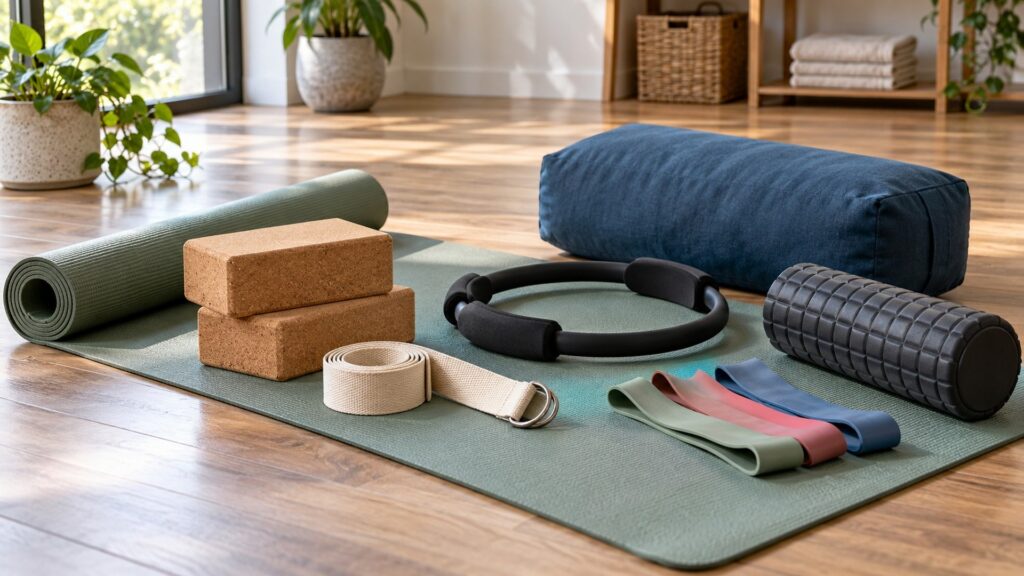
Buying framework
Choose support before chasing deeper range
For flexibility work, equipment should make positions repeatable rather than dramatic. Judge every item by how it changes traction, body support, and control at the edge of a stretch.
Start with a trustworthy mat: Look for enough grip that hands and feet stay planted in slow transitions, plus thickness that protects knees without swallowing balance feedback.
Use props to shorten reach: Blocks, bolsters, and straps are most useful when they bring the floor or limb closer, letting you hold alignment instead of rounding or twisting to reach.
Match firmness to the job: EVA blocks feel forgiving for light support, while cork blocks and dense bolsters give steadier resistance when more body weight rests on them.
Separate stretching from resistance: A D-ring strap helps set a fixed length for hamstrings or shoulders; looped bands and Pilates rings add resistance cues and can pull differently.
Delay specialty pieces: Yoga wheels, rollers, and multiple cushion shapes make sense after you know which positions need help, not as proof that a starter kit is complete.
Who this is for
Match the kit to where and how you practice
The right mix changes when you practice on a living-room floor, carry gear to class, or blend Pilates control work with longer holds. Use your real routine to decide which pieces deserve space.
Home mobility builder: A dependable practice surface plus two matching blocks and an adjustable strap cover most starting needs. Add a bolster only if supported forward folds, hip openers, or restorative holds are already part of the plan.
Studio class carrier: Portability matters more when every prop goes in a bag. Lighter foam blocks, a compact strap, and a mat that rolls tightly usually beat bulky wheels or large cushions for class travel.
Knee and hip comfort seeker: Look for cushioning that protects kneeling and seated work without making standing poses mushy. A thicker Pilates mat or a folded support layer can help, but traction should still feel secure.
Alignment-focused yogi: Firm cork blocks, a D-ring strap, and a textured surface make it easier to repeat hand, foot, and hip placement. This buyer benefits from props that create reference points, not just softness.
Pilates control seeker: A firmer mat, light to medium bands, and a Pilates ring can cue inner-thigh, arm, or core engagement during slow work. Avoid resistance so heavy that it turns mobility practice into a strength set.
What to pay attention to
The details that change a stretch
Small product details can change whether a position feels steady, sloppy, or overforced. Read specs as cues for how the gear will behave under hands, feet, hips, and controlled resistance.
Support and Range Assistance
Think of props as adjustable endpoints. The best ones let you reduce distance to the floor, hold a limb, or create gentle resistance without changing the shape of the movement.
Surface Grip and Body Feedback
Texture, density, and thickness determine whether you feel grounded or wobbly. A comfortable surface still needs enough feedback for balance and Pilates control.
Mat thickness: Around 4-6 mm often balances yoga floor feel with knee comfort. Thicker Pilates mats cushion rolling and kneeling, though they may feel less precise for standing balance.
Surface material: Rubber, cork, PVC, and TPE vary in traction, odor, weight, and sweat handling. Prioritize a texture that stays predictable under bare feet and palms during slow holds.
Block density: Foam blocks are easy to carry and forgiving under sensitive joints. Cork blocks feel firmer and steadier when a hand, hip, or partial body weight rests on them.
Strap length and closure: A useful strap should loop around the foot while your shoulders stay relaxed. D-rings or similar closures help hold one repeatable length instead of relying on grip strength.
Bolster shape and wheel size: Rectangular bolsters create broad, stable support under the spine, hips, or knees. Yoga wheels concentrate pressure along a curve, so diameter and edge padding matter for comfort.
Ring and band resistance: Light or medium resistance usually suits flexibility-adjacent Pilates cues. If a band or ring makes you brace hard, it may distract from range control and alignment.
Avoid these traps
Avoid buying around the wrong signal
The most common misfires come from treating comfort, depth, or prop count as the goal. Better equipment makes useful positions steadier and easier to repeat.
Choosing the thickest mat by default: Extra padding can help knees, but too much squish makes balance and Pilates control harder to read. Choose thickness by the floor work you do most, not by comfort alone.
Treating props as shortcuts: Blocks and straps are not admissions that you cannot stretch well. They help you keep the shape of a pose while reducing the reach, which often produces cleaner practice.
Using elastic bands for every hold: A resistance band keeps changing tension as it stretches. For fixed hamstring or shoulder positions, a non-elastic strap gives steadier feedback and less temptation to tug.
Buying a wheel before the basics: A yoga wheel looks useful, but it is specialized and balance-sensitive. Most buyers learn more from a reliable mat, blocks, and strap before adding curved backbend support.
Ignoring cleanup and storage: A mat that stays damp, a bolster with no washable cover, or props too bulky for the closet can become friction. Choose care routines you will actually follow.
Decision guidance
Build a lean kit, then upgrade with purpose
You do not need every prop to make meaningful progress. Start with the pieces that solve your present limit, then add gear only when a specific position keeps asking for it.
If you are starting from scratch: Begin with a dependable mat surface, paired blocks, and a strap you can adjust without fuss. That combination supports reach, floor contact, and alignment without locking you into a large or expensive setup.
If floor pressure stops practice early: Move toward a thicker mat, a folded support layer, or a bolster before chasing advanced mobility props. Keep enough firmness that you can still sense knees, hips, and feet clearly.
If you carry equipment to class: Prioritize a mat that rolls cleanly, one lightweight block, and a strap that packs flat. Heavy cork blocks and large bolsters are better left at home unless class specifically requires them.
If Pilates cues are part of the routine: Add a Pilates ring or light bands after the mat choice feels settled. The goal is controlled pressing and alignment feedback, not maximum resistance.
If deeper backbends or restorative holds are the goal: Consider a wheel, bolster, or extra cushion only after the basic kit cannot create the support you need. Avoid any prop that encourages painful range or rushed depth.
Ownership & compatibility
Keep the equipment clean, grippy, and useful
Yoga and Pilates props are low-maintenance, but they do live on floors, under bare feet, and under body weight. Simple care habits protect grip and keep the kit pleasant to use.
Dry before storage: Wipe mats after sweaty sessions and let them air out before rolling tightly. Damp storage can trap odor, especially with absorbent surfaces or gear kept in a warm car.
Inspect load points: Check straps around stitching, buckles, and D-rings before loaded holds. Replace a block that is deeply dented or a mat that peels, flakes, or slides under normal pressure.
Protect shape and material: Store bolsters where they are not crushed flat, and keep foam or rubber away from prolonged heat and direct sun. Wash removable fabric covers according to their care labels.
Keep the kit coherent: Two blocks of matching height, bands with distinct resistance levels, and a strap long enough for your body make practice smoother. Random leftovers can create more fuss than support.
FAQ
Questions buyers ask before choosing flexibility gear
Use these quick answers to sort common mat, prop, cleaning, and starter-kit questions before you compare individual products.
What mat thickness is best for flexibility work?
Do I need both yoga blocks and a strap?
Are foam or cork blocks better?
Is a yoga wheel necessary?
Can I use a resistance band as a stretching strap?
What should beginners buy first?
How important is cleaning?
Should I buy a Pilates ring?
What gear is easiest to carry?
Bottom line
Choose the pieces that make range repeatable
The best kit is not the largest pile of props. It is the gear that lets you return to the same positions with steadier traction, better support, and less guesswork.
Grip first: If hands or feet slide, every other feature becomes harder to judge. A dependable surface is the base of the kit.
Support beats strain: Blocks, straps, and bolsters should make clean positions reachable. Skip any prop that tempts you to force depth.
Add resistance carefully: Bands and rings are useful when they improve control cues. They are less helpful when resistance distracts from range and alignment.
Upgrade one gap at a time: Let repeated practice reveal what is missing before buying wheels, extra cushions, or duplicate props.
Reading Shortcuts
Jump to the decision point that matches your next purchase.
Decision Reminders
Use these checks before adding another prop to the kit.
- Mat traction: A slick surface undermines slow holds even when the cushioning feels comfortable.
- Block density: Choose foam for light carry weight and cork for firmer, steadier support.
- Straps vs bands: Use straps for fixed reach and bands or rings for controlled resistance cues.
- Bolsters and wheels: Buy these only when specific poses need shaped support.
- Cleaning: Pick surfaces and covers that match how often you practice on the floor.
- Lean kit: A mat, two blocks, and a strap solve more problems than scattered specialty gear.
Glossary Snippets
A few terms that make product pages easier to parse.
When to Use a Top 10 Review
Use a ranked list when you know the kind of item you need and want a tighter shortlist.
- Shortlisting mats: Compare grip, thickness, material, and carry weight after the basic requirements are clear.
- Starter kits: Look for bundles only when every included prop has a role in your practice.
- Prop upgrades: Use rankings to narrow blocks, straps, bolsters, or rings within one product type.
- Portability checks: A list can help identify lighter gear for studio or travel routines.
Already down to 2-3 options? A Comparison is usually the faster next step.
When to Use a Comparison
Use a comparison when two or three products seem close and the tradeoff is specific.
- Foam vs cork: Compare block materials when firmness, weight, and stability matter more than price alone.
- Yoga vs Pilates mats: Use side-by-side detail when thickness and floor feedback are pulling in opposite directions.
- Strap vs band: Compare non-elastic reach support with elastic resistance before buying both.
- Bolster vs wheel: A focused comparison helps separate broad support from curved, balance-sensitive mobility work.
Still exploring? Start with a Top 10 to build a shortlist first.