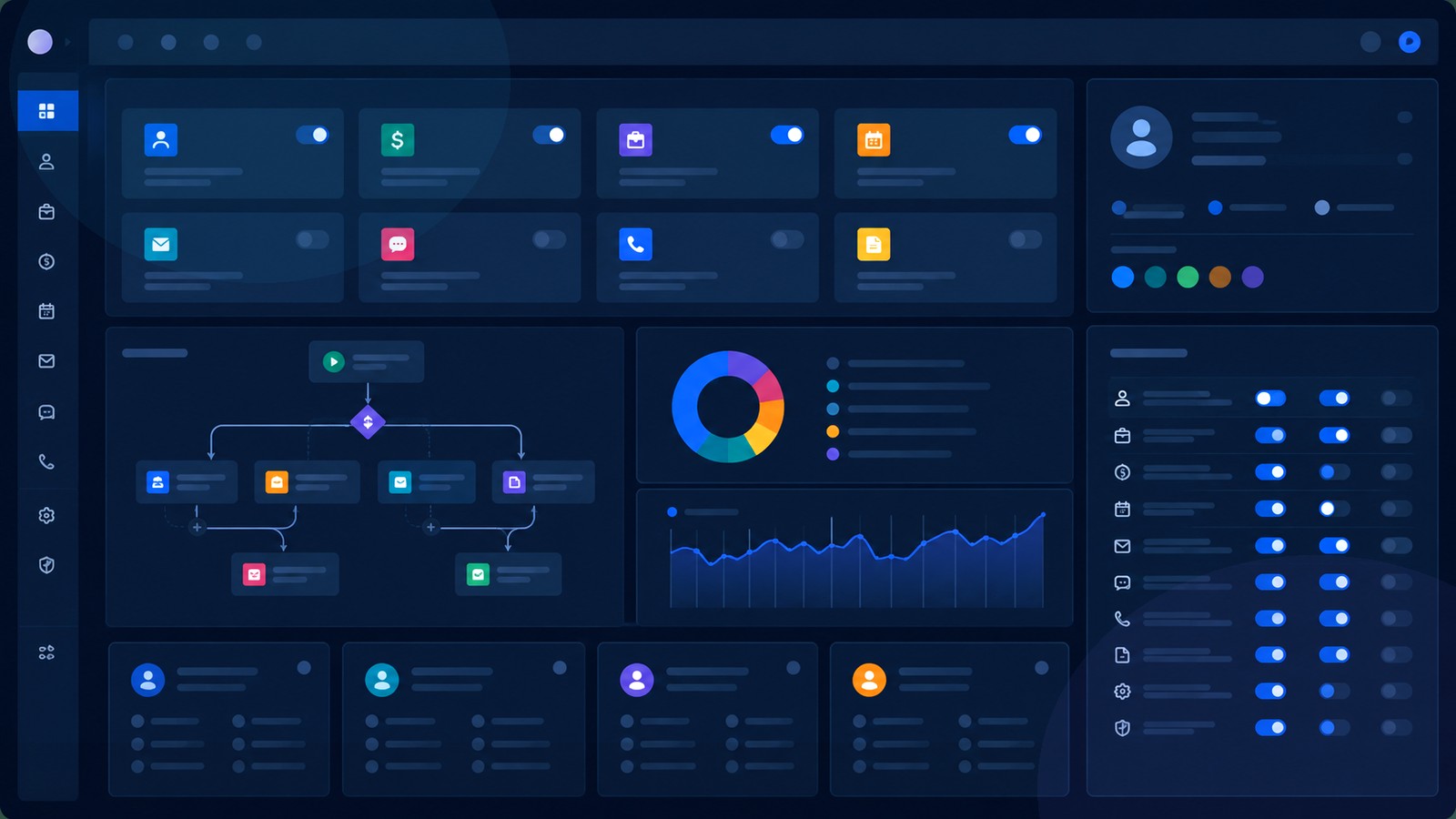
This is a control-versus-simplicity decision. We weighted custom fields, workflow automation, reports, user comfort, setup ownership, support expectations, and whether the CRM should grow into a broader operating system or stay intentionally small. Test both with one messy contact import.
Configuration depth: Zoho CRM gives small businesses more room to shape modules, fields, layouts, automations, scoring, and analytics. Less Annoying CRM keeps the system simpler, which reduces confusion but limits how precisely the CRM can mirror a growing process. Document field ownership early.
Simplicity: Less Annoying CRM is easier when the buyer wants contact management and follow-up without extra layers. Zoho CRM can be streamlined, but someone still needs to decide which features, fields, and automations belong in the workflow. Start with one workflow.
Automation value: Zoho CRM has the larger automation ceiling for lead assignment, scoring, follow-ups, and workflow rules. Less Annoying CRM is more manual by design, which can be healthier for very small teams but restrictive as volume rises. Test volume before launch.
Reporting reality: Zoho CRM can create better dashboards and analytics when data is clean. Less Annoying CRM gives simpler visibility that owners may actually read. The deciding factor is whether the business has enough process discipline to maintain useful data. Protect data quality.
Suite path: Zoho CRM becomes more attractive when the business also wants finance, support, marketing, or operations tools in the same ecosystem. Less Annoying CRM is narrower, which is a benefit only when the company wants CRM to stay focused. Check suite dependency.
Final choice: Choose Zoho CRM when small-business CRM needs are becoming more structured and automation matters. Choose Less Annoying CRM when the main danger is overwhelming users who only need contact history, leads, tasks, and reminders. Keep the first rollout deliberately narrow.