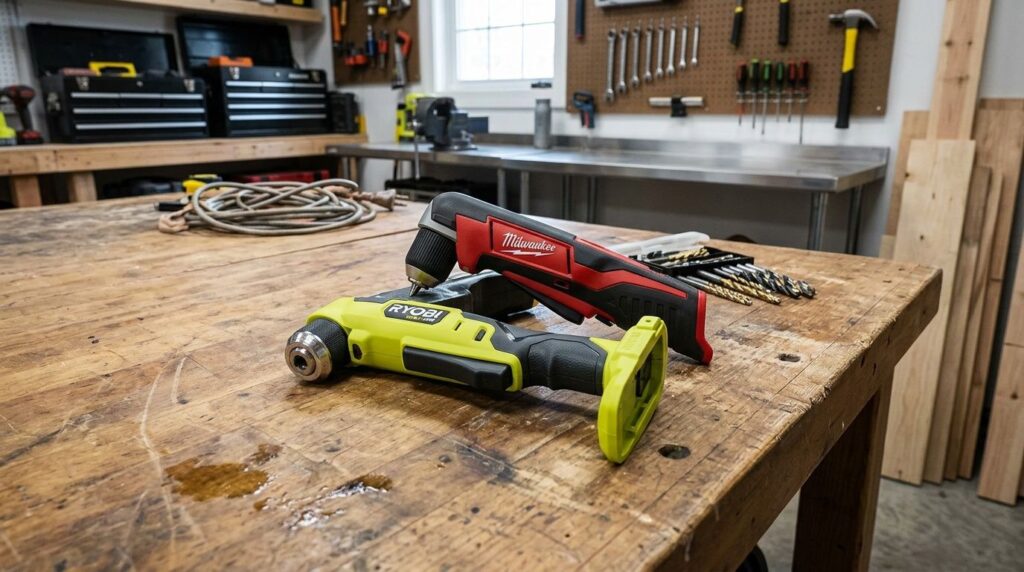
Choosing between 18V and 12V right-angle drills requires balancing power, size, runtime, and maneuverability. This head-to-head comparison examines real-world tradeoffs to help determine which platform fits your work demands.

Head-to-head
A clean A/B view of what matters on real jobs: clearance in tight bays, usable power for hole-making and fasteners, runtime in awkward positions, ergonomics over long days, and the long-term cost of buying into a battery ecosystem.
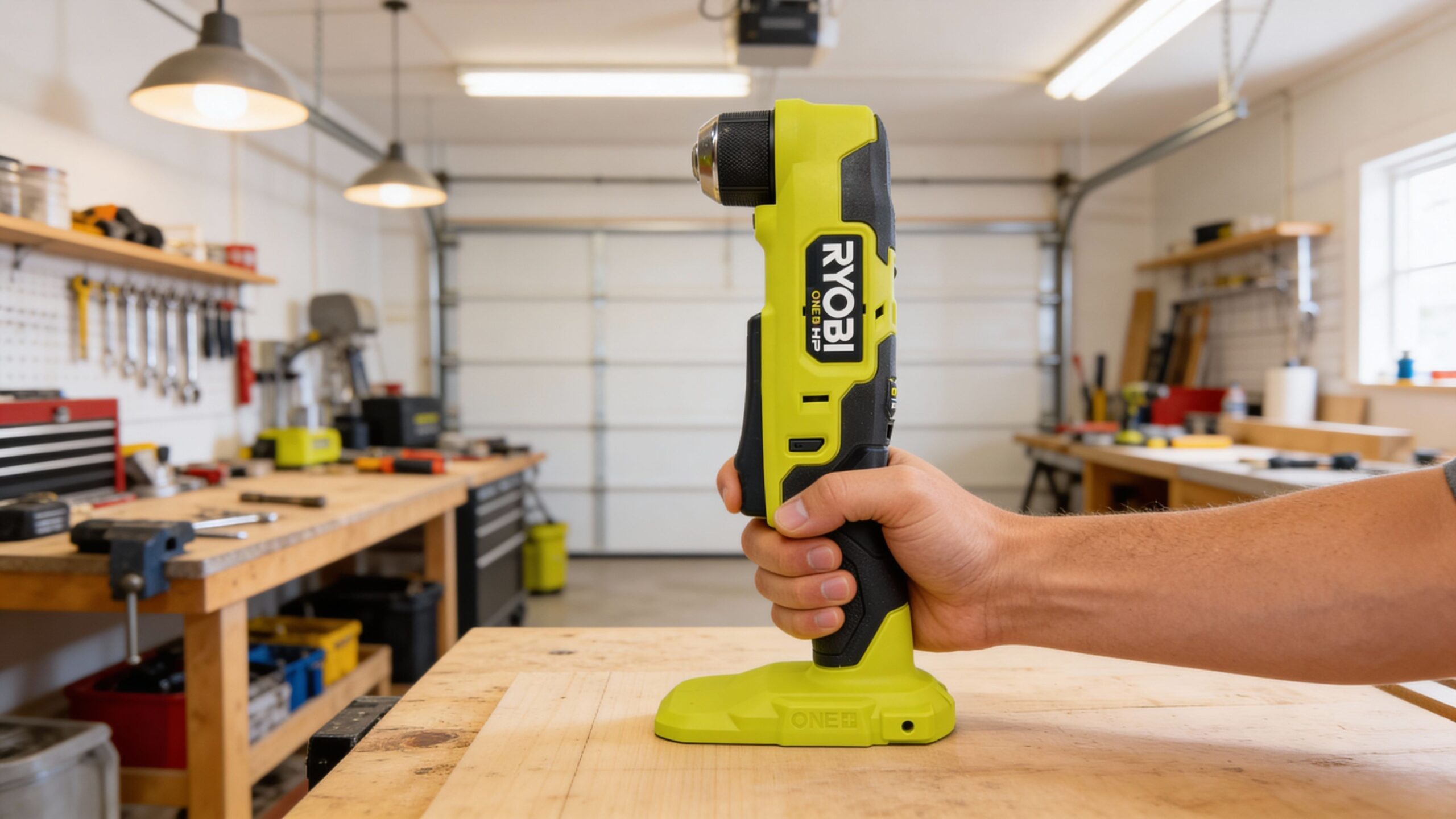
A higher-voltage option that prioritizes usable muscle and longer working time when you’re drilling holes or driving fasteners in tight framing, cabinets, and mechanical spaces where leverage is limited.
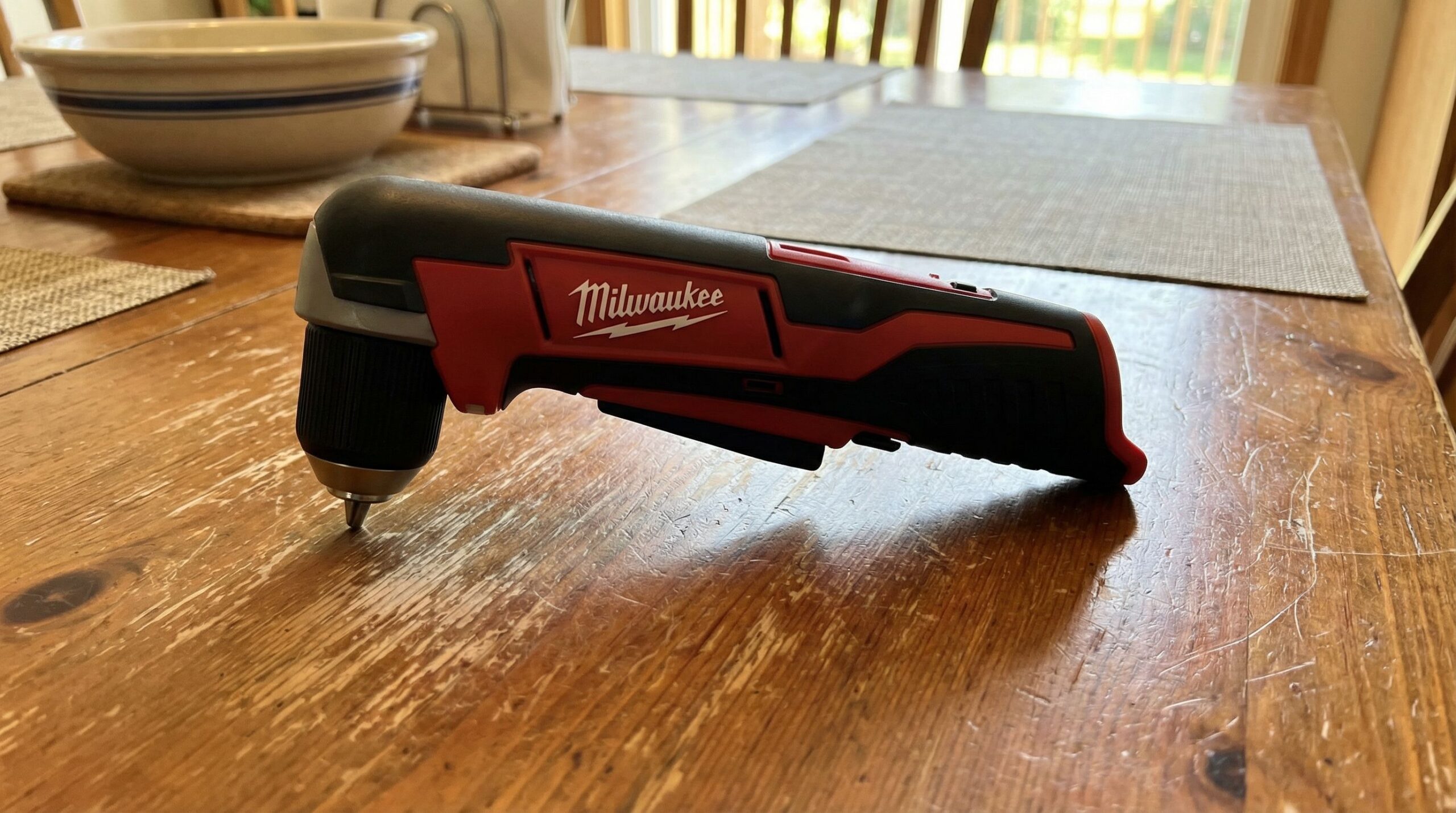
A compact, control-first right-angle drill that shines when clearance and precision matter—great for cabinet installs, electrical work, and service calls where you want less bulk and easier one-handed handling.
Deep dive
With right-angle drills, the decision isn’t about headline voltage—it’s about what happens when you’re wedged between studs, reaching behind plumbing, or starting a hole one-handed. This deep dive focuses on practical outcomes: how each tool stays composed when the bit loads up, how controllable it feels at the start of a hole or screw, how fatigue builds over a long day, and what buying into a 12V vs 18V system means for how you work over time.
Power that shows up when space steals leverage: In cramped bays, the tool can’t be braced like a full-size drill, so load-handling matters more than “max power” claims. The 18V Ryobi tends to feel steadier when the bit starts to bite harder—useful for larger holes, thicker stock, or situations where you’re pushing through resistance without much room to reposition. The 12V Milwaukee typically rewards a lighter touch: it’s more comfortable for repeated pilots, hardware, and moderate hole-making where control and access keep the workflow moving.
Start-and-stop control beats raw speed: Right-angle drilling is often about clean starts at awkward angles. A compact 12V tool can feel easier to “place” precisely, especially when you’re starting a pilot in a tight corner or aligning fasteners where wobble costs time. An 18V right-angle drill can feel more confident once it’s engaged, particularly when the cut gets demanding, but it may be less forgiving in the smallest spaces where a slight shift changes the hole path.
Fatigue comes from bulk, not just weight: In this category, head size and overall bulk influence fatigue as much as the number on the scale. The Milwaukee M12’s smaller format generally makes it easier to hold in place, rotate into position, and work overhead or inside cabinets with fewer “reset” moves. The Ryobi 18V can pay you back with fewer stalls and steadier progress in tougher work, but its larger platform can be more tiring when the job involves constant repositioning or extended holds in awkward postures.
Confidence and reliability are felt in the workflow: The best right-angle drill is the one that doesn’t interrupt momentum—predictable engagement, fewer surprises as resistance changes, and a consistent feel when switching between small tasks. The 12V Milwaukee tends to feel purpose-built for service and install work where predictability and maneuverability reduce rework. The 18V Ryobi can inspire more confidence when the work shifts toward heavier drilling that would push a compact tool closer to its limits.
Ownership matters because right-angle drills are “system” tools: These drills are rarely the only cordless tool in the kit. If most of your work revolves around compact drivers, ratchets, and service-friendly tools, a 12V platform can make everyday carry lighter and simpler. If your jobs regularly cross into heavier drilling, larger batteries, and longer runtime expectations, an 18V platform can be the more flexible backbone—especially when the right-angle drill is just one part of a broader cordless setup.
Where each one fits best: The Milwaukee M12 right-angle drill generally favors tight-clearance work, frequent starts, and tasks where precision and reduced fatigue keep the day efficient. The Ryobi 18V ONE+ HP right-angle drill tends to favor tougher hole-making, longer sessions, and situations where extra headroom helps you finish the task without changing tools or adjusting your approach mid-cut.
Methodology
Our evaluation focused on the real situations where right-angle drills earn their keep: tight clearances, awkward body positions, and start-and-stop work where control matters as much as usable power. Instead of leaning on spec-sheet advantages, we assess how each platform behaves in practical tasks designed to reveal trade-offs in access, consistency, ergonomics, fatigue, and long-term ownership value.
Tasks: tight-space pilot holes in studs and cabinet panels, moderate hole drilling where the bit loads up, repeated fastening cycles with frequent repositioning, and overhead/one-handed positioning to assess access, stability, and fatigue over time.
What we scored: usable power under real load, predictability during clean starts, control when resistance changes, comfort and balance in awkward holds, build confidence over extended use, and the practical upside of each battery ecosystem for growing a kit.
How results are interpreted: outcomes are assessed using a context-aware approach, recognizing that the “better” choice depends on whether the work is mostly tight-clearance installs and service tasks or heavier drilling where extra headroom and runtime reduce workflow interruptions.
What we ignored: advertised max specs, isolated lab-style claims, and feature callouts that don’t consistently translate into repeatable performance in confined spaces, especially when real work involves constant repositioning and imperfect leverage.
FAQ
Verdict
In this matchup, the better choice depends less on brand and more on how and where the drill will be used. Access, control, and fatigue matter just as much as raw headroom, especially in tight-clearance work where right-angle drills typically operate.
Top Pick for Tight Spaces
Milwaukee M12 Right-Angle DrillThe stronger fit for frequent cabinet installs, service work, and confined drilling where compact size and reduced fatigue improve workflow.
Tip: If you already own batteries in one system, that long-term compatibility can outweigh smaller differences in size or power.
Jump to the sections that help you choose between an 18V and 12V right-angle drill—clearance, control, workload fit, and what ownership looks like over time.
We prioritize reputable sellers, easy returns, and reliable availability.
Tip: Prioritize access and comfort first—if the drill fits the space and feels stable, you’ll work faster than chasing extra power you can’t use effectively in tight quarters.
Choose a retailer
Prices checked regularly. We may earn a commission at no cost to you.