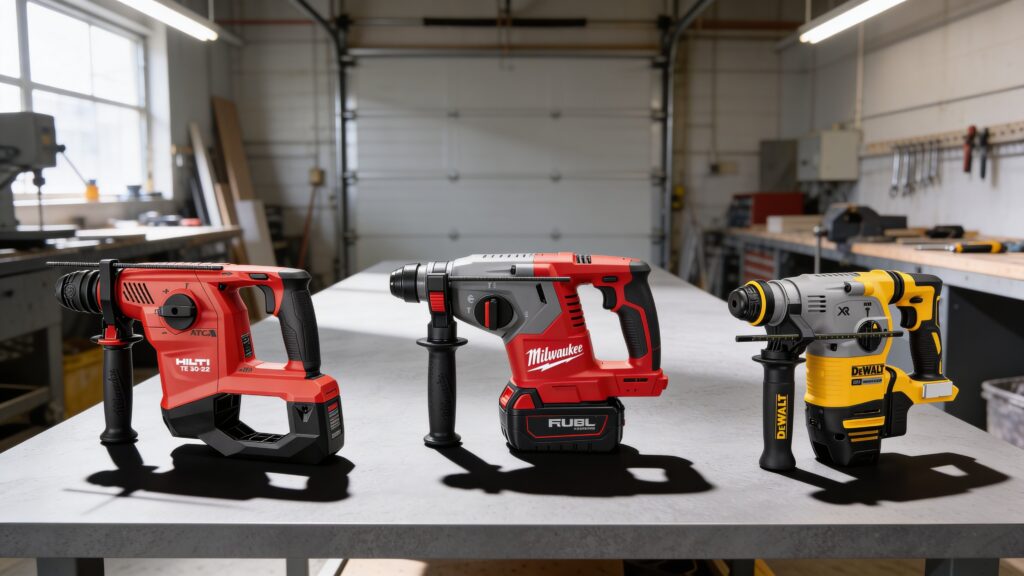
Best Rotary Hammer Drills for Professional Contractors

This guide compares the best rotary hammer drills for professional contractors, evaluating power, durability, ergonomics, and overall value to identify dependable options for demanding, high-performance jobsite applications.

By: Review Streets Research Lab
Updated: March 27, 2026
Approx. 10–12 min read
Best Rotary Hammer Drills for Professional Contractors (Top 10 Picks)

Top 10 Rotary Hammer Drills for Professional Contractors of 2026

Our editorial picks ranked by concrete drilling speed, control, durability, vibration management, and long-term platform value. Tap any image to expand, or jump to full reviews for deeper specs.
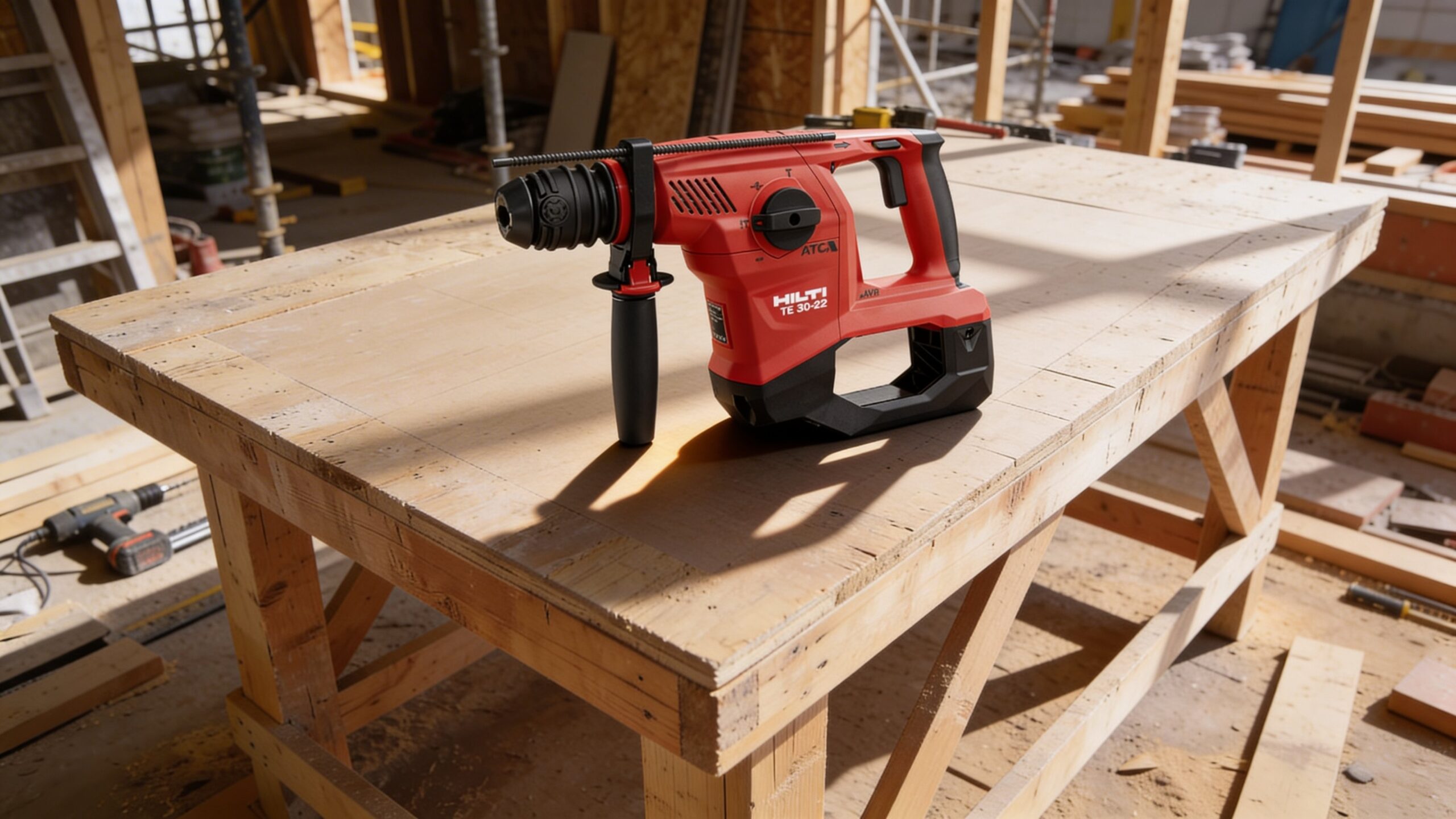
Hilti TE 30-22
#1 Best for Professional Contractors Score: 9.8 / 10

Hilti TE 30-22

Built for demanding concrete work, this cordless SDS Plus rotary hammer delivers the kind of power, safety, and control professionals expect on anchor drilling and light chiseling jobs. It feels purpose-built for daily commercial use, with excellent vibration management and a premium support ecosystem that stands out on larger crews.

Impact: 2.8 ft-lbs Control: ATC + AVR Battery: Nuron 22V Best For: Heavy Daily Use

Pros

  • Excellent drilling power for repeated anchor and structural work
  • Advanced kickback and vibration reduction improve daily usability
  • Strong contractor-focused service and fleet ecosystem

Cons

  • Premium pricing is hard to justify for occasional users
  • Nuron batteries and accessories add to total investment
  • Overkill for light-duty homeowner projects

Best For

  • Commercial contractors drilling concrete all week
  • Structural anchoring and overhead installation work
  • Crews that value service, uptime, and safety systems
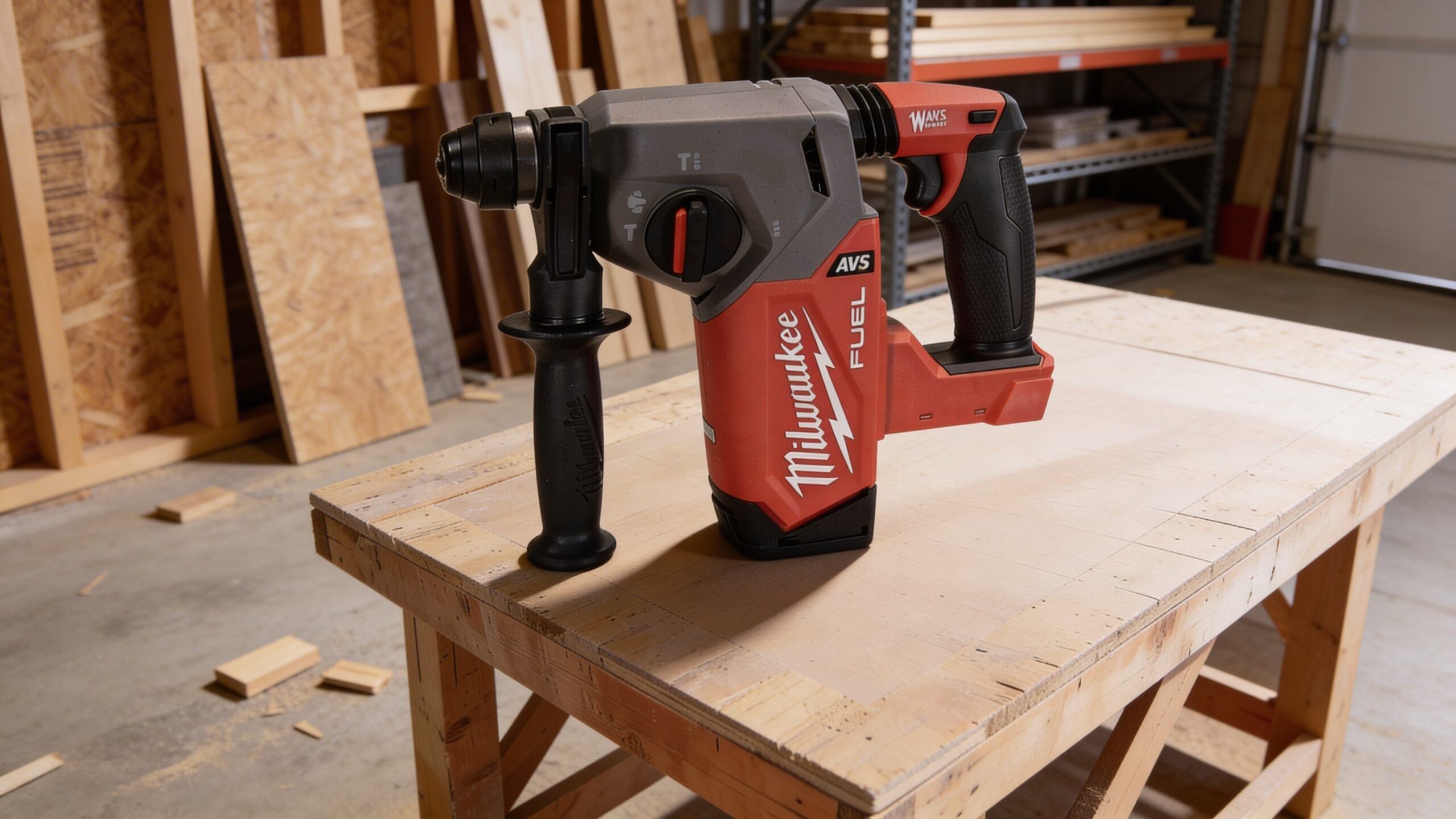
Milwaukee M18 FUEL 2912-20
#2 Best Overall Score: 9.7 / 10

Milwaukee M18 FUEL 2912-20

This is the most balanced all-around pick for many contractors because it combines fast drilling speed, strong ergonomics, and a very deep battery platform. It handles demanding concrete work confidently while still feeling manageable for daily service, retrofit, and installation jobs.

Impact: 2.0 ft-lbs Speed: 1330 RPM Battery: M18 Best For: Daily Anchoring

Pros

  • Strong speed-to-size balance for routine contractor use
  • Excellent M18 battery and tool ecosystem
  • Comfortable vibration and handling characteristics

Cons

  • Not as hard-hitting as the largest premium models
  • Best runtime comes with higher-output batteries
  • Tool-only price remains firmly in pro territory

Best For

  • Electrical, mechanical, and framing contractors
  • Pros already invested in M18 batteries
  • Users who want one dependable all-around rotary hammer
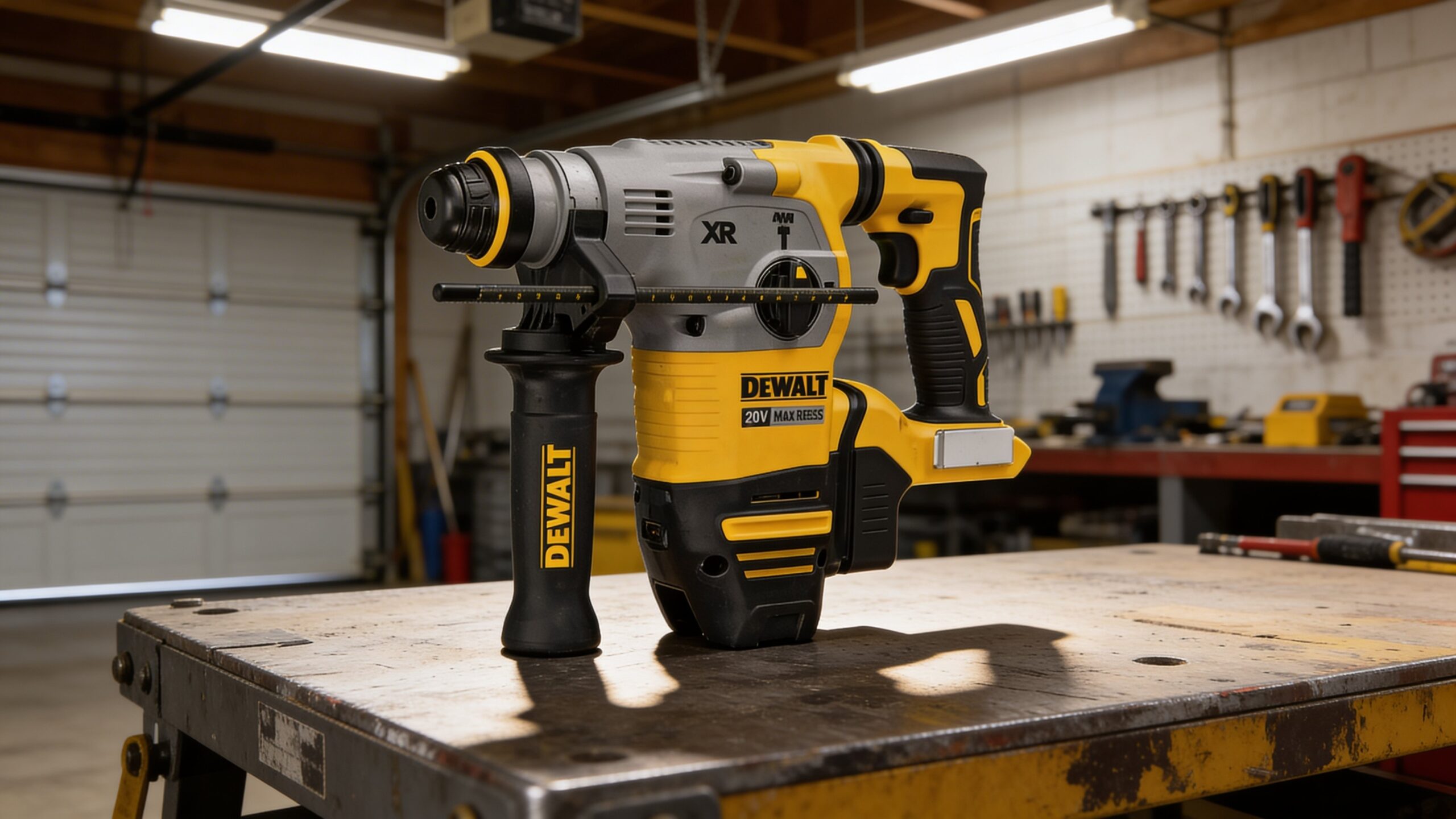
DeWalt DCH293
#3 Best for Anchoring Score: 9.5 / 10

DeWalt DCH293

DeWalt's 20V XR 1-1/8 inch SDS Plus rotary hammer is a serious contractor tool with strong impact energy and a proven jobsite feel. It is especially appealing for crews already on the 20V platform who want a powerful cordless model for anchors, hangers, and structural attachments.

Impact: 3.5 J Safety: E-Clutch Battery: 20V MAX XR Best For: Structural Work

Pros

  • High impact energy for fast concrete drilling
  • Strong safety features for bind-up situations
  • Excellent fit for established DeWalt fleets

Cons

  • Larger and heavier than compact service models
  • Premium kits can become expensive quickly
  • More tool than many remodelers need for light anchor work

Best For

  • Commercial anchor drilling and seismic installs
  • Contractors already committed to DeWalt 20V MAX
  • Crews needing a higher-output cordless hammer
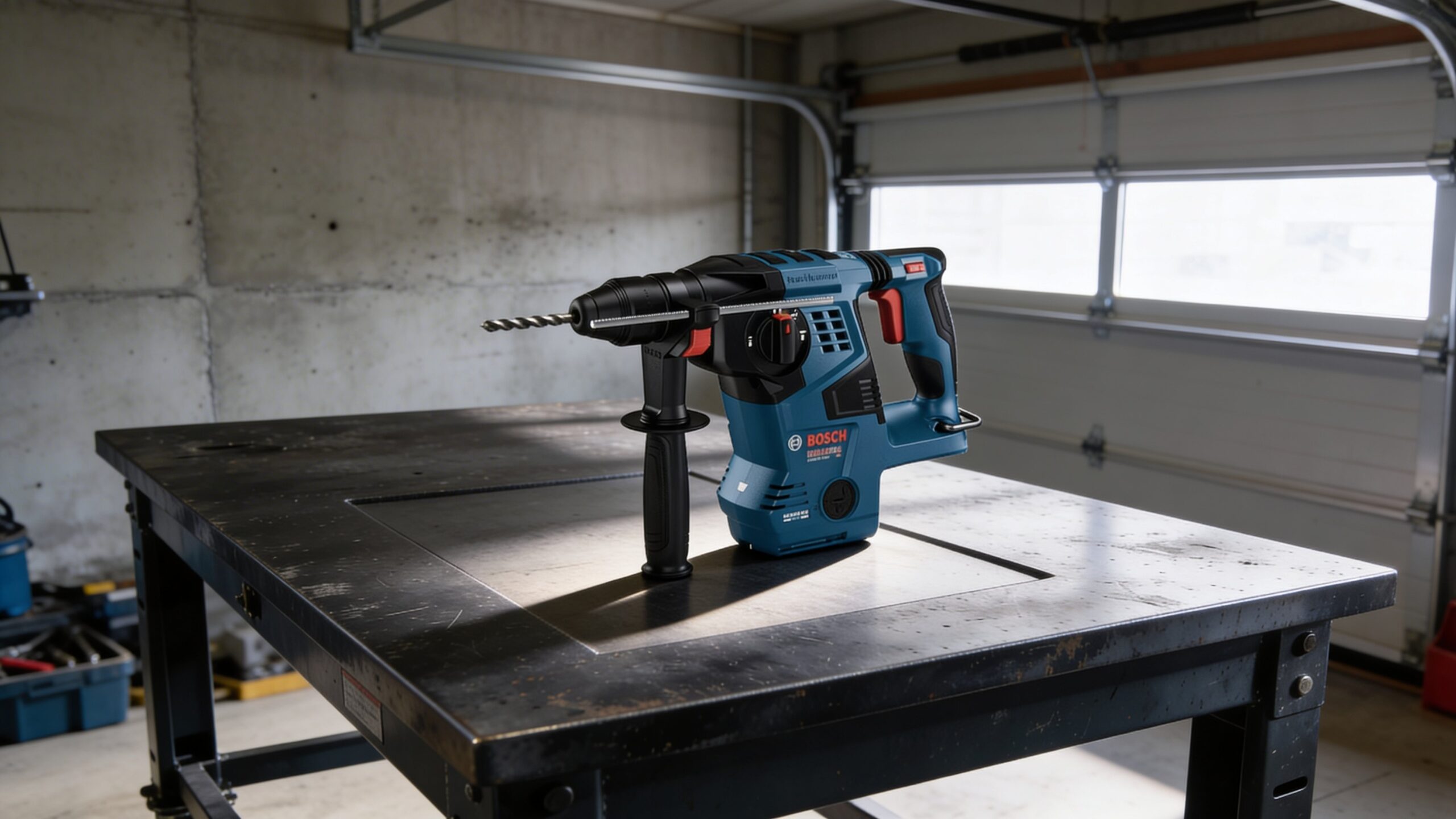
Bosch GBH18V-28C
#4 Best Heavy Duty Value Score: 9.3 / 10

Bosch GBH18V-28C

Bosch brings strong impact-to-weight performance here, making this Bulldog a serious contender for contractors who want higher output without jumping to the most expensive premium tier. It feels refined, durable, and well suited to repetitive concrete drilling on professional sites.

Impact: 2.6 ft-lbs Weight: 7.3 lbs Battery: 18V Best For: Concrete Drilling

Pros

  • Excellent impact-to-weight ratio for a pro cordless tool
  • Strong Bosch Bulldog reputation in concrete applications
  • Well-balanced design for frequent use

Cons

  • Battery platform is not as broad as Milwaukee or DeWalt
  • Not the lightest option for overhead service work
  • Availability can vary depending on local dealer mix

Best For

  • General contractors drilling concrete regularly
  • Users who prefer Bosch Bulldog handling
  • Pros wanting strong performance without Hilti pricing
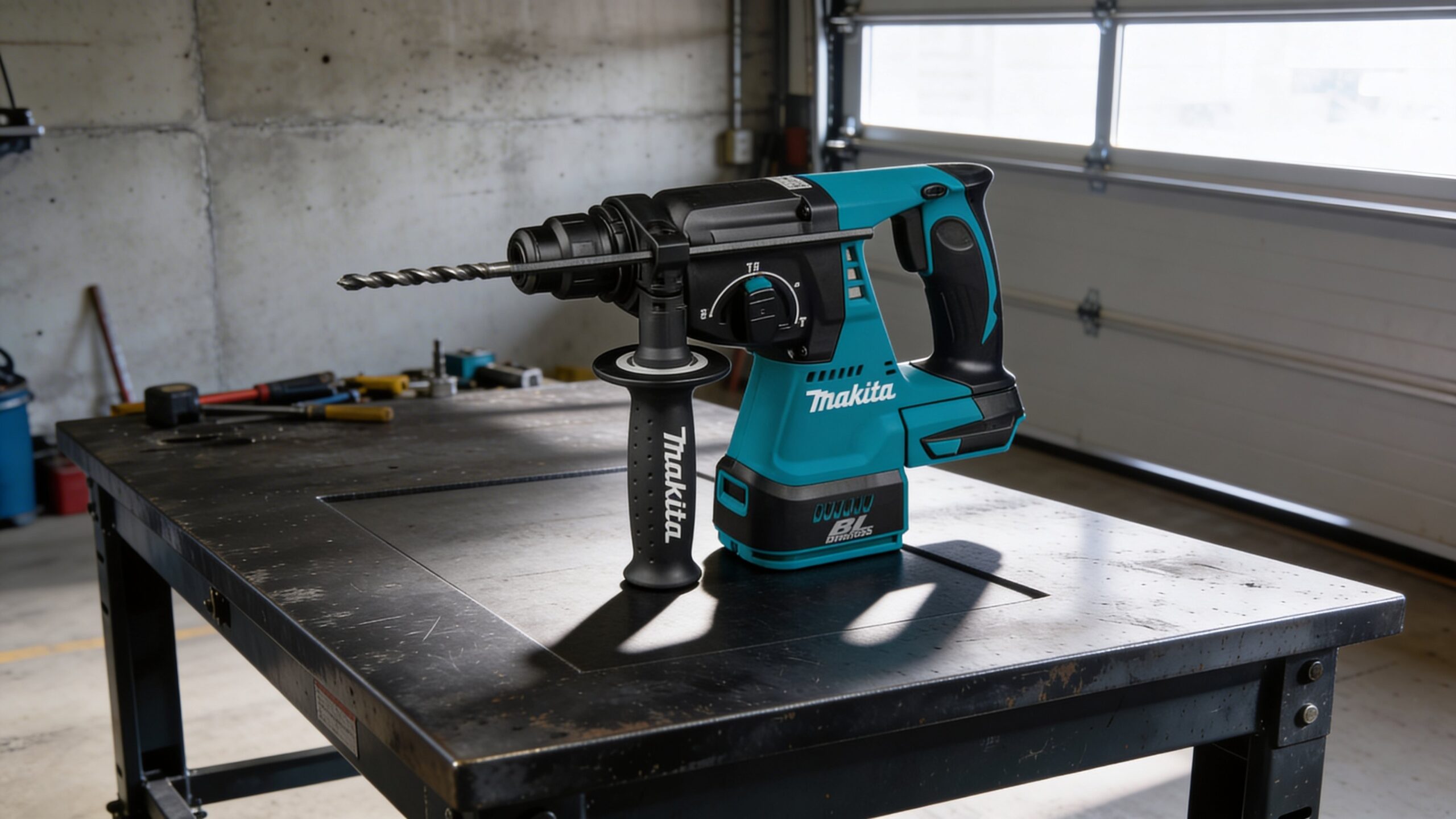
Makita XRH01
#5 Best Ergonomics Score: 9.1 / 10

Makita XRH01

Makita's 18V LXT rotary hammer remains a very smart pro-grade pick for contractors who care about control, comfort, and reliable drilling capacity. It does not chase headline specs, but it delivers the kind of predictable, refined performance that holds up well on real job sites.

Capacity: 1 inch Control: Smooth Battery: 18V LXT Best For: All Day Use

Pros

  • Excellent balance and user-friendly ergonomics
  • Reliable drilling performance in common concrete ranges
  • Strong Makita platform for trade users

Cons

  • Does not hit as hard as the most aggressive premium models
  • Dust extractor setups can add cost fast
  • Value depends on whether you already own LXT batteries

Best For

  • Contractors who prioritize comfort and consistency
  • Service and remodel pros using rotary hammers frequently
  • Makita users building around the LXT system
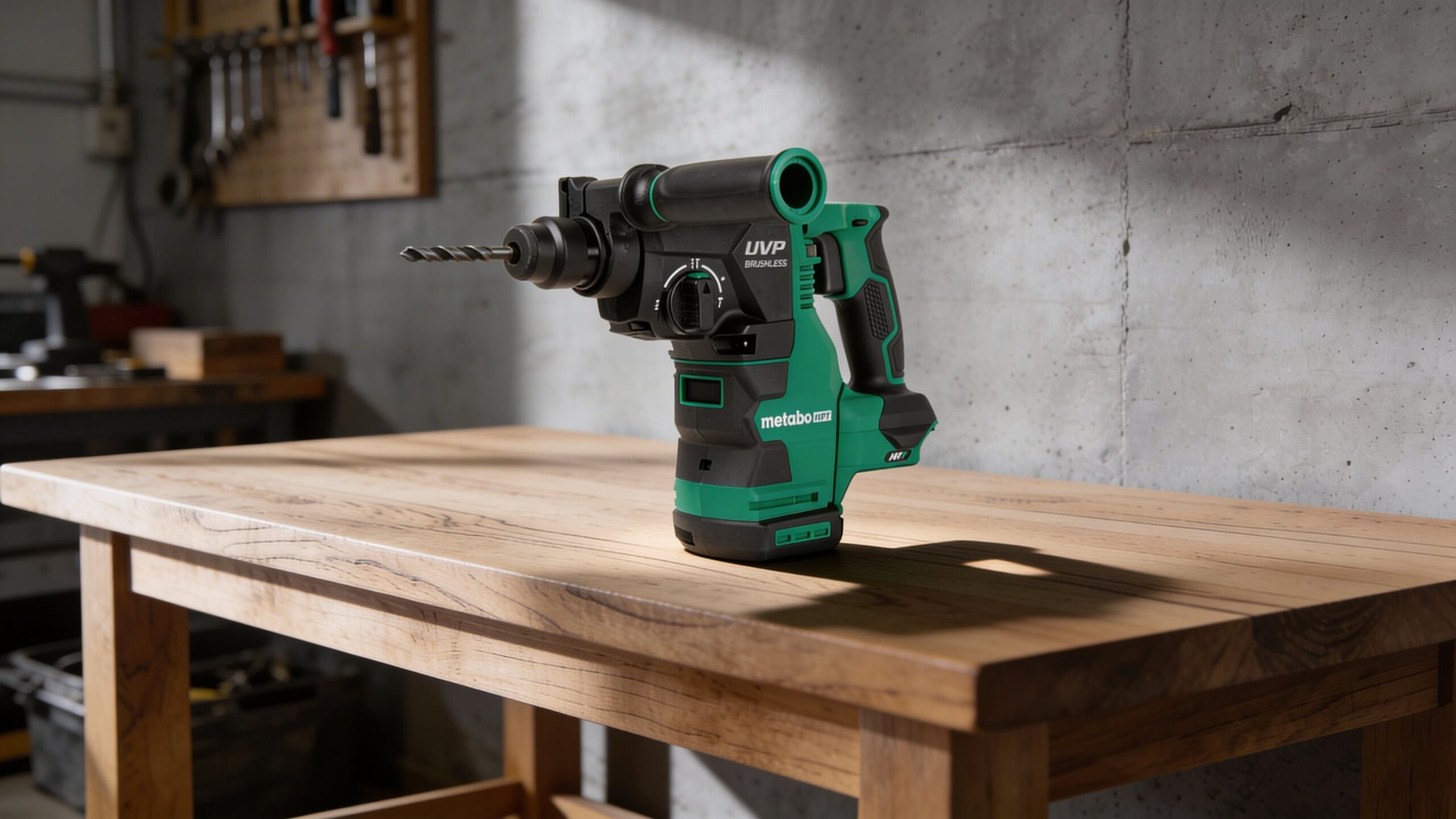
Metabo HPT DH3628DA
#6 Best Runtime Flex Score: 8.9 / 10

Metabo HPT DH3628DA

This MultiVolt rotary hammer offers a compelling blend of power, jobsite flexibility, and reduced vibration for contractors who move between service calls and heavier concrete work. The platform's cordless-or-AC flexibility gives it a unique advantage for crews that want options.

Impact: 2.3 ft-lbs Modes: 3 Battery: MultiVolt 36V Best For: Mixed Duty

Pros

  • Very capable output for demanding concrete drilling
  • Useful MultiVolt flexibility for different work setups
  • Low-vibration design improves extended-use comfort

Cons

  • Not as widely supported on every jobsite as big two brands
  • Bulkier than smaller service-oriented tools
  • Accessory and local dealer availability may vary

Best For

  • Contractors who want strong cordless output with flexibility
  • Mixed drilling and light chipping applications
  • Users already invested in Metabo HPT or MultiVolt
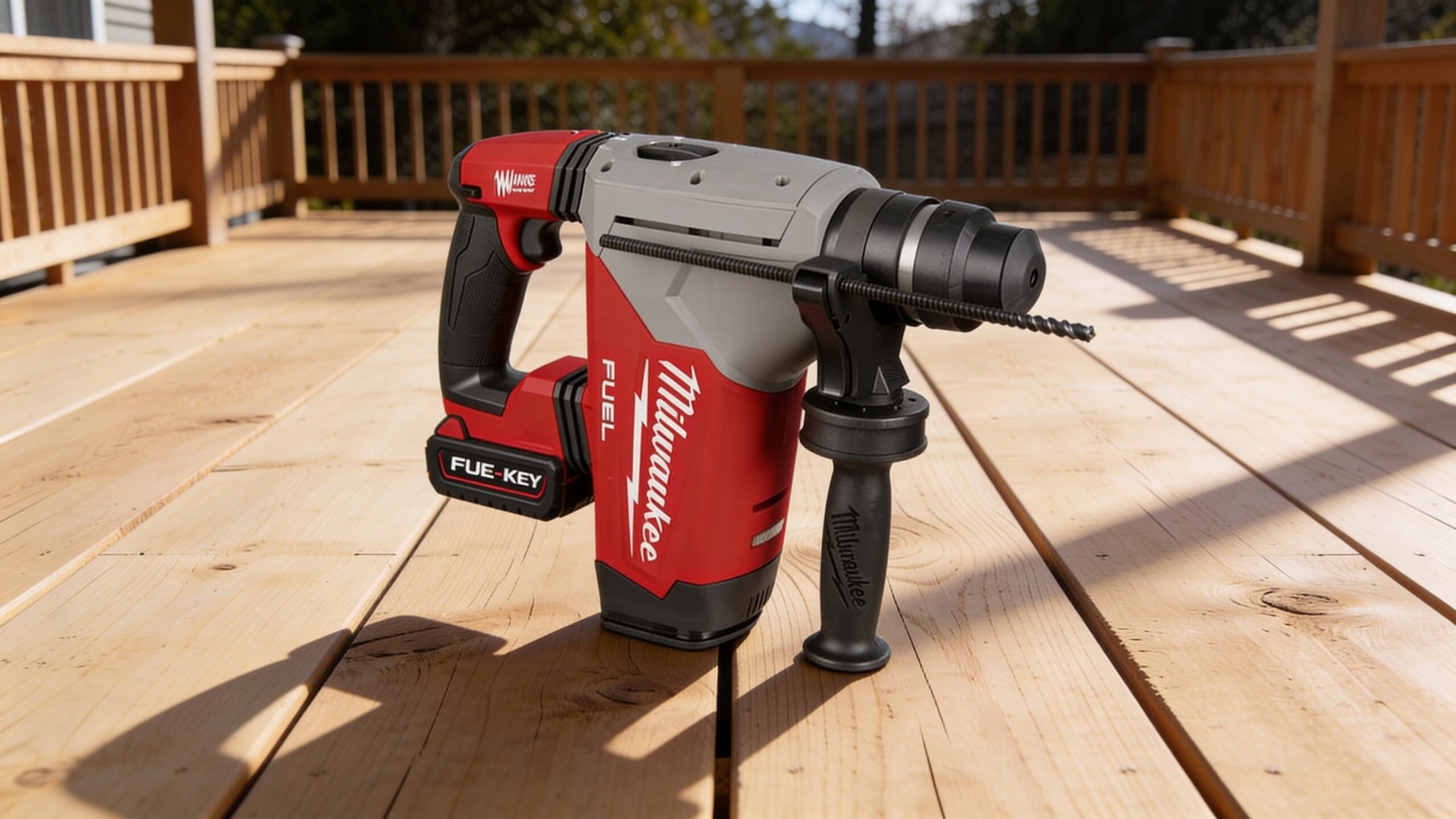
Milwaukee M18 FUEL 2908-20
#7 Best Compact Pro Score: 8.8 / 10

Milwaukee M18 FUEL 2908-20

Compact without feeling underpowered, this 5/8 inch SDS Plus model is ideal for contractors who work overhead, in finished spaces, or on frequent service calls. It is one of the best small rotary hammers for pros who value maneuverability as much as raw output.

Length: 10.4 in Weight: 3.8 lbs Battery: M18 Best For: Overhead Work

Pros

  • Excellent compact size for tight and overhead work
  • Strong control and safety features for its class
  • Works seamlessly within the M18 lineup

Cons

  • Not the right choice for heavier repetitive drilling ranges
  • Smaller format limits outright impact compared with larger models
  • Premium price for a compact specialist tool

Best For

  • Overhead anchors and punch-list service work
  • Electricians and installers in tighter spaces
  • Pros who want a second lighter rotary hammer
DeWalt DCH172
#8 Best for Tight Spaces Score: 8.7 / 10

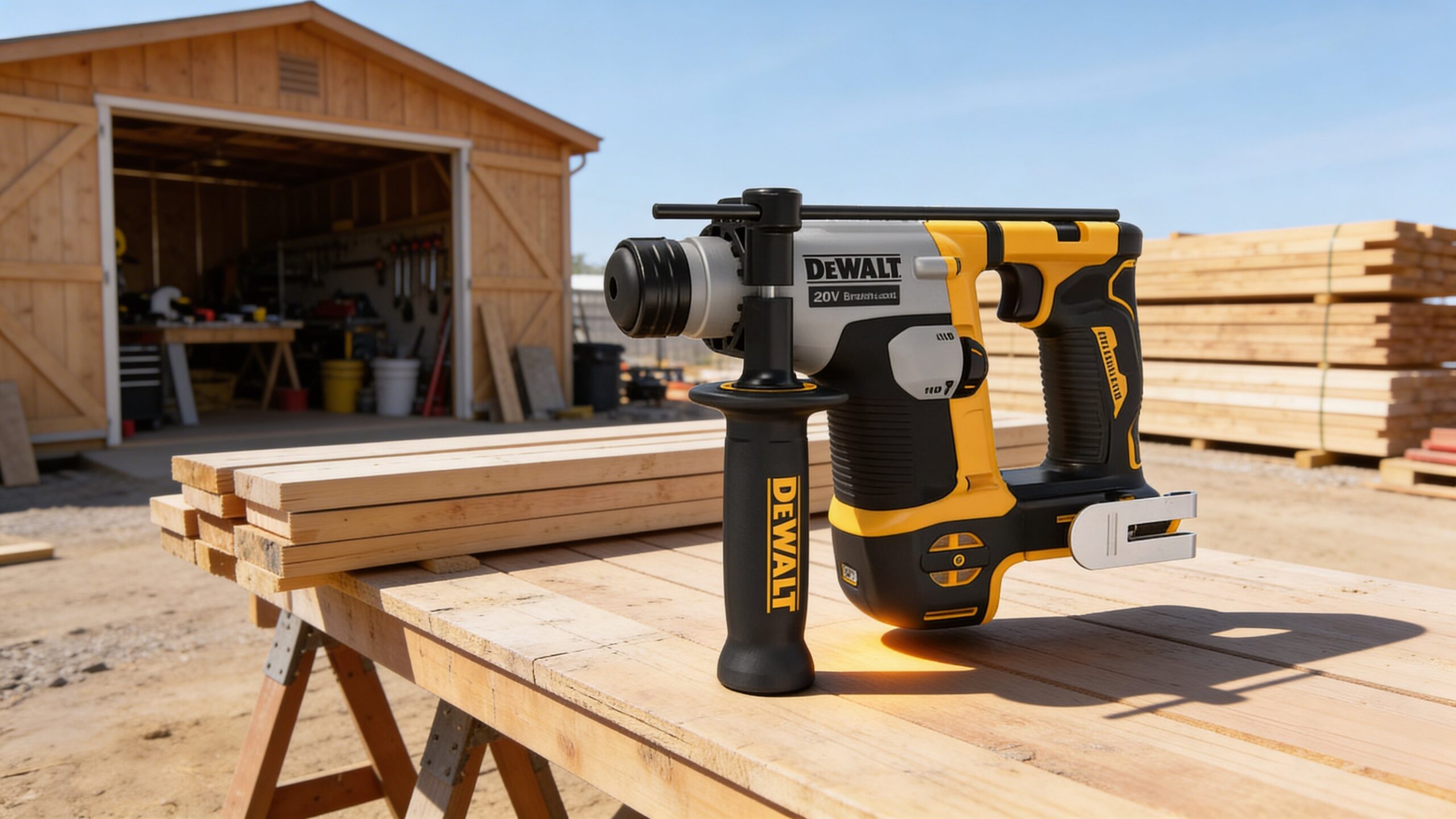
DeWalt DCH172

This ATOMIC 5/8 inch SDS Plus rotary hammer is designed for tradespeople who need a small, quick, easy-to-carry tool for lighter anchor drilling. It is especially useful on ladders, inside occupied spaces, and during punch-list work where compact handling matters more than maximum impact.

Impact: 1.4 J Vibration: SHOCKS AVC Battery: 20V MAX Best For: Service Calls

Pros

  • Very compact and easy to maneuver on small jobs
  • Good fit for installers and technicians on the move
  • Useful vibration control for a small tool

Cons

  • Limited output compared with full-size contractor models
  • Not built for high-volume heavy concrete drilling
  • Value depends on already owning DeWalt batteries

Best For

  • Light anchoring in finished spaces
  • Technicians working from ladders or lifts
  • Pros who want a compact second rotary hammer
Ryobi P223
#9 Best Value Score: 8.5 / 10

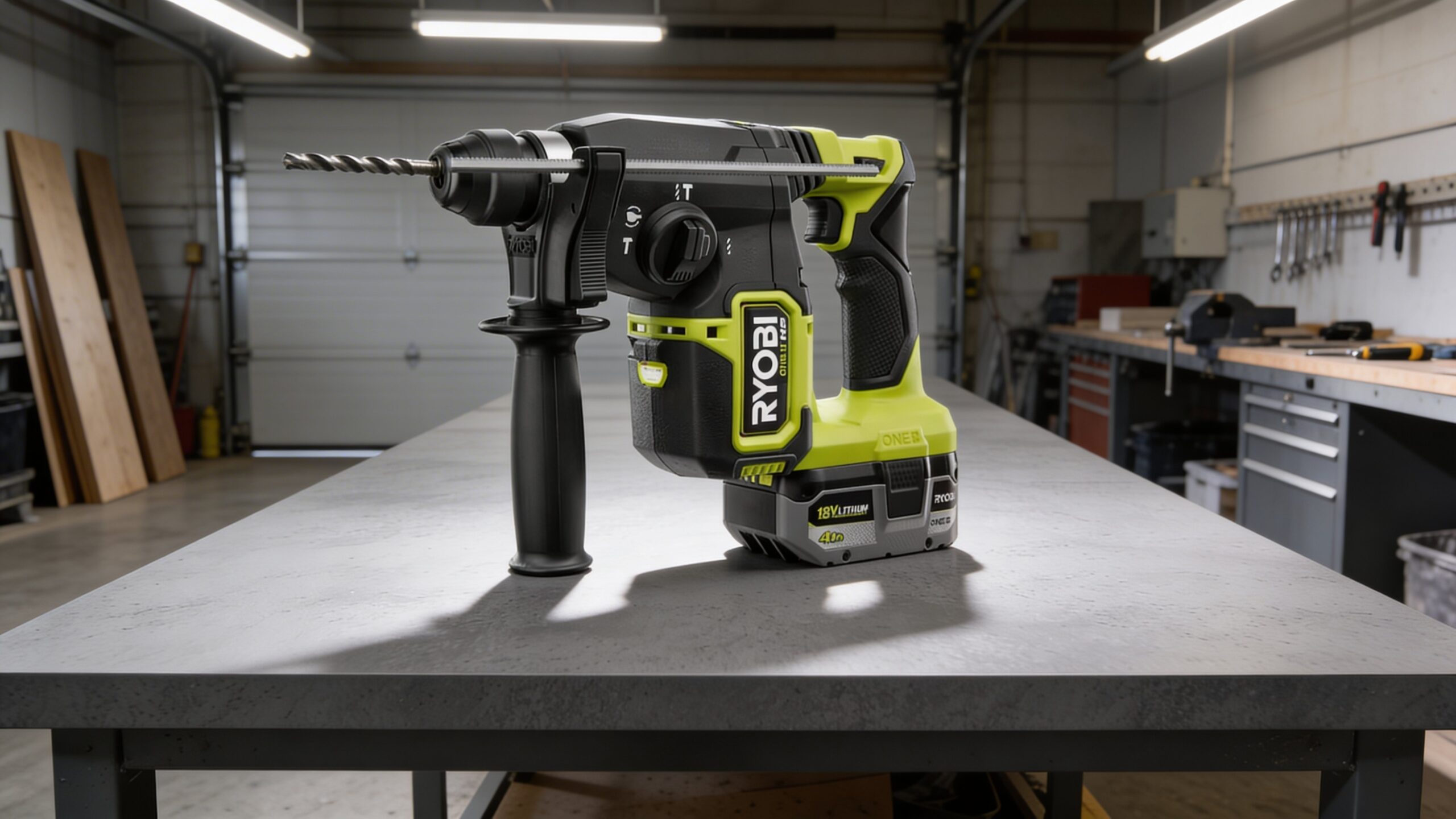
Ryobi P223

Ryobi's 18V ONE+ HP rotary hammer is one of the best lower-cost entries for users who still want real SDS Plus functionality. It cannot match top-tier commercial tools in long-run durability, but it offers impressive value for lighter contractor duty, punch work, and serious DIY concrete drilling.

Impact: 2.1 J Value: Strong Battery: 18V ONE+ Best For: Light Pro Use

Pros

  • Excellent value for an SDS Plus cordless rotary hammer
  • Good feature set for the price tier
  • Accessible battery platform for mixed-use buyers

Cons

  • Below true heavy-duty contractor class in durability
  • Vibration and refinement trail premium pro brands
  • Best suited to lighter workloads rather than daily commercial drilling

Best For

  • Value-focused users who still need SDS Plus capability
  • Maintenance work and lighter anchor drilling
  • DIYers doing frequent concrete projects
Bosch GBH18V-22
#10 Best Light Duty Pro Score: 8.4 / 10

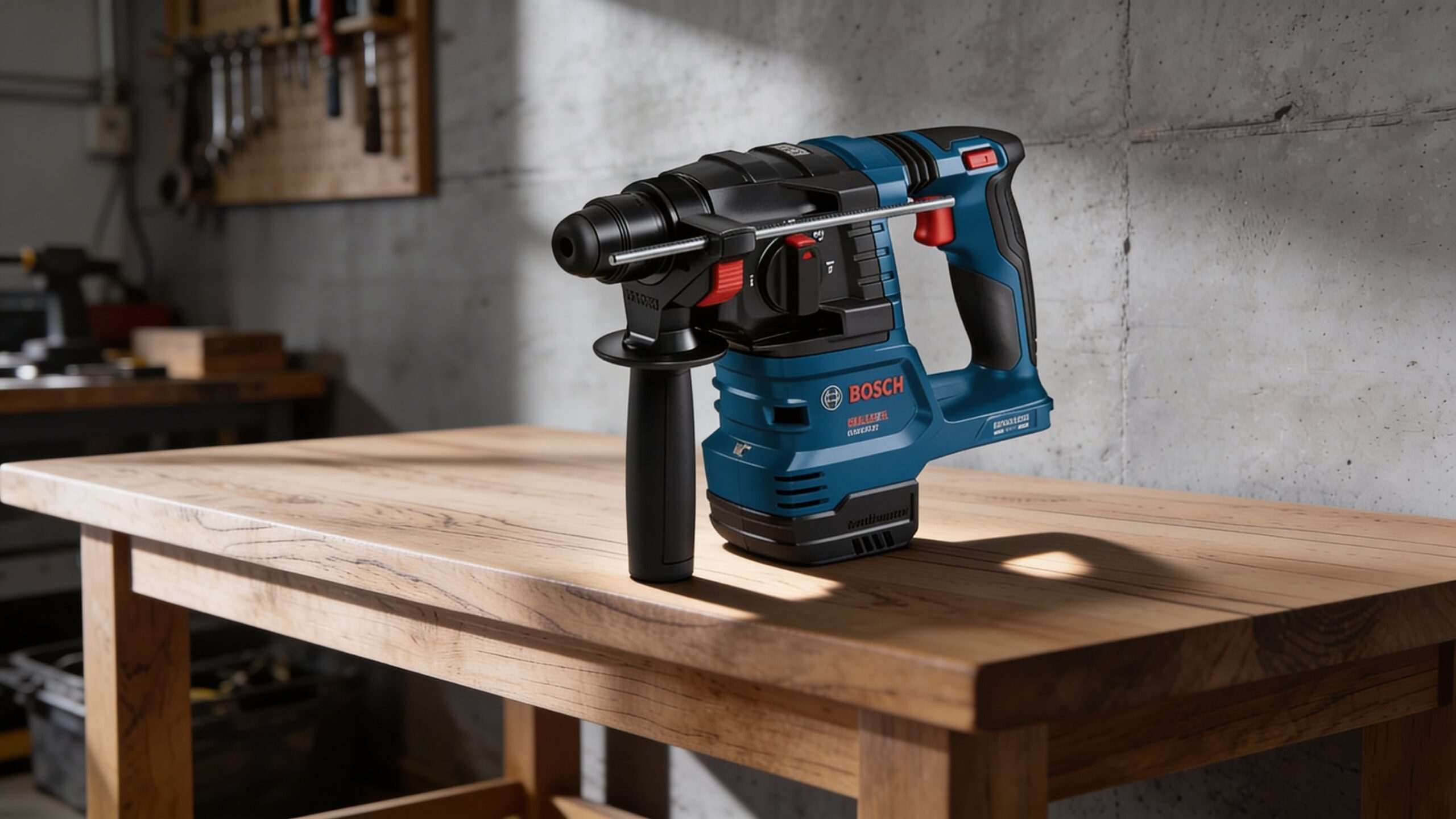
Bosch GBH18V-22

This smaller Bosch Bulldog is a practical option for tradespeople who want a lighter 18V rotary hammer focused on common anchoring and overhead tasks. It is not the class leader in brute force, but it is easy to manage and well suited to lighter service work.

Impact: 1.4 ft-lbs Format: Compact Battery: 18V Best For: Overhead Anchors

Pros

  • Lightweight and easy to control for service work
  • Good Bosch build quality and familiar Bulldog feel
  • Simple fit for lighter anchor and hanger applications

Cons

  • Limited power for larger repetitive concrete holes
  • Less versatile than full-size professional models
  • Best as a specialty light-duty choice rather than main rotary hammer

Best For

  • Light commercial anchoring and overhead installs
  • Technicians prioritizing reduced weight
  • Users who want a smaller Bosch rotary hammer

Methodology

How We Tested

Our rankings for rotary hammer drills are built around real-world contractor priorities, including concrete drilling performance, control, durability, vibration management, battery platform strength, and overall value for professional use.

Our Testing Framework

We evaluate rotary hammer drills through a category-specific framework designed around how contractors actually use these tools on concrete, masonry, anchoring, overhead work, and light chipping tasks.

  • Concrete drilling speed, impact efficiency, and hole-size capability
  • Control, ergonomics, balance, and vibration during repeated use
  • Build quality, durability, and jobsite readiness over time
  • Battery platform depth, dust management options, and accessory support
  • Overall value based on performance, features, and intended workload
Data Sources We Use

Our analysis combines multiple independent inputs to reduce single-source bias and reflect real ownership experience in this category:

  • Professional tool reviews and contractor-focused evaluations
  • Verified buyer feedback, owner reports, and long-term usage patterns
  • Manufacturer specifications, safety features, and platform documentation
  • Known reliability trends, service history, and ecosystem reputation
How We Score & Rank Products

Each rotary hammer drill is scored on a 10-point scale using a weighted comparative model. Rankings reflect relative strength within the professional cordless rotary hammer category, not marketing claims or brand popularity alone.

  • Performance and drilling results in concrete and masonry
  • Build quality, reliability, and long-term jobsite confidence
  • Ease of use, ergonomics, safety systems, and vibration control
  • Features, design execution, and platform compatibility
  • Price-to-performance value and overall contractor usefulness
What We Don’t Do

To keep our recommendations useful and editorially independent:

  • We don’t sell rankings, paid placements, or position upgrades
  • We don’t rank rotary hammers based on affiliate payouts or retailer preference
  • We don’t overreward specs that matter less in real contractor use
How Often Rankings Are Updated

Rankings are reviewed regularly and updated when important new models launch, major price shifts occur, platform changes affect value, or meaningful reliability trends become clear.

Our goal is to keep this rotary hammer drill list current, practical, and trustworthy for professionals comparing tools for real jobsite work.

Side-by-Side Comparisons

Quickly narrow your shortlist. Use this first, then jump to full reviews for your finalists.

# Model Best For Platform Weight Power Feel Why It Won
1 Hilti TE 30-22 Best for Professional Contractors Heavy daily commercial use 22V cordless SDS Plus Heavy Very strong Premium control + contractor support
2 Milwaukee M18 FUEL 2912-20 Best Overall Daily anchoring work 18V cordless SDS Plus Medium Very strong Balanced power + platform depth
3 DeWalt DCH293 Best for Anchoring Structural anchoring 20V cordless SDS Plus Heavy Very strong High impact for anchor drilling
4 Bosch GBH18V-28C Best Heavy Duty Value Concrete drilling 18V cordless SDS Plus Medium-Heavy Strong Impact-to-weight value
5 Makita XRH01 Best Ergonomics All day use 18V cordless SDS Plus Medium Strong Comfort and smooth control
6 Metabo HPT DH3628DA Best Runtime Flex Mixed duty work 36V cordless SDS Plus Heavy Strong Flexible runtime and output
7 Milwaukee M18 FUEL 2908-20 Best Compact Pro Overhead work 18V cordless SDS Plus Light Moderate-Strong Compact pro control
8 DeWalt DCH172 Best for Tight Spaces Service calls 20V cordless SDS Plus Light Moderate Small size for lighter anchoring
9 Ryobi P223 Best Value Light pro use 18V cordless SDS Plus Medium Moderate Lower cost SDS Plus value
10 Bosch GBH18V-22 Best Light Duty Pro Overhead anchors 18V cordless SDS Plus Light Moderate Lighter Bulldog for service work

#1 — Hilti TE 30-22

Best for Professional Contractors
Best For
Heavy daily commercial use
Platform
22V cordless SDS Plus
Weight
Heavy
Power Feel
Very strong
Why it wonPremium control + contractor support

#2 — Milwaukee M18 FUEL 2912-20

Best Overall
Best For
Daily anchoring work
Platform
18V cordless SDS Plus
Weight
Medium
Power Feel
Very strong
Why it wonBalanced power + platform depth

#3 — DeWalt DCH293

Best for Anchoring
Best For
Structural anchoring
Platform
20V cordless SDS Plus
Weight
Heavy
Power Feel
Very strong
Why it wonHigh impact for anchor drilling

#4 — Bosch GBH18V-28C

Best Heavy Duty Value
Best For
Concrete drilling
Platform
18V cordless SDS Plus
Weight
Medium-Heavy
Power Feel
Strong
Why it wonImpact-to-weight value

#5 — Makita XRH01

Best Ergonomics
Best For
All day use
Platform
18V cordless SDS Plus
Weight
Medium
Power Feel
Strong
Why it wonComfort and smooth control

#6 — Metabo HPT DH3628DA

Best Runtime Flex
Best For
Mixed duty work
Platform
36V cordless SDS Plus
Weight
Heavy
Power Feel
Strong
Why it wonFlexible runtime and output

#7 — Milwaukee M18 FUEL 2908-20

Best Compact Pro
Best For
Overhead work
Platform
18V cordless SDS Plus
Weight
Light
Power Feel
Moderate-Strong
Why it wonCompact pro control

#8 — DeWalt DCH172

Best for Tight Spaces
Best For
Service calls
Platform
20V cordless SDS Plus
Weight
Light
Power Feel
Moderate
Why it wonSmall size for lighter anchoring

#9 — Ryobi P223

Best Value
Best For
Light pro use
Platform
18V cordless SDS Plus
Weight
Medium
Power Feel
Moderate
Why it wonLower cost SDS Plus value

#10 — Bosch GBH18V-22

Best Light Duty Pro
Best For
Overhead anchors
Platform
18V cordless SDS Plus
Weight
Light
Power Feel
Moderate
Why it wonLighter Bulldog for service work

FAQ: Rotary Hammer Drills for Professional Contractors

Quick answers to the questions contractors and serious buyers actually ask before choosing a rotary hammer. Expand a topic to get practical guidance, not just specs.

In-Depth Reviews: What These Rotary Hammer Drills Are Really Like to Use

These full reviews expand on the Top 10 cards with a deeper look at real-use behavior. This is the “beyond the spec sheet” part of our Top 10. We focus on real project behavior: drilling speed in concrete, vibration control, overhead fatigue, ergonomics, safety systems, durability, and the small design details that decide whether a rotary hammer feels trustworthy or frustrating once you actually start working.

60-second take Real-use breakdown Who it’s for (and not for)
#1 Best for Professional Contractors Score: 9.8 / 10

Hilti TE 30-22

The most contractor-focused pick in this roundup. It combines hard-hitting concrete performance, strong safety features, and the kind of service-backed ownership experience that makes sense when uptime matters as much as raw drilling speed.

Compare Specs

What It’s Great At

  • Heavy daily use: built for repeated concrete drilling without feeling out of its depth.
  • Safety + comfort: advanced control systems reduce drama during bind-ups and hard drilling.
  • Professional ownership: strong support network matters for serious crews.

Watch-Outs

  • Premium cost: easiest to justify when the tool earns its keep regularly.
  • System buy-in: Nuron batteries and accessories raise the total investment.
  • Not casual-user friendly: more tool than many light-duty buyers need.

Ideal Buyer

  • Commercial contractors: need a serious cordless rotary hammer for constant use.
  • Crews: care about uptime, service, and safety features.
  • Heavy anchor drilling users: want a premium no-nonsense tool.
The Real-World Verdict

The TE 30-22 wins because it feels like a tool designed around professional friction points, not just lab numbers. It drills confidently, stays composed in harder material, and makes more sense the more often you use it. On a real jobsite, that translates into less hesitation, less fatigue from fighting the tool, and more trust when you are working above shoulder height or pushing through demanding anchor schedules.

Concrete Performance & Speed

This is not a “good enough” hammer. It has real authority in concrete and keeps that pro-grade feel when the hole count climbs.

  • Best use: repeated anchor drilling, hanger installs, and structural attachment work.
  • Feel: fast, composed, and less strained than lighter-duty tools.
  • Bonus: enough confidence-inspiring power that you rarely feel under-equipped.
Safety Systems & Daily Comfort

Better safety and vibration management matter more on rotary hammers than many buyers expect. Hilti earns its top spot partly because it reduces the rough edges of hard use.

  • Anti-kickback behavior: useful when bits bind unexpectedly.
  • Reduced vibration: adds up over longer drilling sessions.
  • Overall feel: professional and confidence-building rather than twitchy.
Who Should Skip
  • Skip it if: you only drill occasional light anchors and want lower entry cost.
  • Skip it if: you already own a different platform and do not need premium service support.
  • Skip it if: your work is mostly light overhead drilling where a compact model fits better.
#2 Best Overall Score: 9.7 / 10

Milwaukee M18 FUEL 2912-20

The most balanced pick for the broadest range of contractors. It combines strong drilling speed, manageable size, and one of the deepest cordless ecosystems available, which makes it easy to recommend as an everyday main tool.

Compare Specs

What It’s Great At

  • All-around usability: hits hard without feeling oversized for daily work.
  • Platform depth: the M18 lineup makes long-term ownership easier to justify.
  • Workday comfort: a smart balance of output, handling, and portability.

Watch-Outs

  • Still premium priced: best value if you already use M18 batteries.
  • Not the heaviest hitter here: Hilti and larger models feel more specialized for hard use.
  • Runtime depends on battery choice: smaller packs reduce the advantage.

Ideal Buyer

  • Trade pros: want one dependable cordless rotary hammer for daily service.
  • M18 owners: want a natural fit inside an existing platform.
  • General contractors: need strong performance without moving into oversized territory.
The Real-World Verdict

This is the tool that makes the fewest compromises for the most people. It feels quick, controlled, and jobsite-ready without becoming bulky or overly specialized. That combination matters because many contractors are not looking for the absolute biggest hammer—they want the one that will be used most often and regretted least. The 2912-20 fits that brief extremely well.

Where It Feels Better Than Raw Specs Suggest

Milwaukee gets a lot right in the “easy to live with” category.

  • Handling: less clumsy than many heavy-duty competitors.
  • General use: feels right for anchors, hangers, and routine masonry work.
  • Daily-driver quality: broad usefulness is its biggest advantage.
Why the M18 Platform Matters

The “Best Overall” award is not just about the hammer itself. It is also about how easily the tool fits into the real buying logic of contractors already running cordless fleets.

  • Battery reuse: lowers the effective cost of entry.
  • Tool ecosystem: easy expansion beyond rotary hammer tasks.
  • Ownership simplicity: fewer reasons to mix platforms unnecessarily.
Who Should Skip
  • Skip it if: you want the most premium service-backed contractor package, regardless of cost.
  • Skip it if: your work is mostly light overhead anchors and you want something smaller.
  • Skip it if: you are already heavily invested in another strong platform with a similar class tool.
#3 Best for Anchoring Score: 9.5 / 10

DeWalt DCH293

A serious cordless rotary hammer with a more purpose-built feel for anchor drilling and structural attachment work. If your day regularly involves repeated concrete holes and you already trust DeWalt’s system, this is a very easy tool to like.

Compare Specs

What It’s Great At

  • Anchor drilling: powerful, direct, and clearly jobsite-oriented.
  • Heavy-use confidence: feels built for harder commercial tasks.
  • DeWalt integration: makes sense for established 20V users.

Watch-Outs

  • Bulk: feels larger than the more compact daily-driver picks.
  • Price climb: better batteries and accessories add up.
  • Less versatile for lighter work: not the first pick for service-call portability.

Ideal Buyer

  • Concrete-focused contractors: do repeated anchors and attachments.
  • DeWalt crews: want strong cordless output in-platform.
  • Pros: prefer a more dedicated performance lane than an all-around compromise.
The Real-World Verdict

The DCH293 is one of those tools that immediately feels like it belongs on a real jobsite. It has more of a “serious work” posture than lighter, more convenience-driven models. That shows up in anchor drilling speed, the way it handles harder material, and the general sense that it was designed for pros who expect to lean on it rather than just keep it in the van for occasional use.

Why It Earned the Anchoring Award
  • Impact feel: strong and job-focused rather than soft or overly compact.
  • Best use: commercial anchors, hangers, and structural attachment jobs.
  • Confidence factor: high when you need repeatable results on concrete.
Battery Platform & Crew Logic

This is a particularly rational choice for contractors who already live in DeWalt’s cordless world.

  • Fleet consistency: easier charging and battery swapping.
  • Crew standardization: fewer oddball tools on the truck.
  • Ownership value: stronger if you are not starting from zero.
Who Should Skip
  • Skip it if: you want the most compact service-call rotary hammer possible.
  • Skip it if: your drilling needs are light and infrequent.
  • Skip it if: you value all-around maneuverability more than anchor-first strength.
#4 Best Heavy Duty Value Score: 9.3 / 10

Bosch GBH18V-28C

A strong concrete performer that threads the line between premium output and more rational pricing. It feels like a serious Bulldog-class tool without demanding the highest spend in the category.

Compare Specs

What It’s Great At

  • Concrete efficiency: strong output for its overall size and feel.
  • Value positioning: feels legitimately professional without top-tier pricing.
  • Bosch character: refined, sturdy, and familiar for Bulldog fans.

Watch-Outs

  • Platform depth: not as universally expansive as Milwaukee or DeWalt.
  • Still not light: more of a real work tool than a compact convenience pick.
  • Dealer mix varies: local support can depend on where you buy.

Ideal Buyer

  • General contractors: want strong cordless concrete performance for the money.
  • Bosch users: prefer Bulldog handling and familiar brand feel.
  • Value-minded pros: want more punch without jumping to the most expensive tier.
The Real-World Verdict

The GBH18V-28C feels like a smart buyer’s answer to the question, “How much rotary hammer do I really need?” It is clearly professional grade, clearly capable in concrete, and clearly more substantial than entry-level tools. What it avoids is the sense that you are paying only for brand prestige or for capabilities you will never use. That is why the value case is strong here.

Performance vs Cost
  • Output: strong enough to feel legitimate on demanding jobs.
  • Price lane: more attainable than the highest-end contractor tools.
  • Overall case: one of the better “serious tool without max spend” options.
Handling & Jobsite Feel

Bosch tools often win loyalty because they feel sturdy and familiar in the hand, and that applies here too.

  • Balance: good enough for regular use without feeling awkward.
  • Work style: better suited to real drilling than delicate service-call portability.
  • Confidence: enough to satisfy demanding users who are not chasing maximum prestige.
Who Should Skip
  • Skip it if: you want the lightest overhead-friendly model.
  • Skip it if: your platform loyalty already points clearly toward another brand.
  • Skip it if: you need premium service infrastructure above everything else.
#5 Best Ergonomics Score: 9.1 / 10

Makita XRH01

Smooth, well-balanced, and easier to control than many harder-edged competitors. This is the kind of rotary hammer that earns loyalty through comfort and predictability, especially when the workday runs long.

Compare Specs

What It’s Great At

  • User comfort: refined handling makes long sessions easier.
  • Controlled drilling: predictable behavior matters in real work.
  • Makita fit: works naturally for LXT users who value balance.

Watch-Outs

  • Not the brute-force leader: other models feel more aggressive in hard drilling.
  • Value improves in-platform: less compelling if you are buying into LXT from scratch.
  • Less flashy on paper: appeal is more about feel than headline numbers.

Ideal Buyer

  • Makita users: want a rotary hammer that matches the brand’s ergonomic strengths.
  • Remodel and service pros: care about fatigue and control.
  • Comfort-focused buyers: want a tool that stays pleasant longer.
The Real-World Verdict

The XRH01 does not win by trying to feel the most aggressive. It wins by feeling calm, controlled, and usable for a long time. That matters because many real buyers are not chasing one dramatic spec—they are chasing the tool that stays comfortable and trustworthy through repeated daily work. Makita understands that better than most brands, and it shows here.

Comfort & Workday Fatigue
  • Balance: feels less wrestly than some harder-hitting tools.
  • Repeated use: easier on the user when the hole count rises.
  • Best fit: buyers who think comfort is a performance feature, not a luxury.
Where It Fits Best

This is a smart choice for the contractor whose work is broad and steady rather than extreme.

  • Good fit: regular anchors, masonry drilling, and service work.
  • Less ideal: buyers who want the most aggressive concrete-focused feel possible.
  • Ownership logic: strongest for people already on LXT.
Who Should Skip
  • Skip it if: your buying priority is maximum hard-hitting output.
  • Skip it if: you want the cheapest way into the category.
  • Skip it if: you do mostly overhead anchor work and want a smaller specialist tool.
#6 Best Runtime Flex Score: 8.9 / 10

Metabo HPT DH3628DA

A capable pro-grade rotary hammer with a flexible ownership story. It offers strong cordless output, reduced-vibration appeal, and a platform identity that stands out if you value adaptable power options more than mainstream brand familiarity.

Compare Specs

What It’s Great At

  • Mixed-duty strength: capable enough for serious concrete work.
  • Runtime flexibility: appealing for buyers who like platform options.
  • Reduced vibration: helps the tool feel more civilized over time.

Watch-Outs

  • Less universal ecosystem: not as obvious a default as the biggest brands.
  • Bulk: still a real work tool, not a compact convenience pick.
  • Support familiarity varies: stronger in some markets than others.

Ideal Buyer

  • Trade users: want strong output plus a different platform logic.
  • Mixed-work contractors: need drilling and light chipping flexibility.
  • Metabo HPT owners: can make especially strong use of the system.
The Real-World Verdict

The DH3628DA is a smart choice for buyers who are open to something slightly outside the default Milwaukee-DeWalt-Hilti conversation. It is strong enough to be taken seriously, comfortable enough not to feel crude, and flexible enough to appeal to users who value more than simple brand popularity. That does not make it the universal answer, but it does make it one of the more interesting tools here.

Runtime & Platform Character
  • Flexibility: one of the stronger reasons to consider it over more mainstream picks.
  • Ownership appeal: especially good if you already see value in the MultiVolt idea.
  • Use case: contractors who shift between different drilling demands.
Jobsite Feel & Daily Use

This tool’s appeal is not “small and easy.” It is “serious but thoughtful.”

  • Performance feel: strong enough for demanding work.
  • Comfort: better behaved than some rawer-feeling competitors.
  • Best fit: buyers who want a pro hammer without simply following the crowd.
#7 Best Compact Pro Score: 8.8 / 10

Milwaukee M18 FUEL 2908-20

The compact specialist for pros who spend time on ladders, overhead anchors, or tighter service environments. It gives up some outright muscle, but it returns that trade with better maneuverability and less fatigue.

Compare Specs

What It’s Great At

  • Compact use: easier overhead and in tighter working positions.
  • Pro finish: still feels like a serious Milwaukee tool, not a toy.
  • M18 convenience: ideal as a second hammer for existing users.

Watch-Outs

  • Limited headroom: not the best choice for heavier repetitive drilling.
  • Premium specialist pricing: easier to justify as a targeted tool.
  • Not a universal replacement: many crews will still want a larger main hammer.

Ideal Buyer

  • Electricians and installers: want something lighter for anchors and overhead work.
  • M18 users: need a compact second rotary hammer.
  • Service pros: care about portability as much as power.
The Real-World Verdict

The 2908-20 makes the most sense when you stop thinking of it as a downsized main hammer and start seeing it as a very good compact professional tool. In that role, it is excellent. It is easier to live with on service calls, easier to use overhead, and easier to reach for when a full-size rotary hammer would feel like too much tool for the moment.

Why Compact Can Be the Better Choice
  • Fatigue: lighter tools matter more overhead than buyers often expect.
  • Access: easier in tighter, more awkward work positions.
  • Control: compact size can improve confidence in finished spaces.
Best Role on a Crew

This is one of the stronger “second hammer” tools in the list.

  • Main role: ladders, lifts, service vans, and finished environments.
  • Less ideal: constant larger-hole concrete drilling.
  • Ownership logic: especially smart if you already live in M18.
#8 Best for Tight Spaces Score: 8.7 / 10

DeWalt DCH172

A compact ATOMIC rotary hammer that is easy to understand and easy to deploy. It is best treated as a lighter-duty specialist for service calls, finished spaces, and ladder-friendly work rather than an all-day main hammer.

Compare Specs

What It’s Great At

  • Portability: easy to bring into tight or finished work environments.
  • Compact control: simpler to manage on ladders and overhead.
  • DeWalt compatibility: attractive for 20V users wanting a smaller hammer.

Watch-Outs

  • Output limits: not the choice for heavier repetitive concrete work.
  • Niche value: strongest as a targeted-use tool, not a one-tool answer.
  • Price context matters: more sensible when you already own the batteries.

Ideal Buyer

  • Technicians: need a lighter hammer for punch work and service calls.
  • DeWalt platform users: want a compact specialty option.
  • Installers: work in tight, occupied, or overhead-heavy environments.
The Real-World Verdict

The DCH172’s appeal is straightforward: it is lighter, smaller, and easier to deploy than full-size rotary hammers. That makes it useful in exactly the situations where buyers hate over-carrying bulky tools. The trade-off is obvious too—it is not the hammer you choose for long strings of heavier holes. Used in the right lane, though, it is practical and efficient.

Best Use Cases
  • Best fit: ladders, overhead anchors, service vans, and smaller jobs.
  • Good lane: occupied spaces where compact control is valuable.
  • Less ideal: heavy commercial anchor schedules or broader concrete tasks.
Choosing It vs the DCH293

If the DCH293 is the stronger anchor-first answer, the DCH172 is the more tactical compact choice.

  • Choose this: if size and reduced fatigue matter most.
  • Choose the DCH293: if performance headroom matters more than compactness.
  • Think role: specialty hammer versus main hammer.
#9 Best Value Score: 8.5 / 10

Ryobi P223

The lower-cost way into true SDS Plus capability. It makes the most sense for lighter-duty contractor use, maintenance work, and serious DIY concrete jobs where value matters more than premium refinement.

Compare Specs

What It’s Great At

  • Price-to-function: real rotary hammer capability without premium spend.
  • Accessible ownership: easy entry for buyers already in ONE+.
  • Light-duty practicality: enough for many smaller concrete tasks.

Watch-Outs

  • Not heavy-duty: refinement and durability trail the pro leaders.
  • Vibration and finish: feel more value-tier than premium.
  • Role fit: better as a lighter-use solution than a hard-use crew tool.

Ideal Buyer

  • Value-focused buyers: want SDS Plus without going high-end.
  • Maintenance users: do lighter anchors and routine masonry drilling.
  • Serious DIYers: need more than a standard hammer drill can offer.
The Real-World Verdict

The P223 is a tool you buy when the core question is, “How much rotary hammer do I need, really?” It is not trying to beat Hilti or Milwaukee at hard-use refinement. What it does instead is offer genuine SDS Plus usefulness at a cost many buyers will find far easier to accept. In the right workload, that trade is perfectly rational.

Where the Value Shows Up
  • Main strength: you get real category functionality without premium-tool pricing.
  • Best case: lighter or intermittent work where high-end refinement matters less.
  • Ownership logic: especially good if you already own Ryobi batteries.
What It Gives Up

The lower ranking is not about the tool being useless. It is about fit and refinement.

  • Less ideal: hard daily commercial use.
  • Feel: not as polished or confidence-building as the top-tier picks.
  • Durability expectations: should stay aligned with the price lane.
#10 Best Light Duty Pro Score: 8.4 / 10

Bosch GBH18V-22

A lighter-duty Bosch option aimed at buyers who want a smaller rotary hammer for overhead anchors and service work. It is more about manageability and reduced burden than broad, high-output versatility.

Compare Specs

What It’s Great At

  • Reduced burden: easier to carry and manage for lighter tasks.
  • Service-friendly use: fits punch work and overhead anchors well.
  • Bosch familiarity: appealing for buyers who like the Bulldog feel.

Watch-Outs

  • Limited reach: not the right choice for heavier repetitive drilling.
  • Narrower role: better as a specialty light-duty tool than a main hammer.
  • Value depends on fit: less compelling if you need one do-it-all tool.

Ideal Buyer

  • Technicians: want a lighter rotary hammer for service tasks.
  • Overhead-focused users: care more about weight than maximum punch.
  • Bosch owners: want a smaller in-platform option.
The Real-World Verdict

The GBH18V-22 is the kind of tool that makes sense when your work pattern is lighter and more position-sensitive than output-hungry. It does not try to win the list on brute strength. Instead, it offers a smaller, easier-to-manage Bosch rotary hammer for buyers who know that reduced fatigue and simpler handling can matter just as much as another step up in impact feel.

Best Role for This Tool
  • Best use: overhead anchors, service calls, and lighter commercial tasks.
  • Why it works: lower burden makes it easier to keep moving.
  • Less ideal: buyers wanting one hammer for everything from light to heavy duty.
Why It Ranked Lower

The lower score is more about narrower usefulness than about failure.

  • Power ceiling: smaller tools have clearer limits once workloads grow.
  • Role specificity: best when you already know your needs stay lighter.
  • Comparison context: it faces several stronger all-around or premium competitors here.

Key Takeaways

  • Hilti TE 30-22 is the top overall winner for contractors who want the strongest blend of performance, safety, and daily-use confidence.
  • Ryobi P223 is the best value pick if you want real SDS Plus capability without paying premium-tool prices.
  • DeWalt DCH293 stands out as the best special-use choice for anchor-heavy work where stronger impact and jobsite seriousness matter most.
  • Milwaukee M18 FUEL 2908-20 is the easiest compact option for overhead work, tighter spaces, and lighter service-call use.
  • Your battery platform still matters because existing batteries, chargers, and future tool expansion can change the real ownership cost more than small score differences.
  • For most buyers, it makes more sense to choose the rotary hammer that matches your workload and platform than to chase the highest power rating on paper.
```

Top Picks

Tap a pick to jump to the full review, or compare specs.

Best for Professional Contractors Hilti TE 30-22 →

Best for Anchoring DeWalt DCH293 →

Best Value Ryobi P223 →

Jump to Comparison

Where to Buy

We prioritize reputable sellers, easy returns, and reliable availability.

Price checks happen regularly. Some links may earn a commission—never affects rankings.

Accessories You’ll Want

  • SDS Plus bit set (cover common concrete anchor sizes first, then add larger bits only if your workload really needs them)
  • Dust extraction attachment or vacuum adapter (helps keep overhead drilling cleaner and makes indoor work easier to manage)
  • Extra battery pack (especially useful if you drill concrete regularly or rotate between multiple cordless tools on the same platform)
  • Side handle and depth stop (small setup details that improve control, repeatability, and safety on anchor jobs)
  • Flat chisel and point chisel set (worth adding if your rotary hammer includes chipping mode and you do light demo or surface cleanup)

Tip: Buy accessories that match your actual drilling range and platform first—good bits, spare batteries, and dust control usually matter more than chasing bigger tool specs.