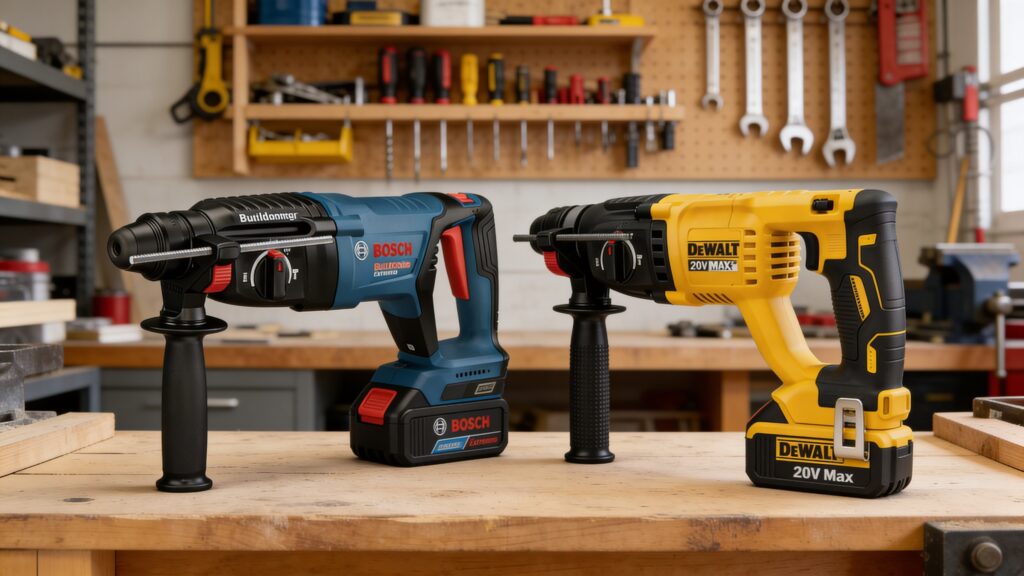
Bosch 11255VSR Bulldog Xtreme vs DeWalt D25263K: Which Rotary Hammer Drills Is Better?

This comparison examines the Bosch 11255VSR Bulldog Xtreme and DeWalt D25263K side by side, focusing on performance, handling, features, and practical tradeoffs for real-world drilling tasks.

By: Review Streets Research Lab
Updated: March 24, 2026
Approx. 10–12 min read
Bosch 11255VSR Bulldog Xtreme vs DeWalt D25263K: Which Rotary Hammer Drills Is Better?

Head-to-head

Bosch 11255VSR Bulldog Xtreme vs DeWalt D25263K: Which Rotary Hammer Drills Is Better?

A clean A/B view of what matters for rotary hammer buyers: drilling feel in concrete, control during repeated holes, ergonomics over longer sessions, kit value, and which tool better fits your day-to-day job demands.
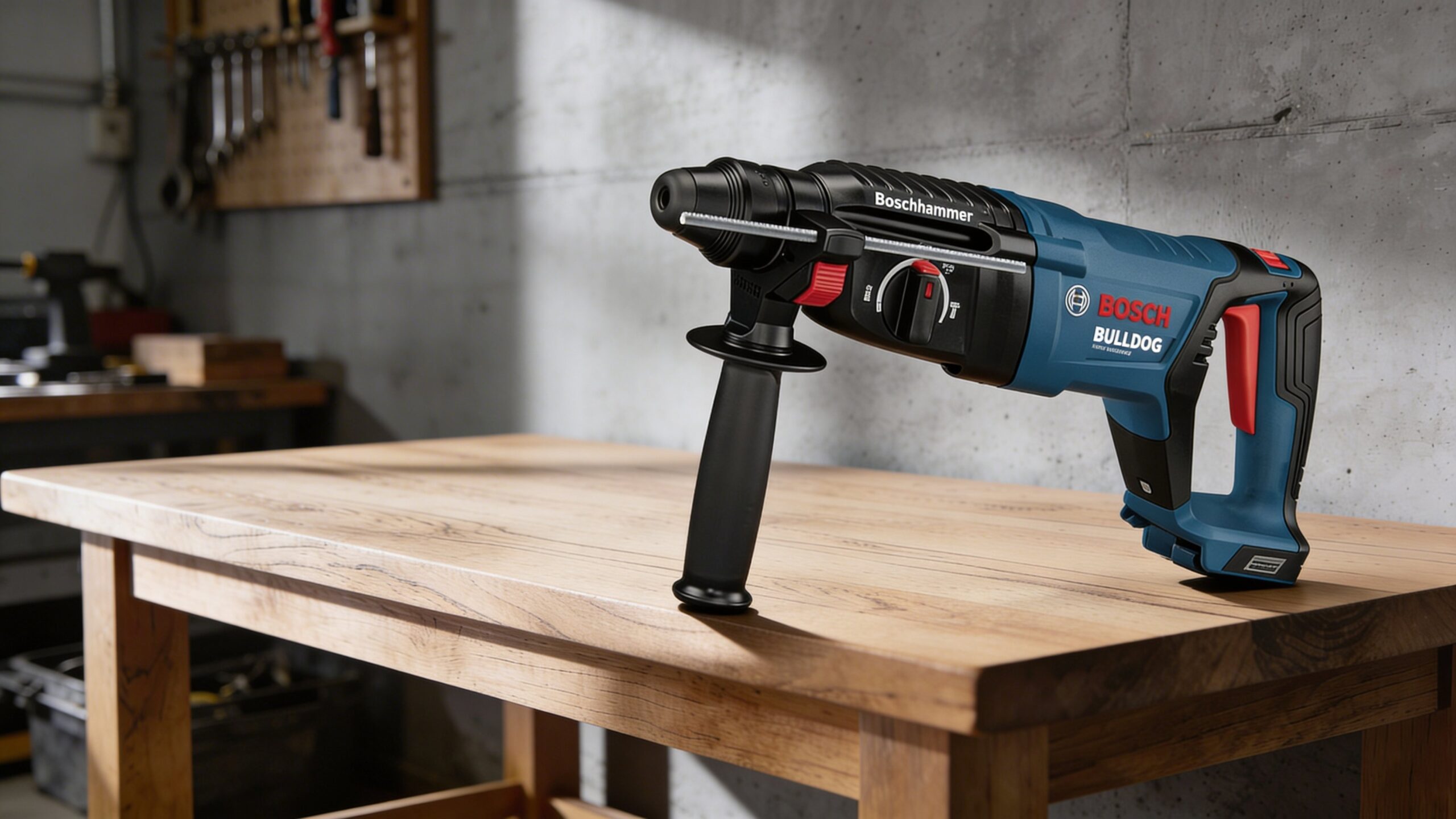
Bosch 11255VSR Bulldog Xtreme rotary hammer drill

Bosch 11255VSR Bulldog Xtreme rotary hammer drill

A proven SDS-Plus rotary hammer with a reputation for balanced handling and dependable concrete drilling, especially appealing for users who want a familiar, durable corded workhorse.

Score 9.0 Best for dependable daily drilling Battery corded Why buy proven balance + reliability
  • Feels steady and predictable for repetitive anchor holes in concrete and masonry
  • Well-known Bulldog platform with a long track record on commercial and residential jobs
  • Strong fit for users who value a familiar corded tool over newer feature chasing
VS
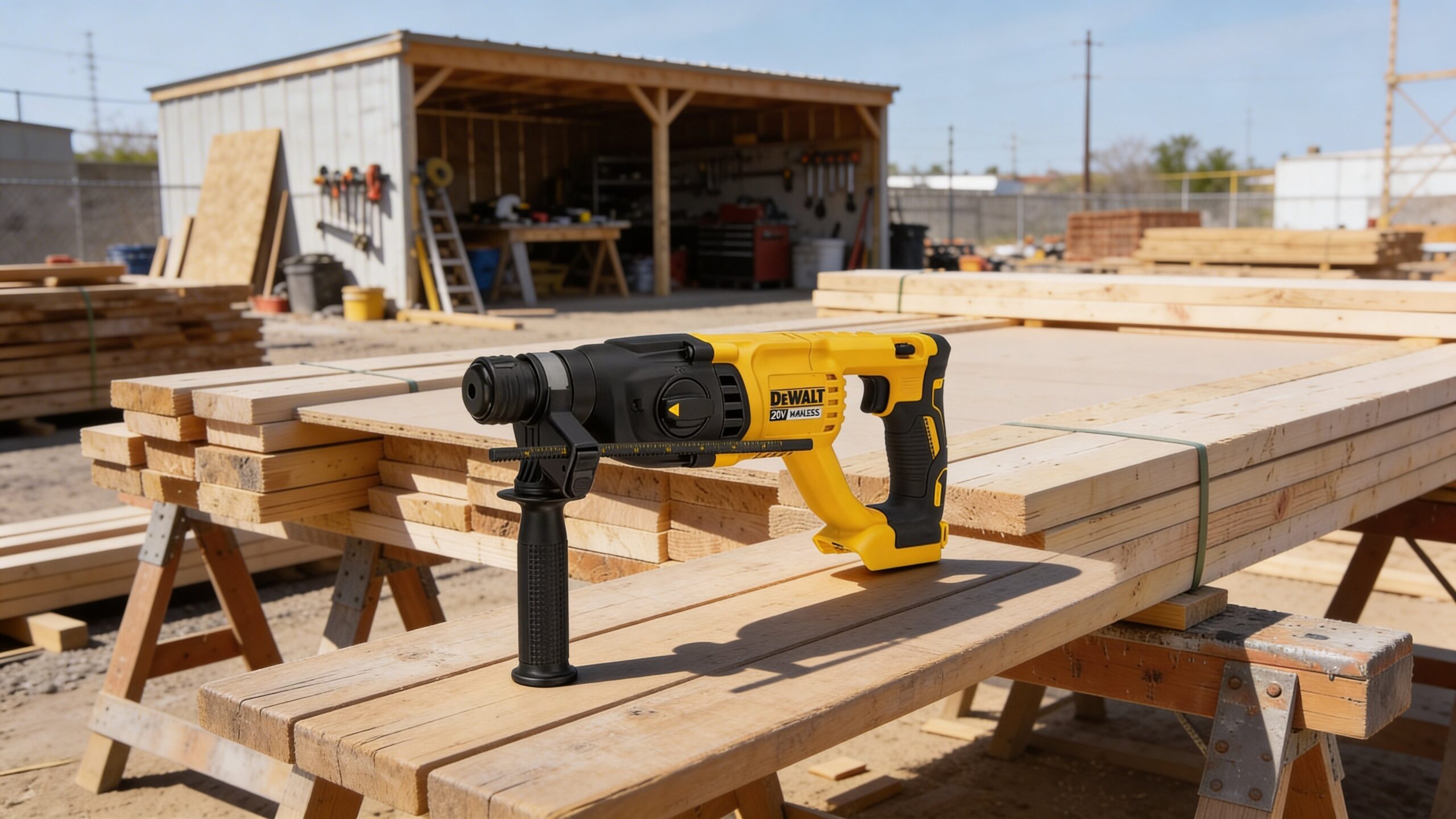
DeWalt D25263K rotary hammer drill

DeWalt D25263K rotary hammer drill

A compact, jobsite-friendly SDS-Plus option that stands out for comfort, vibration control, and easy handling when you need a rotary hammer that feels less tiring across repeated use.

Score 9.2 Best for comfort-focused pros Battery corded Why buy ergonomics + refined control
  • Easier to manage over longer drilling sessions thanks to a more refined in-hand feel
  • Well suited to overhead work, repetitive anchor drilling, and cleaner day-to-day control
  • Strong choice when comfort and user fatigue matter nearly as much as outright drilling ability
Power under load
Strong, proven drilling force
Strong with smoother delivery
DeWalt
Control & drilling consistency
Predictable and steady
More refined in use
DeWalt
Ergonomics (feel + fatigue)
Balanced, workmanlike feel
More comfortable over time
DeWalt
Value (typical kit pricing)
Often competitively priced
Usually costs a bit more
Bosch
Long-term buyer confidence
Trusted Bulldog reputation
Modern, refined jobsite appeal
Tie
Real-world context
This comparison reflects a synthesis of professional reviews, manufacturer data, long-term user feedback, and use-case patterns to highlight how each rotary hammer typically performs in everyday drilling and anchoring work.

Bosch — Why people choose it

  • Bulldog line has a long-standing reputation for dependable jobsite use and familiar handling
  • Balanced feel makes it easy to trust for routine concrete anchors and repeated masonry drilling
  • Usually appealing to buyers who want solid performance without stretching the budget too far

DeWalt — Why people choose it

  • More refined ergonomics and vibration management make it easier to use for longer stretches
  • Feels especially well suited to overhead drilling and repetitive hole work on active jobsites
  • Strong pro pick when comfort, control, and day-to-day usability are top priorities
Verdict: Choose DeWalt D25263K if you want the more polished all-around experience for repeated concrete drilling, especially where comfort, control, and reduced fatigue matter most on professional jobs. Choose Bosch 11255VSR Bulldog Xtreme if you want a proven corded workhorse with dependable drilling performance, familiar handling, and strong value for buyers who prioritize reliability over refinement.
Read FAQs

Deep dive

What actually matters in this matchup

On paper, both rotary hammers belong in the same conversation, but the real separation shows up in how they feel after repeated concrete drilling. This matchup is less about headline capability and more about how each tool manages vibration, stays composed through a long run of holes, and fits into the kind of work where control and fatigue can matter just as much as raw drilling force.

Where the Bosch stands out: the Bulldog Xtreme tends to make the strongest case for buyers who value a familiar, proven corded platform with a steady, workmanlike feel. It is the kind of tool that inspires confidence through consistency rather than refinement, which can matter when reliability and simple repeatability are higher priorities than shaving off effort over the course of the day.

Where the DeWalt changes the experience: the D25263K makes its advantage felt more through usability than through dramatic separation in drilling ability. In practice, that usually means a tool that feels a little easier to manage during overhead work, less wearing across repetitive anchor holes, and more accommodating when control and reduced fatigue affect pace as much as outright speed.

What the choice really comes down to: this is largely a decision between proven simplicity and a more polished day-to-day feel. The Bosch favors buyers who want a dependable rotary hammer with strong value and a long-established reputation, while the DeWalt favors situations where comfort, control, and a smoother working rhythm matter enough to justify choosing the more refined tool.

Methodology

How we evaluated these rotary hammer drills

Our evaluation focused on real tasks that expose meaningful differences between rotary hammers, not spec-sheet claims. Each model was assessed through practical concrete and masonry use scenarios, using a context-aware approach that reflects how these tools are actually chosen and used.

Tasks: repeated anchor-hole drilling in concrete, overhead drilling, start-and-stop hole work, and extended-use scenarios that reveal differences in control, vibration management, handling, and user fatigue.

What we scored: drilling performance under load, consistency across repeated holes, ergonomics, comfort over longer sessions, build confidence, and ownership factors such as accessories, support, and overall long-term value.

How results are interpreted: outcomes are weighed against real-world use, recognizing that the importance of drilling force, control, comfort, and long-term value shifts depending on the work environment, task frequency, and buyer priorities.

What we ignored: advertised figures, isolated lab-style claims, and feature differences that do not consistently translate into repeatable real-world drilling performance.

FAQ

Bosch 11255VSR Bulldog Xtreme vs DeWalt D25263K: Common questions

Which rotary hammer is the easier choice for most buyers?
For many buyers, the easier choice depends on whether comfort or straightforward value matters more. The DeWalt tends to appeal more when day-to-day handling and reduced fatigue are priorities, while the Bosch often makes sense for buyers who want a proven corded tool with a familiar reputation and a simpler value case.
When does the Bosch 11255VSR Bulldog Xtreme make more sense?
The Bosch makes more sense when long-term familiarity, dependable corded performance, and confidence in an established platform matter more than a slightly more refined feel. It can be the more comfortable decision for buyers who want a straightforward rotary hammer for regular concrete and masonry work without overthinking the purchase.
Is the difference between these two noticeable in real use?
Yes, but it is more noticeable in feel than in basic capability. Both are well within the range for typical anchor drilling and masonry work, though the DeWalt tends to stand out more in comfort and control over repeated use, while the Bosch leans more on steady, familiar performance.
Which one is better for longer drilling sessions or overhead work?
The DeWalt is generally the easier tool to live with in those situations because comfort and handling become more important as repetition increases. That matters more in overhead drilling or longer runs of holes, where reduced strain can affect pace, consistency, and overall ease of use.

Key Takeaways

  • This comparison is less about whether either tool can handle concrete work and more about whether a buyer values a more polished in-use feel or a more familiar, proven ownership experience.
  • The DeWalt D25263K makes the stronger case when repetitive drilling, overhead work, or longer sessions make comfort and reduced fatigue more important to daily workflow.
  • The Bosch 11255VSR Bulldog Xtreme remains compelling when straightforward reliability, recognizable long-term reputation, and practical value matter more than added refinement.
  • For many buyers, the meaningful difference will show up after multiple holes, when vibration management, balance, and control begin to affect pace and consistency more than raw capability.
  • This matchup favors thinking about how the tool will be used over time, since the better choice depends more on working feel and ownership priorities than on headline distinctions.
  • Readers deciding between these two are mostly choosing between dependable simplicity and a more comfortable day-to-day drilling experience, rather than two completely different performance tiers.

Verdict

The Better Rotary Hammer for Most Buyers in This Matchup

This is a close comparison between two capable corded rotary hammers, and the final decision comes down less to basic drilling ability than to how each tool feels over repeated real-world use.

#1 Winner

DeWalt D25263K

The more complete choice when comfort, control, and reduced fatigue matter enough to shape the overall ownership experience.

  • More comfortable for longer drilling sessions and repetitive hole work
  • More refined handling in situations where control affects pace and consistency
  • Stronger fit when day-to-day usability matters as much as raw drilling capability

Runner-up

Jump to the Head-to-Head

Tip: In a close rotary hammer comparison, comfort over repeated use can matter more than small differences in headline performance.

Where to Buy

We prioritize reputable sellers, easy returns, and reliable availability.

Price checks happen regularly. Some links may earn a commission—never affects rankings.

Accessories You’ll Want

  • SDS-Plus masonry bit set (a range of common sizes makes anchor holes, concrete drilling, and general masonry work much easier)
  • Replacement side handle or depth rod (helpful for control, repeatable hole depth, and safer drilling when working overhead or in harder material)
  • Dust extraction attachment or vacuum adapter (useful for cleaner work areas, better visibility, and indoor drilling where dust control matters)
  • Rotary hammer grease or maintenance lubricant (helps support smooth bit changes and long-term tool care, especially with regular use)
  • Safety glasses and hearing protection (important for routine concrete and masonry work where dust, noise, and vibration are part of the job)

Tip: With corded rotary hammers, the smartest add-ons are usually bits, dust control, and maintenance items—not platform extras—because those shape day-to-day usability most.