Brushless vs Brushed Motor Right-Angle Drills: Key Differences Explained

This head-to-head comparison examines brushless and brushed motor right-angle drills, highlighting performance differences, efficiency tradeoffs, durability factors, and practical considerations that influence real-world tool selection.

By: Review Streets Research Lab
Updated: April 13, 2026
Approx. 10–12 min read
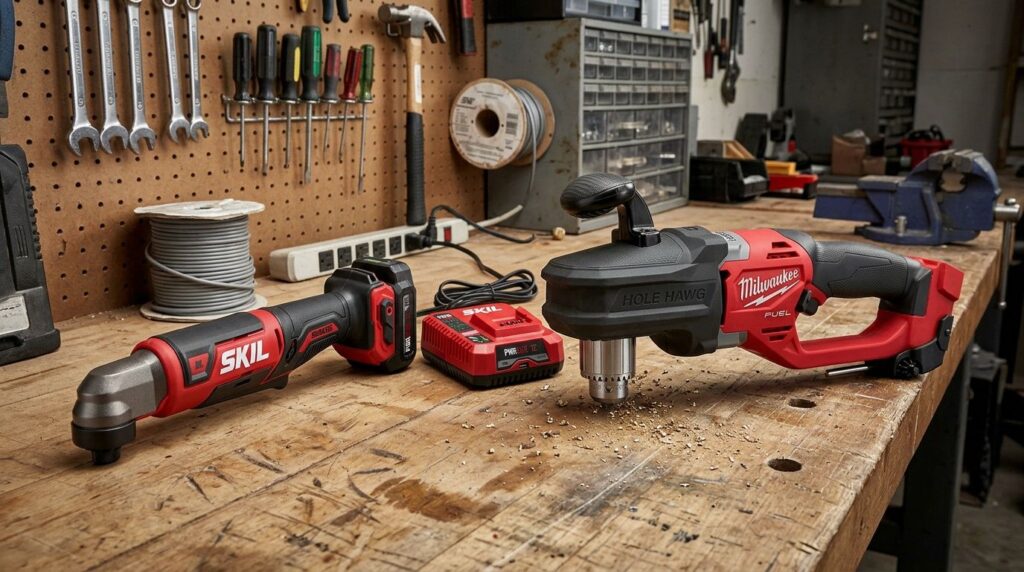
Brushless vs brushed motor right-angle drills shown side by side highlighting internal motor components and performance differences

Head-to-head

Brushless vs Brushed Motor Right-Angle Drills: Key Differences Explained

A clean A/B view of what matters when you’re drilling in tight bays: sustained performance under load, heat and run-time behavior, control at low speed, ergonomics in awkward positions, and the long-term cost of your battery platform.
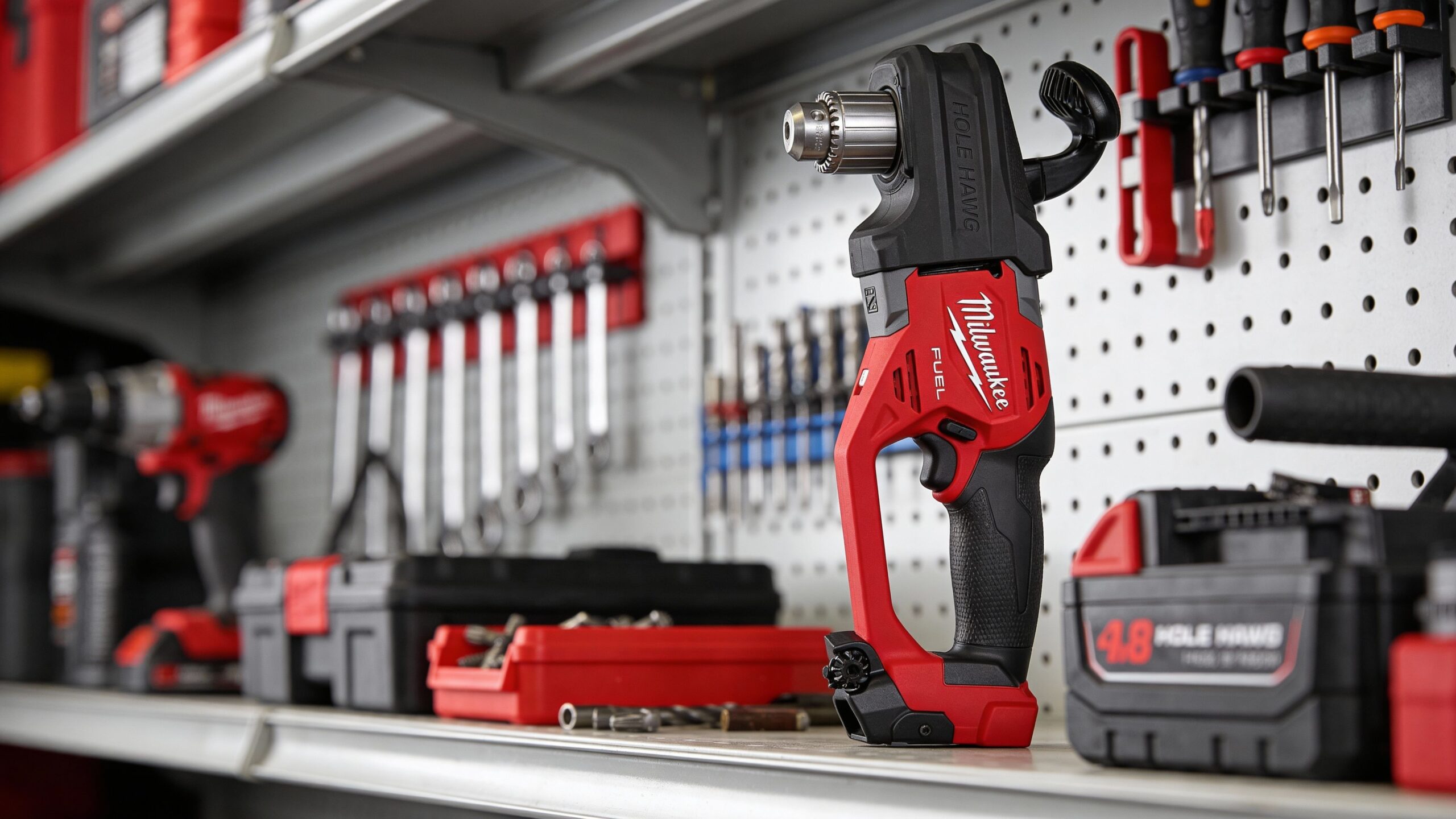
Milwaukee M18 FUEL Hole Hawg right-angle drill

Milwaukee M18 FUEL Hole Hawg right-angle drill

A brushless, work-first right-angle drill built for repetitive holes in framing and rough-in work where bind-ups, tight studs, and long days are normal—not the exception.

Score 9.3 Best for heavy rough-in drilling Battery M18 Why buy brushless endurance + ecosystem
  • Typically stays more consistent when you’re pushing larger bits through dense framing
  • Runs cooler and tends to waste less battery when the work is stop-and-go in tight spaces
  • Best long-term value if you’re already committed to M18 or plan to expand a pro kit
VS
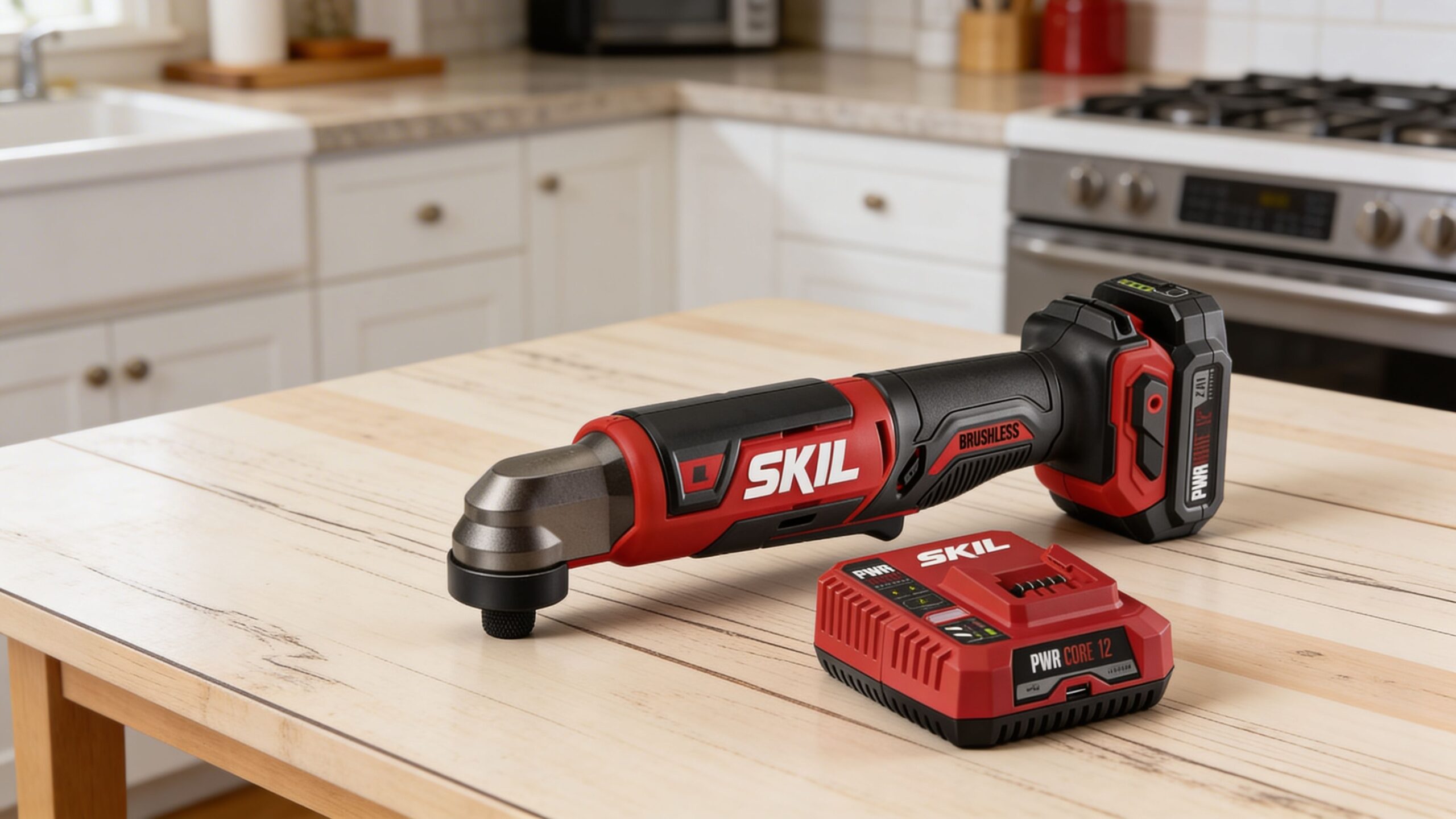
SKIL 12V right-angle drill

SKIL 12V right-angle drill

A compact brushed 12V right-angle drill that prioritizes access and convenience—best for lighter drilling, cabinet installs, and maintenance tasks where size matters more than brute force.

Score 8.1 Best for tight-access light work Battery 12V Why buy compact fit + lower buy-in
  • Fits where larger right-angle drills can’t—great for inside cabinets and close studs
  • Delivers practical performance for pilots and small holes without hauling a full-size rig
  • Better choice when budget and portability matter more than sustained heavy drilling
Power under load
More headroom for larger bits
Best for lighter drilling
Milwaukee
Control & clutch consistency
Strong low-speed control
Good for careful pilots
Milwaukee
Ergonomics (feel + fatigue)
Heavier, steadier in bracing
Lighter, easier overhead
SKIL
Value (typical kit pricing)
Higher buy-in, pro-grade
Lower cost entry point
SKIL
Battery ecosystem depth
Massive trade lineup
Smaller 12V selection
Milwaukee
Real-world context
This comparison reflects a synthesis of professional reviews, manufacturer data, long-term user feedback, and use-case patterns to highlight how each drill typically performs in everyday projects.

Milwaukee — Why people choose it

  • Brushless design tends to maintain output better during repeated holes and tougher stock
  • Better match for large augers, self-feeds, and consistent rough-in drilling demands
  • Deep M18 platform if your right-angle drill is part of a larger pro tool system

SKIL — Why people choose it

  • Compact 12V size makes it easier to position in cabinets, studs, and tight corners
  • Brushed motor simplicity works well for occasional use and lighter-duty drilling
  • Lower overall buy-in when you need a small right-angle drill for specific tasks
Verdict: Choose Milwaukee if your work involves repeated drilling in framing, larger bits, and longer duty cycles where brushless efficiency, heat control, and ecosystem depth matter most. Choose SKIL if you prioritize tight-access portability for lighter drilling and install work, and you want a lower-cost entry point for occasional right-angle needs.
Read FAQs

Deep dive

What actually matters in this matchup

In real use, this matchup isn’t about “which drill is stronger” so much as what kind of work you’re doing and how long you’re doing it. The Milwaukee M18 FUEL Hole Hawg is built for sustained, demanding drilling where the tool is braced, the bit is working hard, and consistency matters over a full day. The SKIL 12V right-angle drill focuses on access and convenience—where fitting into the space cleanly and finishing small-to-medium tasks with less bulk can matter more than heavy-duty endurance.

Power delivery in tough material: When drilling repeatedly through framing, dense stock, or using larger hole-making bits, the experience is shaped by how steady the drill feels when the bit loads up. A larger, brushless right-angle drill tends to stay more composed in these moments, while a smaller brushed 12V tool is better treated as a “get-in-and-get-out” option for lighter holes and pilots rather than a tool to lean on for long, high-resistance runs.

Control in awkward starts: Right-angle drilling often begins at an odd angle—inside bays, against blocking, or close to finished surfaces—where smooth starts matter. The practical difference shows up in how predictable the trigger feels and how easily you can keep the bit from walking before it bites. The heavier-duty platform usually rewards a controlled two-hand brace when precision matters under load, while the compact 12V format can feel easier to position and “feather” into tight corners for careful pilot work.

Fatigue and positioning over a long day: With right-angle drills, weight and leverage matter because you’re often drilling off-axis. The larger tool can feel steadier once it’s set and braced, but it’s also more demanding to hold, reposition, and keep overhead for repeated tasks. The smaller 12V drill often reduces the hassle of getting into the spot and staying there, which can be a meaningful advantage for install, punch-list, and maintenance work where the drill is moved constantly rather than braced for long cuts.

Reliability confidence and workflow impact: In heavier drilling, confidence comes from how the tool behaves when things don’t go perfectly—bit chatter, sudden resistance, or stop-and-go drilling that builds heat. A brushless, pro-grade right-angle drill generally supports a steadier workflow for repeated rough-in tasks, while a brushed compact drill can be a practical specialist for lighter duty where the priority is access and convenience rather than running at high load for extended periods.

Ownership and long-term flexibility: The decision is also shaped by what you’re buying into. A pro battery platform can make sense when the right-angle drill is one piece of a larger kit that needs to share chargers, batteries, and jobsite support. A smaller 12V system can be the more sensible path when you want a compact tool for occasional tight-access work without committing to a heavier, higher-cost ecosystem.

How to choose based on your work: If your right-angle drill is expected to drill hard, repeatedly, and predictably in framing and rough-in environments, the Milwaukee-style heavy-duty approach tends to fit the job better. If the priority is fitting into cramped spaces for lighter drilling, quick installs, and grab-and-go tasks—where the drill is carried more than it’s braced—the SKIL-style compact approach is often the more practical fit.

Methodology

How we evaluated these right-angle drills

Our evaluation focused on real tasks that expose meaningful differences between a heavy-duty brushless right-angle drill and a compact brushed 12V right-angle drill—not spec-sheet advantages. Each model was assessed through scenario-based use that reflects how right-angle drills are actually chosen: drilling in tight bays, starting holes at awkward angles, managing bind-ups, and balancing tool size against the demands of repeated work.

Tasks: boring common framing holes in studs and blocking, drilling smaller pilots in confined spaces, start–stop cycles that build heat, and awkward-position work (overhead, between studs, inside cabinets) to evaluate access, control, and fatigue.

What we scored: consistency under real load, how predictable the tool feels at the trigger during starts, ergonomics when braced off-axis, build confidence during demanding drilling, and ownership factors like battery platform flexibility and long-term kit fit.

How results are interpreted: outcomes are assessed using a context-aware approach, recognizing that “better” changes with the job—rough-in drilling favors sustained stability and endurance, while install and maintenance work often favors compact access and easier handling.

What we ignored: advertised torque claims, isolated lab-style numbers, and feature callouts that don’t consistently translate into repeatable, day-to-day drilling performance in tight spaces.

FAQ

Milwaukee M18 FUEL Hole Hawg vs SKIL 12V: Common questions

Which right-angle drill makes more sense for typical home projects?
For many home projects, a compact 12V right-angle drill is often the more practical fit because it’s easier to handle in cabinets, closets, and tight framing bays. It covers light-to-moderate drilling needs without the bulk of a heavy-duty rough-in tool. If the work includes frequent large holes or tough framing, a heavier-duty model can be worth the step up.
When is the Milwaukee Hole Hawg the better choice?
It tends to be the better fit when the drill will be used for repeated rough-in drilling, larger hole-making bits, or higher-resistance work where consistency matters over long sessions. It’s also a logical pick when the right-angle drill is part of a larger M18 kit and you want shared batteries, chargers, and long-term flexibility.
When is the SKIL 12V right-angle drill the smarter buy?
It’s often the smarter buy when access and portability are the main problems you’re solving—tight installs, small pilots, and occasional drilling where a full-size right-angle drill is simply too bulky. It can also make sense as a task-specific tool for light-duty work, especially when the drill won’t be used daily for demanding hole-making.
Is brushless vs brushed a meaningful difference in real-world drilling?
It can be, especially when the drill is used often or pushed hard. Brushless designs commonly feel more efficient and consistent during repeated work, while brushed tools can perform well for intermittent use and lighter tasks. The difference matters most when heat, runtime, and sustained load show up in day-to-day use.
Which one is easier to use in tight spaces?
The compact 12V right-angle drill is typically easier to position in cabinets, between studs, and in close-clearance corners because it’s lighter and less bulky. A heavy-duty right-angle drill can still work in tight bays, but it generally asks for more bracing and room to manage the tool’s size and leverage.
How much does battery ecosystem matter for this purchase?
It matters most when the drill is part of a growing cordless kit. If you already own compatible batteries and chargers, sticking with that platform can simplify ownership and reduce cost over time. If this is a standalone, occasional-use tool, a smaller system can be the more efficient commitment.
What’s the most common mistake people make when choosing a right-angle drill?
Buying based on maximum capability instead of actual workload. Many buyers are better served by matching the drill to the size of holes they’ll drill most often and how frequently they’ll do it. For heavy rough-in drilling, endurance and stability matter; for tight installs, compact handling is usually the deciding factor.

Key Takeaways

  • The Milwaukee M18 FUEL Hole Hawg is built for sustained, demanding drilling where consistency under load and long-duty performance matter more than compact size.
  • The SKIL 12V right-angle drill prioritizes access and maneuverability, making it a practical choice for lighter drilling in tight spaces where bulk becomes the main limitation.
  • Brushless design tends to favor efficiency and endurance during repeated rough-in tasks, while a brushed 12V setup can be sufficient for intermittent or lower-resistance work.
  • Tool weight and balance affect real-world fatigue differently: a heavier drill can feel steadier when braced, while a lighter drill reduces strain during repositioning and overhead use.
  • Battery platform commitment plays a significant role in long-term value, especially if the right-angle drill is part of a broader cordless system rather than a standalone purchase.
  • The better fit ultimately depends on workload intensity and frequency—heavy, repetitive drilling favors the larger pro-grade platform, while compact, task-specific use favors the smaller 12V format.

Verdict

The Right Right-Angle Drill Depends on Your Workload

In this head-to-head, the most useful choice comes down to how hard you’ll push a right-angle drill and how often. One tool is designed to stay consistent during demanding, repetitive drilling where endurance and platform depth matter. The other is built to fit and finish tight-access tasks with less bulk, where portability and ease of positioning often matter more than sustained heavy-duty output.

#1 Winner

Milwaukee M18 FUEL Hole Hawg right-angle drill

The stronger fit for repeated rough-in drilling and higher-resistance work where a steadier feel under load, longer duty cycles, and ecosystem flexibility matter over time.

  • Better suited for sustained drilling in framing and rough-in conditions
  • More consistent feel when the bit loads up and the drill needs to stay composed
  • M18 platform depth makes more sense when the tool is part of a larger cordless kit

Runner-up

Jump to the Head-to-Head

Tip: If you already own batteries in one ecosystem, that can outweigh small differences in performance for this tool category.

Where to Buy

We prioritize reputable sellers, easy returns, and reliable availability.

Price checks happen regularly. Some links may earn a commission—never affects rankings.

Accessories You’ll Want

  • Self-feed and auger bits (for clean, fast holes in studs and framing when you’re doing rough-in work)
  • Right-angle drill attachment (a helpful backup for ultra-tight spots where even a compact right-angle drill won’t fit)
  • Extra battery pack (a smaller pack for balance and a higher-capacity pack for longer drilling sessions)
  • Hole saw kit (for common pass-throughs and larger openings in wood, drywall, and light materials)
  • Spade bit set with extensions (good for quick rough-in holes and reaching deeper bays or awkward angles)

Tip: Match accessories to the work you actually do—larger bits and hole-making kits favor heavier-duty platforms, while compact setups shine with smaller bits and tight-access tasks.