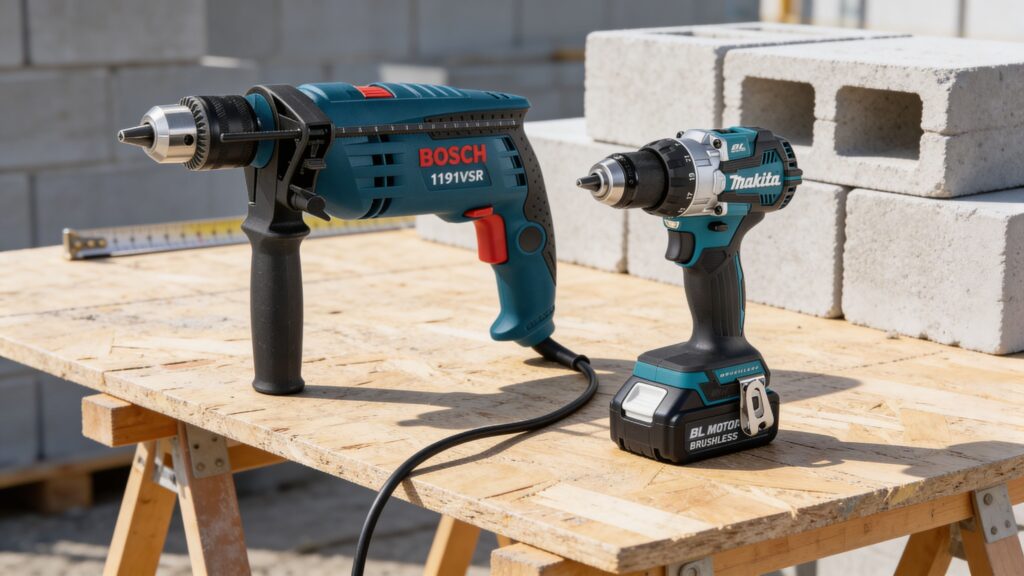
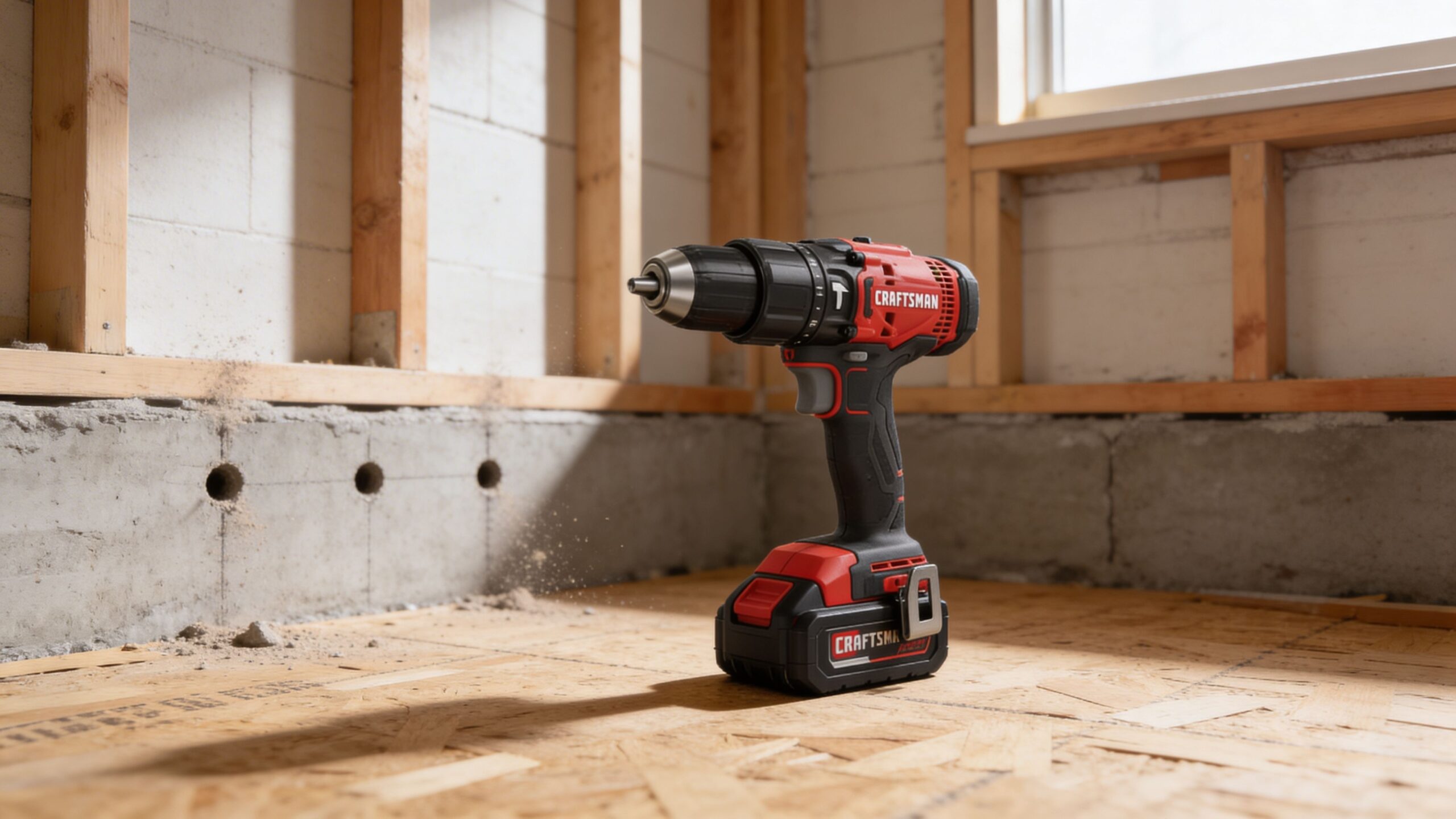
This side-by-side comparison examines corded and cordless hammer drills across power delivery, runtime, mobility, and jobsite practicality, highlighting real-world tradeoffs to help determine which platform best fits your work demands.

Head-to-head
A clean A/B view of what matters on real jobs: sustained drilling power, mobility, setup friction, fatigue over long days, and the practical tradeoffs of plugging in versus managing batteries.
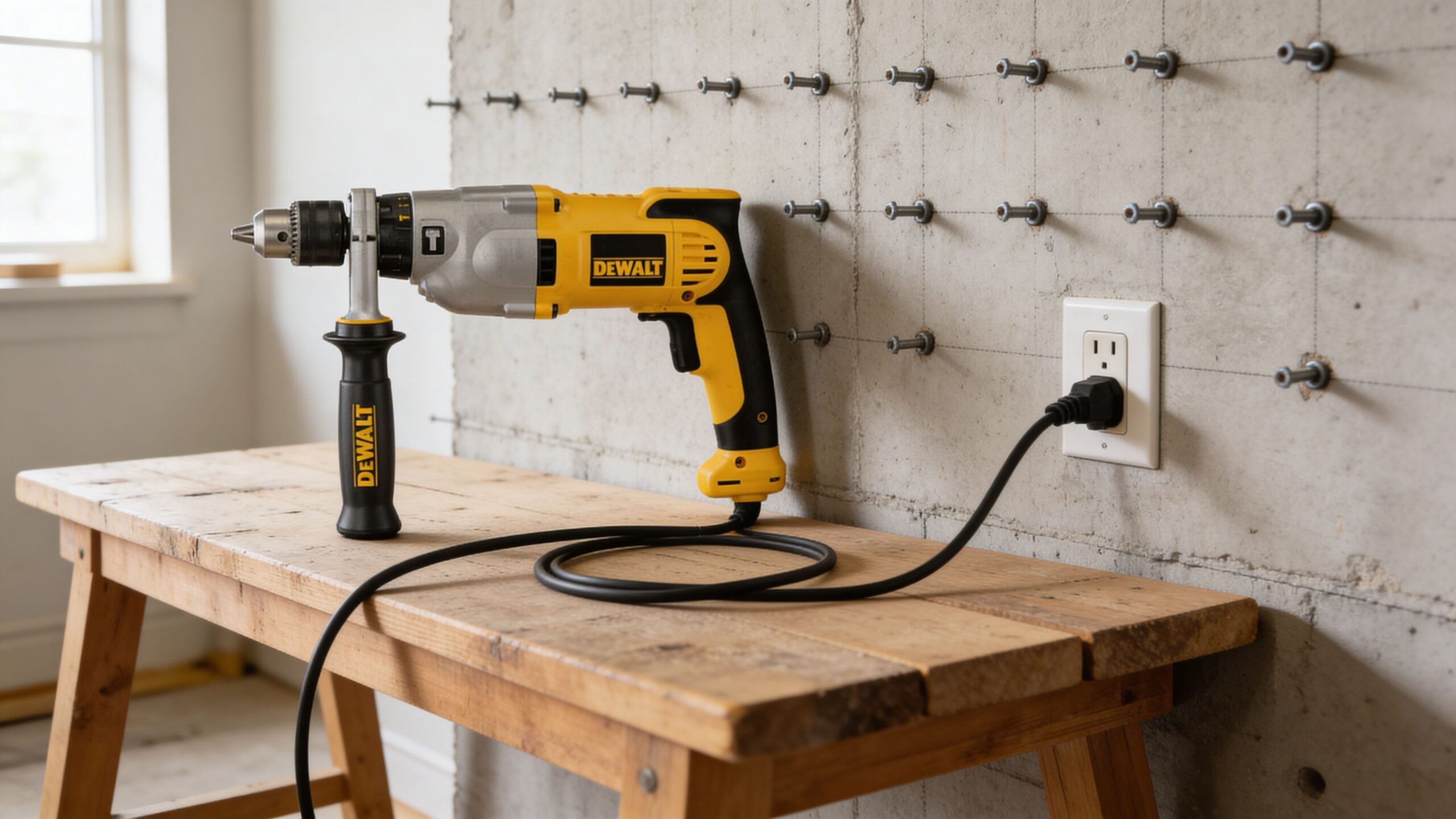
A plug-in option built for consistent output when you’re drilling a lot of holes in masonry and want steady performance without managing runtime or battery swaps.
A mobile, jobsite-friendly choice for scattered drilling, ladder work, and quick transitions—best when moving fast matters more than unlimited runtime.
Deep dive
Corded and cordless hammer drills can both get holes into concrete and brick, but they shape your workflow in very different ways. The meaningful differences show up in how steady the tool feels when the bit is working hard, how much setup friction you deal with, and how often you have to stop to manage power—either by routing a cord safely or by rotating batteries and chargers. This deep dive focuses on the “day-of-work” experience: consistency across long drilling runs, control when starting holes cleanly, fatigue when you’re repositioning constantly, and what ownership looks like once the drill is one piece of a larger tool setup.
Power delivery & consistency: Corded models tend to feel more predictable during longer drilling sessions because performance isn’t tied to battery state or heat buildup in packs. Cordless models can feel more than capable for typical anchor holes and intermittent drilling, but the experience is shaped by how fresh the battery is and whether you’re doing short bursts or extended runs.
Workflow & setup friction: Cordless wins when the work is scattered—moving between rooms, working off ladders, or drilling in tight paths where cord routing becomes a slowdown and a trip hazard. Corded is often smoother when the work is anchored to one area with reliable power access, where a single safe cord route lets you drill continuously without interruptions for charging or swaps.
Control, starts, and fatigue: The better choice depends on how you’re drilling. If you’re frequently repositioning, reaching overhead, or drilling at odd angles, cordless freedom can reduce small frustrations that add up and can feel less “in the way” during the day. If you’re staying planted and drilling repeatedly into masonry, corded steadiness and uninterrupted pacing can feel easier to manage over time.
Reliability confidence & ownership: Corded ownership is straightforward—no battery aging, no charger logistics, and fewer variables when the tool sits for long periods. Cordless ownership pays off when you already share batteries across tools or plan to, because convenience compounds across a kit; the tradeoff is keeping batteries healthy, charged, and sized appropriately for the work you actually do.
Where each option ultimately fits: Corded favors steady, longer masonry drilling sessions with predictable power access and minimal downtime. Cordless favors fast-moving work where mobility, cleaner setup, and fewer constraints make the tool easier to live with—especially when drilling is frequent but spread across locations and tasks.
Methodology
Our evaluation focused on practical drilling scenarios that highlight the real differences between corded and cordless hammer drills. Rather than emphasizing published specifications, we examined how each tool performs during common masonry tasks, how predictable it feels under load, and how its power source influences workflow over the course of a typical project.
Tasks: repeated drilling into concrete and brick, intermittent anchor hole installation, start–stop cycles between holes, repositioning across a workspace, and overhead drilling to assess balance, cord management, and mobility.
What we scored: consistency of power during sustained use, control when starting and maintaining clean holes, ergonomics and fatigue during extended sessions, build confidence, and ownership considerations such as battery management or reliance on site power.
How results are interpreted: performance is evaluated through a context-aware lens, recognizing that steady output may matter more in long drilling runs, while mobility and setup speed may matter more in fast-moving or multi-room work. The importance of each attribute shifts depending on how the tool is used.
What we ignored: advertised torque figures, isolated lab claims, and feature checklists that do not consistently translate into meaningful, repeatable performance in real-world masonry and jobsite conditions.
FAQ
Verdict
In this comparison, the right choice depends less on peak capability and more on how and where the drill will be used. Both can handle typical masonry work; the deciding factors are workflow, runtime expectations, and long-term ownership priorities.
Top Pick for Mobility
Cordless Hammer DrillThe more versatile option for most active jobsites, especially where movement, ladder work, and fast setup meaningfully affect productivity.
Tip: If most of your drilling happens in one area with easy outlet access, corded simplicity can outweigh mobility. If you move constantly or already run cordless tools, battery convenience may matter more.
Jump to the sections that help you choose between corded and cordless hammer drills—how each feels in use, where the tradeoffs show up, and which setup fits your work.
We prioritize reputable sellers, easy returns, and reliable availability.
Tip: Match accessories to how you work—corded users benefit most from safe cord management, while cordless users benefit most from keeping a charged spare battery and the right bit sizes on hand.
Choose a retailer
Prices checked regularly. We may earn a commission at no cost to you.