Choosing between cordless and corded right-angle drills requires understanding real-world performance tradeoffs, including power delivery, runtime limitations, mobility, and jobsite demands across different working environments.

Reviews You Can Trust
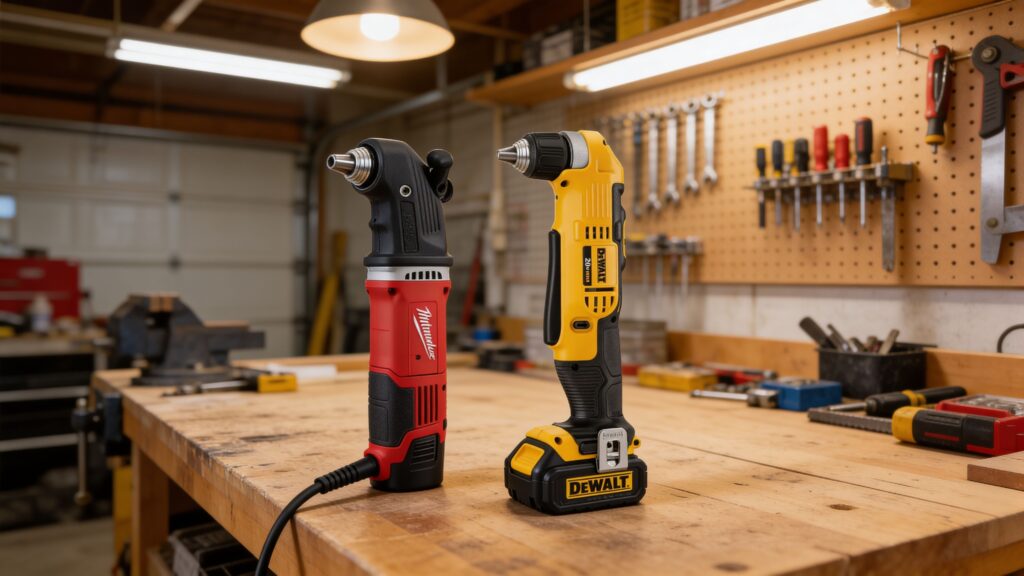
Head-to-head
Cordless vs Corded Right-Angle Drills: Key Differences Explained
A clean A/B view of what matters in tight, real jobsite conditions: mobility vs continuous power, endurance for long bores, clearance in studs and cabinets, and the practical costs of buying into a battery platform versus running corded.
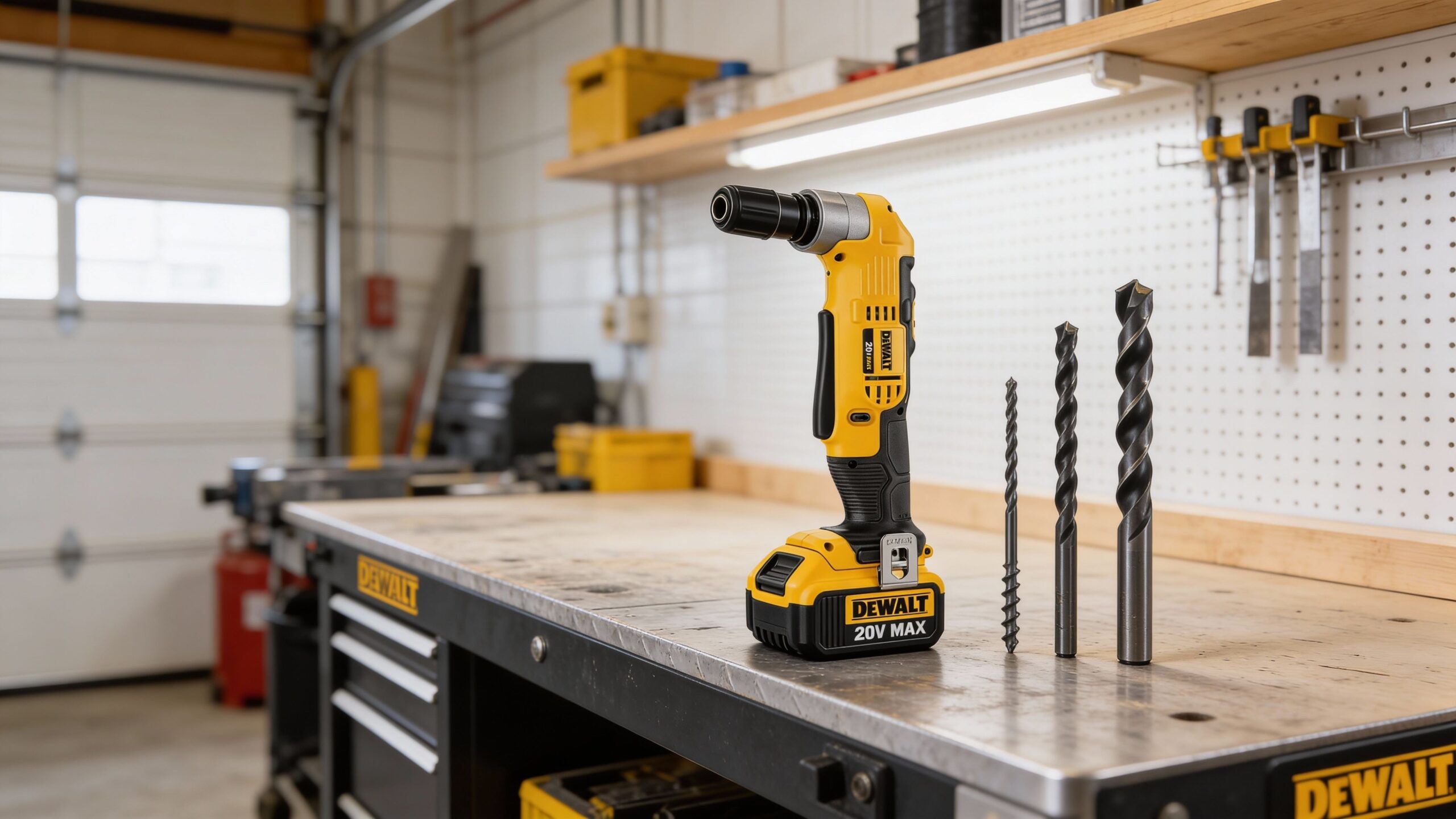
DeWalt 20V MAX XR Right-Angle Drill
A cordless right-angle built for “move fast and keep going” tasks—great for punch-list work, tight studs, and anywhere a cord would constantly fight you. Best when you value mobility and quick positioning over unlimited runtime.
- Easy to reposition in stud bays, cabinets, and crawl spaces without managing a cord
- Clean workflow for short-to-medium drilling runs and mixed fastening tasks
- Strong fit if you’re already on the 20V MAX platform and share batteries across tools
VS
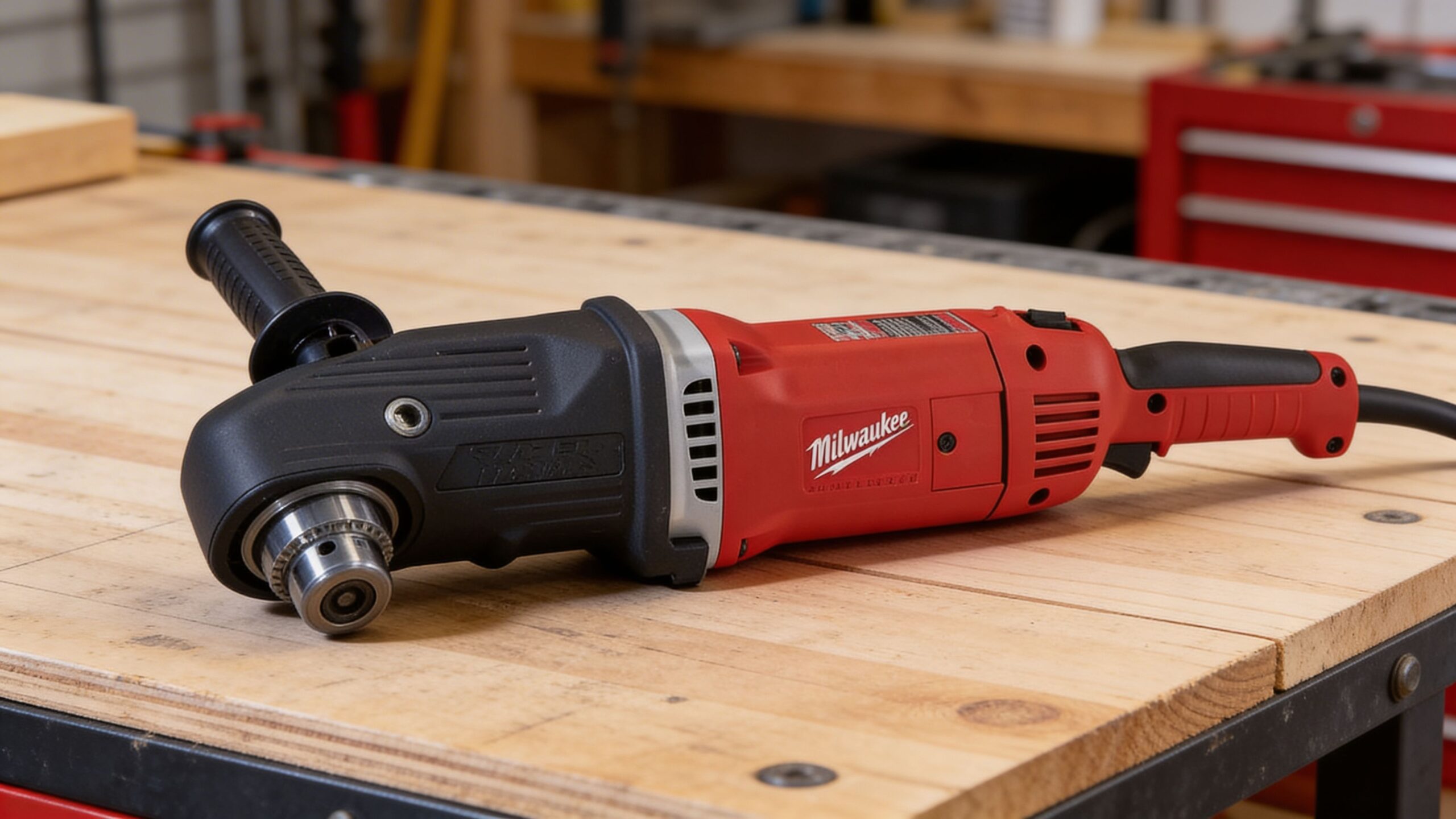
Milwaukee Corded Right Angle Drill
A corded workhorse for long drilling sessions—ideal when you’re boring repeated holes, running larger bits, or working near power all day. Best when steady, uninterrupted performance matters more than mobility.
- Consistent output for longer hole runs without swapping or charging packs
- Better fit for shop work, remodel stations, and repetitive drilling on power access
- Smart choice when you need dependable performance and can manage the cord safely
Power under load
Strong for typical on-site holes
More consistent for long, demanding runs
Milwaukee
Control & clutch consistency
Predictable starts; good for mixed tasks
Steady response; fewer slowdowns mid-hole
Milwaukee
Ergonomics (feel + fatigue)
Cordless mobility; less snag management
More tethered; cord awareness required
DeWalt
Value (typical kit pricing)
Higher buy-in once batteries are included
Solid value if you need a dedicated corded tool
Milwaukee
Battery ecosystem depth
Broad 20V MAX lineup for expansion
Not applicable (corded platform)
DeWalt
Real-world context
This comparison reflects a synthesis of professional reviews, manufacturer data, long-term user feedback, and use-case patterns to highlight how each drill typically performs in everyday projects.
DeWalt — Why people choose it
- Fast setup and easy repositioning when you’re moving from bay to bay
- Convenient for service calls, punch lists, and jobs where outlets are inconvenient
- Strong long-term upside if you’re building a shared-battery cordless kit
Milwaukee — Why people choose it
- Runs all day without battery swaps—good for repetitive holes and longer drilling sessions
- More consistent feel when work stays demanding for extended stretches
- Reliable choice for shop settings and remodel stations with easy power access
Verdict: Choose Milwaukee if your work involves sustained drilling where consistency and uninterrupted runtime matter most—especially near power. Choose DeWalt if you need maximum mobility in tight spaces, want faster repositioning, and already benefit from the 20V MAX battery platform on a pro truck.