
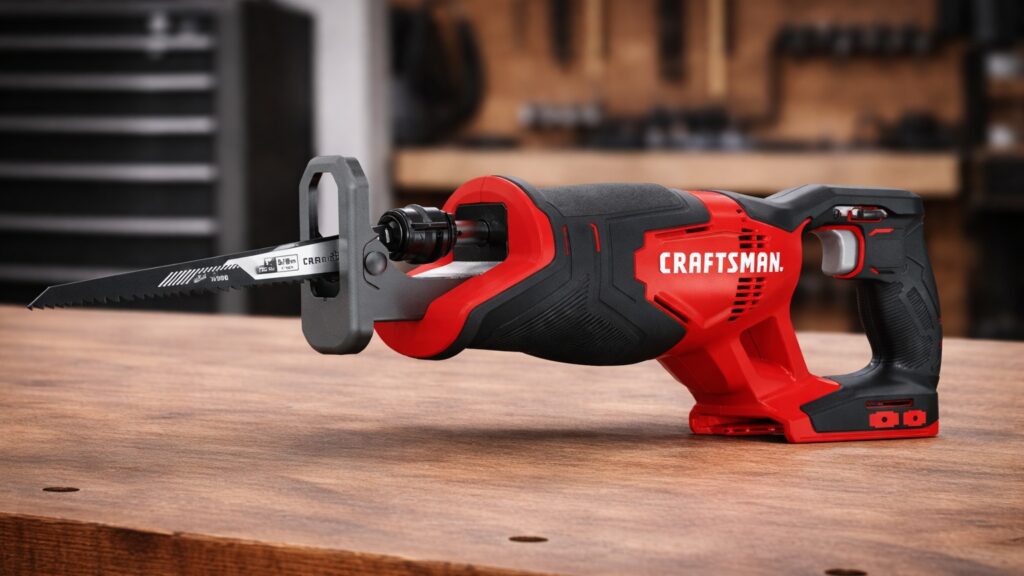
The Craftsman CMCS300B is evaluated in real-world cutting scenarios to understand how it balances power, control, and durability against competing cordless options. This review focuses on practical performance, design tradeoffs, and usability differences to clarify where it fits—and where it may fall short—depending on your workload.
Craftsman CMCS300B Reciprocating Saw Review: Performance, Pros, and Cons
By: Review Streets Research Lab
Updated: April 9, 2026
Approx. 8–10 min read
Quick Summary
The Craftsman CMCS300B comes across as a straightforward cordless reciprocating saw with usable cutting power, familiar handling, and a general-purpose feel that suits home projects, occasional remodeling tasks, and light demolition work. It inspires more confidence in intermittent use than in long, demanding sessions, where refinement, vibration control, and sustained cutting composure can feel less polished than stronger jobsite-focused alternatives.
7.8
Score
Best for: Budget DIY
Pros & Cons
Craftsman CMCS300B: what we liked (and what we didn’t)
A quick look at the biggest strengths and tradeoffs based on performance, handling, and everyday usability.
Pros
- Approachable Handling: Feels easy to pick up and use for common home cutting and tear-out tasks.
- Useful General Power: Delivers enough cutting ability for light demolition, pruning, and renovation work.
- Familiar Controls: Straightforward operation makes workflow feel simple, especially for occasional users.
- Good Project Range: Works well across a broad mix of repair, cleanup, and remodeling jobs.
- Accessible Value: Offers a practical cordless option for buyers who want capability without moving into premium territory.
Cons
- More Vibration: Extended cutting sessions can feel less settled and more fatiguing than better-refined models.
- Limited Heavy-Duty Confidence: It feels more comfortable in occasional work than in repeated, demanding demolition use.
- Less Composed Under Load: Tougher cuts can feel slower and less controlled than stronger jobsite-focused alternatives.
- Not Ideal In Tight Spots: The overall feel is more general-purpose than especially compact or maneuverable.
Specs
Craftsman CMCS300B key specifications
These are the core specs and practical details most buyers compare across cordless reciprocating saws.
| Spec | Craftsman CMCS300B |
|---|---|
| Type | Cordless reciprocating saw (brushed motor) |
| Platform | CRAFTSMAN V20 system |
| Voltage | 20V MAX (V20) |
| Speed | Variable speed trigger; up to approx. 3,000 SPM (claimed) |
| Chuck | Tool-free blade clamp |
| Torque | Not specified; cutting force depends on blade and material |
| Length | Approx. mid-size body; not compact class |
| Weight | Varies by battery; moderate weight, heavier with larger packs |
| Clutch settings | Not applicable |
| LED light | Yes (front-mounted work light) |
| Included | Tool only (battery and charger sold separately) |
| Best use | General demolition, pruning, and light renovation cutting |
| Warranty | CRAFTSMAN limited warranty (typically 3 years) |
Performance
How the Craftsman CMCS300B performs
We evaluated cutting behavior, control, comfort, and everyday usability across common home repair, light demolition, pruning, and remodeling scenarios to understand how this reciprocating saw performs in normal real-world use.
Cutting Power
Capable in typical household tear-out and cleanup work, though tougher material can slow progress.
Cutting Consistency
Performs best in shorter cuts and moderate workloads, with less confidence in sustained heavy-duty use.
Control & Handling
Easy enough to guide for general-purpose work, with a familiar feel that suits occasional users well.
Balance & Comfort
Manageable for intermittent jobs, but longer sessions can feel more tiring than smoother, better-balanced alternatives.
Noise & Vibration
Noticeably harsher under load, with vibration that is acceptable for occasional work but less refined overall.
Overall Performance
A practical cordless saw for light demolition and general home projects, with clear limits in heavier workloads.
Testing note: Performance observations are based on real-world cutting, handling, and repeat-use impressions across common renovation, yard, and teardown tasks rather than controlled lab measurements.
Build Quality
Build quality & durability
The Craftsman CMCS300B has a practical, workmanlike feel that fits its general-purpose positioning. The housing feels reasonably solid in hand, the grip shape is familiar and secure enough for common cutting tasks, and the overall build inspires more confidence for regular home use than for nonstop heavy-duty jobsite demands.
Key contact points—blade clamp, housing joints, and battery connection—feel serviceable rather than especially premium. The main interfaces are straightforward to use, and the tool gives an acceptable sense of alignment and control, though it does not feel as tight or as refined as more expensive reciprocating saws when cutting gets more aggressive.
In everyday use, it comes across as capable of handling normal transport, garage storage, and the usual bumps that come with renovation and cleanup work. It does not feel delicate, but it also benefits from a bit more care than higher-end models that feel better suited to constant site movement, repeated hard use, and longer cutting sessions.
Compared with more rugged professional saws, the CMCS300B leans toward accessibility and manageable ownership rather than maximum toughness. That tradeoff makes sense for buyers who want a cordless saw for intermittent projects, but those expecting a more planted, hard-use feel may find it less confidence-inspiring over time.
Setup & Maintenance
Setup, daily use, and upkeep
The Craftsman CMCS300B is straightforward to set up—install the appropriate blade for the material, seat it securely in the clamp, and let the variable-speed trigger control the cut. Most setup comes down to matching blade type and pressure to the task so cuts stay controlled, smoother, and easier to manage.
Best setup for common tasks
- Wood Cutting: Use a coarse wood blade and moderate trigger speed. Let the blade do the work without forcing it.
- Metal Cutting: Install a fine-tooth blade and use slower, steady trigger input to reduce heat and maintain control.
- Demolition Work: Use a durable multi-material blade and keep a firm grip to manage vibration during rough cuts.
- Pruning Tasks: Use a long pruning blade and lighter pressure to keep cuts smooth and prevent binding.
What to do for smoother starts
- Start Slow: Ease into the trigger to guide the blade into the material without jumping or wandering.
- Brace The Shoe: Press the front shoe against the work surface before cutting to stabilize the saw.
- Align The Blade: Keep the blade straight and square to the cut line before increasing speed.
Maintenance (simple but important)
- Blade Check: Replace worn or bent blades to maintain cleaner cuts and reduce strain on the tool.
- Clamp Cleanliness: Clear dust and debris from the blade clamp so blades seat securely.
- Vent Care: Keep airflow openings free of debris to help manage heat during longer cutting sessions.
- Battery Contacts: Wipe contacts occasionally to ensure consistent power delivery and avoid interruptions.
Tip: Use two hands, brace the front shoe firmly against the material, and maintain steady trigger control to reduce vibration and avoid blade binding during cuts.
Real-World Use
Where the Craftsman CMCS300B fits best
On paper, the Craftsman CMCS300B is a cordless reciprocating saw for general-purpose cutting. In real projects, it makes the most sense when everyday versatility, simple operation, and manageable ownership matter more than maximum cutting speed or refined heavy-duty performance.
Home repair and teardown
It fits well in basic removal work such as cutting out old materials, trimming scrap, and handling the kind of tear-out that comes with room updates and repair projects. The saw feels most comfortable when the workload is varied rather than relentlessly demanding.
Yard cleanup and pruning
For occasional outdoor cutting, it offers enough control and portability to handle branches, overgrowth, and general cleanup without much setup. That convenience makes it useful when speed matters less than being able to grab the tool and get through the task efficiently.
Light renovation projects
In remodeling work that mixes demolition with short cutting tasks, the CMCS300B feels practical and easy to work into the flow of a project. It is well suited to intermittent use where reliability and familiarity matter more than pushing through dense material all day.
Where it’s less ideal
If the job involves frequent heavy demolition, long cutting sessions, or a need for smoother control under harder loads, stronger reciprocating saws tend to feel more planted and less fatiguing. The CMCS300B is better matched to moderate use than sustained high-demand work.
Value
Is the Craftsman CMCS300B worth it?
The Craftsman CMCS300B makes the most sense when the work is occasional to moderately demanding and the priority is owning a usable cordless reciprocating saw without stepping into higher-priced pro territory. For lighter home projects, cleanup, and intermittent renovation tasks, its value is easier to justify than for repeated heavy demolition.
Price-to-performance takeaway
What buyers are really paying for here is accessible cordless convenience, broad everyday usefulness, and entry into the V20 platform rather than top-tier cutting refinement or hard-use durability. The value improves most when the tool fits an existing battery lineup or comes through a kit or bundle that lowers the total cost of ownership.
Tip: Compare tool-only and kit pricing carefully. If batteries and a charger are not already on hand, a bundle can offer better overall value than adding V20 components separately later.
FAQ
Craftsman CMCS300B FAQ
Quick answers to the most common questions about the Craftsman CMCS300B—compatibility, use cases, and what to expect in real-world work.
Is the Craftsman CMCS300B brushless?
No. It is generally positioned as a brushed cordless reciprocating saw, which helps explain its more value-focused placement compared with higher-end brushless options.
Does the CMCS300B work with V20 batteries?
Yes. It is part of the CRAFTSMAN V20 cordless platform, so it is designed to work with V20 batteries. Larger-capacity packs can help it feel steadier in longer cutting sessions.
What kind of work is it best for?
It fits best with general home repair, light demolition, pruning, and moderate renovation tasks where cordless convenience matters more than top-tier heavy-duty cutting performance.
Can it handle demolition work?
Yes, for lighter to moderate demolition jobs. It is more comfortable in occasional tear-out and cleanup work than in repeated, all-day demolition where stronger saws usually feel faster and less fatiguing.
Who is this saw best for?
It makes the most sense for buyers who want a straightforward cordless reciprocating saw for intermittent projects and everyday cutting without moving into a more expensive professional tier.
Should you buy it tool-only or in a kit?
Tool-only usually makes sense when V20 batteries and a charger are already on hand. If not, comparing bundle pricing is worthwhile because total ownership cost can change quickly once batteries are added.
What are the main tradeoffs?
The main tradeoffs are refinement under load, vibration during longer sessions, and less heavy-duty confidence than stronger reciprocating saws. It is practical and usable, but not especially polished or hard-use focused.
Alternatives
Best alternatives to the Craftsman CMCS300B
If the Craftsman CMCS300B is close to what you want but not quite the right fit, these alternatives represent different tradeoffs in value, compactness, and overall cutting confidence.
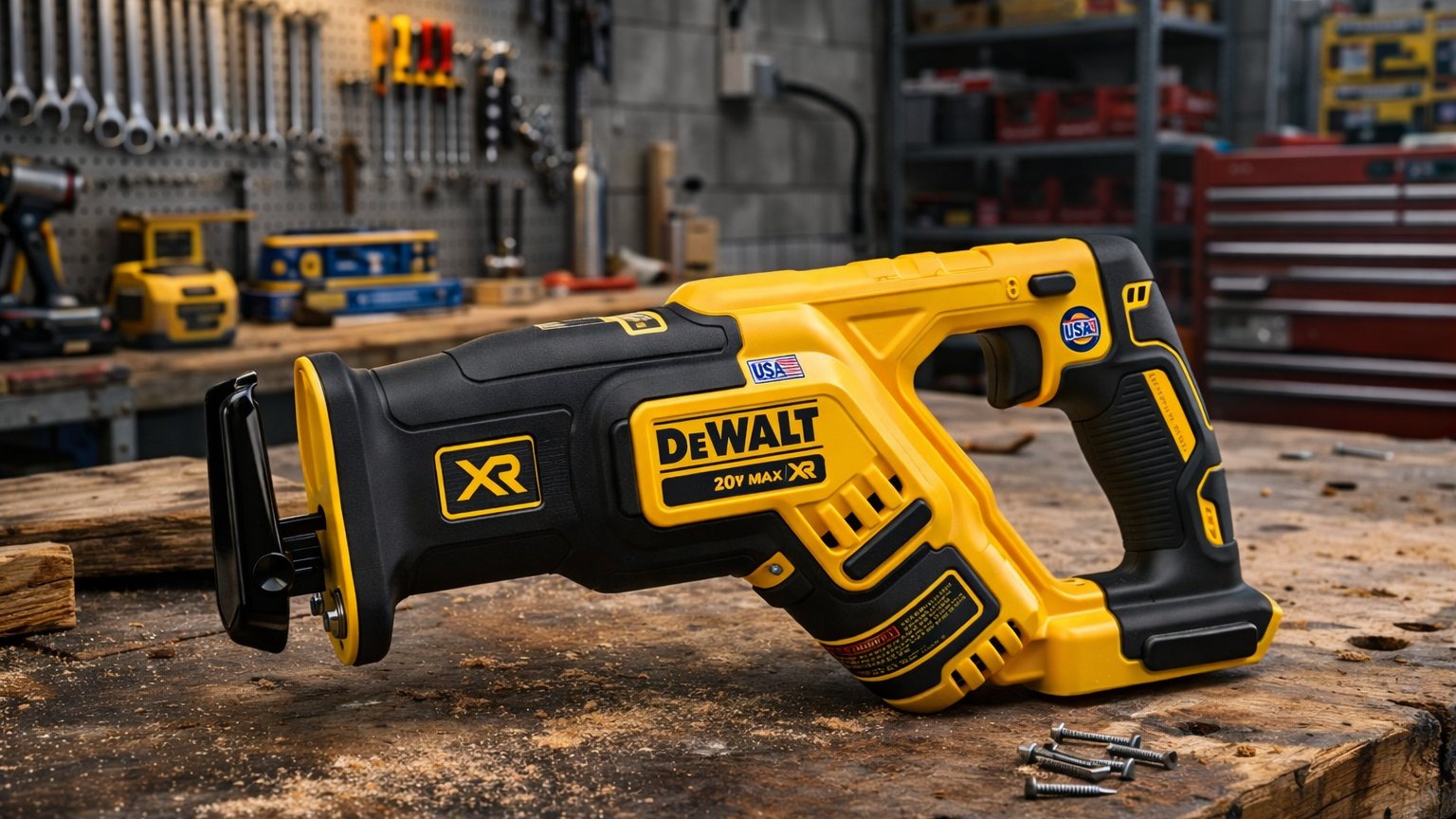
DeWalt DCS367B
Compact option
A better fit for buyers who want a shorter, easier-to-position reciprocating saw for tighter spaces and more controlled one-handed-feeling work, even if it gives up some of the straightforward value appeal of the Craftsman.
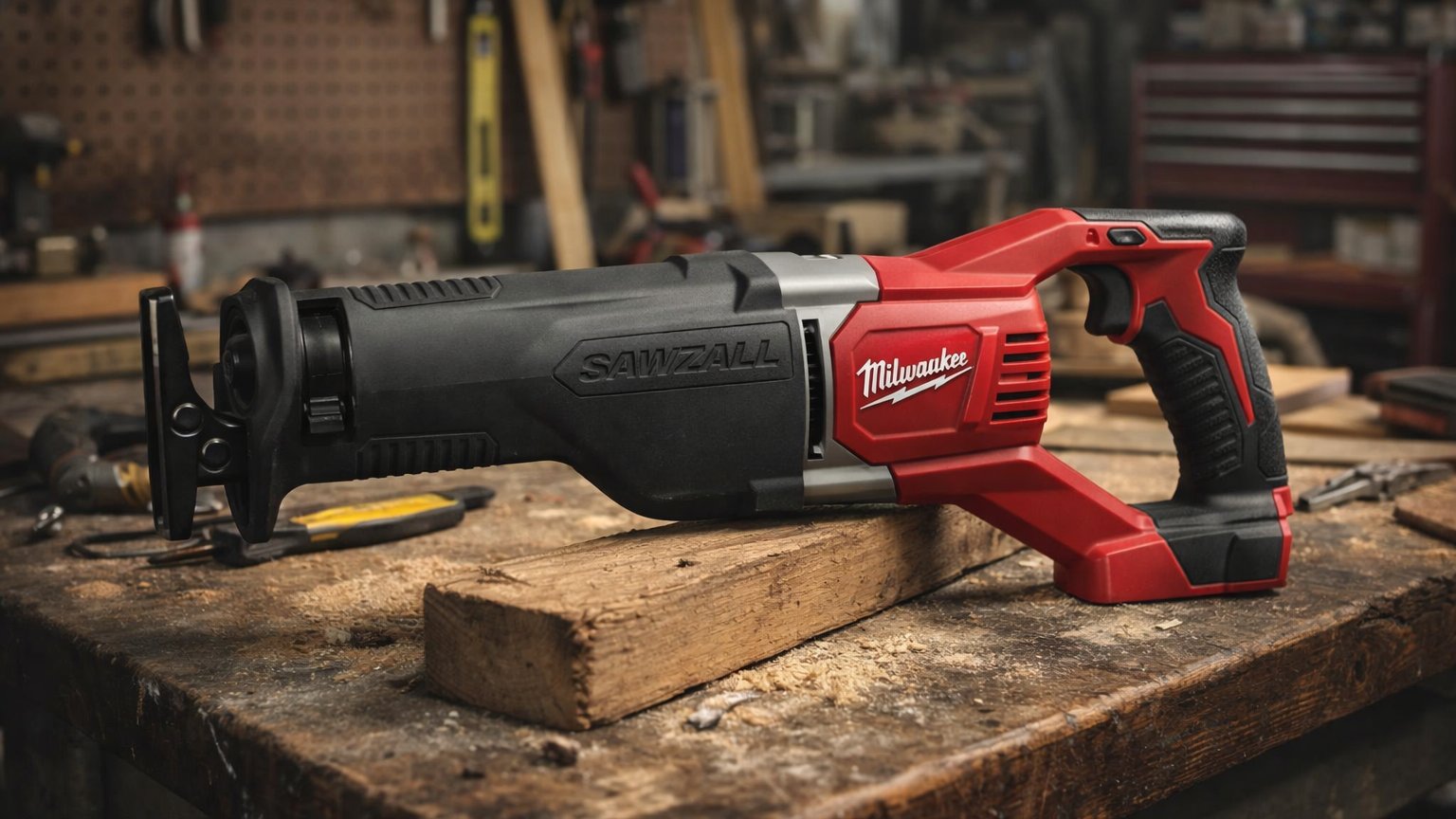
Milwaukee 2621-20
More refined
This makes more sense if smoother cutting behavior, stronger day-to-day durability impressions, and a more settled feel under load matter more than keeping costs lower within a more budget-oriented cordless setup.
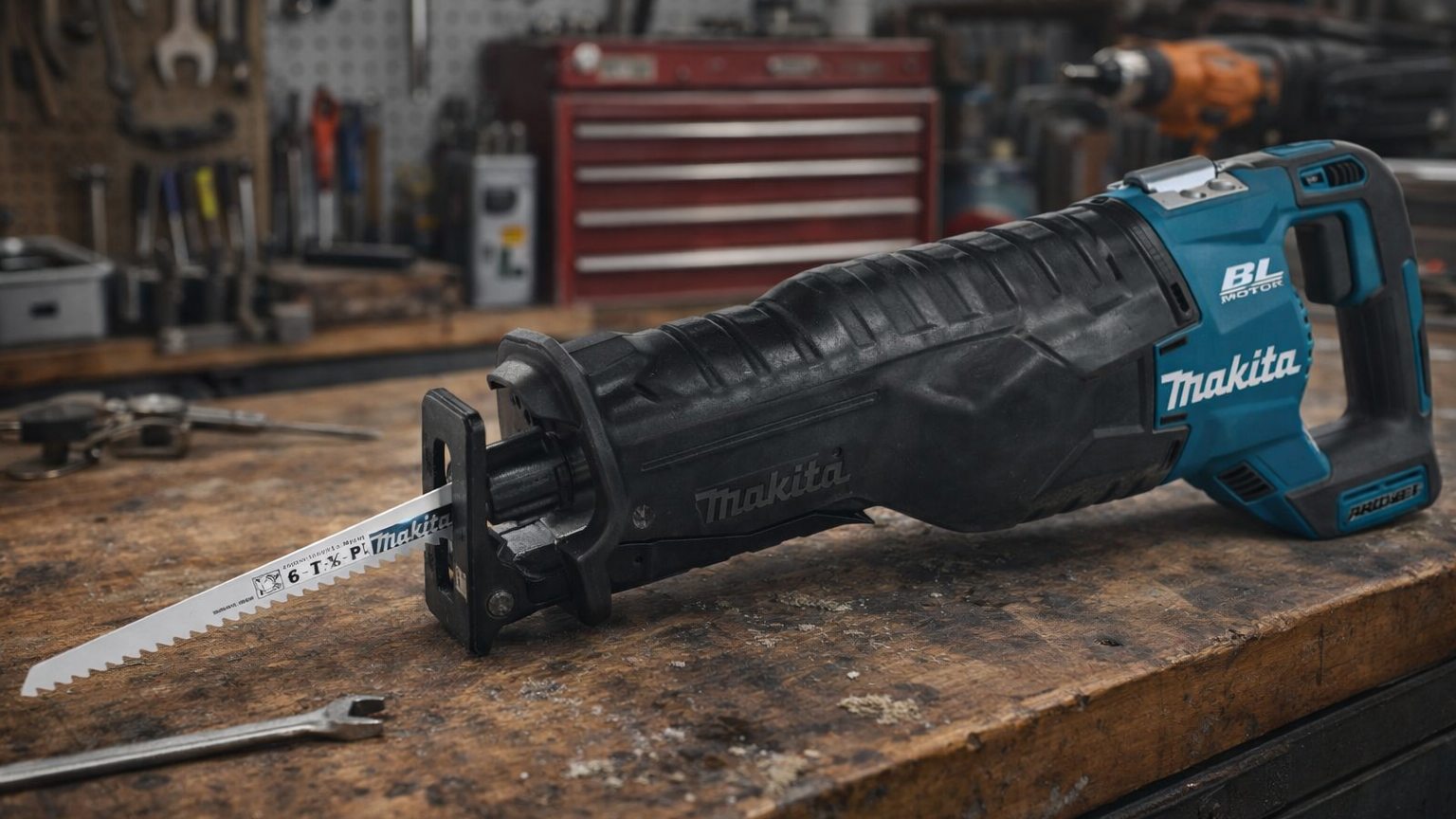
Makita XRJ05Z
Stronger upgrade
A better alternative for buyers willing to spend more for a more composed, higher-confidence cutting experience that feels better suited to frequent renovation and demolition work.
Sources
Sources & reference notes
Specifications, platform details, and general product positioning referenced in this review were checked against publicly available manufacturer information and current product listings. Where tool-only and kit configurations differ, those differences should be noted directly in the article.
- CRAFTSMAN product documentation and published specifications for the Craftsman CMCS300B reciprocating saw.
- V20 battery platform compatibility information for tool-only and bundled configurations.
- Retail product listings used to confirm current naming, SKU references, and included accessories where applicable.
Where to Buy
Craftsman CMCS300B
V20 Reciprocating Saw
Typical price range: $79–$149
Pricing varies by retailer, bundle, and whether a battery or charger is included.
Check Current PriceReview Snapshot
Craftsman CMCS300B
7.8
Practical value + versatility
Best for light demolition, home repairs, and occasional renovation work where affordability matters more than refined heavy-duty performance.
- Performance: Handles everyday tear-out and general cutting with usable power
- Handling: Straightforward to use, but rougher and more tiring in longer sessions
- Value: Makes more sense if V20 batteries are already part of the setup
Top 10 List
See the best reciprocating saws right now
Want the full picture? Our Top 10 breaks down the best reciprocating saws by performance, value, and real-world use.
View the Top 10Compare Models
Compare this saw head-to-head
See how the Craftsman CMCS300B stacks up against other reciprocating saws across cutting feel, handling, and overall value.
View ComparisonsAccessories You’ll Want
- Wood-cutting blade set (covers fast rough cuts, pruning, and general tear-out in wood)
- Metal-cutting blades (improves control and cut quality when working through pipe, conduit, or thin metal)
- Demolition blade assortment (helps handle mixed materials and reduces interruptions when one blade type is not enough)
- Extra battery pack (keeps the saw ready for longer projects and reduces downtime between cuts)
- Blade storage case (keeps blade types organized and makes it easier to grab the right one quickly)
Tip: Blade choice and battery availability shape the day-to-day experience more than most buyers expect, so it helps to keep a few task-specific blades and at least one backup battery on hand.