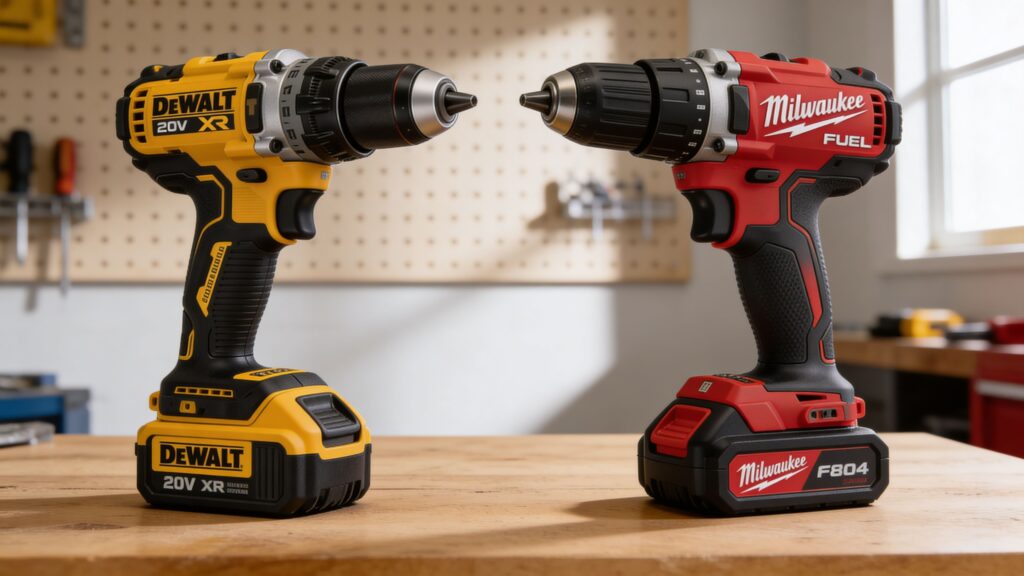
This head-to-head comparison examines the DeWalt DCD996B and Milwaukee 2804-20 hammer drills, focusing on real-world performance, durability, ergonomics, and key tradeoffs to clarify which better fits your work.

Reviews You Can Trust
Head-to-head
DeWalt DCD996B vs Milwaukee 2804-20: Which Hammer Drills Is Better?
A focused A/B look at what matters on real jobs: drilling speed in dense material, control for repeatable fasteners, comfort over long days, kit value, and the long-term cost of committing to a battery platform.
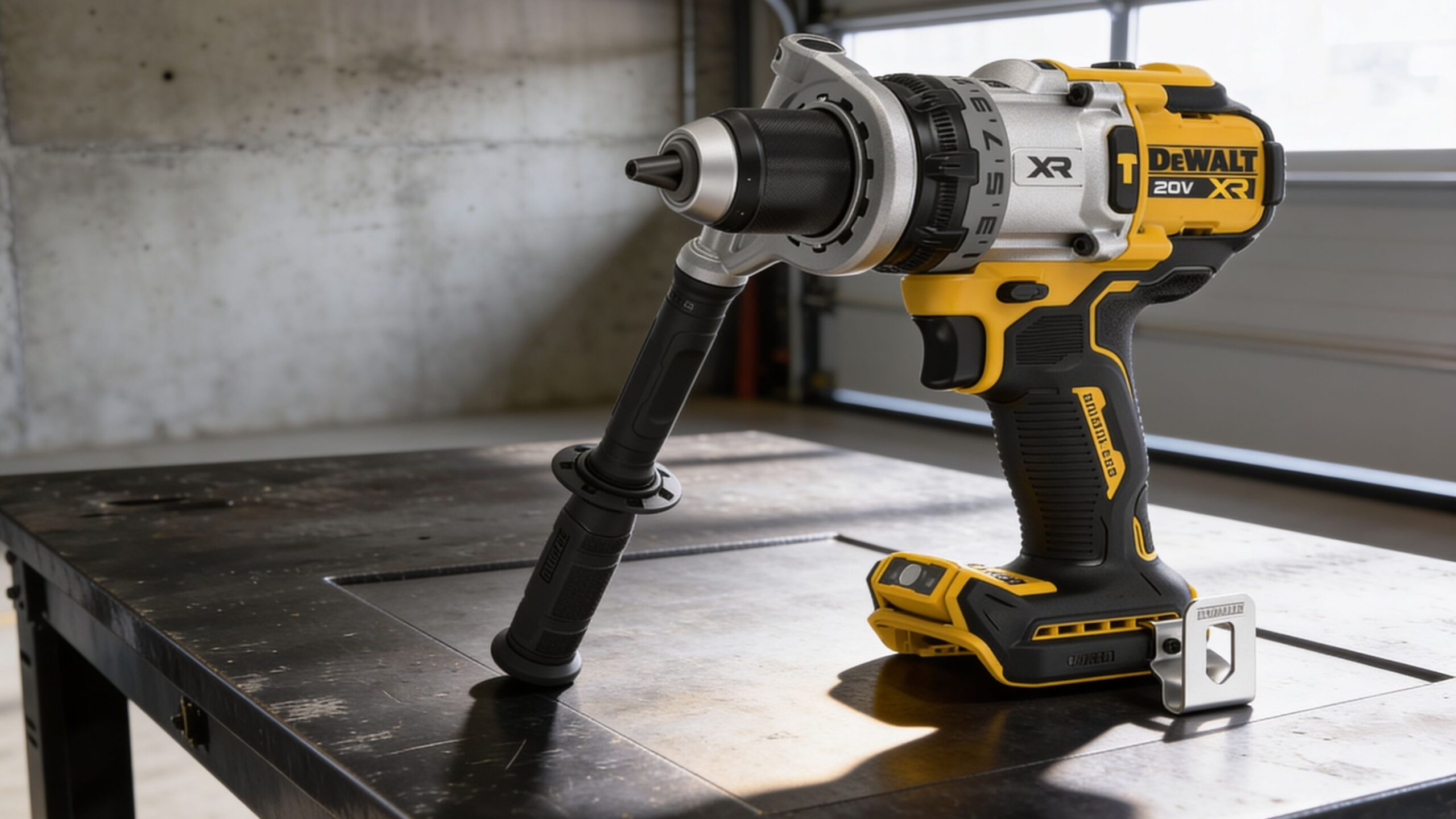
DeWalt DCD996B 20V MAX XR Brushless Hammer Drill/Driver
A dependable, jobsite-ready hammer drill that fits a wide range of work—from daily fastening and pilot holes to routine masonry duty—without feeling over-specialized.
- Comfortable, familiar handling for mixed drilling and fastening across a full day
- Strong hammer mode for occasional anchors and small-to-mid masonry holes
- Practical choice if you want reliable performance with an easy-to-expand platform
VS
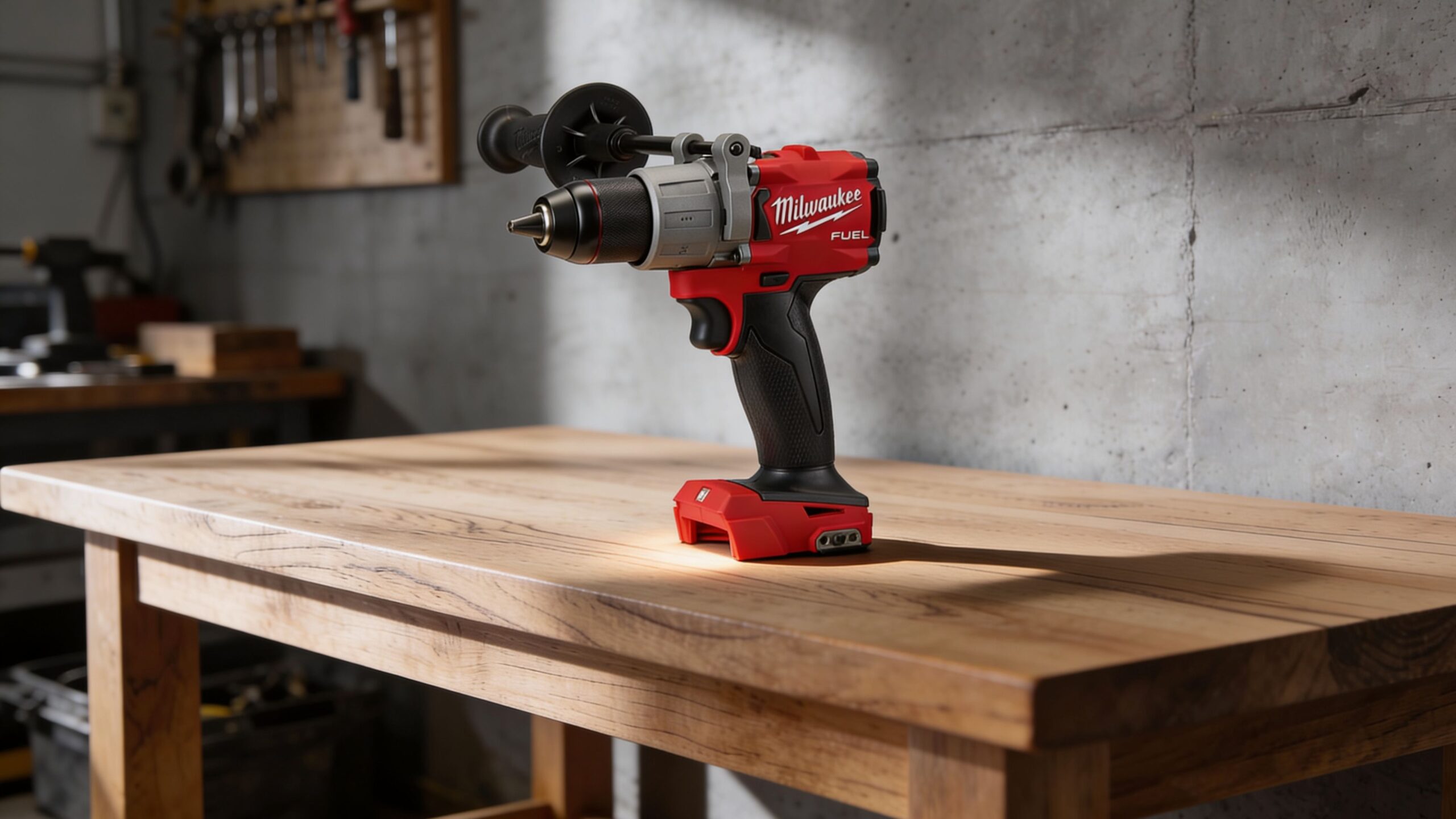
Milwaukee 2804-20 M18 FUEL Hammer Drill/Driver
A pro-first drill tuned for demanding work where you’re regularly boring larger holes, driving long fasteners, or working in tougher stock—and want consistent control when load increases.
- More composed feel when pushing larger bits or driving longer fasteners
- Strong control for clean starts, fewer cam-outs, and consistent screw seating
- Smart buy if you plan to build a wider cordless kit around one battery system
Power under load
Strong, jobsite-ready
More headroom
Milwaukee
Control & clutch consistency
Very good
Excellent
Milwaukee
Ergonomics (feel + fatigue)
Balanced, easy to place
Stable, slightly heavier
DeWalt
Value (typical kit pricing)
Often a better deal
Costs more
DeWalt
Battery ecosystem depth
Large
Massive
Milwaukee
Real-world context
This comparison reflects a synthesis of professional reviews, manufacturer data, long-term user feedback, and use-case patterns to highlight how each drill typically performs in everyday projects.
DeWalt — Why people choose it
- Reliable all-around performance for mixed drilling, fastening, and light-to-moderate masonry work
- Comfortable balance for repetitive tasks and frequent tool repositioning
- Common kits and wide availability make it easier to build out a practical 20V lineup
Milwaukee — Why people choose it
- More “push through it” confidence when bits bind or the material gets dense
- Excellent low-speed control for clean starts and consistent finish-quality seating
- Deep M18 lineup if you’ll expand into impacts, saws, nailers, and specialty tools
Verdict:
Choose Milwaukee if your work routinely pushes a drill hard—larger holes, tougher stock, longer fasteners—and you want the most composed feel under load with the deepest long-term platform. Choose DeWalt if you want a dependable, jobsite-ready hammer drill with strong everyday results, comfortable handling, and better typical value when you’re building out a practical cordless kit.