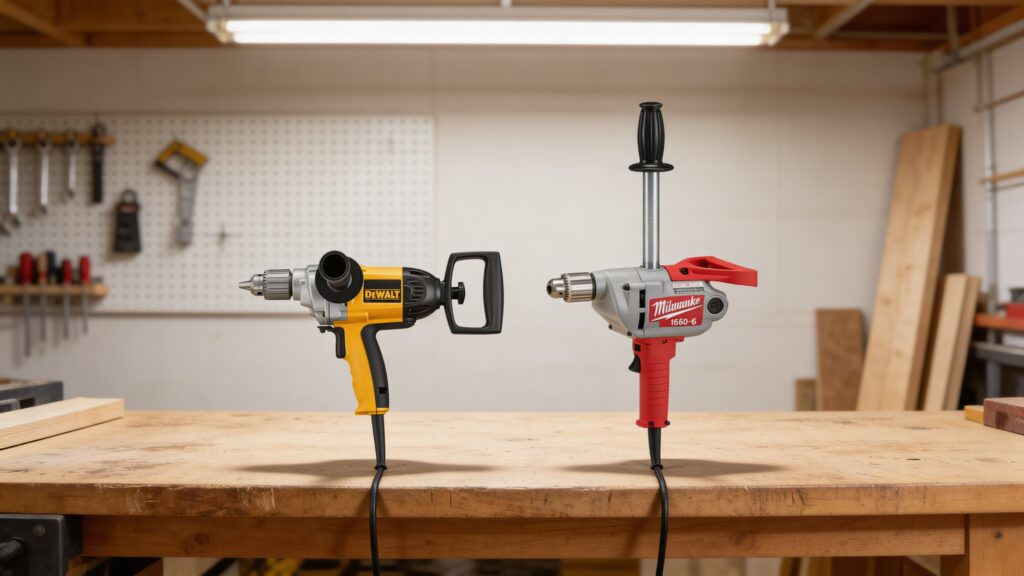
The DeWalt DW130V and Milwaukee 1660-6 are built for demanding mixing tasks. This head-to-head comparison examines power, handling, durability, and real-world performance to clarify key differences and practical tradeoffs.

Head-to-head
A clean A/B view of what matters when you’re mixing: steadiness at low RPM, resistance to bogging in thick material, comfort on two-handed control, and durability for repeat batches.
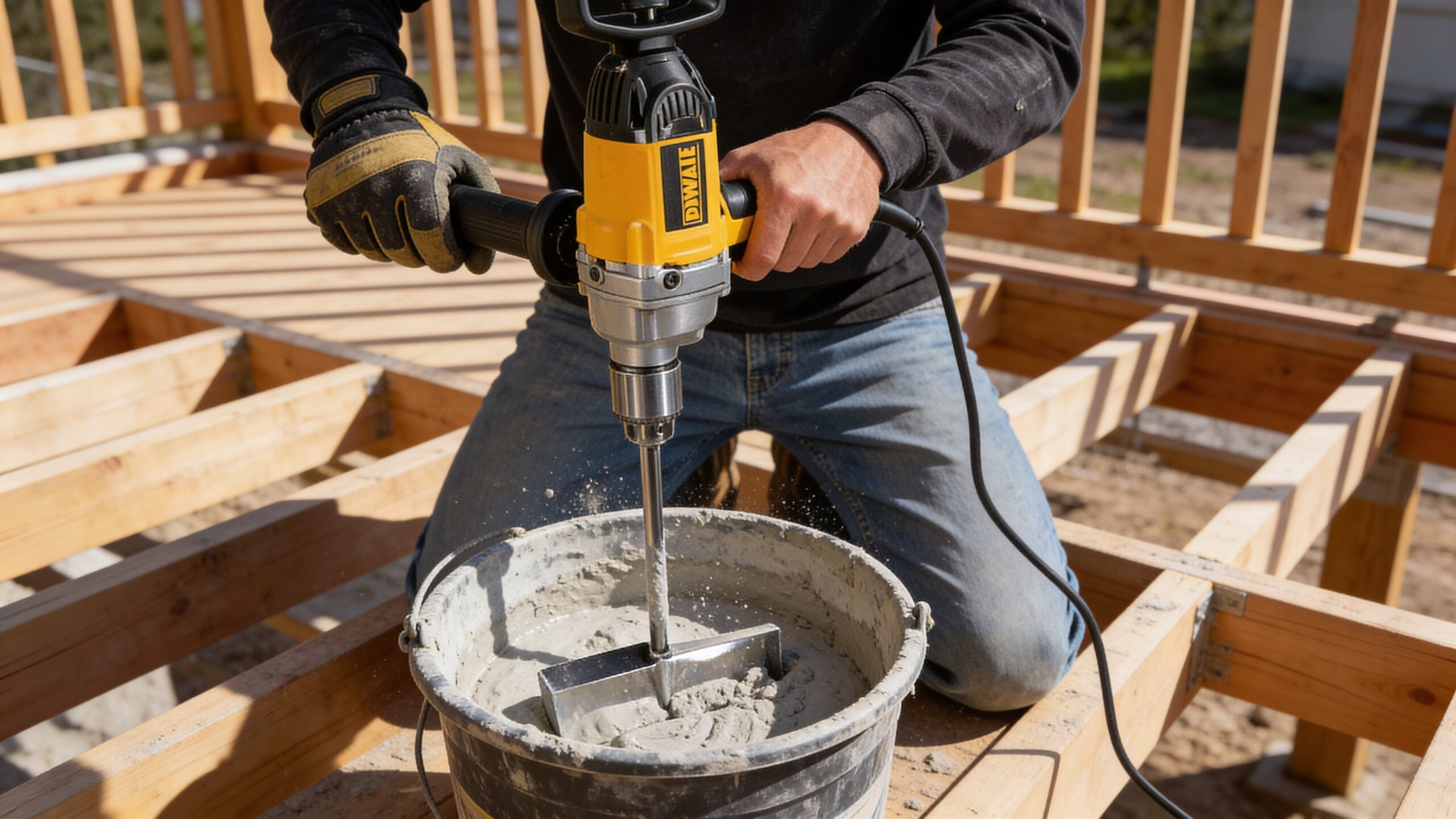
A spade-handle, corded mixer built for steady, low-speed blending—best when you want consistent runs in thicker materials and don’t want battery limits to shape your workflow.
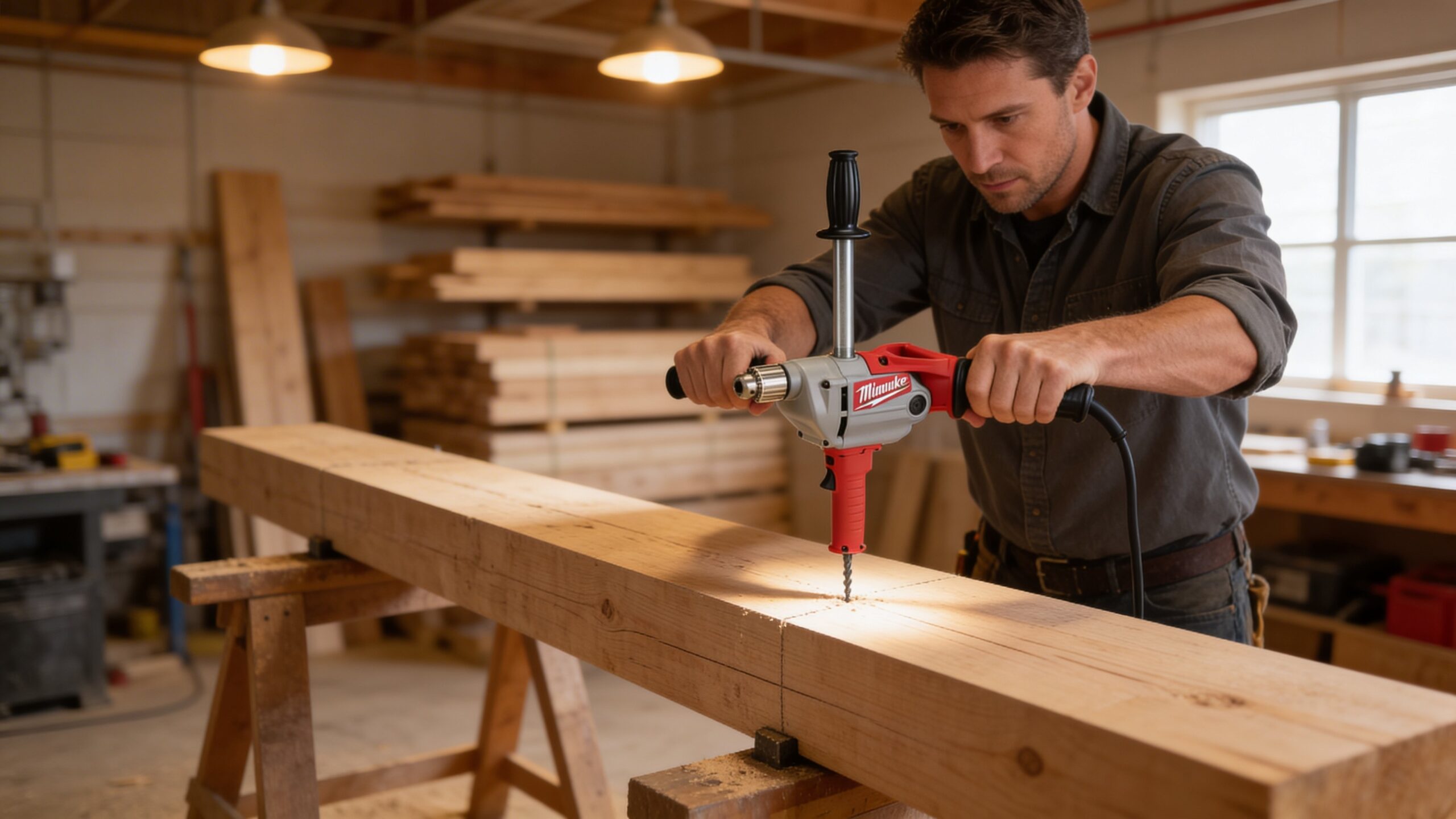
A compact, jobsite-friendly drill that prioritizes handling and control—best for lighter mixing, smaller batches, and tasks where maneuverability and quick setup matter.
Deep dive
In a mixing-drill matchup, the decision is less about headline specs and more about workflow: how calmly the tool ramps into thick material, how steady it stays when the mix tightens, and how much control you maintain without fighting the handle. The DeWalt DW130V leans into consistent, outlet-powered mixing for repeat batches, while the Milwaukee 1660-6 leans into compact handling and general-purpose versatility—especially when mixing is only part of the day.
Power delivery in real mixes: Thick mortar, compound, and mud punish tools that surge or bog. A corded mixer like the DW130V tends to feel more “even” through a batch because it isn’t gated by battery state or heat management, which matters when you’re doing back-to-back buckets. The 1660-6 can still handle lighter mixing, but it’s a better fit when the material isn’t consistently heavy or you’re not pushing large paddles all day.
Control at startup and near-stall moments: The riskiest part of mixing is the first few seconds—splashes, paddle wobble, and sudden grab when dry pockets catch. What matters is how predictably you can ramp speed and keep the bucket stable with two hands. The DW130V’s spade-handle format generally supports a more controlled, deliberate start for mixing. The Milwaukee’s compact form can feel easier to place and manage in tight spots, but the more “drill-like” handling puts a bit more emphasis on technique and keeping the paddle centered.
Fatigue and day-to-day handling: Mixing isn’t just force—it’s time on tool. Handle shape, stance, and how naturally you can brace the drill against your body matter more than small spec differences. The DeWalt tends to reward a stable two-hand posture for longer batches, while the Milwaukee tends to reward maneuverability—moving between tasks, setting the tool down frequently, or working in confined areas where a larger mixer format feels cumbersome.
Reliability confidence and ownership tradeoffs: For frequent mixing, simplicity is a feature: fewer variables, consistent behavior, and a tool that feels purpose-built. That’s the DW130V’s advantage—especially in shops or jobsites with dependable power. The Milwaukee makes more sense when you want one tool to cover a wider range of drilling tasks and only occasionally mix, or when the jobsite reality favors compact storage and quick setup more than repeat, heavy batches.
Where each ultimately fits: Choose the DeWalt DW130V when mixing is a recurring, high-resistance job and you value steady control and consistent batch-to-batch behavior. Choose the Milwaukee 1660-6 when you’re mixing smaller amounts, working in tighter areas, or prioritizing a versatile drill feel that can pivot between mixing and general drilling without feeling specialized.
Methodology
Our evaluation focused on real mixing workflows that reveal meaningful differences between a purpose-leaning corded mixer and a compact drill used for lighter mixing—not spec-sheet advantages. We prioritize how each tool behaves when starting a batch, working through thicker material, and repeating cycles over a workday, using a context-aware approach that reflects common jobsite and shop use.
Tasks: controlled startup in a bucket (to assess splash risk and paddle stability), mixing thinset or mortar to a consistent texture, mixing drywall compound for smoothness, and repeated batch cycles to see how handling, heat, and fatigue change over time.
What we scored: steadiness under load (bogging vs. smooth pull-through), low-speed control during starts, comfort and two-hand stability during longer mixes, perceived build confidence in high-resistance work, and ownership considerations like workflow fit (corded dependence vs. flexibility on site).
How results are interpreted: outcomes are judged by practical use cases—heavy, frequent mixing versus occasional, lighter batches—because the “right” tool depends on material thickness, batch size, access to power, and how often mixing competes with other drilling tasks.
What we ignored: isolated marketing claims, single-number performance promises, and features that don’t reliably change day-to-day mixing results—especially anything that doesn’t improve control, consistency, or comfort across repeat batches.
FAQ
Verdict
In this matchup, the decision comes down to workload and workflow. One tool favors steady, repeat mixing of thicker materials, while the other makes more sense when mixing is lighter-duty and versatility across drilling tasks matters just as much.
Recommended for Frequent Mixing
DeWalt DW130V Mixing DrillA stronger fit when mixing mortar, thinset, or compound is a regular task and consistent, outlet-powered performance supports your daily workflow.
Tip: If mixing is a recurring, heavy-duty task, a purpose-leaning mixer often feels more controlled over time; if it’s occasional, flexibility and compact handling may carry more weight.
Jump to the sections that help you decide between these two mixing drills—workload fit, control for thick materials, and practical ownership tradeoffs.
We prioritize reputable sellers, easy returns, and reliable availability.
Tip: Match paddle size and material thickness to the tool—oversizing a paddle in heavy mixes is the quickest way to increase strain, fatigue, and wear.
Choose a retailer
Prices checked regularly. We may earn a commission at no cost to you.