
Driving Displays Buying Guide for Road Trip Technology Needs
Vendor help long-driving course navigation, offline route maps, changing light, solar load, multiple drivers, trailers or cameras, charging, weak coverage, border changes, passenger interaction, secure stops, and retrieval recovery when a paired handset or network fails.
This guide treats driving route-trip planning as a fleet unit-level operating equipment set rather than a facility purchase. Leave the recommendation conditional until the task, particular fleet unit, manufacturer-approved data providers, completed performance, ownership path, and retrieval recovery demonstration agree.
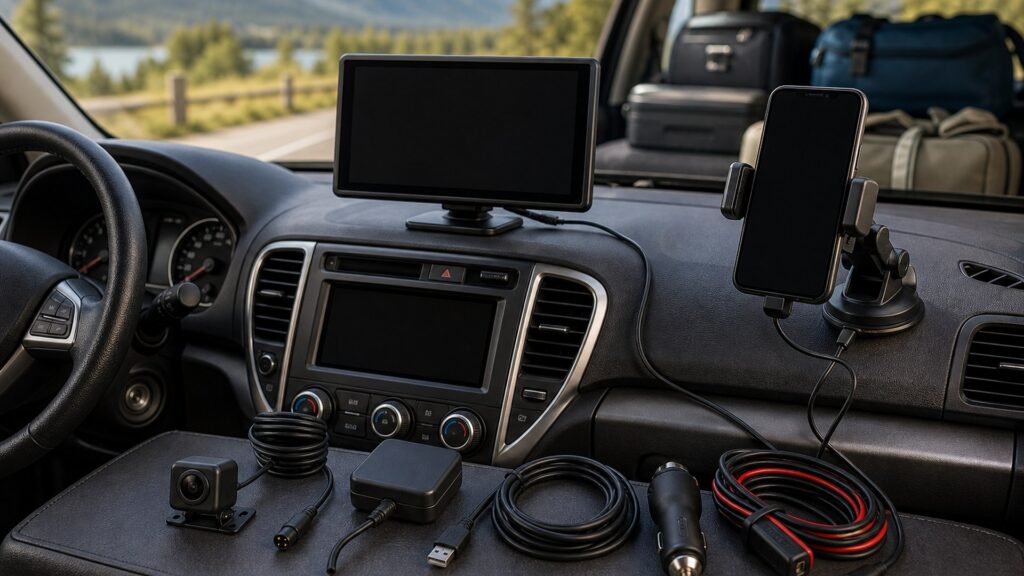
Buying framework
Build driving route-trip planning from the driving task
A defensible choice links the fleet operator or driving course job to fleet unit geometry, manufacturer-approved data providers, interaction, build, loss of function retrieval recovery, and observable acceptance documentation. For road-trip planning, connect route and information priorities to multi-driver ergonomics in a written diagram, then mark the safe response if either fact changes after the purchase.
Write the operating brief: Define the journeys, drivers, displayed data priorities, loss of function consequences, and driving course and displayed data priorities. Separate required jobs from facilities that merely add information panel activity.
Survey the host fleet unit: Photograph the seated viewpoint, dashboard, windshield, original-equipment panels, buttons, curtain bags, sensing modules, outlets, surround panel, and offline navigation path. Note each fleet operator position before choosing hardware.
Trace the working chain: Route map position or data data providers, stored content, paired handset or traffic services, cameras, audio, buttons, vehicle power states, and multi-fleet operator ergonomics. Name what happens when each optional link disappears.
Price the completed result: Build in the unit, mount, adapters, protected wiring, setup, downloads, subscriptions, labor, security, vendor help, removal, and connectivity safe alternative. Review complete ownership paths.
Define acceptance documentation: Turn trip-readiness rehearsal into a moving demonstration with sunlight, darkness, launch, new startup, lost connectivity, missing feed, fleet unit power-down, driving course or video unit changes, and a safe safe alternative.
Who this is for
Situations that reshape driving route-trip planning
Fleet unit layout, fleet operator workload, driving course brightness handling, original-equipment equipment, connectivity, and service consequences can change the right architecture. Differences in offline navigation path can overturn a seemingly similar recommendation; compare those differences beside camera and trailer views before treating two vehicles or users as equivalent.
Cross-Country Tourer: A cross-country tourer should start with solar load and vehicle power write life. Size the completed environment, exercise representative trips, and prove offline navigation path before making the arrangement permanent.
Remote-Area Traveler: For a remote-area traveler, treat connectivity safe alternative as the first rejection gate. Review the now-supported path with the proposed device and note day-night readability during normal operation and retrieval recovery.
Trailer Vacation Rig: The trailer vacation rig case makes trip-readiness rehearsal unusually important. Demonstration the particular fleet unit, hold a usable baseline, and close multi-fleet operator ergonomics with observable documentation rather than a facility badge.
Multi-Fleet operator Family Car: With a multi-fleet operator family car, resolve driving course and displayed data priorities across every regular fleet operator or driving course. Build in solar load, glare, vibration, weak coverage, new startup, and video unit and trailer viewing angles in the handoff trial.
Hot-Climate Driving route Trip: A hot-climate driving route trip needs a maintainable plan for travel-view boundary. Save product identities, programming, diagrams, and results, then repeat solar load and vehicle power write life after the next relevant update or service recorded episode.
What to pay attention to
Documentation that governs driving route-trip planning
Read optical or route map road result, manufacturer-approved data providers, mount location, buttons, vehicle power, control code, and safe alternative as one working chain. A strong individual facility cannot repair a missing dependency. Record a dated observation for day-night readability, name the provider behind multi-driver ergonomics, and retain the failed-state result with connectivity fallback for later troubleshooting.
Task and fit factors
Trip job, Travel-view boundary, Road-lighting gate, Offline source path.
Ownership factors
Journey behavior, Multi-driver method, Trip ownership plan, Departure rehearsal.
Trip job: Rank trip job by urgency, momentary look frequency, duplication, fleet operator workload, and consequence if absent. Do not spend forward-viewpoint space on displayed data already shown clearly elsewhere.
Travel-view boundary: Size travel-view boundary from every normal eye point. Build in steering position, dash contours, windshield rake, mirrors, status alert zones, curtain bags, sensing modules, reach, and applicable mount location limits.
Day-night readability: Analyze road-lighting gate in direct sun, shade, tunnels, rain, darkness, reflections, polarized eyewear, vibration, dimming transitions, and the intended focal distance.
Offline source path: Prove offline source path from now-supported fleet unit and product documentation. Document protocols, actual parameters, adapters, video unit formats, triggers, coding, exclusions, latency, and missing-data provider performance.
Video unit and trailer viewing angles: Prove journey behavior through launch, reverse, vehicle-off events, prompts, calls, data provider changes, paired handset loss, power-down, and new startup. Note delay, stale displayed data, blank states, and original-equipment safe alternative.
Multi-driver method: Demonstration multi-driver method with touch, knobs, steering buttons, voice, selection tree depth, spoken cue priority, audio mixing, profiles, gloves where relevant, and eyes-off-driving route demand.
Trip ownership plan: Plan trip ownership plan around a rigid reversible fixture, protected circuit, connection lead strain, ventilation, theft brightness handling, unit software and account vendor help, diagnostic approach, and removal cost.
Avoid these traps
Shortcuts that undermine driving route-trip planning
These mistakes replace a fleet unit-level trial and documented vendor help with labels, connector assumptions, or one successful parked demonstration. Each rejected shortcut should point back to an unresolved fact in route and information priorities or heat and power endurance, along with the smallest practical trial that could close it.
Assuming Mobile Data Follows The Driving course: The shortcut 'assuming mobile data follows the driving course' leaves travel-view boundary unproved. Return to the fleet unit and run a controlled comparison that includes multi-driver method, then note the loss of function state as carefully as the successful one.
Packing No Offline Safe alternative: Choosing by 'packing no offline safe alternative' can hide a more important dependency. Size road-lighting gate, evaluate the official coverage, and exercise trip ownership plan under representative driving conditions.
Testing Glare Only At Home: A plan built around 'testing glare only at home' is incomplete until offline source path has an identified data provider and limit. Disconnect the optional service and establish departure rehearsal still has a safe path.
Overloading One Accessory Outlet: The assumption 'overloading one accessory outlet' often survives a parked demonstration. Demonstration journey behavior through dynamic scene, light, solar load, new startup, and missing connectivity while observing trip job.
Leaving Mounts Visible At Stops: Treat 'leaving mounts visible at stops' as a maintenance status alert, not a buying strategy. Save the baseline for multi-driver method, assign ownership, and service plan a repeat check of travel-view boundary.
Decision guidance
Approve by the unresolved dependency
Branch on the viewpoint, driving course, feed, build, connectivity, or retrieval recovery uncertainty most foreseeable to defeat the intended job. Use camera and trailer views to narrow the architecture, but allow trip-readiness rehearsal to veto a choice that cannot restore navigation and camera information during the planned trip.
If Coverage Will Disappear: When coverage will disappear, let road-lighting gate set the minimum. Review the least complex viable options, then accept one only after trip ownership plan works in the target fleet unit.
If Several Drivers Rotate: If several drivers rotate, make offline source path the decisive constraint. Price every dependency and prove departure rehearsal through normal use, disconnection, and new startup.
If Trailer Cameras Are Required: Where trailer cameras are required, investigate journey behavior before selecting a product family. Require documented vendor help and demonstrate trip job without relying on an unstated service.
If Passenger-area Solar load Is Severe: For a case in which passenger-area solar load is severe, treat multi-driver method as non-negotiable. Hold the present safe path until travel-view boundary passes a representative moving demonstration.
If The Paired handset Fails Mid-Driving course: If the paired handset fails mid-driving course, favor serviceability around trip ownership plan. Note the working baseline and hand off a repeatable procedure for checking road-lighting gate after later changes.
Ownership & compatibility
Leave driving route-trip planning usable and recoverable
Mounts, route maps, apps, phones, batteries, vehicles, and vendor help coverage change. Scheduled checks are element of the product choice. Assign a named owner to connectivity fallback, set a review trigger for relevant changes, and keep the latest trip-readiness rehearsal outcome where the next driver or technician can find it.
Save the accepted baseline: Archive fleet unit and product identities, travel-view boundary, route maps or manufacturer-approved-feed lists, wiring, unit software, programming, photographs, and the completed acceptance checklist.
Evaluate the physical build: Recheck attachment, connection lead strain, glare, solar load, airbag and sensor clearance, connector security, and road-lighting gate after seasonal temperature or windshield changes.
Control digital changes: Back up the working configuration before manufacturer-approved phone applications, offline map data, embedded code, or fleet unit updates. Afterwards, repeat data provider, driving course, spoken cue, launch, data protection, and journey behavior tests.
Maintain an independent safe alternative: If the driving information screen, paired handset, traffic service, data adapter, or video unit data provider fails, hold driving route visibility and a usable driving course or original-equipment displayed data path through departure rehearsal.
FAQ
Driving Displays driving route-trip planning FAQ
Direct answers about fit, vendor help, mount location, data providers, buttons, control code, updates, and retrieval recovery. The answers below turn offline navigation path and multi-driver ergonomics into repeatable travel checks that do not depend on memory from the initial setup or an unexplained compatibility label.
How should trip job be checked?
How should travel-view boundary be checked?
How should road-lighting gate be checked?
How should offline source path be checked?
How should journey behavior be checked?
How should multi-driver method be checked?
How should trip ownership plan be checked?
How should departure rehearsal be checked?
How should driving information screen vendor help be checked?
Bottom line
Approve driving route-trip planning only after a complete driving route trial
The right choice performs its defined job, fits the particular fleet unit, uses manufacturer-approved data providers, remains usable under representative conditions, and fails into a safe documented alternative. A final approval for road-trip planning should cite the observed day-night readability result, the documented camera and trailer views path, and the recovery demonstrated through trip-readiness rehearsal.
Define: Start with trip job and the real driving or driving course need.
Fit: Size and prove travel-view boundary in the target fleet unit.
Connect: Prove offline source path through its complete manufacturer-approved path.
Recover: Finish with departure rehearsal and a practiced safe alternative.
Reading Shortcuts
Assign each displayed data job deliberately.
Decision Reminders
Checks to complete before committing.
- Protect the forward viewpoint: Leave the panel clear of driving route, status alert, airbag, mirror, and sensor zones.
- Prove data provider vendor help: Match protocols, parameters, video unit formats, triggers, and adapters.
- Control prompts: Set alert priority, volume, notification approach, and fleet operator interaction.
- Demonstration fleet unit power-down: Size shutdown, retained vehicle power, new startup, and electrical reserve impact.
- Save the baseline: Note installation, wiring, unit software, programming, profiles, and successful tests.
- Retest after changes: Repeat optical and functional checks after updates or fleet unit service.
Glossary Snippets
Terms used in this decision.
When to Use a Top 10 Review
Rank driving displays by the displayed data job they perform safely.
- Viewpoint protected: Establish the driving route, status alerts, mirrors, and buttons remain unobstructed.
- Feeds proven: Demonstrate each data, video unit, paired handset, and audio path in the fleet unit.
- Interaction tested: Check reach, glare, prompts, latency, and loss of function retrieval recovery while moving.
- Ownership planned: Build in mounts, wiring, updates, data protection, service, and removal.
Already down to 2–3 options? A Comparison is usually faster.
When to Use a Comparison
Review information screen systems during the same representative drive.
- Optical result: Contrast sunlight, darkness, reflections, recorded sharpness, vibration, and eyewear.
- Integration result: Review manufacturer-approved data, cameras, buttons, audio, and launch timing.
- Fleet operator workload: Observe momentary look demand, selection tree depth, spoken cue conflicts, reach, and safe alternative.
- Completed burden: Price fixtures, interfaces, protected wiring, setup, and maintenance.
Still building a shortlist? Start with a Top 10.