
Hammer Drills Buying Guide for Brick and Block Walls
Hammer drills are useful when a standard drill struggles to make clean anchor holes in brick, concrete block, or mortar. The tricky part is choosing the right level of tool: some shoppers only need occasional hammer mode for light wall anchors, while others should step up to an SDS-plus rotary hammer before they waste time, bits, and patience.
This buying guide explains how to match a hammer drill to brick and block wall work, including hole size, wall density, bit style, dust control, safety features, and battery or corded tradeoffs. Use it to decide what is enough, what is overkill, and where the long-term costs show up after the first project.
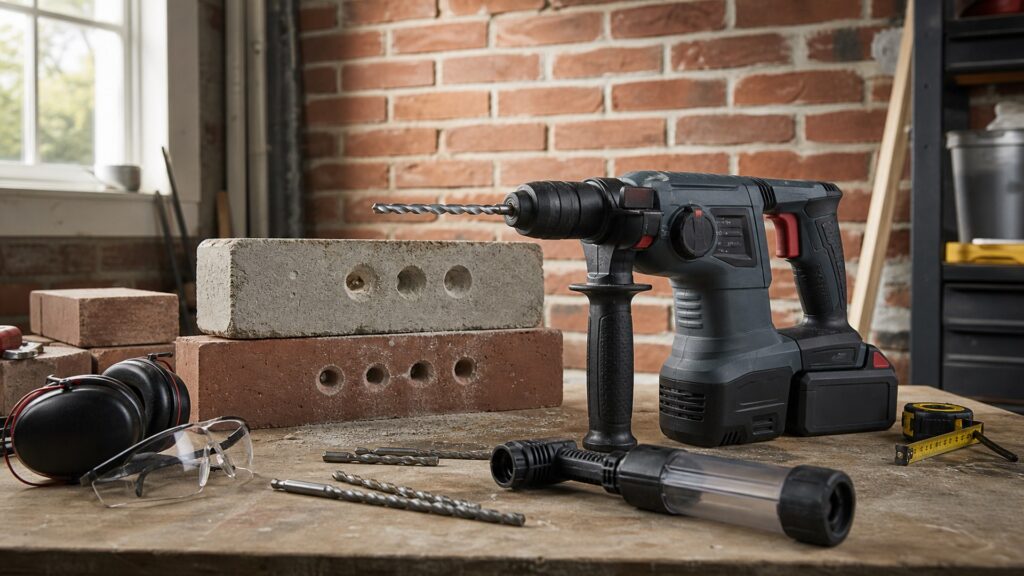
Buying framework
How to think about buying a hammer drill for masonry walls
Brick and block walls reward the right setup and punish the wrong one. Before comparing models, decide how often you drill masonry, how large the holes need to be, and whether you are drilling soft brick, mortar joints, hollow block, or dense concrete block. Those details matter more than a single power number.
Start with the wall, not the tool: Occasional small anchors in brick or mortar can be handled by many hammer drill/drivers. Frequent holes in dense block, old hard brick, or concrete usually justify an SDS-plus rotary hammer.
Match the bit system to the workload: Standard 3-jaw chucks accept round or hex-shank masonry bits for lighter work. SDS-plus tools lock bits into a dedicated shank that transfers impact energy more efficiently and changes bits faster.
Hole size changes everything: A few 3/16-inch or 1/4-inch anchor holes are a different job from repeated 1/2-inch holes for sleeve anchors. Larger holes demand more impact energy, better side-handle control, and sharper carbide bits.
Control still matters: Masonry drilling is not just about aggression. Smooth trigger response, a stable side handle, a depth stop, and predictable starting speed help keep holes accurate and reduce bit walk on brick faces.
Plan for dust from day one: Drilling brick and concrete block can release fine silica-containing dust. A dust extractor, shroud or dust cup, eye protection, hearing protection, and a respirator-rated approach are part of buying well, not optional extras for serious work.
Who this is for
Pick the hammer drill setup that matches your wall work
The right choice depends on whether masonry drilling is a once-in-a-while task or the main reason you are buying the tool. Use these profiles to avoid overpaying for a heavy tool you will hate using, or underbuying for walls that need more impact energy.
Apartment and homeowner anchor jobs: Look for a compact hammer drill/driver with a good clutch, low-speed control, and a 1/2-inch chuck if you will mostly hang shelves, brackets, hose reels, or light fixtures in brick or block.
Renovation and repeat installation work: Prioritize a stronger brushless hammer drill with a side handle, depth stop, metal chuck, and batteries that can support repeated holes without sagging halfway through the job.
Dense block, old brick, and frequent anchors: Consider an SDS-plus rotary hammer instead of a drill/driver with hammer mode. The tool is bulkier, but it usually drills masonry faster, with less pressure from the user.
Overhead or ladder work: Weight, balance, and dust capture matter as much as power. A lighter tool with a smaller battery may be safer and easier to control than a heavy high-output kit.
One-platform tool buyers: If you already own batteries, compare the hammer drill options inside that platform first. Tool-only pricing can be attractive, but only if the batteries have enough capacity for masonry work.
What to pay attention to
Which hammer drill specs actually matter for brick and block
Spec sheets mix useful details with numbers that are easy to market and hard to feel. For masonry walls, focus on the specs that affect control, bit fit, sustained drilling, and safety.
Specs that affect feel
Weight, handle design, trigger control, vibration, side-handle stability, and visibility around the bit determine how accurately the tool starts and how tiring it becomes.
Specs that affect capability
Hammer mode, blows per minute, supported masonry bit diameter, chuck or SDS-plus shank type, battery capacity, and sustained speed determine which wall jobs remain practical.
Hammer action and BPM: Blows per minute indicates how often the tool pulses, but it does not tell the whole story. A rotary hammer's impact energy can matter more for larger or repeated masonry holes.
Chuck type: A 1/2-inch metal chuck adds bit grip and versatility on hammer drill/drivers. SDS-plus is a different system for rotary hammers and requires matching SDS bits.
Side handle and depth stop: These are not extras for masonry. A secure side handle improves control if the bit binds, while a depth stop helps keep anchor holes consistent.
Speed ranges: Lower speed helps start holes accurately and protects bits. Higher speed may help in lighter masonry, but pushing too fast can overheat the bit and widen the hole.
Battery capacity: Larger packs improve runtime and voltage stability, but they add weight. For overhead wall work, two moderate packs can be more comfortable than one oversized battery.
Often overhyped: peak torque, maximum RPM, and kit bundle size. For brick and block, bit quality, wall density, dust management, and tool class usually explain more of the real result.
Avoid these traps
Common mistakes people make when buying a hammer drill
Most frustration comes from matching the wrong tool to the wall or treating masonry like wood. These mistakes lead to slow drilling, oversized holes, broken bits, dust problems, and a tool that feels worse than expected.
Buying a standard drill and hoping better bits will fix it: Good bits help, but a drill without hammer action is the wrong starting point for repeated brick or block holes.
Using a hammer drill when a rotary hammer is the real answer: If you need larger holes, many holes, or work in dense concrete block, SDS-plus can save time and reduce user effort.
Ignoring the anchor system: Anchors often require a specific pilot-hole diameter and depth. Oversized holes can weaken holding power, especially in hollow block or crumbly mortar.
Skipping dust control: A quick hole can still make fine dust. Plan for extraction, cleanup, and personal protection before the first trigger pull.
Pressing too hard: Excess pressure can slow the hammer action, heat the bit, and chip the wall face. Let the tool and sharp carbide bit do the work.
Assuming every masonry wall behaves the same: Soft brick, hard brick, mortar, hollow block, and filled block all drill differently. Test in a less visible spot when finish quality matters.
Decision guidance
Which type of hammer drill is right for your wall projects
Choose by workload first, then by battery platform and budget. A tool that fits your common hole sizes and wall materials will feel more capable than a more expensive model chosen only for headline numbers.
Buy a compact hammer drill/driver if: you mostly drill occasional small anchor holes in brick, mortar, or block and also want one tool for everyday drilling and screwdriving.
Buy a full-size brushless hammer drill if: you drill masonry more often, want stronger battery performance, need a side handle, and still value drill/driver versatility for non-masonry work.
Buy an SDS-plus rotary hammer if: masonry is the main job, holes are larger or frequent, or you need cleaner progress in dense block, concrete, or old hard brick.
Choose corded if: you value lower upfront cost, steady power, and do not mind managing an outlet and extension cord. Corded rotary hammers can be strong value for occasional heavy masonry work.
Choose cordless if: mobility, ladder work, outdoor walls, or platform convenience matters. Budget for batteries that can actually support masonry drilling.
If you are unsure: choose the lightest tool that handles your largest realistic hole size, then spend on quality masonry bits, dust control, and the right anchors.
Ownership & compatibility
What you are really buying for long-term masonry work
A hammer drill purchase includes the tool, the bit system, dust-control accessories, batteries or cords, and the anchor workflow around it. Long-term satisfaction often depends on those pieces more than the drill body alone.
Masonry bits: Buy carbide-tipped bits from a reputable line and match the shank to the tool. Replace dull bits; worn tips make the drill feel weak and can damage the hole.
Dust accessories: Look for compatible dust cups, shrouds, or extractor attachments if you drill indoors. For heavier work, a proper dust extractor is easier to live with than cleanup after the fact.
Battery platform: Cordless hammer drilling drains packs faster than ordinary driving. Check charger speed, pack cost, and whether the same batteries support other tools you expect to buy.
Safety and control features: A side handle, mechanical clutch or electronic bind control, vibration control, and good lighting are practical features, especially when drilling near edges or overhead.
Maintenance: Keep vents clear, avoid storing bits loose in a way that damages carbide tips, clean dust from the chuck or SDS mechanism, and follow the tool maker's instructions for SDS shank grease when required.
Total cost: The full setup may include bits, anchors, dust collection, spare batteries, PPE, and replacement wear items. A cheap bare tool can become expensive if the supporting pieces are missing.
FAQ
Hammer drill buying guide FAQ
Quick answers to common shopper questions about hammer drills for brick, block, anchors, bits, and dust control.
Do I need a hammer drill for brick walls?
Is a hammer drill the same as a rotary hammer?
Can I use a hammer drill on concrete block?
What size chuck should I look for?
Are cordless hammer drills good enough for brick?
What bits should I buy for brick and block?
Should I drill into brick, block, or mortar?
How important is dust collection?
Can I use hammer mode for wood or metal?
Bottom line
The simplest way to choose a hammer drill for brick and block
Buy for the wall material and hole pattern you actually expect. Small occasional anchors call for a comfortable hammer drill/driver; repeated or larger masonry holes call for SDS-plus.
If you want one flexible household tool: choose a brushless hammer drill/driver with a 1/2-inch chuck, side handle if available, good low-speed control, and batteries you can share with other tools.
If masonry is the main job: skip the compromise and look at SDS-plus rotary hammers. They are less versatile for screwdriving but far better suited to repeated brick, block, and concrete holes.
If budget is tight: buy the right class of tool first, then spend carefully on carbide bits and anchors. Dull or mismatched bits can make even a good drill feel poor.
If you drill indoors: include dust control and PPE in the budget. A cleaner drilling setup protects the room, the tool, and the person using it.
Final check: choose by your largest realistic hole size, the number of holes per project, and how hard the wall material is. That simple filter usually points to the right tool class.
Reading Shortcuts
Jump to the sections that matter most for choosing a hammer drill for brick and block walls.
Decision Reminders
A quick checklist before you commit to a hammer drill setup.
- Start with hole size: repeated larger anchor holes usually need more than basic hammer mode.
- Match the bit system: standard masonry bits fit drill chucks; SDS-plus bits require SDS-plus tools.
- Do not skip dust control: masonry dust affects cleanup, tool life, and personal protection.
- Use the right anchor: hole diameter and depth matter for holding strength in brick and block.
- Balance power with control: side handles, trigger feel, and weight matter near edges or overhead.
- Budget beyond the tool: bits, batteries, dust accessories, and PPE are part of the real cost.
Glossary Snippets
Quick translations for terms that confuse hammer drill buyers.
When to Use a Top 10 Review
Use this format when you want a faster way to narrow the hammer drill field.
- You are early in the process: a Top 10 helps separate light hammer drill/drivers from heavier masonry-focused tools.
- You want a shortlist: rankings can organize choices by compact size, value, cordless platform, and heavy-use needs.
- You are comparing tool classes: it can show when SDS-plus is worth considering instead of another drill/driver.
- You are planning a kit: it is useful for seeing batteries, chargers, and accessories at a glance.
Already down to 2-3 tools? A Comparison is usually faster than reading broad buying advice.
When to Use a Comparison
Ideal once you have a shortlist and need clear tradeoffs for masonry wall work.
- You narrowed it to 2-3 options: direct comparisons make differences in weight, bit system, battery cost, and control easier to see.
- You are deciding hammer drill vs SDS-plus: a comparison can clarify whether speed and impact energy outweigh everyday versatility.
- You care about ownership cost: batteries, chargers, masonry bits, and dust accessories are easier to compare side by side.
- You are ready to buy: comparisons work best after your wall type, anchor size, and workload are clear.
Still exploring? Start with a Top 10 to identify the right hammer drill category first.