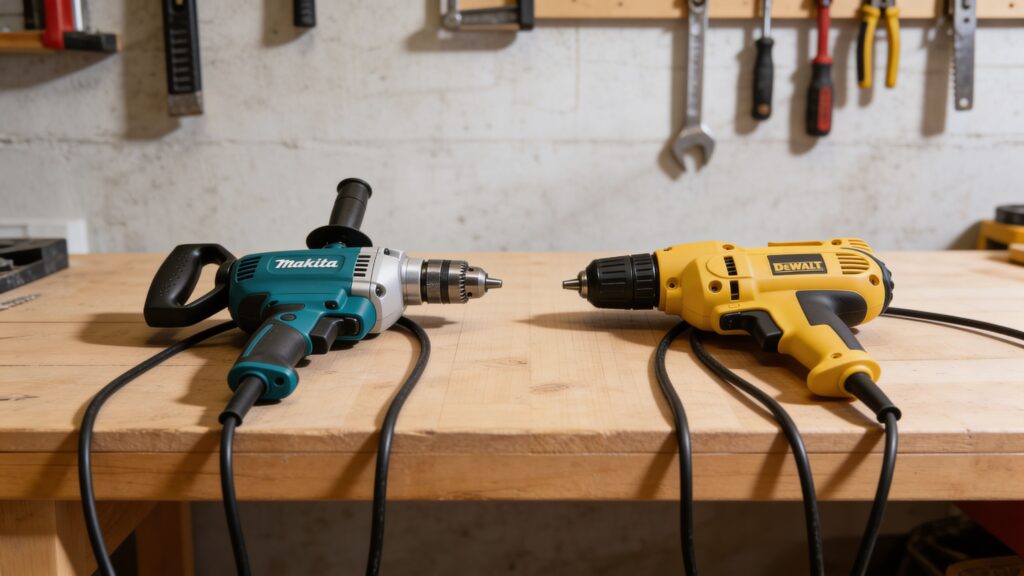
This head-to-head comparison examines high-torque and compact corded drills, highlighting real-world performance differences, practical tradeoffs, and application-specific considerations to help you choose the right tool.

Head-to-head
A clean A/B view of what matters on real jobs: power under load, control for clean starts, comfort in tight spaces, and where each form factor makes the most sense before you buy.
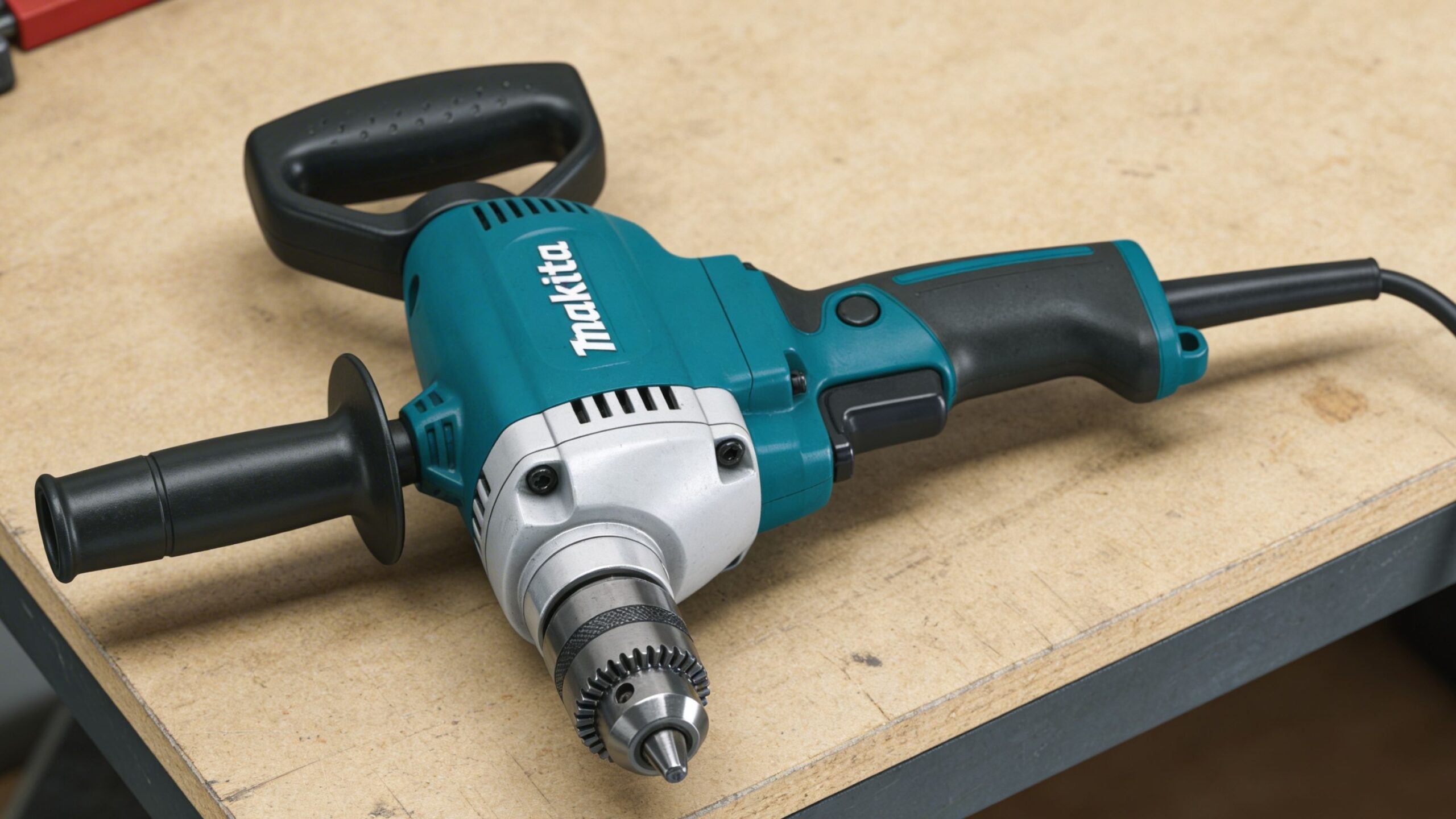
Built for demanding holes and stubborn materials, these prioritize low-speed muscle and stability when the bit loads up—ideal when you’d rather not baby the tool.
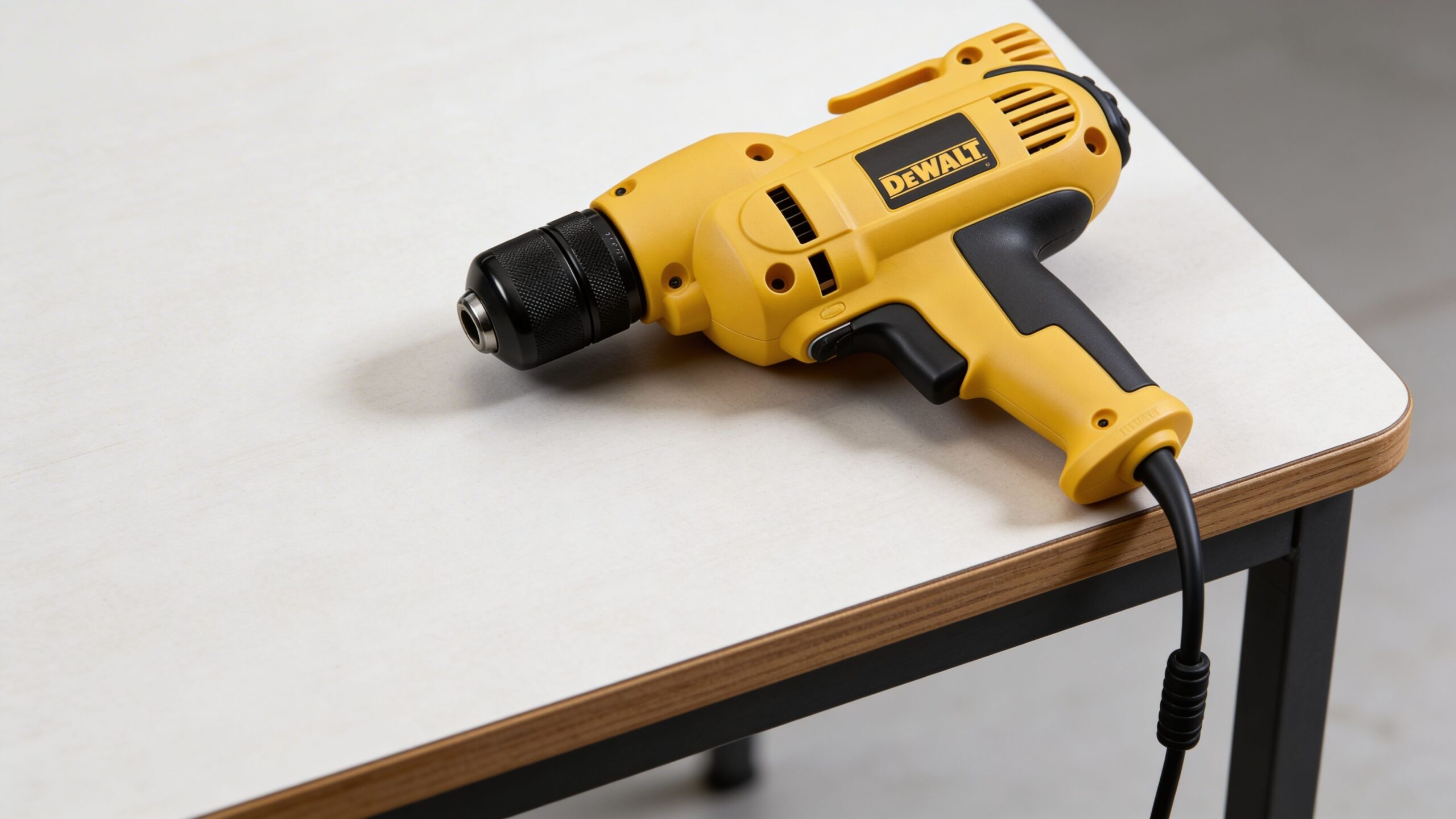
Lighter and easier to place precisely, these shine for everyday drilling and pilot work—especially in cabinets, tight bays, and overhead where fatigue matters.
Deep dive
High-torque and compact corded drills can both get holes made, but they do it with different priorities. The meaningful differences show up when the bit loads up, when you’re working overhead or in a tight bay, and when you need predictable control instead of brute force. This section focuses on how each drill type affects real workflow: how stable it feels under resistance, how easy it is to place accurately, how quickly fatigue builds, and what you give up to get those benefits.
When the work fights back: high-torque corded drills tend to feel steadier when the hole gets demanding—thicker stock, larger bits, or materials that grab and slow the cut. The advantage isn’t just “more power,” but fewer stalls and less need to feather the trigger to keep things moving. The trade-off is bulk: the same stability that helps in heavy boring can feel like extra mass when you’re repositioning frequently.
Placement and control: compact corded drills usually win the “easy to aim” moments—starting clean pilot holes, staying square in awkward positions, and working around studs, cabinets, and mechanicals. That lighter, shorter feel can reduce small errors that lead to blown-out holes or hardware that won’t seat cleanly. The trade-off is that when you push into larger holes or tougher material, you may need more patience, lighter feed pressure, or smaller step-ups in bit size to keep the drill comfortable and consistent.
Day-to-day usability: the right pick often comes down to how your time is spent. If the job routinely includes big holes, mixing, or repeated drilling where bind-ups are common, a high-torque drill’s composure can keep the pace steady. If most tasks are routine drilling, installs, pilots, and overhead work, a compact drill’s handling can keep work cleaner and less tiring. In many toolkits, these aren’t substitutes so much as different answers to where effort shows up—at the bit, or in your hands and shoulders.
Methodology
Our evaluation focuses on real tasks that reveal practical differences between high-torque and compact corded drills, not spec-sheet claims. We emphasize how each drill type behaves when the work changes: larger bits versus small pilots, awkward positioning versus open access, and short bursts versus longer sessions where control and fatigue matter.
Tasks: boring small-to-medium holes for installs, stepping up to larger holes that load the bit, controlled starts near edges, and repeated repositioning in tight bays and overhead angles to evaluate handling, stability, and fatigue.
What we scored: how consistently each drill maintains progress under resistance, how predictable and controllable it feels during starts, comfort and balance during longer use, build-confidence signals (handles, chuck feel, vibration), and day-to-day ownership factors like cord management and accessory compatibility.
How results are interpreted: outcomes are weighed in context, because the “right” strength depends on the work. Heavy boring and mixing favor composure under load, while routine drilling and tight-space tasks favor placement, control, and reduced fatigue. We treat trade-offs as decision drivers rather than universal wins.
What we ignored: advertised torque ratings, isolated lab-style claims, and minor features that don’t reliably translate into repeatable on-the-job results. If a difference doesn’t show up in typical drilling scenarios, it doesn’t carry much weight here.
FAQ
Verdict
In this head-to-head, the best choice isn’t about a universal winner—it’s about whether your typical work demands steady progress under resistance or favors easier handling and precise placement. Both types can overlap on lighter tasks, but they feel very different when you’re drilling all day, working overhead, or stepping up to larger holes.
#1 Winner
High-Torque Corded DrillsThe better fit when your work regularly loads the bit and you need the drill to stay composed, maintain progress, and feel stable in demanding holes or mixing-style applications.
Tip: If heavy boring is occasional, comfort and control can matter more than peak capability; if heavy boring is frequent, composure under load usually matters more than compact size.
Jump to the sections that help you choose between high-torque and compact corded drills—how they feel in use, where each makes sense, and the trade-offs that matter.
We prioritize reputable sellers, easy returns, and reliable availability.
Tip: With corded drills, cord quality and bit sharpness often matter more than small tool differences—use the right gauge extension cord and replace dull bits before blaming the drill.
Choose a retailer
Prices checked regularly. We may earn a commission at no cost to you.