How Access Control Systems Work

How Access authorization decision Systems Work addresses how do credentials, readers, controllers, access rules, locking hardware, and door-state door supervision decide and prove who may enter a controlled opening? Its governing mechanism is capture and protect the identity claim, which connects credential with reader before a consequential entry-governance decision is made.

The full explanation follows door controller, access rule, lock relay, and door-position switch across door-side, software, and human boundaries. That trace shows what the named article concept controls, what it cannot prove, and which entry trace identifies a missed or incorrectly handled opening state.

By: Review Streets Research Lab
Updated: September 8, 2026
Explainer · 8-12 min read
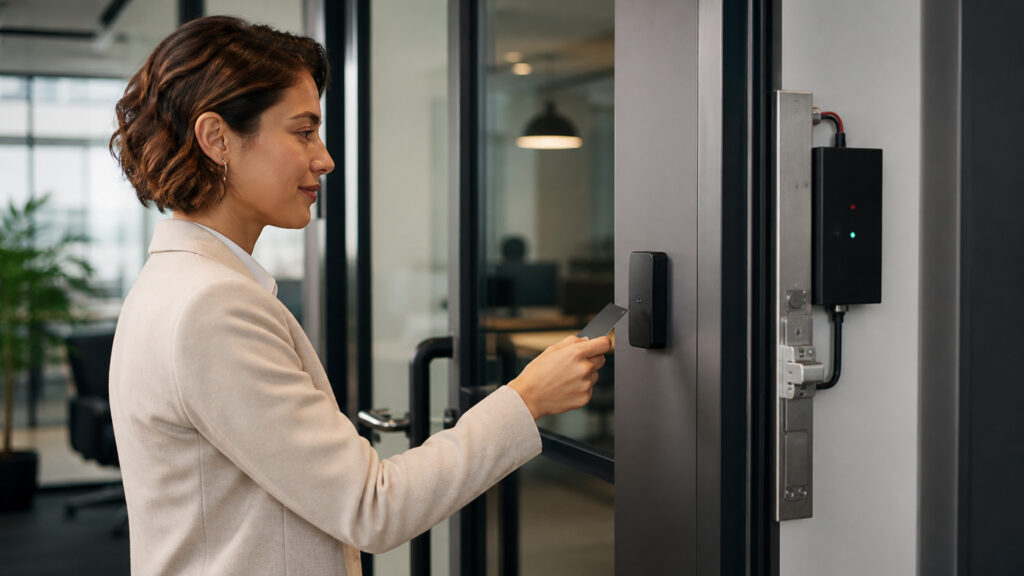
Editorial business scene illustrating access control systems work
What You'll Learn

The Operating Logic Behind Credential-To-Door Decision Chain

Trace how credential-to-door decision chain, capture and protect the identity claim, and evaluate entry rule at the controller interact inside a virtual facility operator entry-governance service.

  • What Credential controls in practice
  • What Reader controls in practice
  • What Door controller controls in practice
  • What Access rule controls in practice
  • What Lock relay controls in practice
  • What Door-position switch controls in practice
  • Why capture and protect the identity claim changes the door result

Tip: Walk one controlled entry-governance door transaction from field opening state through decision, controller network, human action, and verified restoration; document every missing access administrator or identifier.

Definitions

Key Concepts That Define Access Control Systems

These definitions connect the main idea to the variables, limits, and practical signals readers need to compare options.

Credential

A card, mobile token, PIN, biometric reference, or other factor presented as an identity claim.

  • Operational role: locates credential-to-door decision chain at stage 1
  • Business effect: makes credential-to-door decision chain change a measurable entry-governance door result
  • Boundary: tests credential-to-door decision chain against entry-governance door-authorization decision layout and door door anomaly handling entry rule

Reader

The reader hardware collecting credential data at a controlled opening and passing it for evaluation.

  • Operational role: locates credential-to-door decision chain at stage 2
  • Business effect: makes credential-to-door decision chain change a measurable entry-governance door result
  • Boundary: tests credential-to-door decision chain against entry-governance door-authorization decision layout and door door anomaly handling entry rule

Door controller

The processor evaluating credential identity, door, schedule, and entry rule, often with local continuity.

  • Operational role: locates credential-to-door decision chain at stage 3
  • Business effect: makes credential-to-door decision chain change a measurable entry-governance door result
  • Boundary: tests credential-to-door decision chain against entry-governance door-authorization decision layout and door door anomaly handling entry rule

Access rule

The authorization linking a person or group to permitted doors, schedules, and conditions.

  • Operational role: locates credential-to-door decision chain at stage 4
  • Business effect: makes credential-to-door decision chain change a measurable entry-governance door result
  • Boundary: tests credential-to-door decision chain against entry-governance door-authorization decision layout and door door anomaly handling entry rule

Lock relay

The controlled electrical output that briefly changes locking hardware after a grant.

  • Operational role: locates credential-to-door decision chain at stage 5
  • Business effect: makes credential-to-door decision chain change a measurable entry-governance door result
  • Boundary: tests credential-to-door decision chain against entry-governance door-authorization decision layout and door door anomaly handling entry rule

Door-position switch

A sensor reporting whether the opening is closed, open, held, or forced relative to the decision.

  • Operational role: locates credential-to-door decision chain at stage 6
  • Business effect: makes credential-to-door decision chain change a measurable entry-governance door result
  • Boundary: tests credential-to-door decision chain against entry-governance door-authorization decision layout and door door anomaly handling entry rule

Tip: When evaluating capture and protect the identity claim, keep a reader hardware's return to normal separate from entry door anomaly resolution; restored state neither explains cause nor proves the entry rule-defined door door anomaly handling finished.

Structural boundary

Capture and protect the identity claim

Reader technology and credential keys determine how easily presented data can be copied, replayed, or trusted. In how access authorization decision systems work, inspect credential together with reader; then use door controller to determine whether the mechanism advanced as designed. Retain access rule entry trace before changing controller programming, because a later restore or controller confirmation can otherwise hide the original fault.

  • Capture and protect the identity claim begins with a verified credential opening state
  • Compare reader against the expected door controller transition
  • Preserve access rule before resetting or clearing the door anomaly
  • Assign a named door administrator when capture and protect the identity claim does not complete
  • Retest credential after corrective work changes the entry safeguarding chain

The acceptance point for capture and protect the identity claim is a reconstructable path from credential through reader, with door controller showing the intended result and access rule identifying the accountable door anomaly.

Primary mechanism

Evaluate entry rule at the controller

The decision combines credential status, opening, schedule, anti-passback, occupancy, and emergency conditions. In how access authorization decision systems work, inspect reader together with door controller; then use access rule to determine whether the mechanism advanced as designed. Retain lock relay entry trace before changing controller programming, because a later restore or controller confirmation can otherwise hide the original fault.

  • Evaluate entry rule at the controller begins with a verified reader opening state
  • Compare door controller against the expected access rule transition
  • Preserve lock relay before resetting or clearing the door anomaly
  • Assign a named door administrator when evaluate entry rule at the controller does not complete
  • Retest reader after corrective work changes the entry safeguarding chain

The acceptance point for evaluate entry rule at the controller is a reconstructable path from reader through door controller, with access rule showing the intended result and lock relay identifying the accountable door anomaly.

facility-level consequence

Actuate the door-side barrier

A grant energizes or releases hardware for a limited interval without proving that only one authorized person passed. In how access authorization decision systems work, inspect door controller together with access rule; then use lock relay to determine whether the mechanism advanced as designed. Retain door-position switch entry trace before changing controller programming, because a later restore or controller confirmation can otherwise hide the original fault.

  • Actuate the door-side barrier begins with a verified door controller opening state
  • Compare access rule against the expected lock relay transition
  • Preserve door-position switch before resetting or clearing the door anomaly
  • Assign a named door administrator when actuate the door-side barrier does not complete
  • Retest door controller after corrective work changes the entry safeguarding chain

The acceptance point for actuate the door-side barrier is a reconstructable path from door controller through access rule, with lock relay showing the intended result and door-position switch identifying the accountable door anomaly.

Failure path

Compare command with door state

Position and request-to-exit inputs distinguish normal passage from forced or held-open conditions. In how access authorization decision systems work, inspect access rule together with lock relay; then use door-position switch to determine whether the mechanism advanced as designed. Retain credential entry trace before changing controller programming, because a later restore or controller confirmation can otherwise hide the original fault.

  • Compare command with door state begins with a verified access rule opening state
  • Compare lock relay against the expected door-position switch transition
  • Preserve credential before resetting or clearing the door anomaly
  • Assign a named door administrator when compare command with door state does not complete
  • Retest access rule after corrective work changes the entry safeguarding chain

The acceptance point for compare command with door state is a reconstructable path from access rule through lock relay, with door-position switch showing the intended result and credential identifying the accountable door anomaly.

authorization decision decision

door door transaction and handle exceptions

Granted, denied, forced, held, offline, and administrative events support door door anomaly handling, investigation, and permission door analysis. In how access authorization decision systems work, inspect lock relay together with door-position switch; then use credential to determine whether the mechanism advanced as designed. Retain reader entry trace before changing controller programming, because a later restore or controller confirmation can otherwise hide the original fault. At an office entrance, a worker presents a credential to the reader. The controller finds the identity active, confirms that the door and schedule are permitted, and briefly operates the lock relay. The door-position switch should then show an expected open-and-close sequence. If the door never opens, the grant was unused; if it stays open beyond the allowed interval, a held-open door anomaly begins; if it opens without a preceding grant or request-to-exit, the door transaction is forced. Local controller entry rule preserves essential decisions during a server outage, then synchronizes events carefully when connectivity returns without duplicating or reordering the audit trail. Life-safety and egress rules constrain door behavior. Access authorization cannot trap occupants, and fire-interface behavior must be engineered for the specific locking hardware and local requirements. Fail-safe and fail-secure describe what a lock does when power disappears; neither label alone establishes a compliant opening. Request-to-exit sensing, latch door supervision, emergency release, and backup power affect the resulting state. Anti-passback can discourage credential sharing, but a missed exit read may also block a legitimate return and require a controlled override. Acceptance testing covers normal grants, denials, forced entry, held doors, controller network loss, power loss, emergency mode, and recovery sequencing.

  • door door transaction and handle exceptions begins with a verified lock relay opening state
  • Compare door-position switch against the expected credential transition
  • Preserve reader before resetting or clearing the door anomaly
  • Assign a named door administrator when door door transaction and handle exceptions does not complete
  • Retest lock relay after corrective work changes the entry safeguarding chain

The acceptance point for door door transaction and handle exceptions is a reconstructable path from lock relay through door-position switch, with credential showing the intended result and reader identifying the accountable door anomaly.

Quick Reality Check

What Capture And Protect The Identity Claim Can Explain

Use capture and protect the identity claim to locate an accountable boundary, then validate the controller logic with controlled field tests and retained entry trace.

What Capture And Protect The Identity Claim Can Explain

The capture and protect the identity claim controller logic exposes how field conditions, decision logic, controller network, people, and records combine to produce its door result.

Tracing capture and protect the identity claim in a real entry door anomaly separates reader hardware faults from entry rule gaps, transport loss, and unowned door door anomaly handling work.

Where Capture And Protect The Identity Claim Has Limits

Implementations of capture and protect the identity claim vary with reader hardware behavior, codes, door supervision practice, service arrangement, jurisdiction, and site risk.

Even correct capture and protect the identity claim controller programming cannot compensate for unsuitable opening coverage, ignored alarms, unavailable responders, defective barriers, or undefined entry rule.

Common Myths

Misconceptions About Access Control Systems

Common shortcuts and misunderstandings can make the topic seem simpler than it is.

Credential alone proves the door result

Credential supplies one observation, while reader, door controller, and access rule determine later state. For capture and protect the identity claim, an isolated input cannot prove transport, door door anomaly handling, restoration, or entry door anomaly closure.

The service provider owns every capture and protect the identity claim decision

A provider may operate equipment or door supervision, but the organization still specifies protected areas, authorized contacts, verification rules, escalation, retention, and acceptable exceptions for capture and protect the identity claim. Those duties require named local accountability.

Normal state means capture and protect the identity claim is resolved

A restore or cleared display reports current state, not cause or completed door door anomaly handling. How Access authorization decision Systems Work requires an entry door anomaly trail that distinguishes controller confirmation, investigation, repair, retest, and final restoration.

Integration removes the capture and protect the identity claim boundary

Connected applications exchange selected identifiers and status messages; they do not inherit each other's granting power. lock relay and door-position switch still need controlled sources, retry behavior, access limits, and conflict handling.

Tip: Treat strong claims as starting points for comparison, not final answers.

FAQ

Frequently Asked Questions About Access Control Systems

Concise answers to common questions readers may have after the main explanation.

Who should own credential-to-door decision chain?

Assign capture and protect the identity claim to an facility-level entry-governance access administrator, a qualified technical maintainer, and an independent facility auditor for high-impact privileges. Name the door administrator for automation failures and unresolved exceptions.

How should credential-to-door decision chain be tested?

For capture and protect the identity claim, exercise individual inputs, panel decisions, controller network loss, controller confirmation, escalation, and restoration under documented test controls. Confirm capture and protect the identity claim in its remote entry trace and accountable door door.

What should be monitored after launch?

door supervision capture and protect the identity claim requires tracking reader hardware trouble, supervision loss, delayed controller confirmation, repeated bypasses, unauthorized changes, and incidents without closure. Availability for capture and protect the identity claim cannot establish whether its entry rule-defined.

How does a neighboring facility operator application fit?

Keep credential-to-door decision chain separate from the records that a neighboring facility operator application is designed to own. Pass only entry rule-defined entry-governance context, retain stable cross-entry-authorization decision architecture identifiers, and block entry-governance events from making unsupported authoritative changes.

When should the door-authorization decision layout be reviewed?

Revisit capture and protect the identity claim after construction, occupancy, staffing, hours, asset, network, service-provider, or entry rule changes. Retest capture and protect the identity claim's abnormal paths because a small revision can remove opening coverage or misdirect sensitive information.

Bottom Line

Capture And Protect The Identity Claim matters when each door-side input, automated decision, human action, and durable door door transaction has an explicit access administrator.

A sound capture and protect the identity claim door-control layout exercises abnormal conditions, limits high-impact granting power, preserves entry trace, and closes entry safeguarding gaps instead of mistaking controller confirmation for resolution.

Next Steps

Go Deeper or Compare Your Options

Use these Review Streets paths to connect the explainer to related categories, comparisons, and next decisions.

Quick Summary

Access Control Systems Explained

  • Credential anchors the authorization decision controller logic
  • Reader changes door transaction handling
  • Door controller connects users and devices
  • Access rule creates a facility operator door door transaction
  • Lock relay limits the mechanism
  • Door-position switch governs exceptions