
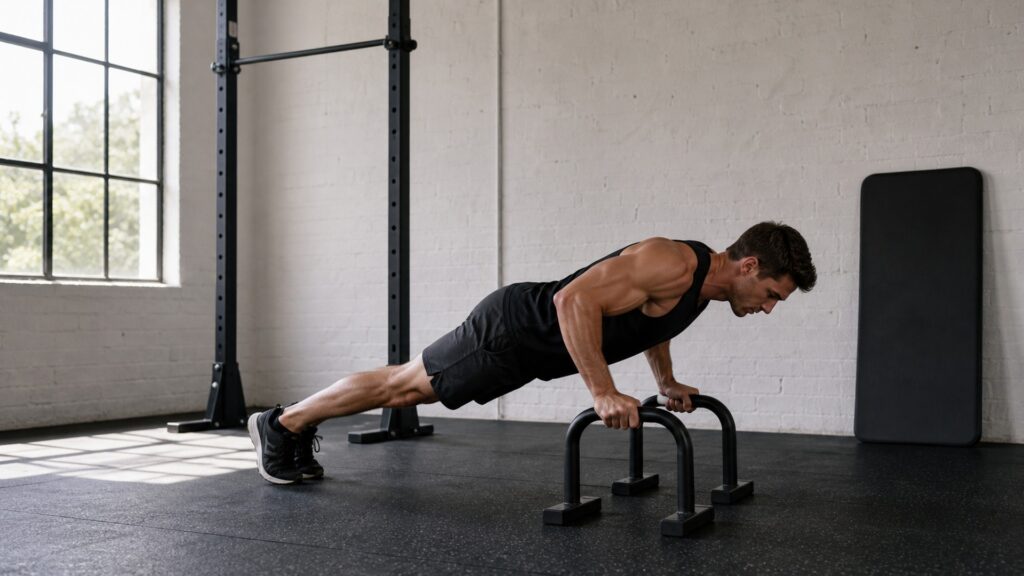
How Bodyweight Training Equipment Works

Bodyweight training equipment works by changing how the body is supported, angled, stabilized, or moved against gravity. The user's body remains the main resistance, but the equipment changes leverage, range of motion, grip, balance, or exercise options.

That is why a pull-up bar, parallettes, push-up handles, suspension straps, rings, dip station, sliders, or ab wheel can make bodyweight training easier to scale. The tool does not create strength by itself. It changes the position and challenge so the user can train with better control and progression.

By: Review Streets Research Lab
Updated: October 2, 2026
Explainer · 8-12 min read
bodyweight training equipment explainer hero image for Review Streets
What You'll Learn

How Bodyweight Equipment Changes The Exercise

A practical explanation of support, leverage, grip, range of motion, and progression in bodyweight training tools.

  • How equipment changes leverage and body angle
  • Why support height, grip, and stability affect difficulty
  • Where range of motion can increase or reduce challenge
  • How suspension straps, bars, rings, handles, and sliders differ
  • Why mounting strength and setup safety matter
  • How to choose tools that support repeatable progression

Tip: Judge bodyweight equipment by the position it creates and the progression it supports, not by how simple it looks.

Definitions

Key Concepts Behind Bodyweight Training Equipment

These concepts explain how simple tools can change body-resistance exercises.

Bodyweight Resistance

Bodyweight resistance uses the user's own body mass as the main load during an exercise.

  • Example: push-ups, pull-ups, dips, rows, planks, or assisted squats
  • Check: identify how much of the body is being moved or supported
  • Limit: bodyweight alone can be hard to fine-tune

Leverage

Leverage is how body angle and limb position make an exercise easier or harder.

  • Example: making a suspension row harder by walking the feet forward
  • Check: see whether the tool allows small angle changes
  • Limit: poor leverage can overload joints or technique

Support Point

A support point is where the hands, feet, straps, bar, handles, or floor hold part of the body.

  • Example: hands on parallettes during a push-up
  • Check: confirm the support is stable and comfortable
  • Limit: unstable support can add risk before the user is ready

Range Of Motion

Range of motion is how far the body moves through the exercise.

  • Example: push-up handles allowing the chest to lower farther than floor level
  • Check: use only the range the user can control
  • Limit: more range is not always better

Stability Demand

Stability demand is how much control the user needs to keep the body aligned during the movement.

  • Example: rings requiring more shoulder control than a fixed pull-up bar
  • Check: match stability demand to current strength and skill
  • Limit: too much instability can reduce useful force production

Mounting And Clearance

Mounting and clearance describe how securely the equipment is attached and how much room the exercise needs.

  • Example: a doorway pull-up bar with enough overhead and forward space
  • Check: verify load rating, attachment, and movement space
  • Limit: unsafe mounting can make a good exercise unsafe

Tip: The equipment's job is to make bodyweight resistance more adjustable, repeatable, and safe for the intended movement.

Resistance

The Body Provides The Main Load

Most bodyweight equipment does not add weight in the way dumbbells or machines do. Instead, it changes how much body mass the user has to move and how difficult the position feels.

  • A pull-up moves most of the body against gravity.
  • An incline push-up reduces the load by changing angle.
  • A suspension row changes difficulty by moving the feet.

The tool changes the relationship between the body, gravity, and support.

Leverage

Small Position Changes Can Make A Big Difference

Bodyweight tools often work through leverage. Changing hand height, strap length, body angle, or foot position can make the same exercise much easier or harder.

  • Higher hand support can make pressing easier.
  • Longer body lines can make core work harder.
  • Adjustable straps help scale rows and presses.

Good equipment gives the user manageable steps between too easy and too hard.

Control

Stability Changes The Training Effect

Fixed bars and handles create a different challenge than rings, straps, sliders, or an ab wheel. More instability can train control, but it can also expose weakness quickly.

  • Fixed supports are easier to learn.
  • Suspension tools require more body alignment.
  • Sliders and wheels demand careful core control.

Stability demand should rise only as the user can maintain clean positions.

Setup

Mounting And Space Are Part Of The System

Bodyweight equipment can look compact, but setup still matters. Bars, straps, rings, and dip stations need secure support and enough clearance for the movement.

  • Check load ratings and attachment points.
  • Leave room for legs, torso, and swing path.
  • Use stable flooring for floor-based tools.

Safe setup is what turns simple equipment into reliable training equipment.

Progression

The Best Tools Make Progress Easy To Repeat

A useful bodyweight tool should make progression visible. The user should know how to make the exercise easier, harder, deeper, slower, more stable, or more controlled.

  • Change one variable at a time.
  • Track angle, reps, range, tempo, or assistance.
  • Do not rush to harder variations before positions are solid.

Progression works when the next step is clear and repeatable.

Quick Reality Check

Where Bodyweight Equipment Helps And Where It Has Limits

Bodyweight tools are effective when they create useful positions and manageable progression.

Where It Helps

It makes body-resistance exercises more adjustable, repeatable, and varied.

It can support strength, control, mobility, and compact home training.

Where It Falls Short

It may not provide the same precise loading as weights or machines.

Some tools require secure mounting, adequate space, and baseline control.

Common Myths

Misconceptions About Bodyweight Training Equipment

Simple equipment can be useful, but it still needs smart setup and progression.

Bodyweight equipment is only for beginners

Advanced users can make bodyweight tools very challenging through leverage, range, tempo, and stability.

No weights means no progression

Progression can come from angle, support, range of motion, reps, tempo, and control.

Unstable tools are always better

Instability is useful only when the user can keep safe alignment and still train the target movement.

Compact tools need no setup planning

Bars, straps, rings, and stations still need secure mounting and movement clearance.

Tip: Simple tools work best when setup, position, and progression are controlled.

FAQ

Frequently Asked Questions About Bodyweight Training Equipment

Short answers about how bodyweight tools create resistance and progression.

What does bodyweight training equipment actually do?

It changes support, leverage, grip, range of motion, stability, or setup so bodyweight exercises can be scaled and repeated.

Is bodyweight equipment enough for strength training?

It can be enough for many users, especially when progression is planned. Some goals may still need external load.

Which tool should beginners start with?

Beginners often do well with stable, simple tools such as push-up handles, a secure bar, or adjustable suspension straps.

Are rings and sliders harder than fixed handles?

Usually, yes. They add stability demand, so users should build control before relying on harder variations.

What is the practical takeaway?

Bodyweight training equipment works by making body-resistance exercises easier to scale, control, and repeat safely.

Bottom Line

Bodyweight training equipment works by changing leverage, support, range of motion, grip, stability, and setup.

The best tools make bodyweight resistance more adjustable and repeatable while matching the user's strength, control, space, and safety needs.

Next Steps

Go Deeper or Compare Your Options

Use these Review Streets paths to compare related categories and practical next decisions.