How Compact Pickup Trucks Work

Compact pickups work by combining a passenger cabin and cargo bed with systems that produce motion, support weight, steer, and stop. Their smaller package can provide useful hauling without the dimensions of a larger truck, but it still relies on the whole vehicle operating within its designed limits.

Compact is a size description, not one mechanical formula. Construction, engine or hybrid arrangement, driven wheels, suspension, and towing equipment vary by model. Understanding those systems explains why a vehicle can feel easy to drive yet still need careful attention to cargo weight, tire condition, and the equipment required for a trailer.

By: Review Streets Research Lab
Updated: October 5, 2026
Explainer · 8-12 min read
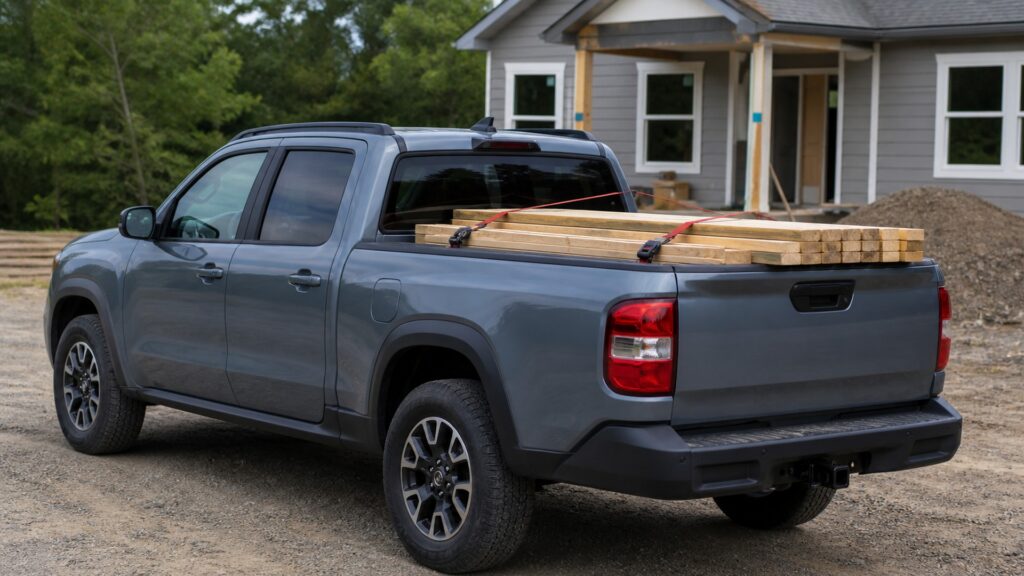
compact pickup trucks explainer hero image for Review Streets
What You'll Learn

Understand the Systems Behind a Smaller Pickup

Follow power to the road and cargo weight through the vehicle.

  • Identify the actual powertrain and driven-wheel layout
  • Understand how the body and suspension support loads
  • Separate power delivery from approved carrying capacity
  • See how steering, tires, and brakes control movement
  • Use configuration-specific instructions for towing and modes

Tip: Read the specifications for the exact build. A body shape or model-family maximum cannot explain every compact pickup's hardware.

Definitions

Six Mechanical Concepts for Compact Pickups

Each connects a vehicle system with a practical task.

Powertrain

The components that produce and deliver driving power.

  • Example: A gasoline engine and transmission drive the wheels, while a hybrid adds electric components.
  • Check: Identify the fitted arrangement and its controls.
  • Limit: Size does not determine the power source.

Structural Load Path

The route forces take through the body or frame and supporting components.

  • Example: Bed cargo transfers load through the structure and suspension toward the tires.
  • Check: Use approved mounting and load limits.
  • Limit: A strong-looking bed does not establish payload.

Suspension

Components that support the body and manage wheel movement over the road.

  • Example: Springs support load while dampers control motion.
  • Check: Check the actual arrangement and required maintenance.
  • Limit: A level stance is not proof that weight limits are satisfied.

Driven-Wheel Layout

The wheels to which propulsion can be delivered and the system controlling it.

  • Example: A compact may use front-wheel drive or an available all-wheel-drive arrangement.
  • Check: Learn the fitted system instead of assuming conventional truck four-wheel drive.
  • Limit: Driving more wheels does not guarantee more stopping grip.

Braking System

The components and controls that reduce speed and stop the vehicle.

  • Example: Friction brakes convert motion into heat; a hybrid may also recover some energy electrically.
  • Check: Follow the model's braking and towing guidance.
  • Limit: Energy recovery does not eliminate mechanical brakes.

Rated Capability

The approved limits for the vehicle and relevant equipment.

  • Example: Occupants, accessories, materials, and hitch load must fit the actual truck's limits.
  • Check: Read loading labels and configuration-specific documentation.
  • Limit: More engine power does not independently increase carrying allowance.

Tip: The operating manual connects these principles to the actual controls and restrictions on the truck.

Producing Motion

The Powertrain Has to Match Speed and Load

A combustion engine turns fuel energy into rotation, and a transmission helps match its operating range to the wheels. Hybrid systems combine an engine with electric components in model-specific ways. A battery-electric design uses stored electrical energy for propulsion. The driver's request passes through controls that manage output, and the exact arrangement determines how acceleration and deceleration feel.

  • Identify the powertrain rather than inferring it from size.
  • Learn gear and mode selection for that system.
  • Keep performance feel separate from load approval.

A hybrid can provide useful electric assistance without using the same charging routine as a battery-electric vehicle.

Carrying Weight

Cargo Loads the Complete Vehicle

Cargo does not act only on the bed floor. Its weight passes through the structure, suspension, wheels, and tires, affecting the loaded vehicle as a whole. Some contemporary compacts use integrated body construction, while other designs differ. The manufacturer's ratings reflect the complete configuration. Where the load sits also matters to axle loading and securement.

  • Count occupants and installed equipment with cargo.
  • Respect gross vehicle and axle limits.
  • Use appropriate restraints and approved attachment points.

Dense material can consume carrying allowance without occupying much bed space, so volume and weight must be checked separately.

Traction and Steering

Tires Connect the Mechanical Systems to the Road

Driving force reaches the road through the tires. Differentials and fitted traction systems manage the delivery of that force, while steering changes direction and suspension helps the wheels follow the surface. Front-wheel drive, all-wheel drive, and selectable four-wheel-drive systems have different arrangements and restrictions. The actual compact may not use the system a driver associates with larger pickups.

  • Use the manual for traction and drive-mode instructions.
  • Maintain suitable tires and specified cold pressures.
  • Adjust operation to the surface and load.

Improved ability to get moving on a slippery surface does not prove the truck can stop or turn without reduced grip.

Stopping and Heat

Brakes Must Control the Vehicle's Motion

Friction brakes provide essential stopping capability, and some powertrains add engine braking or electric energy recovery. The available assistance depends on the vehicle and conditions. A loaded trip can increase demands on braking and cooling systems. A trailer may require its own brakes and correctly supported controls rather than relying entirely on the compact's braking system.

  • Follow loaded-driving and descent instructions.
  • Check required trailer braking equipment.
  • Keep brakes and cooling systems maintained.

A towing mode can change specified control behavior without increasing the weights the truck may carry or tow.

Putting It Together

Capability Belongs to the Exact Configuration

Engine, transmission, cooling, drive system, hitch provisions, and other equipment can differ across a compact model range. A maximum advertised rating may require particular options. Use the documentation for the actual truck and consider the people and equipment traveling with it. Mechanical operation explains how the vehicle works; ratings establish the approved boundaries for the intended task.

  • Verify the fitted towing package where required.
  • Check the whole loaded combination.
  • Reassess when passengers, accessories, or trailers change.

The truck is suitable when its systems and limits support the complete trip, not merely when it can start the load moving.

Quick Reality Check

Mechanics and Ratings Answer Different Questions

Understand the hardware, then apply its approved limits.

What the Systems Explain

How energy becomes wheel motion and how cargo weight reaches the ground.

How steering, tires, suspension, brakes, and controls manage driving.

What the Ratings Establish

The loads the actual vehicle and equipment may support.

The approved configuration and required provisions for cargo or towing tasks.

Common Myths

Misconceptions About Compact Pickup Mechanics

A smaller truck still needs a complete systems check.

All compact pickups have the same chassis and drivetrain.

Construction and powertrain arrangements vary by model.

A bed that looks strong can carry any load that fits.

Vehicle and component ratings govern weight, regardless of volume.

All-wheel drive increases payload.

It changes the driving arrangement, not permission to exceed the actual ratings.

A towing mode substitutes for required hardware.

Modes do not replace the approved package, hitch, brakes, or other necessary equipment.

Tip: Use the actual truck's documentation to connect general principles with safe operation.

FAQ

Questions About How Compact Pickups Work

Answers linking the hardware to driving and hauling.

What makes a compact pickup useful?

It combines passenger travel and open-bed cargo capability within a smaller vehicle package, subject to its actual ratings.

Does compact mean front-wheel drive?

No. Check the specific vehicle; driven-wheel layouts vary.

What supports the cargo weight?

The load passes through the structure and suspension to the wheels and tires, with the complete system setting limits.

Do hybrids still use mechanical brakes?

Yes. Electric energy recovery supplements rather than removes the need for friction brakes.

Why check the exact build before towing?

Ratings and required equipment can change with powertrain, drive system, and factory options.

Bottom Line

Compact pickups work through coordinated power, structural, suspension, tire, braking, and control systems.

Understand the fitted hardware and use the actual vehicle's ratings to decide which passenger, cargo, and trailer tasks it can support.

Next Steps

Go Deeper or Compare Your Options

Use these Review Streets paths to compare related categories and practical next decisions.

Technical references: Ford Maverick configuration information; Ford Maverick owner manual; Ford towing information and vehicle-specific guides. Use the manual and ratings for your own model year and configuration.