
How Corded Drills Speed Control Works

Speed control in corded drills is a vital yet often misunderstood feature. Many users may assume it simply adjusts the drill’s power, but the system is designed to offer more precise control over the tool’s rotation speed, enhancing versatility across different applications. Its complexity lies in balancing the motor’s output while allowing for smooth adjustments without sacrificing performance.

This explainer will detail the mechanics behind speed control, breaking down the key components and their functions. By the end, readers will have a clear understanding of how the system works, including how it interacts with the motor and trigger mechanism to deliver variable speeds for specific tasks.

By: Review Streets Research Lab
Updated: April 19, 2026
Explainer · 8–12 min read
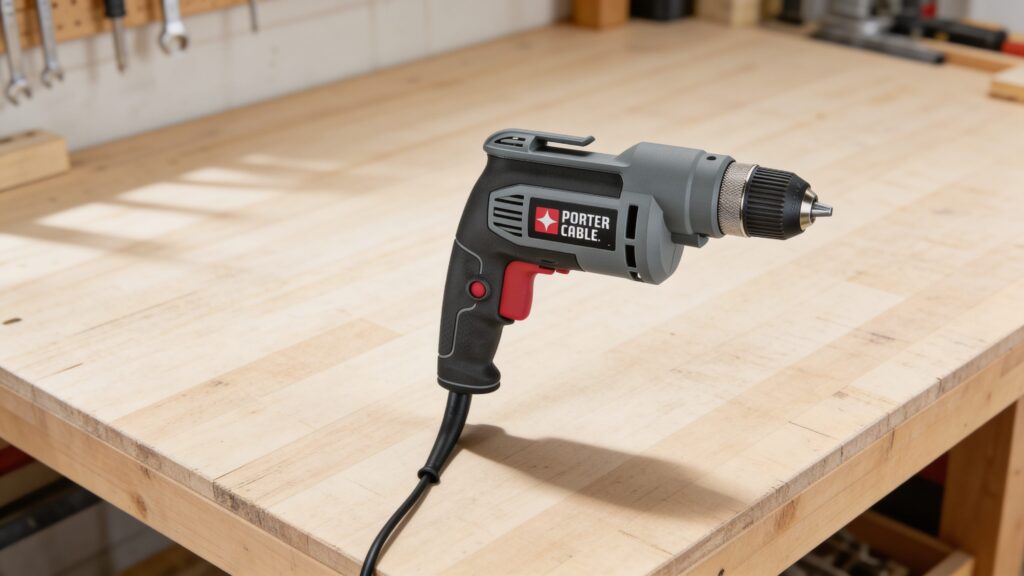
Close-up of a corded drill with adjustable speed control settings on its handle, highlighting the mechanism that enables variable speed for precision work.
What You’ll Learn

How Corded Drills Speed Control Works

This section will explain the inner workings of speed control in corded drills, focusing on the mechanisms behind precise speed adjustments and their function.

  • How the speed control system adjusts the drill’s motor output
  • What components are involved in managing variable speeds
  • How the trigger mechanism influences speed control settings
  • Why different tasks require different speed settings for optimal results
  • How the drill maintains performance with speed adjustments
  • What makes the system more reliable under heavy use
  • How to use speed control effectively for various applications

Tip: Understanding the connection between the trigger and motor will help you adjust speed control precisely for the task at hand.

Definitions

Key Parts That Make a Corded Drill Work

Before you can understand performance, it helps to know what each major component does—and where the common misunderstandings come from.

Battery Pack

The power source that stores energy and delivers it to the drill. Battery quality affects how hard the drill can push under load and how long it can keep doing it.

  • Voltage: How much “electrical pressure” is available
  • Amp-hours (Ah): How much energy is stored for runtime
  • Cells: The individual batteries inside the pack that do the real work

Electronic Controller

The drill’s “brain” that translates trigger input into controlled power. It regulates speed, manages current draw, and protects the tool and battery from damage.

  • Trigger feel: How smoothly speed ramps up or down
  • Protection: Helps prevent overheating and overcurrent
  • Efficiency: Impacts how much power becomes usable work

Motor

The component that converts electrical power into rotation. Motor design influences torque delivery, efficiency, heat, and how “strong” the drill feels.

  • Brushed: Simpler, usually cheaper, more wear over time
  • Brushless: More efficient, cooler running, often more power-dense
  • Heat: The enemy of sustained drilling under load

Gearbox + Clutch

The gearbox reduces motor speed and multiplies torque, while the clutch limits torque for driving screws consistently without stripping or snapping fasteners.

  • Low gear: More torque, slower rotation
  • High gear: Faster drilling, less torque
  • Clutch: Controls screw-driving force and repeatability

Chuck

The gripping mechanism that holds the bit. Chuck quality affects wobble, slippage, and how confidently you can drill or drive under load.

  • Jaw grip: Determines how well the bit stays locked
  • Runout: The “wobble” you feel at the bit
  • Maintenance: Dirt and wear can cause slipping over time

Torque

The twisting force the drill applies. Torque is what helps a drill keep turning when the material fights back—especially in larger holes or dense lumber.

  • Peak torque: Short bursts under ideal conditions
  • Sustained torque: What matters for real drilling time
  • Feel: Torque delivery changes how “strong” a drill seems

Tip: When a drill feels weak, it’s usually not “the voltage”—it’s the total system: battery cells, controller limits, heat, and gearing.

Power Path

How Power Moves Through a Corded Drill

A corded drill doesn’t produce power in one place—it transfers and transforms it step by step. Understanding this flow explains why some drills feel strong on paper but struggle in real use.

  • The battery releases stored energy as electrical current
  • The electronic controller regulates how much power is delivered
  • The motor converts electrical energy into rotation
  • The gearbox trades speed for torque
  • The chuck delivers that torque to the bit

Any weakness along this path—poor cells, conservative electronics, heat buildup, or cheap gearing—reduces usable power at the bit.

Motors

Brushless vs. Brushed Motors

The motor plays a major role in how efficiently a corded drill turns battery energy into real work. This is where many modern performance gains come from.

  • Brushed motors use physical contacts that wear over time and waste some energy as heat
  • Brushless motors rely on electronic control for smoother power delivery and better efficiency
  • Brushless designs usually run cooler under load, extending both tool and battery life

In practice, brushless drills tend to feel stronger for longer tasks, even when rated at similar voltages.

Gearing

Why Gears Matter More Than Raw Motor Speed

The gearbox determines how motor speed is converted into usable torque. This is why drills with similar motors can behave very differently.

  • Low gear multiplies torque for driving screws or boring large holes
  • High gear trades torque for speed when drilling smaller holes
  • Gear quality affects smoothness, noise, and long-term durability

A well-designed gearbox allows a drill to stay productive without stalling or overheating when the work gets demanding.

Heat Management

Why Drills Lose Power as They Get Hot

Heat is the silent limiter of corded drill performance. As internal temperatures rise, electronics and batteries reduce output to prevent damage.

  • Batteries restrict current when they overheat
  • Controllers dial back power to protect components
  • Motors lose efficiency as heat builds

This is why sustained drilling often tells a very different story than short burst tests.

User Control

Trigger Control, Balance, and Ergonomics

Beyond raw specs, how a drill feels in your hand affects accuracy, fatigue, and overall productivity.

  • Smooth trigger response improves precision when starting holes or driving screws
  • Good balance reduces wrist strain during overhead or extended use
  • Grip shape and weight distribution influence control more than most people expect

These factors don’t show up in spec sheets, but they heavily influence real-world performance.

Quick Reality Check

Where Corded Drills Shine — and Where They Don’t

A simple, practical balance: what cordless drills handle beautifully, and the situations where their limits show up.

What Corded Drills Do Well

Cordless drills excel at portability and convenience. With no cord to manage, they’re easier to maneuver in tight spaces, on ladders, or across job sites.

Modern battery and motor designs allow many cordless drills to handle the majority of household and professional drilling tasks without feeling underpowered.

Where Corded Drills Have Limits

Because they rely on batteries, cordless drills can lose performance as heat builds or batteries drain. Sustained heavy drilling can trigger power reductions.

For continuous, high-load tasks, corded tools still have an advantage in delivering unlimited runtime without thermal throttling.

Common Myths

Misconceptions About How Corded Drills Work

Corded drills are often judged by outdated assumptions or misunderstood specs. Here’s what actually matters—and what doesn’t.

Corded drills aren’t powerful enough for real work

Modern corded drills are capable of high power output and can handle demanding tasks. The power of a corded drill remains consistent throughout usage, unlike cordless drills that may lose power as the battery drains.

Higher voltage always means more power

Voltage alone doesn’t determine power. The motor design, current delivery, and gearing affect how much usable torque is generated, meaning two drills with different voltages can perform similarly in certain tasks.

Amp-hours make a drill stronger

Amp-hours primarily affect runtime, not peak power. While a higher Ah battery provides longer usage, it does not directly increase the power or performance during heavy-duty tasks.

Brushless drills are always better

Brushless motors are more efficient and have longer lifespans, but brushed drills still perform effectively for many basic and light-duty tasks, offering solid power at a lower price.

If a drill stalls, it’s underpowered

Stalling is more likely due to heat buildup, controller limits, or an improper gear selection rather than a lack of motor power. Switching gears or allowing the drill to cool can help restore performance.

Tip: When comparing drills, focus on how they perform under load and over time, rather than just specs or initial power output.

FAQ

Frequently Asked Questions About How Corded Drills Work

Quick answers to the most common questions people have after learning the basics of corded drill power, motors, and speed control.

What actually determines how “powerful” a corded drill feels?

Power is determined by the motor, controller, and gearing. These components work together to deliver torque at the bit, and the drill’s performance depends on how these parts interact under load.

Does a higher voltage drill always drill faster?

Not necessarily. While voltage plays a role in power delivery, the motor design and gearing impact the actual speed and torque. A lower-voltage drill with the right gearing can be faster for certain tasks.

What does amp-hour (Ah) mean—and does it make the drill stronger?

Amp-hours primarily affect runtime, not peak power. A higher Ah rating allows the drill to run longer without overheating but does not directly increase the drill’s ability to handle tough tasks.

Why does my drill slow down or shut off during tough drilling?

Slowing or shutting down typically happens due to heat buildup or current protection. When the motor or controller reaches thermal limits, the drill reduces power to prevent damage, often requiring a break or adjustment in load.

When should I use low gear vs high gear?

Use low gear for tasks requiring higher torque, like drilling larger holes or driving screws. Use high gear for faster drilling in softer materials, where less torque is needed.

What’s the practical advantage of a brushless drill?

Brushless drills offer higher efficiency, generate less heat, and extend the drill’s lifespan. These features lead to more consistent performance, especially in prolonged heavy-duty tasks.

Why do some chucks slip or wobble?

Chuck slippage often results from worn jaws, dirt accumulation, or poor tightening. Wobbling (runout) can occur if the chuck is not aligned properly or if the bit is not securely held.

What matters more for performance: the drill or the power supply?

Both the drill and power supply play essential roles. The drill’s design, motor, and gearing must match the power output of the supply to ensure consistent, reliable performance under load.

Tip: If your drill struggles with tough tasks, check the gear selection, bit sharpness, and consider the impact of heat and power supply.

Bottom Line

Corded drills work by managing power, heat, and torque—not just voltage. The battery, electronics, motor, and gearing all contribute to how strong a drill feels and how long it can sustain that performance.

Once you understand the power path inside the tool, it becomes much easier to see past marketing numbers and choose a drill that actually fits the work you do.

Next Steps

Go Deeper or Compare Your Options

Now that you understand how corded drills work, these guides help you apply that knowledge to real buying decisions.

Best Corded Drills

A ranked look at the top corded drills across power levels, use cases, and budgets—based on real performance factors.

Corded vs Cordless Drills

A side-by-side comparison that breaks down power, runtime, heat limits, and which type makes sense for different jobs.

How to Choose a Corded Drill

A practical buying guide that explains which specs matter, which don’t, and how to avoid common marketing traps.

Quick Summary

How Corded Drills Speed Control Works

  • Corded drills use a system of battery, controller, motor, and gearbox
  • Speed control adjusts power delivery based on user input and task needs
  • Heat buildup can reduce performance and trigger protective shutdowns
  • The gearbox balances speed and torque for different drilling tasks
  • Gearing and motor design impact speed control efficiency and stability