
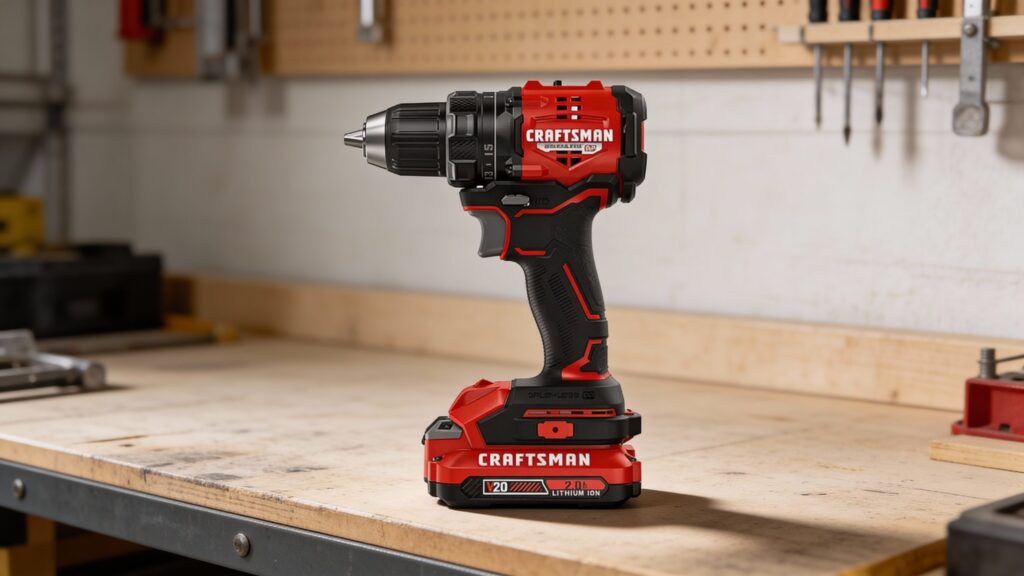
How Cordless Drills Work for Home Projects

Cordless drills are often treated as simple household tools, yet their operation involves a coordinated system of electrical and mechanical components. Battery chemistry, electronic control, motor design, and gearing all interact to convert stored energy into controlled rotation. Misunderstandings usually come from focusing on surface specifications rather than the internal process that governs behavior during typical home tasks.

This explainer walks through how a cordless drill functions from power storage to bit rotation. It outlines the role of the battery, controller, motor, gearbox, and chuck, and explains how load and heat influence operation. By the end, readers will understand how these systems work together during common home projects and why drill behavior changes under different conditions.

By: Review Streets Research Lab
Updated: April 20, 2026
Explainer · 8–12 min read
Cordless drill in use on a home project showing internal motor and battery power flow
What You’ll Learn

How Cordless Drills Work

An explanatory overview of internal electrical and mechanical processes that govern how cordless drills behave during common home drilling and driving tasks.

  • How battery chemistry and controllers regulate current delivery during intermittent home workloads
  • How brushed and brushless motors differ in commutation, friction, and heat generation
  • How gearing and clutches convert motor speed into controllable torque at the bit
  • Why voltage ratings and amp-hour capacity influence behavior differently under household loads
  • What causes slowdown or shutdown when resistance, heat, and protection thresholds interact
  • How chuck design and alignment affect grip, runout, and drilling accuracy
  • How trigger mapping and balance shape control during precise home project tasks

Tip: Viewing the drill as an energy path clarifies why behavior changes with load and temperature.

Definitions

Core Components in a Home Cordless Drill

Understanding how a cordless drill behaves starts with knowing how its main parts interact to manage energy, motion, and load during typical home projects.

Battery Pack

The battery stores chemical energy and supplies electrical current to the drill as needed. Its internal characteristics influence how steadily power is delivered during intermittent home use.

  • Voltage: Establishes the electrical potential driving current through the system
  • Amp-hours: Determines how long energy can be supplied before depletion
  • Cells: Set current capacity, resistance, and heat buildup inside the pack

Electronic Controller

The controller interprets trigger input and regulates how power flows from the battery to the motor. It balances responsiveness with protection under varying loads.

  • Signal control: Converts trigger movement into regulated electrical output
  • Current limits: Restrict power flow to protect components from damage
  • Thermal logic: Adjusts output as heat accumulates during operation

Motor

The motor transforms electrical energy into rotational motion. Its design affects efficiency, heat generation, and how smoothly torque is delivered during drilling or driving.

  • Commutation: Determines how electrical switching sustains rotation
  • Efficiency: Influences how much input power becomes usable motion
  • Heat output: Limits how long torque can be sustained under load

Gearbox + Clutch

The gearbox converts motor speed into usable torque, while the clutch sets an upper torque limit. Together, they shape how force is applied in home materials.

  • Gear reduction: Trades rotational speed for increased turning force
  • Load response: Alters how resistance is felt by the motor
  • Torque limiting: Controls maximum output during screw driving

Chuck

The chuck secures the bit and transfers rotation into the workpiece. Its alignment and grip directly affect accuracy and stability.

  • Clamping force: Holds the bit securely under changing loads
  • Alignment: Influences wobble and drilling precision
  • Surface wear: Reduces grip consistency over extended use

Torque

Torque is the rotational force applied at the bit. It reflects how effectively the system converts electrical input into resistance-handling capability.

  • Motor output: Generated by magnetic interaction within the motor
  • Gear influence: Multiplies force as speed is reduced
  • Thermal limits: Restrict sustained torque as heat builds

Tip: Viewing the drill as a connected energy system explains why changes in load or temperature alter behavior.

Power Path

How Energy Becomes Rotation in Home Tasks

A cordless drill is a sequence of conversions, moving energy from the battery to controlled current and then to mechanical output. Home projects highlight this chain because loads change quickly between starting, drilling, and driving.

  • The battery supplies DC power whose voltage and resistance set baseline limits
  • The controller meters current and shapes response to trigger input
  • The motor converts managed current into torque through electromagnetic interaction
  • The gearbox transforms motor speed into the torque needed at the chuck
  • The chuck transfers torque through clamping friction and alignment at the bit

What is felt at the bit reflects cumulative limits and losses across the entire path.

Motors

How Brushed and Brushless Motors Produce Continuous Rotation

The motor’s commutation method determines how magnetic fields are switched to keep the rotor turning. This affects where friction and electrical losses occur and how precisely torque can be regulated.

  • Brushed motors switch current through sliding contacts and a commutator as the rotor turns
  • Brushless motors use electronic switching to energize windings in timed sequences
  • Controller timing aligns switching with rotor position cues to maintain smooth rotation
  • Removing brush contact changes wear sources and the distribution of internal heating

During home use, motor behavior is shaped by both magnetics and the control electronics.

Gearing

How Gear Reduction Sets Torque and Speed at the Bit

The gearbox defines the relationship between motor speed and output torque. It also changes how the motor and controller experience resistance when drilling or driving into common household materials.

  • Reduction gearing multiplies torque while lowering chuck speed in predictable proportions
  • Two-speed ranges shift the motor’s operating point under different resistance levels
  • Clutch mechanisms limit transmitted torque by allowing controlled slip at a set threshold
  • Gear train friction and alignment influence heat generation and vibration transmission

Many “strength” differences in home projects originate from gearing and clutch behavior.

Heat Management

Why Heat Limits Output During Repeated Home Drilling

Heat is produced whenever current flows through resistance and whenever mechanical parts dissipate energy as friction. As temperatures rise, protection thresholds reduce allowable current to keep electronics and cells within safe ranges.

  • Battery cells warm as internal resistance converts current draw into heat
  • Controllers generate heat during switching and constrain output as temperatures climb
  • Motor windings heat as copper losses increase with current under heavier resistance
  • Reduced cooling airflow during slow operation can accelerate thermal accumulation

In practical use, temperature often explains why response changes after repeated demanding holes.

User Control

How Trigger Input Becomes Controlled Motor Output

Trigger movement is interpreted by electronics rather than applied directly to the motor. The controller maps input to switching behavior, then adjusts output as load and voltage conditions shift.

  • Trigger signals are converted into a command that sets speed and torque response
  • Feedback and limiting logic modulate current when resistance rises abruptly
  • Startup control depends on how the controller ramps switching and current delivery
  • Balance and grip geometry affect how torque reaction is transmitted to the hand

The “feel” of control is the interaction between controller behavior, mechanics, and changing load.

Quick Reality Check

Where Home Drilling Feels Smooth — and Where It Tightens Up

A quick balance of everyday home tasks cordless drills handle predictably, and the conditions where electrical and thermal limits become noticeable.

Where They Work Smoothly

In intermittent home work, the system can reset between bursts, keeping current, temperature, and speed within stable operating ranges.

Short drilling cycles in drywall or softwood often stay below protection thresholds, so controller mapping and gearing remain consistent through the task.

Where Limits Become Visible

As resistance rises or runtime extends, current demand increases and heat accumulates in cells, electronics, and windings, narrowing allowable output.

Dense lumber, larger bits, or repeated holes can push thermal and current limits, leading to reduced speed or interrupted output as protection engages.

Common Myths

Common Misreads of Cordless Drill Behavior at Home

Home projects expose how load, heat, and control limits shape drill behavior beyond simple headline specifications.

Cordless drills are only for light tasks

Home work often involves short, repeated bursts where batteries and electronics stay within stable operating ranges. Limits tend to appear when resistance stays high long enough for current draw and heat to accumulate.

Higher voltage guarantees stronger drilling

Voltage sets electrical potential, but strength at the bit depends on current delivery, controller limits, motor conversion efficiency, and gear reduction. Under load, internal resistance can lower effective voltage reaching the motor.

Amp-hours increase torque output

Amp-hours describe stored charge, which influences how long power can be delivered. Torque is constrained by allowable current and temperature, though higher-capacity packs may sustain delivery longer before protection thresholds intervene.

Brushless removes the need for control limits

Brushless changes how commutation is performed, shifting switching into electronics. Current and temperature limits still apply because cells, power components, and windings generate heat as load increases.

A stall means the motor is weak

Stalling usually reflects a system constraint being reached, such as current limiting, thermal protection, or an unfavorable gear ratio for the resistance encountered. The symptom is mechanical, but the cause is often electrical control interacting with load.

Tip: Interpret drill behavior by tracing the chain from load to current demand to heat, then to the controller’s limiting response.

FAQ

Frequently Asked Questions for Home Cordless Drill Use

Mechanism-based answers to common home-project questions about power delivery, speed control, torque conversion, and the limits created by heat and load.

What actually determines how “powerful” a cordless drill feels?

Perceived power comes from the full chain: how much current the battery can supply, how the controller limits it, how the motor converts it, and how gearing multiplies torque. Under heavier resistance, heat buildup narrows allowable current and changes the output the system can sustain.

Does a higher voltage drill always drill faster?

Higher voltage increases electrical potential, but bit speed is set by motor characteristics, controller mapping, and gear ratio. Under load, internal resistance and current limits can reduce effective voltage at the motor, narrowing the difference in practical rotation speed.

What does amp-hour (Ah) mean—and does it make the drill stronger?

Amp-hours describe stored charge, which mainly affects how long energy can be delivered. Torque is limited by allowable current and temperature, though higher-capacity packs may hold voltage steadier during repeated holes because heat is distributed across more cell mass.

Why does my drill slow down or shut off during tough drilling?

This usually indicates protection behavior rather than a sudden mechanical failure. As resistance drives current higher, sensors and control logic reduce output or interrupt power to prevent overheating and overcurrent conditions in the battery, electronics, or motor windings.

When should I use low gear vs high gear?

Low gear reduces speed while multiplying torque, lowering how hard the motor must work to overcome resistance. High gear permits faster rotation but demands more current as load rises, which can bring protection limits into play sooner.

What’s the practical advantage of a brushless drill?

Brushless designs move commutation into the controller, eliminating sliding brush contact and enabling timed switching of the windings. This changes where losses occur and allows tighter regulation of current delivery, which influences smoothness and how the system behaves as load and temperature shift.

Why do some chucks slip or wobble?

Slip occurs when jaw clamping force and contact friction are insufficient for the applied torque, often worsened by wear or contamination. Wobble, or runout, reflects misalignment between the chuck, spindle, and bit seating, which becomes more noticeable with longer bits or uneven tightening.

What matters more for performance: the drill or the battery?

The battery often sets the boundary because it determines how much current can be supplied without excessive voltage drop or overheating. The drill’s controller and motor can only convert what the battery can safely deliver, and protection logic enforces that limit as conditions change.

Tip: When performance changes mid-task, trace the symptom back through load, current demand, temperature rise, and the controller’s limiting response.

Bottom Line

Home drill behavior is governed by load, current limits, and heat. As resistance rises, the controller and battery enforce safe current delivery, and gearing determines how that electrical input becomes torque at the bit.

With this model, changes in speed or torque read as predictable system responses rather than confusing fluctuations tied to a single specification.

Next Steps

Explore Lists, Comparisons, and Guides

If you want to extend this framework, these pages organize drills by category, contrast tool types, and translate specifications into clearer expectations.

Cordless Drill Lists

A list-style overview that groups cordless drills by intended workload and core design features for easier navigation.

Cordless vs Corded Drills

A structured comparison focused on power delivery and heat limits, clarifying how continuous supply differs from battery-managed output.

How to Choose a Cordless Drill

A specification guide that connects batteries, motors, gearing, and control behavior to the way drills operate across common home tasks.

Quick Summary

Cordless Drills for Home

  • Battery, controller, motor, and gearing convert stored energy into rotation
  • Voltage sets potential, but current limits govern real torque delivery
  • Gear reduction trades speed for torque and changes load behavior
  • Heat builds in cells, electronics, and windings, triggering output limits
  • Trigger response reflects controller mapping and feedback under changing resistance