
How Cordless Drills Work for Woodworking

Cordless drills are frequently treated as simple rotary tools, yet their behavior in woodworking is governed by interacting systems that regulate power delivery, speed, and resistance. Misunderstanding often arises when electrical drive, mechanical gearing, and clutch control are viewed in isolation rather than as a coordinated mechanism that adapts rotation to the variable density and grain structure of wood.

This explainer details how cordless drills convert electrical energy into controlled rotational force for woodworking tasks. It outlines motor operation, gearbox reduction, clutch regulation, and trigger-based speed modulation, clarifying how these components work together to manage torque, limit overdrive, and maintain consistency across drilling and driving actions.

By: Review Streets Research Lab
Updated: April 20, 2026
Explainer · 8–12 min read
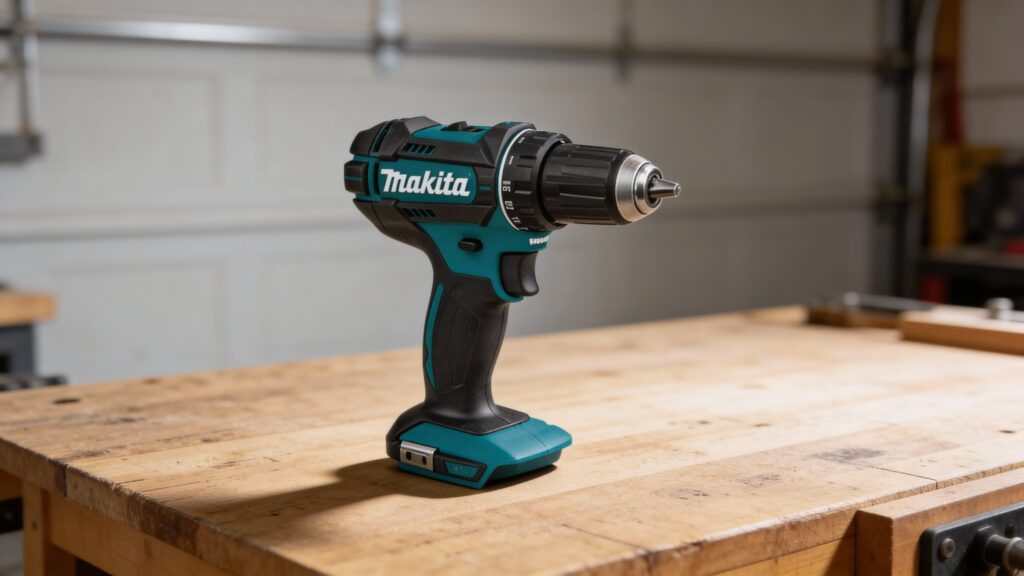
Cordless drill driving a screw into hardwood during a woodworking project, showing controlled speed, torque, and precision
What You’ll Learn

How Cordless Drills Work

An inside-the-system explanation of how a cordless drill regulates rotation, load response, and torque control during drilling and driving in wood.

  • How battery output becomes controlled motor torque through electronic switching
  • How trigger modulation changes duty cycle, speed, and low-end control
  • How gear reduction trades RPM for torque under woodworking loads
  • How the clutch limits drive torque and prevents incremental over-rotation
  • Why bit geometry and wood density change load, heat, and stall behavior
  • How the chuck clamps bits, and why slip occurs under torque spikes
  • How mechanical drag and alignment affect runout, vibration, and accuracy

Tip: Track the power path from battery to bit, then note where control, reduction, and slip can occur.

Definitions

Key Parts That Make a Cordless Drill Work

To understand how a drill behaves in wood, it helps to define the parts that shape power delivery, rotation control, and load response across the entire drive system.

Battery Pack

The energy reservoir that supplies the controller with voltage and current. In woodworking loads, cell behavior under demand shapes how steadily the system can drive.

  • Voltage: Sets the operating window the electronics and motor work within
  • Current delivery: Determines how well the pack supports load without sagging
  • Cell balance: Keeps output consistent as individual cells discharge at different rates

Electronic Controller

The switching stage that converts battery output into controlled motor input. It meters current, interprets trigger position, and enforces limits when resistance rises.

  • Duty cycle: Modulates average power to manage speed and low-end control
  • Current limiting: Caps electrical demand to prevent thermal and electrical overload
  • Brake logic: Uses controlled stopping to reduce overrun at the end of a drive

Motor

The electromechanical converter that turns electrical input into rotation. Its torque constant, efficiency, and heat behavior determine how rotation changes under wood resistance.

  • Torque generation: Produces rotational force proportional to current through the windings
  • Back EMF: Regulates speed as the motor generates voltage while spinning
  • Thermal rise: Heat increases resistance, reducing output under sustained cutting loads

Gearbox + Clutch

The mechanical reduction that converts high-speed rotation into usable torque, paired with a slip mechanism that caps transmitted torque during screw driving.

  • Reduction ratio: Trades motor RPM for higher torque at the bit
  • Shift range: Changes the operating point to match drilling versus driving demands
  • Clutch slip: Decouples torque peaks to limit overdrive when resistance spikes

Chuck

The clamping interface that transfers torque from the spindle to the bit. Its grip geometry and alignment determine whether torque stays stable or dissipates as slip.

  • Jaw geometry: Converts tightening force into friction at the bit shank
  • Runout: Misalignment introduces wobble that increases cutting load and vibration
  • Retention losses: Dust, pitch, and wear reduce friction during high-torque pulses

Torque

The twisting moment delivered to the bit after electronic control and gear reduction. In wood, torque is consumed by cutting forces, friction, and chip evacuation.

  • System torque: Emerges after limits, losses, and reduction across the power path
  • Load torque: Rises with bit diameter, feed pressure, and wood density
  • Torque ripple: Pulsing from cutting edges creates uneven resistance that affects feel

Tip: Treat the drill as a chain of limits and conversions from cells to bit, then locate where voltage sag, current caps, gearing, or slip constrains rotation.

Power Path

How Power Moves Through a Cordless Drill

In woodworking, the drill’s behavior is shaped by how electrical energy becomes controlled rotation under changing resistance. Following the power path reveals where output is regulated, reduced, or lost.

  • The battery supplies voltage and current that vary with load and temperature
  • The controller switches power to the motor and enforces current limits
  • The motor converts current into torque, then torque into spindle rotation
  • The gearbox sets the torque-to-speed tradeoff that reaches the chuck
  • The chuck transfers torque through friction at the bit shank and interfaces

Woodworking loads expose small losses in each stage as slower rotation and earlier limiting.

Motors

How Motor Design Shapes Torque and Speed Under Load

The motor is the conversion point where electrical input becomes mechanical rotation, and its control method determines how smoothly it responds to resistance. Wood acts as a variable load that changes with density, grain, and chip clearing.

  • Brushed designs use mechanical commutation, adding friction and contact losses as load rises
  • Brushless designs use electronic commutation to time current delivery more precisely
  • Torque is proportional to current, while speed is moderated by back EMF
  • As temperature increases, winding resistance rises and effective output declines

Motor behavior in wood is best understood as current-driven torque moderated by heat and control.

Gearing

How Gear Reduction Converts Rotation Into Usable Cutting Force

Gearing determines the operating point where a motor’s speed becomes spindle torque that can overcome cutting forces. In woodworking, this conversion governs whether rotation stays stable as the bit begins to bite.

  • Lower ratios reduce RPM and increase torque at the spindle for high-resistance cuts
  • Higher ratios preserve RPM but reach current limits sooner as resistance increases
  • Shift mechanisms change load on the motor by moving the reduction point
  • Geartrain friction and alignment consume torque before it reaches the chuck

When wood resistance rises, the gearbox decides whether the system responds with torque or slowdown.

Heat Management

Why Heat Changes Output in Batteries, Electronics, and Motors

Heat is a system-wide constraint that alters electrical resistance, controller thresholds, and cell behavior. In sustained woodworking cuts, temperature becomes a primary reason output changes over time.

  • Batteries warm under high current, increasing internal resistance and reducing voltage
  • Controllers reduce duty cycle or limit current as component temperatures approach thresholds
  • Motors convert some input to heat, raising winding resistance and lowering torque per amp
  • Friction in gears and the chuck adds localized heating that increases mechanical losses

As temperatures climb, the drill’s limits shift from available energy to allowable current and loss.

User Control

How Trigger Input Becomes Controlled Rotation at the Bit

Control in woodworking is largely a function of how the trigger signal is translated into motor switching and torque regulation. Fine adjustments happen electrically first, then mechanically through gearing, clutch behavior, and bit engagement.

  • Trigger position maps to controller duty cycle, shaping speed and low-end torque delivery
  • Clutch settings introduce a calibrated slip point that caps transmitted drive torque
  • Bit geometry and feed pressure change cutting load, altering current draw in real time
  • Runout and chuck friction affect contact stability, increasing resistance and vibration

The resulting “feel” is the visible output of electronic modulation meeting mechanical resistance in wood.

Quick Reality Check

Where Cordless Drills Shine — and Where They Don’t

A quick balance check that ties cordless drill strengths and constraints to how batteries, control electronics, and heat behave under woodworking loads.

Stable control in wood

Cordless drills regulate rotation electronically, which supports controlled starts and steady driving when wood density and bit engagement change from moment to moment.

When a pilot hole transitions into deeper cutting, the controller adjusts duty cycle and current to keep the motor within its operating range.

Limits under sustained load

Continuous boring in dense stock increases current draw, raising battery and motor temperature until internal limits reduce available power to protect components.

As voltage sags and thermal thresholds approach, the drill may slow, clutch sooner, or reach stall behavior even with the same bit and feed pressure.

Common Myths

Misconceptions About How Cordless Drills Work in Woodworking

Woodworking loads change quickly, and many drill “rules” ignore how the battery, electronics, gearing, and heat limits interact under resistance.

Cordless drills fail as soon as wood gets dense

Dense stock mainly increases cutting torque and current draw, which raises temperature and can trigger controller or cell limits. The behavior is usually a controlled reduction in speed or torque, not a simple “no power” condition.

Voltage alone tells the whole power story

Voltage sets an operating range, but usable output depends on current delivery, electronic limits, and mechanical reduction. Under a biting bit, the system may be constrained by voltage sag, current caps, or gear losses rather than nominal voltage.

A higher amp-hour pack increases drilling force

Amp-hours describe stored energy, not the instantaneous current the system can sustain. Two packs with similar capacity can behave differently in hardwood if cell chemistry, internal resistance, and thermal behavior change how much current reaches the controller.

Motor type alone determines woodworking performance

Motor design affects efficiency and heat, but it cannot bypass electrical and mechanical constraints. The controller’s switching strategy, current limits, and the gearbox ratio determine how motor torque is translated to the bit when resistance rises.

Stalling proves the drill lacks torque

A stall can occur when cutting torque exceeds what the system will deliver at that moment, often due to current limiting, temperature thresholds, or an operating point that is too speed-focused. In wood, bit geometry and chip clearing can raise load abruptly.

Tip: Treat every “power” claim as a chain from cells to bit, then identify which limit—sag, current caps, heat, gearing, or slip—dominates under load.

FAQ

Frequently Asked Questions About How Cordless Drills Work

Clear, mechanism-based answers to common woodworking questions about power delivery, torque control, gearing behavior, and why output changes under load.

What actually determines how “powerful” a cordless drill feels?

“Powerful” is the combined result of current delivery from the cells, controller limits, motor torque per amp, and the selected gear ratio. In wood, feel changes as voltage sags under load and as heat raises resistance and triggers protective limiting.

Does a higher voltage drill always drill faster?

Higher voltage can support higher motor speed, but speed at the bit is set by controller modulation and gearbox ratio. Under cutting load, drilling speed often becomes a function of allowable current and reduction rather than the nominal voltage number.

What does amp-hour (Ah) mean—and does it make the drill stronger?

Amp-hours describe stored energy, so they primarily change how long the pack can supply a given load. “Stronger” behavior depends on internal resistance, heat rise, and current limits; a higher-capacity pack may hold voltage steadier simply because it runs cooler at the same demand.

Why does my drill slow down or shut off during tough drilling?

As resistance increases, the controller draws more current to maintain torque until it reaches a current or temperature threshold. At that point it reduces duty cycle or cuts output to protect cells, electronics, and motor windings, which presents as slowing, pulsing, or a brief stop.

When should I use low gear vs high gear?

Low gear increases torque at the bit by reducing speed, which helps when cutting forces are high. High gear preserves speed for lighter resistance where the motor can stay in a higher-RPM operating range without hitting current limits as quickly.

What’s the practical advantage of a brushless drill?

Brushless operation replaces mechanical commutation with electronic timing, reducing contact losses and allowing more precise current control. That typically lowers heat for a given load and keeps the motor closer to its intended operating point as cutting resistance fluctuates in wood.

Why do some chucks slip or wobble?

Slip occurs when jaw clamping force and friction cannot hold against torque spikes, often worsened by dust, pitch, or worn jaw faces. Wobble (runout) comes from misalignment in the chuck mechanism, spindle interface, or bit seating, which increases cutting load and vibration.

What matters more for performance: the drill or the battery?

They function as one system, but the battery often sets the ceiling because it dictates how much current can be delivered without excessive sag or heat. The controller and motor can only convert what the pack supplies, and protective thresholds in the pack and controller define sustained output.

Tip: Diagnose changes in behavior by tracing the chain from bit load to current draw, then to voltage sag, heat rise, and controller limiting.

Bottom Line

Woodworking performance comes from the full power path, not a single spec. Cutting resistance drives current demand, and the system responds through voltage sag, controller limits, gear reduction, and heat-driven throttling over time.

With this model, drill behavior in wood reads as predictable interactions between load, control, and thermal limits rather than inconsistent strength from one moment to the next.

Next Steps

Go Deeper or Compare Your Options

With the internal system in mind, these pages extend the framework into shortlists, side-by-side context, and a structured way to interpret specs.

Cordless Drill Lists

Curated lists organized by task and load level, emphasizing power-path behavior like torque delivery, heat response, and control under resistance.

Cordless vs Corded Overview

A comparison focused on mechanism-level differences in continuous power, thermal constraints, and how each platform behaves during extended drilling and driving.

Cordless Drill Selection Guide

A structured guide to interpreting voltage, capacity, gearing, and clutch control by tracing how those inputs affect rotation when wood load increases.

Quick Summary

How Cordless Drills Work

  • Cordless drills operate as integrated systems of battery, controller, motor, and gearing
  • Usable torque depends on current limits, reduction ratios, and voltage stability
  • Heat buildup reduces output by increasing resistance and triggering protective limits
  • Electronic control shapes speed, torque response, and consistency under changing wood loads
  • Gearing determines whether rotation favors speed, torque, or stability during cutting