
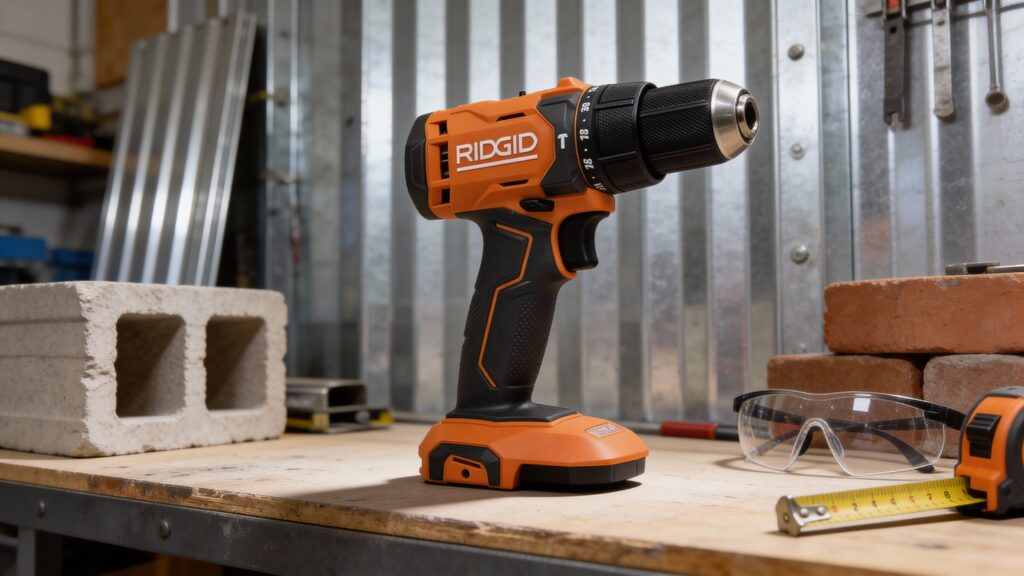
How Cordless Drills Work on Metal and Masonry

Cordless drills are often treated as universal tools, yet their behavior changes dramatically when moving from metal to masonry. These differences are frequently misunderstood because the outward motion appears the same, while the internal forces, contact dynamics, and energy transfer mechanisms vary beneath the surface.

This explainer walks through how cordless drills interact with dense metals and brittle masonry, focusing on rotational motion, resistance, heat generation, and material response. By the end, readers will understand how drill mechanics adapt to each surface, why drilling stresses differ, and how material structure shapes the way energy is absorbed, dispersed, or resisted during operation.

By: Review Streets Research Lab
Updated: April 20, 2026
Explainer · 8–12 min read
Cordless drill boring into metal and masonry surfaces, showing drilling action on steel and concrete materials
What You’ll Learn

How Cordless Drills Work

A focused breakdown of how cordless drills interact with metal and masonry through force transfer, resistance, and material response.

  • How rotational force behaves differently when cutting metal versus fracturing masonry
  • How material density and structure influence resistance, friction, and energy transfer
  • Why heat generation differs between metal drilling and masonry penetration
  • How torque delivery changes as bits encounter continuous or intermittent resistance
  • How bit contact mechanics affect cutting efficiency and surface interaction
  • Why masonry drilling produces impact stresses even without hammer action
  • How internal drill systems respond to load variation across different hard materials

Tip: Visualize drilling as energy moving through materials—cutting metal continuously, but breaking masonry through repeated localized stress.

Definitions

Key Parts That Make a Cordless Drill Work

Metal and masonry load a drill in different ways, so these definitions focus on how the system manages resistance, heat, and force transfer.

Battery Pack

The energy reservoir that supplies current when the bit meets resistance. Under heavy drilling, the pack’s cell behavior shapes voltage stability and heat buildup.

  • Current delivery: Determines how well rotation is maintained under load
  • Voltage sag: Drops available power as resistance and temperature increase
  • Thermal rise: Heat in cells limits how long high demand can continue

Electronic Controller

The control stage that meters power from the battery into the motor. It interprets trigger input while managing current spikes from binding in metal or chatter in masonry.

  • Power modulation: Shapes how smoothly speed responds as load changes
  • Limit control: Constrains current during stalls to protect electronics and cells
  • Heat management: Adjusts output as internal temperatures climb under demand

Motor

The conversion point that turns electrical energy into rotation. In hard materials, motor behavior is defined by torque production, efficiency, and how quickly heat is generated.

  • Torque production: Converts electrical current into twisting force at the shaft
  • Efficiency: Determines how much input becomes rotation versus internal heat
  • Thermal load: Heat rise increases losses and changes how load is handled

Gearbox + Clutch

The gearbox trades speed for torque before motion reaches the chuck. Its ratios shape cutting behavior in metal and influence how easily the bit maintains contact in masonry.

  • Speed reduction: Lowers RPM so torque increases at the output stage
  • Load matching: Alters how the motor experiences resistance at the bit
  • Slip mechanism: Clutch interrupts torque transfer when a set threshold is reached

Chuck

The mechanical interface that clamps the bit and transmits torque. When materials force the bit to grab, wander, or vibrate, the chuck’s grip and alignment control stability.

  • Clamping force: Keeps the bit from slipping as torque demand climbs
  • Alignment: Controls runout that can widen holes and increase chatter
  • Friction surfaces: Jaw condition affects how reliably torque transfers to the bit

Torque

The twisting moment applied to the bit as it cuts or fractures material. In metal it sustains cutting at the edge, while in masonry it helps overcome intermittent binding and abrasion.

  • Applied moment: Turning force at the chuck that drives the cutting interface
  • Load response: Changes as the bit alternates between cutting, rubbing, and binding
  • Heat coupling: Higher torque demand often corresponds with rising frictional heating

Tip: Think of drilling as a power path where resistance at the bit feeds back through chuck, gearing, motor, controller, and battery.

Power Path

How Power Moves Through a Cordless Drill Into Hard Materials

Metal and masonry impose different resistance patterns, so the drill’s power path is constantly adapting under load. The limiting point is often upstream from the bit.

  • The battery supplies current that rises sharply when resistance increases
  • The controller meters that current, shaping torque and speed under changing load
  • The motor converts current into shaft torque, with losses increasing as heat builds
  • The gearbox transforms torque and speed, altering how load is reflected to the motor
  • The chuck transmits torque to the bit while resisting slip and alignment error

As the material demands more force, each stage can become a constraint on delivered torque.

Motors

How Motor Design Shapes Cutting and Contact Stability

The motor governs how electrical input becomes controlled rotation at the spindle. In metal and masonry, that control determines how consistently the bit edge engages the surface.

  • Commutation method influences torque ripple that can translate into chatter at the bit
  • Current-to-torque response determines how quickly the motor reacts when the bit grabs
  • Efficiency losses convert input energy into heat, reducing available work at the shaft
  • Speed stability affects whether the bit cuts cleanly or shifts into rubbing and friction

Motor behavior shows up as changes in how smoothly the drill holds rotation through variable resistance.

Gearing

How Gear Ratios Match Torque Delivery to Material Resistance

Gearing determines the torque-speed relationship that arrives at the bit. This matters because metal cutting prefers sustained edge engagement, while masonry often loads the bit intermittently.

  • Lower ratios increase available torque while reducing RPM, shifting load away from the motor
  • Higher ratios raise RPM while lowering torque, changing how the bit transitions between cutting and friction
  • Gear train stiffness affects how sharply torque changes are transmitted during binding events
  • Mechanical losses in gears convert part of the input into heat and vibration

Gear behavior becomes visible when the bit alternates between steady cutting and sudden resistance spikes.

Heat Management

How Heat Builds Differently in Metal and Masonry Drilling

Heat is produced where energy is not converted into cutting or fracture work. Metal tends to generate heat at the cutting edge through continuous contact, while masonry produces heat through abrasion and repeated micro-impacts.

  • Friction at the bit increases when edge engagement shifts into rubbing and glazing
  • Motor and controller losses rise as current demand increases under heavy resistance
  • Battery cell temperature climbs during sustained current draw, affecting voltage stability
  • Heat alters material behavior at the interface, changing chip formation or dust generation

As temperatures rise, the system’s electrical and mechanical losses compound and reshape delivered torque.

User Control

How Control Inputs Influence Bit Engagement and Load Behavior

Control is not only about handling; it changes how the bit meets the surface. Small changes in speed and pressure can shift the interface between cutting, binding, and surface damage.

  • Gradual speed ramping reduces the initial slip that can dull edges or wander on metal
  • Stable alignment limits side loading that increases friction and enlarges hole geometry
  • Consistent feed pressure affects chip formation in metal and abrasion rate in masonry
  • Vibration and chatter feedback change how force is applied, influencing interface stability

The drill’s behavior is ultimately governed by how controlled rotation meets a material’s resistance profile.

Quick Reality Check

Where Cordless Drills Shine — and Where They Don’t

A quick reality check for metal and masonry: cordless drills can manage hard materials, but load, heat, and stability shape their behavior.

Controlled Rotation Under Moderate Load

When resistance stays manageable, a cordless drill can deliver steady rotation that supports clean cutting in metal and consistent abrasion in masonry.

This shows up when the bit maintains continuous contact, current draw stays stable, and the drivetrain can translate motor torque without frequent stalls or chatter.

Heat and Resistance Escalation

As resistance spikes, current demand rises and heat accumulates in the motor, controller, and battery, which can reduce delivered torque and speed.

This often appears when metal binds at the cutting edge or masonry abrasiveness increases friction, pushing the system toward voltage sag, thermal limits, and unstable engagement.

Common Myths

Misconceptions About Drilling Metal and Masonry

Hard materials expose how a drill system manages resistance, heat, and contact stability, which is often misread as simple “power” or “specs.”

Metal and masonry load the drill the same

Metal cutting tends to create continuous contact and steady torque demand, while masonry often alternates between abrasion and micro-fracture with intermittent binding. Those different resistance profiles change current draw, heat generation, and how stable the bit remains at the surface.

More RPM automatically drills hard materials faster

Rotation speed only helps when the cutting edge stays engaged in a controlled way. In metal, excessive speed can shift energy into frictional heating, and in masonry it can increase abrasion and dust without improving material removal if torque delivery cannot keep contact stable.

Masonry drilling is just abrasion like sanding

Masonry removal combines abrasion with localized fracture at the bit tip, which creates pulsed resistance rather than a smooth cutting load. That pulsing can produce chatter and torque spikes that propagate back through the chuck, gearbox, and motor as changing demand.

Heat comes only from the motor working hard

Much of the heat originates at the bit–material interface when energy becomes friction instead of chip formation or fracture. Metal often concentrates heat at the cutting edge through continuous contact, while masonry spreads heat through abrasive grinding and repeated impact-like loading at the tip.

If the bit grabs, the drill lacks torque

Grabbing is often an interface problem where edge geometry, friction, and chip evacuation change abruptly. In metal, binding can occur when chips pack and friction rises, and in masonry the bit can momentarily wedge as the surface fractures unevenly, creating short torque spikes.

Tip: Treat drilling as a closed loop where material resistance feeds back through the bit interface into torque, current draw, and heat.

FAQ

Frequently Asked Questions About Drilling Metal and Masonry

Clear, mechanism-based answers to common questions about how cordless drills respond to hard materials, changing resistance, and heat buildup.

What actually determines how “powerful” a cordless drill feels?

Perceived power comes from how the system holds torque and speed when resistance rises: battery current delivery, controller limits, motor efficiency, gearing, and temperature. Metal tends to demand continuous torque, while masonry often creates pulsed loads that make instability and heat more noticeable.

Does a higher voltage drill always drill faster?

Voltage sets electrical potential, but drilling speed depends on torque at the bit, gear ratio, and how well the controller maintains RPM under load. In hard materials, the limiting factor is often resistance-driven current demand and heat, not the headline voltage value.

What does amp-hour (Ah) mean—and does it make the drill stronger?

Amp-hours describe stored capacity and therefore how long a pack can supply energy at a given draw. It does not automatically increase peak torque, but higher-capacity packs can sustain demanding loads more steadily because current is spread across more cells, reducing heating and voltage sag.

Why does my drill slow down or shut off during tough drilling?

Slowing or shutoff usually comes from protection behavior when current spikes or temperature rises. Binding in metal or abrasive drag in masonry can drive current demand upward, and the controller or battery limits output to prevent overheating, which shows up as reduced speed or an interruption.

When should I use low gear vs high gear?

Low gear increases torque at lower RPM, which helps the bit maintain controlled engagement when resistance is high. High gear increases RPM with lower available torque, which fits lower-resistance contact where the cutting edge stays engaged without frequent binding or torque spikes.

What’s the practical advantage of a brushless drill?

Brushless systems use electronic commutation to control torque and speed without mechanical brush contact. That typically reduces electrical and friction losses, so less input becomes internal heat, which matters in metal and masonry where sustained current draw can push the motor and controller toward thermal limits.

Why do some chucks slip or wobble?

Slip happens when jaw friction and clamping force are lower than the torque being transmitted, which becomes more likely during binding events. Wobble, or runout, comes from alignment errors in the chuck or bit seating, and it increases side loading that can amplify chatter in masonry and grabbing in metal.

What matters more for performance: the drill or the battery?

The drill sets the mechanical and electronic pathway, but the battery sets the current ceiling the system can draw without overheating or voltage collapse. In hard materials, that ceiling is reached quickly during binding or abrasive drag, so battery internal resistance and thermal behavior strongly shape stability at the bit.

Tip: Diagnose hard-material issues by tracing symptoms from the bit interface back through chuck, gearing, motor, controller limits, and battery temperature.

Bottom Line

Drilling metal and masonry is governed by load, heat, and contact stability. Material resistance feeds back through the bit, drivetrain, electronics, and battery, shaping torque delivery and speed as temperatures and current limits accumulate.

With this model, performance becomes easier to interpret as a chain of causes rather than a single spec, especially when hard materials create sudden resistance changes.

Next Steps

Go Deeper or Compare Your Options

If you want to extend this metal-and-masonry framework, these pages translate the mechanics into broader context, tradeoffs, and selection criteria.

Cordless Drills Top 10 List

A curated list that organizes drills by intended workload, focusing on load handling, heat behavior, and control characteristics that show up in hard materials.

Cordless vs Corded Comparison

A focused comparison explaining how continuous power delivery, thermal limits, and sustained load response differ between battery-powered systems and plug-in tools.

Cordless Drill Buying Guide

A selection framework that clarifies which mechanical and electrical features shape real behavior, so specs can be interpreted in terms of load, heat, and control.

Quick Summary

Drilling Metal and Masonry

  • Power delivery depends on how load travels through battery, electronics, motor, and gears
  • Metal cutting demands steady torque, while masonry creates pulsed resistance and vibration
  • Heat builds at the bit and inside the drill, reducing available torque over time
  • Gearing shapes how speed and torque are matched to changing material resistance
  • Control stability affects whether energy becomes cutting, abrasion, or wasted friction