
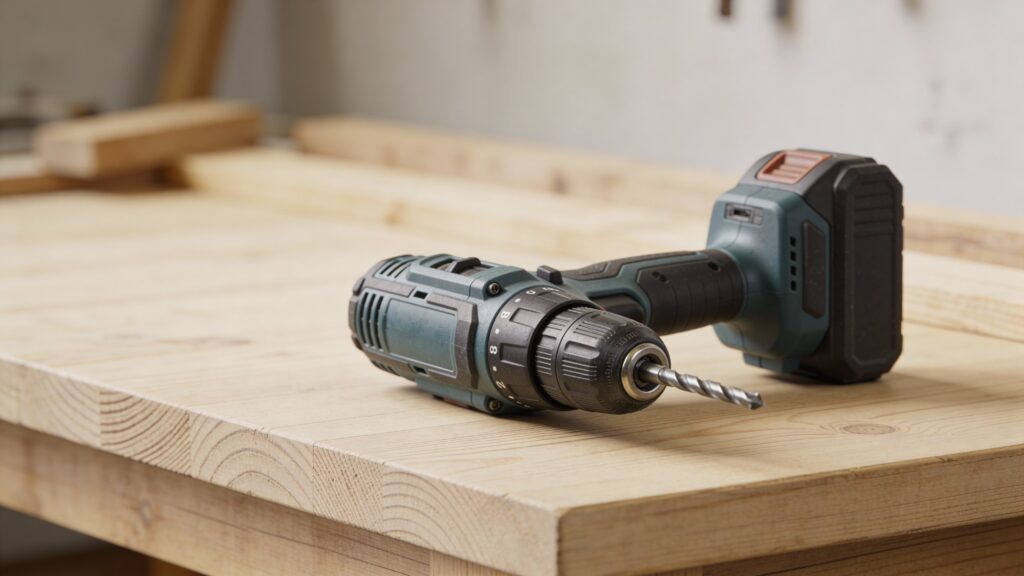
How Cordless Drills Work

Cordless drills don’t create power in a single place—they manage and move it through a system of batteries, electronics, motors, and gears. Understanding how that system works explains why some drills feel strong on paper but struggle in real use, while others deliver consistent performance under load.

This guide breaks down what’s actually happening inside a cordless drill—from the battery and controller to the motor, gearbox, and chuck—so you can understand how power is created, where it’s lost, and what really matters beyond headline specs.

By: Review Streets Research Lab
Updated: April 20, 2026
Explainer · 8–12 min read
How Cordless Drills Work
What You’ll Learn

How Cordless Drills Work

A clear, practical walkthrough of what’s happening inside the tool—so you can understand performance, limitations, and what really matters.

  • How the battery, controller, and motor work together to create power
  • What brushless vs. brushed motors change (and what they don’t)
  • How the gearbox and clutch translate motor power into usable torque
  • Why voltage and amp-hours don’t tell the whole performance story
  • What makes a drill overheat, stall, or “feel weak” under load
  • How the chuck holds bits—and why some chucks slip
  • What features matter for real work: trigger control, balance, and ergonomics

Tip: If you understand the power path (battery → controller → motor → gearbox → chuck), you can quickly spot why one drill feels stronger than another—even with similar specs.

Definitions

Key Parts That Make a Cordless Drill Work

Before you can understand performance, it helps to know what each major component does—and where the common misunderstandings come from.

Battery Pack

The power source that stores energy and delivers it to the drill. Battery quality affects how hard the drill can push under load and how long it can keep doing it.

  • Voltage: How much “electrical pressure” is available
  • Amp-hours (Ah): How much energy is stored for runtime
  • Cells: The individual batteries inside the pack that do the real work

Electronic Controller

The drill’s “brain” that translates trigger input into controlled power. It regulates speed, manages current draw, and protects the tool and battery from damage.

  • Trigger feel: How smoothly speed ramps up or down
  • Protection: Helps prevent overheating and overcurrent
  • Efficiency: Impacts how much power becomes usable work

Motor

The component that converts electrical power into rotation. Motor design influences torque delivery, efficiency, heat, and how “strong” the drill feels.

  • Brushed: Simpler, usually cheaper, more wear over time
  • Brushless: More efficient, cooler running, often more power-dense
  • Heat: The enemy of sustained drilling under load

Gearbox + Clutch

The gearbox reduces motor speed and multiplies torque, while the clutch limits torque for driving screws consistently without stripping or snapping fasteners.

  • Low gear: More torque, slower rotation
  • High gear: Faster drilling, less torque
  • Clutch: Controls screw-driving force and repeatability

Chuck

The gripping mechanism that holds the bit. Chuck quality affects wobble, slippage, and how confidently you can drill or drive under load.

  • Jaw grip: Determines how well the bit stays locked
  • Runout: The “wobble” you feel at the bit
  • Maintenance: Dirt and wear can cause slipping over time

Torque

The twisting force the drill applies. Torque is what helps a drill keep turning when the material fights back—especially in larger holes or dense lumber.

  • Peak torque: Short bursts under ideal conditions
  • Sustained torque: What matters for real drilling time
  • Feel: Torque delivery changes how “strong” a drill seems

Tip: When a drill feels weak, it’s usually not “the voltage”—it’s the total system: battery cells, controller limits, heat, and gearing.

Power Path

How Power Moves Through a Cordless Drill

A cordless drill doesn’t produce power in one place—it transfers and transforms it step by step. Understanding this flow explains why some drills feel strong on paper but struggle in real use.

  • The battery releases stored energy as electrical current
  • The electronic controller regulates how much power is delivered
  • The motor converts electrical energy into rotation
  • The gearbox trades speed for torque
  • The chuck delivers that torque to the bit

Any weakness along this path—poor cells, conservative electronics, heat buildup, or cheap gearing—reduces usable power at the bit.

Motors

Brushless vs. Brushed Motors

The motor plays a major role in how efficiently a cordless drill turns battery energy into real work. This is where many modern performance gains come from.

  • Brushed motors use physical contacts that wear over time and waste some energy as heat
  • Brushless motors rely on electronic control for smoother power delivery and better efficiency
  • Brushless designs usually run cooler under load, extending both tool and battery life

In practice, brushless drills tend to feel stronger for longer tasks, even when rated at similar voltages.

Gearing

Why Gears Matter More Than Raw Motor Speed

The gearbox determines how motor speed is converted into usable torque. This is why drills with similar motors can behave very differently.

  • Low gear multiplies torque for driving screws or boring large holes
  • High gear trades torque for speed when drilling smaller holes
  • Gear quality affects smoothness, noise, and long-term durability

A well-designed gearbox allows a drill to stay productive without stalling or overheating when the work gets demanding.

Heat Management

Why Drills Lose Power as They Get Hot

Heat is the silent limiter of cordless drill performance. As internal temperatures rise, electronics and batteries reduce output to prevent damage.

  • Batteries restrict current when they overheat
  • Controllers dial back power to protect components
  • Motors lose efficiency as heat builds

This is why sustained drilling often tells a very different story than short burst tests.

User Control

Trigger Control, Balance, and Ergonomics

Beyond raw specs, how a drill feels in your hand affects accuracy, fatigue, and overall productivity.

  • Smooth trigger response improves precision when starting holes or driving screws
  • Good balance reduces wrist strain during overhead or extended use
  • Grip shape and weight distribution influence control more than most people expect

These factors don’t show up in spec sheets, but they heavily influence real-world performance.

Quick Reality Check

Where Cordless Drills Shine — and Where They Don’t

A simple, practical balance: what cordless drills handle beautifully, and the situations where their limits show up.

What Cordless Drills Do Well

Cordless drills excel at portability and convenience. With no cord to manage, they’re easier to maneuver in tight spaces, on ladders, or across job sites.

Modern battery and motor designs allow many cordless drills to handle the majority of household and professional drilling tasks without feeling underpowered.

Where Cordless Drills Have Limits

Because they rely on batteries, cordless drills can lose performance as heat builds or batteries drain. Sustained heavy drilling can trigger power reductions.

For continuous, high-load tasks, corded tools still have an advantage in delivering unlimited runtime without thermal throttling.

Common Myths

Misconceptions About How Cordless Drills Work

Cordless drills are often judged by outdated assumptions or misunderstood specs. Here’s what actually matters—and what doesn’t.

Cordless drills aren’t powerful enough for real work

Modern cordless drills—especially brushless models—can outperform many older corded drills in short to medium-duty tasks. Power limits usually show up during long, continuous drilling, not everyday use.

Higher voltage always means more power

Voltage alone doesn’t determine performance. Battery cell quality, current delivery, motor efficiency, and gearing all affect how much usable torque reaches the bit.

Amp-hours make a drill stronger

Amp-hours affect runtime, not peak power. A higher Ah battery lets you work longer, but it won’t necessarily make the drill drill faster or harder.

Brushless drills are always better

Brushless motors are generally more efficient and durable, but a well-designed brushed drill can still perform very well for light or occasional use.

If a drill stalls, it’s underpowered

Stalling often comes from heat buildup, controller limits, or the wrong gear selection—not a lack of rated torque. Switching to low gear or letting the drill cool can make a big difference.

Tip: When comparing drills, focus on how they behave under load and over time—not just headline specs or marketing claims.

FAQ

Frequently Asked Questions About How Cordless Drills Work

Quick answers to the most common questions people have after learning the basics of cordless drill power, motors, and gearing.

What actually determines how “powerful” a cordless drill feels?

It’s a system: battery cells (how much current they can deliver), the electronic controller (how much it allows), motor efficiency, gearing, and heat management. Two drills with similar voltage can feel very different under load.

Does a higher voltage drill always drill faster?

Not always. Voltage helps, but speed at the bit depends on gearing, motor design, and controller tuning. Some lower-voltage drills are geared and tuned to feel quicker for common tasks.

What does amp-hour (Ah) mean—and does it make the drill stronger?

Amp-hours mainly affect runtime. A higher Ah battery usually lets you work longer before recharging, but it doesn’t automatically increase peak power. That said, some higher-capacity packs can deliver power more steadily under heavy load because they manage heat better.

Why does my drill slow down or shut off during tough drilling?

Usually heat or current protection. The battery and controller limit output to prevent damage. Switching to low gear, using a sharper bit, reducing pressure, or letting the tool cool often restores performance.

When should I use low gear vs high gear?

Use low gear for higher torque tasks like driving long screws or drilling larger holes. Use high gear for smaller holes and faster drilling when resistance is lower. If the drill stalls, low gear is usually the fix.

What’s the practical advantage of a brushless drill?

Brushless motors are generally more efficient, run cooler, and waste less energy as heat. In real use, that often means better sustained performance, longer battery life per charge, and less wear over time.

Why do some chucks slip or wobble?

Chuck grip depends on jaw quality, internal wear, and how firmly it’s tightened. Wobble (runout) can come from the chuck itself or the way the bit is seated. Dirt, wear, or a low-quality chuck design can cause slipping over time.

What matters more for performance: the drill or the battery?

Both matter, but the battery can be the limiter. The best drill can only use the power the battery can safely deliver. Better battery cells and smarter packs often improve how consistent a drill feels under load.

Tip: If your drill struggles, check gear selection and bit sharpness first—then consider battery health and heat as the next most common culprits.

Bottom Line

Cordless drills work by managing power, heat, and torque—not just voltage. The battery, electronics, motor, and gearing all contribute to how strong a drill feels and how long it can sustain that performance.

Once you understand the power path inside the tool, it becomes much easier to see past marketing numbers and choose a drill that actually fits the work you do.

Next Steps

Go Deeper or Compare Your Options

Now that you understand how cordless drills work, these guides help you apply that knowledge to real buying decisions.

Best Cordless Drills

A ranked look at the top cordless drills across power levels, use cases, and budgets—based on real performance factors.

Cordless vs Corded Drills

A side-by-side comparison that breaks down power, runtime, heat limits, and which type makes sense for different jobs.