How Electric Pickup Trucks Work

A battery-electric pickup works by storing energy in a traction battery and using controlled electrical power to turn motors that drive the wheels. Charging restores that stored energy, and electric braking can recover some energy while slowing. The truck still needs the structure, suspension, tires, friction brakes, and load restraints that make a pickup useful and controllable.

The driver requests motion through familiar pedals, but electronic controls manage the battery, motors, traction, and temperatures behind that request. The details vary by model: motor layout, charging capability, suspension, and available power outlets are not universal. This explanation covers battery-electric pickups, rather than hybrids or range-extended trucks that also carry a combustion power source.

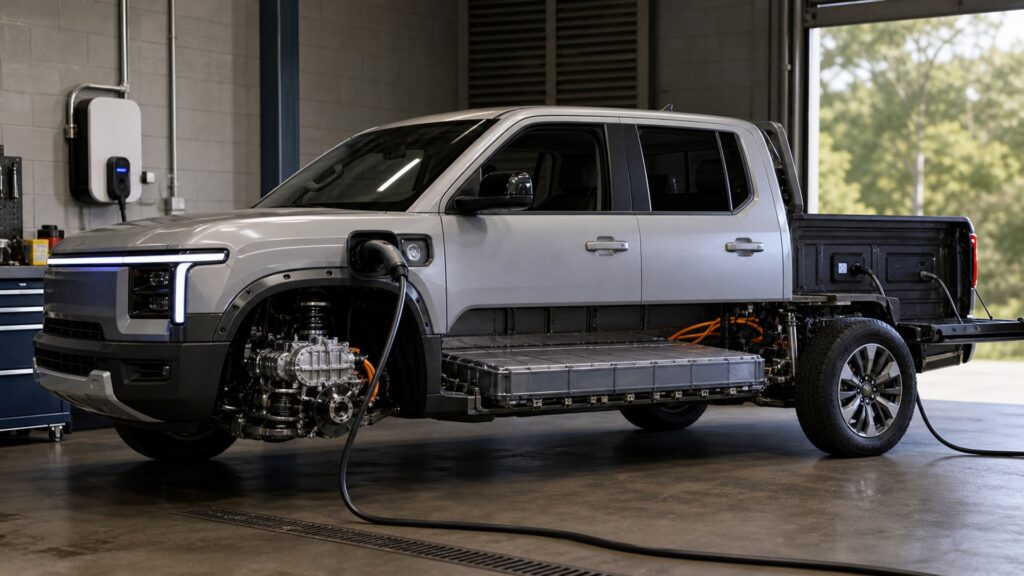
By: Review Streets Research Lab
Updated: October 5, 2026
Explainer · 8-12 min read
electric pickup trucks explainer hero image for Review Streets
What You'll Learn

Follow Energy From the Charger to the Wheels

Understand the main systems and the limits behind the driving experience.

  • See how the traction battery stores usable driving energy
  • Follow power electronics and motors into wheel motion
  • Distinguish AC charging from DC fast charging
  • Understand why energy recovery does not eliminate brakes
  • Connect temperature, loads, and auxiliary use to available performance

Tip: Battery capacity, motor power, charging power, and payload describe different abilities. No single figure explains the whole truck.

Definitions

Six Systems Behind Battery-Electric Propulsion

Each performs a specific job in the energy path.

Traction Battery

The high-voltage energy store used for propulsion.

  • Example: The truck draws stored energy while climbing a hill.
  • Check: Distinguish stored energy capacity from motor output.
  • Limit: The battery's size alone does not determine range or payload.

Power Electronics

Equipment that controls and converts electrical power for the drive system.

  • Example: An inverter controls power supplied to a traction motor.
  • Check: Understand that requested output is managed within system limits.
  • Limit: These components require qualified service rather than owner repair.

Traction Motor

A machine that converts electrical energy into mechanical rotation for driving.

  • Example: A motor turns reduction gearing connected to an axle's wheels.
  • Check: Identify the actual motor and driven-wheel layout.
  • Limit: More motors do not remove tire or load limits.

Onboard Charger

Vehicle equipment that converts incoming AC power for battery charging.

  • Example: An AC charging connection supplies energy through the vehicle's onboard charging system.
  • Check: Check the vehicle's AC acceptance capability.
  • Limit: The highest station rating is not automatically the power the vehicle receives.

Regenerative Braking

Using the drive system to recover some motion energy while slowing the vehicle.

  • Example: A descent can return some energy to the battery when conditions permit.
  • Check: Learn the fitted controls and their restrictions.
  • Limit: Recovery is limited and friction brakes remain necessary.

Thermal Management

Control of temperatures in the battery and other electrical components.

  • Example: Cooling or heating helps maintain suitable operating conditions.
  • Check: Observe temperature-related messages and operating guidance.
  • Limit: Temperature can affect charging and available power.

Tip: The small auxiliary battery serves a different role from the traction battery; low-voltage controls still need a healthy supply.

Stored Energy

The Battery Is an Energy Supply, Not an Unlimited Power Source

The traction pack stores energy that the vehicle can use for driving and other supported functions. A displayed charge percentage describes its state, not a fixed number of remaining miles. How far that energy goes depends on the trip. A heavy or aerodynamically demanding trailer, higher speed, difficult terrain, or temperature-related demand can change consumption.

  • Interpret charge alongside the actual route and load.
  • Leave a practical reserve for uncertainty.
  • Distinguish energy capacity from instantaneous power.

The same truck starting at the same charge can finish two different trips with very different amounts of energy remaining.

Motion Control

Electronics Translate Pedal Requests Into Wheel Torque

Controls use the driver's request and vehicle conditions to manage motor torque. Motors deliver rotation through gearing and other drive components to the wheels. Some designs use motors on separate axles; layouts vary. Traction control can limit or redistribute output within the fitted system's ability, but it cannot create grip where the tires and surface cannot provide it.

  • Learn the actual drive modes and restrictions.
  • Use tires appropriate to the vehicle and conditions.
  • Do not equate quick acceleration with towing approval.

Smooth delivery can make a loaded truck feel composed while leaving its payload, axle, and hitch limits exactly as specified.

Charging

AC and DC Connections Use Different Conversion Paths

With AC charging, the vehicle's onboard charger converts supplied power for the battery. DC fast charging performs the main AC-to-DC conversion outside the truck and supplies controlled DC through the supported charging connection. Actual charging depends on the vehicle, equipment, battery state, and temperature. A high-power station label therefore does not promise that rate throughout a session.

  • Use compatible equipment and approved adapters where required.
  • Check both AC and DC capabilities for the vehicle.
  • Plan charging time from realistic conditions.

A modest overnight supply can serve a routine well if it restores the required energy during parked time, while a road trip poses a different charging task.

Slowing Down

Energy Recovery Works Alongside Mechanical Brakes

During regenerative braking, the drive system can oppose motion while returning some energy to the battery. The amount available depends on operating conditions, including the battery's ability to accept energy. One-pedal settings and brake blending differ by model. The driver still needs the brake pedal for appropriate stopping, and the friction brakes remain part of the vehicle's essential braking system.

  • Read the instructions for slopes, towing, and slippery conditions.
  • Expect limitations when the vehicle indicates reduced recovery.
  • Keep brake inspection and maintenance current.

Recovered energy reduces losses; it does not allow the truck to replenish everything it used to accelerate or climb.

The Complete Truck

Temperature and Load Support Still Set Boundaries

Batteries, motors, and electronics operate within temperature and electrical limits. Control systems may adjust charging or output to protect them. Meanwhile, the chassis and tires must support the actual vehicle and cargo, and brakes must control motion. Cabin conditioning and supported external-power use can also consume energy. These demands explain why capability is more than a battery or motor specification.

  • Use the exact vehicle's load ratings and equipment requirements.
  • Follow warning messages and thermal-system care instructions.
  • Include accessory and cabin demand in the energy plan.

The electric pickup succeeds as a truck when energy delivery, load support, and safe control all fit the same task.

Quick Reality Check

What the Main Numbers Tell You

Different specifications answer different questions.

Energy and Power Information

Battery energy helps describe the available store; motor power describes an output capability.

Charging capability describes how energy can be restored under supported conditions.

Truck Capability Information

Vehicle, axle, tire, hitch, and trailer limits govern the loaded arrangement.

Usable range and charging practicality depend on the real route and conditions.

Common Myths

Misconceptions About Electric Pickup Mechanics

A simple driving experience does not mean every system has unlimited ability.

Electric trucks have no gearing.

Motors normally deliver power through gearing or other drive components; the arrangement varies.

Regenerative braking can fully recharge the truck while driving.

It recovers only some energy from slowing and cannot replace external replenishment.

The charger's highest number is the truck's constant charging speed.

Vehicle limits and battery conditions affect actual charging power.

Large motor output automatically means high payload.

Payload comes from the complete vehicle's approved limits, not motor output alone.

Tip: Read the specifications as descriptions of separate systems that must work together.

FAQ

Questions About How Electric Pickups Work

Answers connecting the components to ordinary operation.

What powers a battery-electric pickup?

Stored energy in the traction battery supplies controlled power to motors that drive the wheels.

Why is there also a small battery?

Low-voltage systems and controls need their own supported electrical supply; it serves a different role from the traction pack.

What is the difference between AC and DC charging?

AC charging uses conversion onboard the truck; DC fast charging supplies controlled DC after conversion outside the vehicle.

Why can braking recovery change?

The battery and drive system must be able to accept recovered energy, and operating conditions can limit it.

Why does towing affect range?

Moving the additional load and overcoming trailer drag can require more energy over the same distance.

Bottom Line

Battery-electric pickups turn stored electrical energy into controlled wheel motion, restore it through charging, and recover some energy while slowing.

Their practical capability still depends on load ratings, tires, brakes, temperatures, and the energy demands of the actual trip.

Next Steps

Go Deeper or Compare Your Options

Use these Review Streets paths to compare related categories and practical next decisions.

Technical references: DOE battery-electric vehicle components; DOE charging equipment and power considerations; Chevrolet regenerative-braking guidance; Ford electric range and charging considerations; Chevrolet Silverado EV owner resources. Use the manual and ratings for your own model year and configuration.