
Impact Zone
The surface most likely to receive stones, branches, doors, cargo, or tire-thrown debris.
- Exposure varies by vehicle geometry
- Coverage should follow evidence
- Edges can become new wear points
Exterior accessories work by placing a deliberately shaped component between the vehicle and a specific exposure. Film receives gravel impact, mud flaps interrupt tire spray, steps lower the entry point, covers shield cargo, and guards or racks redirect loads into selected mounts.
Protection is never free of interaction. Added parts can concentrate force, trap grit or water, shade paint unevenly, alter airflow, obstruct cameras, reduce clearance, loosen under vibration, or move crash loads into unintended structure. A sound installation begins with a defined hazard, uses vehicle-specific attachment and material compatibility, then verifies every affected system through use and inspection.
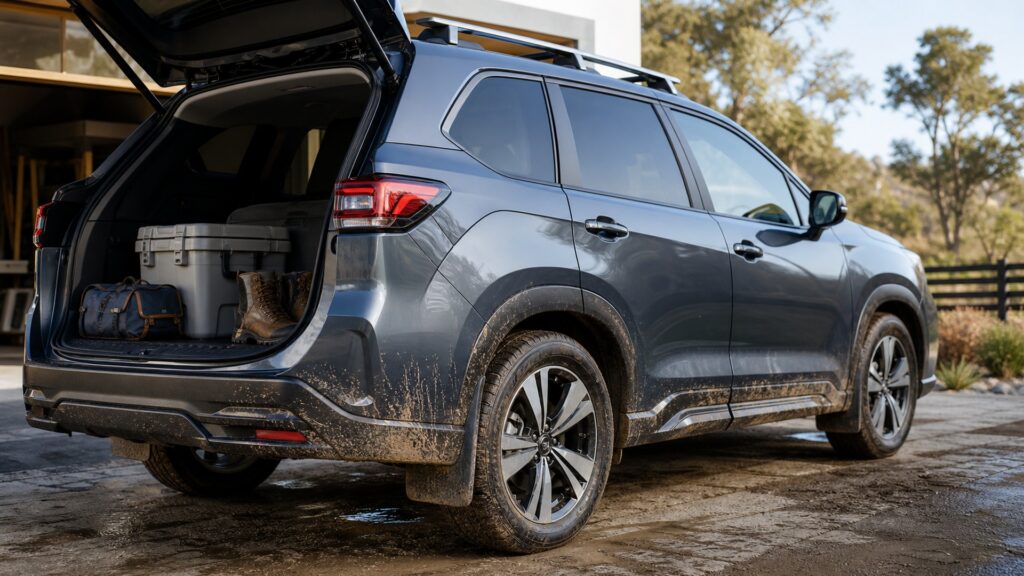
Each product succeeds only when it intercepts the intended exposure and sends resulting forces or contamination somewhere the vehicle can tolerate.
Tip: Photograph mounting, clearances, paint contact, sensor views, and cable routes at installation; later changes are easier to identify against a clean baseline.
These terms connect visible accessories to the hidden forces and interfaces they create.
The surface most likely to receive stones, branches, doors, cargo, or tire-thrown debris.
The route force follows from an accessory into brackets, fasteners, and vehicle structure.
A location intended or evaluated to carry a defined accessory load.
Film, coating, cover, molding, or guard placed between the finish and contamination or contact.
The physical area a camera, radar, ultrasonic sensor, antenna, or lamp must use unobstructed.
A planned check for movement, corrosion, wear, contamination, and retained torque.
Tip: Fitment means more than bolt-hole alignment: confirm the exact body, trim, wheel, tire, sensor, hitch, suspension, and option configuration.
Select coverage from the actual path of gravel, spray, footwear, cargo, sunlight, branches, or door contact. A product positioned outside that path adds mass and maintenance without receiving the load it was meant to manage.
Protection becomes specific when the hazard has a direction, frequency, energy, and target surface.
Rigid accessories transfer force through leverage into a few mounts; films spread small impacts across an adhesive layer; flaps flex while pulling on liners or brackets. Preparation, torque, hole protection, and support geometry govern whether loads remain controlled.
The strongest-looking product can damage weak attachment structure if its load path was never resolved.
Modern exteriors are active surfaces containing radar, cameras, antennas, shutters, cooling openings, lamps, tow points, jacking locations, and removable panels. Coverage or hardware must preserve each field, motion, and service procedure.
A visual fit check cannot validate an electronic field or a service operation hidden behind the accessory.
Edges and brackets create crevices where abrasive dirt and moisture remain. Dissimilar metals can corrode, polymers can harden or fade, adhesives can change, and trapped contamination can abrade paint during vibration.
Long-term protection depends on what happens underneath, not only on the outward appearance.
After installation, verify clearance through steering and suspension travel, secure retention at speed, water drainage, sensor function, lighting, noise, door movement, cargo access, and removal plan. Reinspect after the first trip and severe weather.
A product remains compatible only while its mounts, shape, and surroundings stay within the verified condition.
A useful accessory intercepts a known hazard and manages the resulting load without creating a worse interface elsewhere.
Correctly placed barriers can reduce paint impact, spray, step height, cargo exposure, or localized wear while preserving service and vehicle functions.
Vehicle-specific mounts and documented inspection make changes visible before looseness, corrosion, or abrasion becomes severe.
No accessory protects every surface or event; coverage, energy, angle, material, and attachment limits remain.
Added mass, edges, holes, brackets, wiring, and sensor obstruction can create new maintenance, aerodynamic, clearance, corrosion, or crash concerns.
These myths treat protection as a passive shell rather than a new vehicle interface.
Coverage outside the exposure path can add seams, trapped contamination, aerodynamic drag, sensor obstruction, weight, and maintenance. The better system protects vulnerable zones while leaving drainage, cooling, visibility, movement, and service access intact.
Aligned holes do not prove bracket strength, option compatibility, fastener grade, torque, clearance, corrosion protection, or crash behavior. Confirm the complete application and installation procedure for the exact vehicle configuration.
Films, flaps, steps, covers, guards, and racks experience ultraviolet light, temperature change, salt, grit, impact, vibration, and cleaning chemicals. Their edges, mounts, drains, wiring, and hidden paint interfaces require scheduled inspection.
FTC guidance says third-party parts do not automatically cancel warranty coverage. Damage caused by a defective product or improper installation can affect coverage for that damage, making fitment, records, and causation important.
Tip: Evaluate where intercepted force, water, grit, and vibration go after they meet the accessory.
These answers cover planning and verification across very different exterior product types.
Confirm the hazard, exact fitment, mounting method, load rating, material compatibility, sensor and lamp fields, drainage, full vehicle motion, ground clearance, service access, local rules, warranty terms, and a safe removal or repair procedure.
No, some engineered installations require holes, but drilling changes corrosion protection and can reach wiring, fuel, high-voltage, structural, or trim components. Use the specified locations, rustproofing procedure, hardware, and qualified installer.
Check soon after installation, at routine service, after impacts or severe weather, before load-carrying trips, and whenever noise, movement, leaks, sensor alerts, corrosion, edge lift, rubbing, or changed clearance appears.
Yes. Hardware, coatings, covers, dirt, vibration, or altered ride geometry can obstruct or reflect sensor signals and change calibration assumptions. Follow vehicle guidance and verify every affected feature after installation and repairs.
It depends on buyer preference, lease terms, installation reversibility, paint condition, holes, wiring, calibration, and documentation. Inspect the underlying surfaces and restore factory hardware or software correctly rather than hiding alteration evidence.
Exterior accessories work by intercepting a specific exposure and transferring its force, contamination, or function through a barrier and attachment system.
Define the hazard, protect the correct zone, preserve active vehicle interfaces, document installation, and keep inspecting the new load paths, edges, clearances, drainage, and hidden surfaces.
These explainers examine impact barriers, tire spray, and the boundary between reversible protection and deeper modification.
Examine how an adhesive polyurethane film absorbs small impacts and preserves selected painted zones.
Follow tire-thrown water, grit, and stones into a flexible flap, its mounts, and the surfaces behind it.
Decide when reversible exterior equipment solves the need and when integrated modification is justified.
Choose a retailer
Prices checked regularly. We may earn a commission at no cost to you.