
How Focus Training Devices Works

A focus training device works by organizing a cycle: choose an attentional anchor, practice within a bounded interval, notice distraction or a changing proxy signal, return deliberately, and inspect the outside task.

The device may provide pacing, distraction shielding, logging, or biofeedback. None of those features directly reads attention. Their value depends on whether they create tolerable opportunities to return and whether relevant work improves.

By: Review Streets Research Lab
Updated: August 19, 2026
Explainer · 8-12 min read
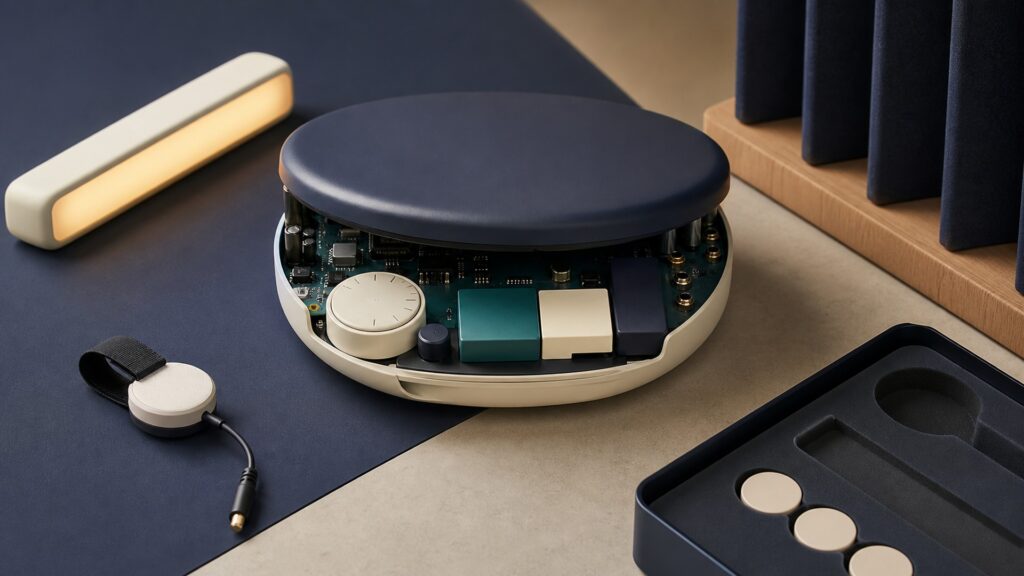
People-free editorial still life for How Focus Training Devices Works
What You'll Learn

Follow the focus-training loop from anchor to task outcome

The mechanism connects anchor choice, interval design, drift detection, sensor artifacts, neutral return practice, and independent review of the activity that matters.

  • How an anchor is chosen
  • What the interval contributes
  • How drift or proxies are detected
  • Why artifacts matter
  • What a return count means
  • How the outside task closes the loop

Tip: Read the concept as part of a system, then connect it back to the use case.

Definitions

Six Concepts That Shape This Decision

These definitions connect the main idea to the variables, limits, and practical signals readers need to compare options.

Attentional Anchor

An attentional anchor is the selected sensation, sound, visual point, rule, or work step to which attention is returned.

  • It gives the session a clear destination after the user notices drift.
  • Choose an anchor that is safe, understandable, and relevant to the intended practice.
  • An anchor does not prevent distraction or diagnose why it occurs.

Practice Interval

A practice interval is a defined period during which the user rehearses noticing and returning.

  • A boundary makes the session manageable and provides a point for reviewing load and outcome.
  • Set duration before starting and allow an early stop for discomfort or urgent demands.
  • Long sessions are not automatically better training.

Signal Artifact

Signal artifact is a change in recorded data caused by movement, contact, electronics, or environment rather than the intended state.

  • It is especially relevant when focus devices use heart rate, skin conductance, brain-signal, or motion feedback.
  • Check sensor placement, movement, connection, and room conditions when a trace changes unexpectedly.
  • A smooth signal may still be incomplete, and a noisy signal may not mean poor focus.

Return Count

Return count is the number of times distraction is noticed and attention is deliberately brought back to the anchor.

  • It can represent opportunities for practice, not simply failures of concentration.
  • Record how returns were recognized and whether counting itself becomes distracting.
  • A lower count can mean steadiness, missed awareness, disengagement, or an unclear anchor.

Session Load

Session load combines cognitive effort, sensory intensity, emotional demand, and duration.

  • It influences whether practice remains tolerable and whether the user can perform useful work afterward.
  • Track fatigue, frustration, headache, and recovery alongside the session record.
  • A calm-looking dashboard cannot establish appropriate load.

Task Outcome

A task outcome is the observable quality, completion, or safety result of the relevant activity outside the training display.

  • It is the main checkpoint for claims that focus practice helps daily function.
  • Define the outside activity in advance and assess it without relying on the session score.
  • Session change does not guarantee transfer to that activity.

Tip: Keep the definitions connected; the strongest answer usually comes from the whole system, not one term.

Choose an anchor that matches the kind of practice

Operation begins with a specific destination for attention rather than a command to concentrate harder.

A writer might use the current paragraph as the anchor, while another user chooses breathing or a steady sound during a separate practice period. The anchor should be simple enough to recognize after distraction and safe in the setting. Hazardous work and driving are poor places for inward-focused exercises.

  • Name the anchor in concrete terms
  • Match it to the session purpose
  • Avoid use during hazardous activity
  • Confirm that the user accepts it

A vague goal to focus provides no reliable return point.

Set an interval and reduce avoidable competition

The device creates a bounded opportunity to rehearse attention under chosen conditions.

The writer starts a twenty-five-minute soundscape and closes unrelated tabs before beginning. A predictable interval lowers the burden of an indefinite task, but the environment still matters. Notifications, pain, caregiving duties, and unclear instructions can interrupt the session without representing an attention failure.

  • Choose a tolerable duration
  • Remove optional distractions
  • Preserve necessary alerts
  • Prepare materials before starting

The timer structures practice; it does not control the surrounding day.

Detect drift through awareness or measured signals

Some products rely on the user noticing distraction, while others add sensor or interaction data.

A button press can mark a noticed urge to switch tabs. Biofeedback may change when a measured signal crosses a threshold. Neither observation directly reads the contents of attention. Movement, poor contact, breathing changes, and anticipation can alter a sensor, so artifacts must remain part of interpretation.

  • Identify what triggers feedback
  • Separate self-report from sensor data
  • Check contact and movement
  • Avoid claims of mind reading

The device observes proxies and interactions, not attention in full.

Practice returning without treating distraction as defeat

The central learning event is the deliberate reorientation to the chosen anchor.

When the writer notices an unrelated tab, the next action is to mark the event if useful, close the tab, and resume the paragraph. Harsh feedback can add shame and lengthen the interruption. A return count may rise as awareness improves, so direction alone cannot define success.

  • Use neutral return language
  • Keep logging brief
  • Interpret counts with context
  • Resume the smallest useful step

A noticed distraction creates a chance to practice, not a failed session.

Review the work product and the cost of practice

Operation ends by connecting the session to a real outcome and its burden.

The writer examines whether the paragraph advanced, whether errors increased, and how depleted or calm the session felt. Compare several similar attempts before changing settings. If the product improves its own score but leaves work unchanged or worsens fatigue, the mechanism has not supported the claimed function.

  • Inspect quality and completion
  • Record fatigue and recovery
  • Compare similar sessions
  • Change one feature at a time

The outside task keeps the feedback loop honest.

Quick Reality Check

What focus training devices can directly show

The strongest evidence concerns a defined session and a separately observed activity under recorded conditions.

Reasonable conclusions

The product can document interval timing, user-marked distractions, cue delivery, and selected sensor traces.

Repeated sessions may show whether a return routine coincides with better completion or tolerable effort on a named task.

Claims that remain unsupported

The device cannot identify thought content, diagnose an attention disorder, or explain every signal change.

Session metrics do not establish permanent concentration gains, treatment, or transfer to unrelated activities.

Common Myths

Misconceptions That Distort the Decision

Common shortcuts and misunderstandings can make the topic seem simpler than it is.

Myth: a focus device can measure exactly what someone is thinking about

Consumer sensors and interaction logs detect limited signals, physical movements, or user actions. They cannot identify specific thought content, explain every distraction, or provide a complete objective measure of attention.

Myth: fewer recorded returns always mean stronger focus

A lower count may reflect steadier engagement, but it may also reflect missed awareness, disengagement, changed logging, or an unclear anchor. Interpret returns with conditions and the outside task outcome.

Myth: biofeedback eliminates subjectivity from focus training

Biofeedback depends on sensor quality, placement, algorithms, and a physiologic proxy that may change for many reasons. User experience and functional outcome remain necessary, while signal artifacts require explicit review.

Myth: extending the timer builds attention faster

Longer intervals can increase fatigue, frustration, physical discomfort, and poor-quality work. A shorter sustainable practice with clear recovery may provide better learning opportunities than an endurance session continued for a streak.

Tip: Treat strong claims as starting points for comparison, not final answers.

FAQ

Questions to Ask Before Choosing

Concise answers to common questions readers may have after the main explanation.

What can serve as an attentional anchor?

An anchor may be a breath sensation, steady sound, visual point, written rule, or current task step. It should be easy to recognize, safe for the setting, and acceptable to the user.

How should return counts be interpreted?

Treat them as contextual practice events, not a grade. Review how distractions were noticed, whether logging changed, what interruptions occurred, and how the relevant task progressed before deciding that a count improved.

What should be checked when biofeedback changes suddenly?

Inspect sensor contact, movement, battery, connection, breathing pattern, and nearby environmental interference before interpreting the trace. Respond independently to concerning symptoms; a technical review should never delay appropriate medical help.

How do I know whether focus practice is helping?

Define an outside task outcome, such as completed writing of acceptable quality, then compare similar sessions along with fatigue and recovery. Improvement inside the app is insufficient without relevant functional evidence.

Bottom Line

Focus training devices structure practice around an anchor, a bounded interval, noticed drift, and a deliberate return. Sensor or interaction data remains a limited proxy that must be checked for artifacts.

Judge the mechanism through the activity that matters. Keep the product when return practice is tolerable and useful work improves without excessive burden; do not promote its session metrics into diagnosis or universal focus claims.

Next Steps

Go Deeper or Compare Your Options

Use these Review Streets paths to connect the explainer to related categories, comparisons, and next decisions.