
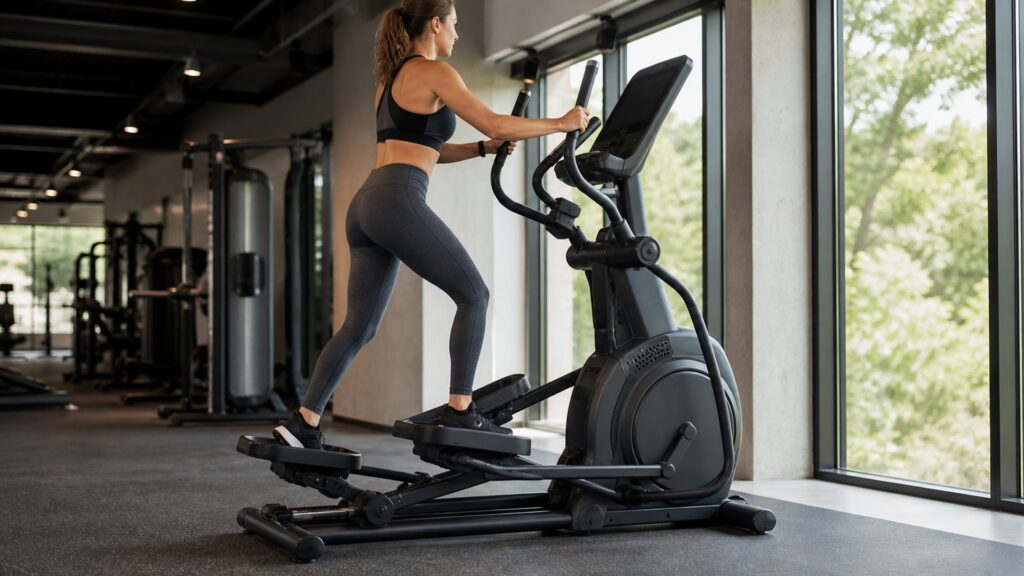
How Front Drive Ellipticals Work

Front drive ellipticals work by placing the flywheel and main resistance system at the front of the machine, then guiding the pedals through rails or linkages behind it. That layout creates the machine's stride feel, body position, stability demands, and maintenance points.

The front-drive design often feels more compact and slightly more climbing-oriented than some center or rear drive layouts. The useful question is not whether the front flywheel is automatically better, but how the frame, stride path, resistance, and setup fit the person using it.

By: Review Streets Research Lab
Updated: October 6, 2026
Explainer · 8-12 min read
front drive ellipticals explainer hero image for Review Streets
What You'll Learn

How Front Drive Ellipticals Turn A Front Flywheel Into A Stride

A practical look at the frame layout, pedal path, resistance system, and setup details that shape how front drive ellipticals feel.

  • Why the front flywheel changes the machine's layout
  • How rails, linkages, and pedals create the stride path
  • Where resistance and incline systems affect workout feel
  • Why stability, step-up height, and user setup matter
  • Which maintenance points deserve attention before and after purchase

Tip: Judge a front drive elliptical by the full stride and frame feel, not by flywheel position alone.

Definitions

Key Concepts Behind Front Drive Ellipticals

These concepts explain the parts and setup choices that determine how a front drive elliptical works during real workouts.

Front Drive Layout

A front drive layout places the flywheel and main drive system near the front of the elliptical.

  • Example: a machine with the flywheel housing in front of the pedals
  • Check: look at where the drive housing sits relative to the user's feet
  • Limit: front placement alone does not prove stride quality

Stride Path

Stride path is the shape the pedals follow as the user moves through each step.

  • Example: a flatter oval motion or a slightly climbing-feeling motion
  • Check: test whether the motion feels smooth through the full stride
  • Limit: published stride length does not describe the whole motion

Rail And Roller System

The rail and roller system supports the pedal arms as they move behind the front drive housing.

  • Example: rear rollers traveling along fixed rails during each stride
  • Check: listen for rough rolling and inspect rail alignment
  • Limit: rails can require cleaning and adjustment

Resistance System

The resistance system controls how hard it is to keep the pedals moving.

  • Example: magnetic resistance changing from an easy warmup to a harder interval
  • Check: try several resistance levels, not only the lowest setting
  • Limit: high resistance still needs a comfortable stride path

Step-Up Height

Step-up height is how high the user must climb to stand on the pedals.

  • Example: checking ceiling clearance before placing the machine in a basement
  • Check: measure user height plus pedal height at the top of the motion
  • Limit: compact length does not always mean low clearance needs

Frame Stability

Frame stability is how well the machine resists rocking, flexing, or shifting during use.

  • Example: a heavier frame staying steady during faster intervals
  • Check: test the machine at the cadence you expect to use
  • Limit: a stable frame still needs a level floor and proper assembly

Tip: A smooth front drive elliptical depends on the frame, rails, stride geometry, and resistance working together.

Layout

The Flywheel Sits In Front Of The User

The defining feature is the front drive housing. Because the main drive system sits ahead of the pedals, the frame can often be shorter than some rear drive machines while still giving the user a full elliptical motion.

  • The front housing contains much of the drive and resistance hardware.
  • Pedal arms connect the user's motion to the front mechanism.
  • The layout can save length, but it does not automatically save height or weight.

The front drive position shapes the machine, but the rest of the frame determines how it feels.

Motion

Rails And Linkages Guide The Pedals

Most front drive ellipticals use pedal arms, rollers, and rails to guide the user's feet through a repeated oval path. The quality of those parts affects smoothness, noise, and whether the stride feels natural.

  • Longer, well-supported rails can help the pedals track smoothly.
  • Loose rollers or poor alignment can create bumps or rattles.
  • The same listed stride length can feel different across machines.

Stride feel comes from the moving parts working as a system.

Resistance

Resistance Changes The Effort Without Changing The Basic Path

The resistance system makes the movement easier or harder while the pedals continue along the same guided path. Magnetic resistance is common because it can adjust smoothly and avoid direct friction wear.

  • Low resistance should feel smooth enough for warmups.
  • Higher resistance should increase effort without jerky motion.
  • Preset programs may change resistance automatically during a workout.

Good resistance makes the same stride useful for easy sessions and harder intervals.

Fit

User Position Changes The Experience

A front drive elliptical can feel different depending on height, stride comfort, handle reach, and room clearance. The machine may look compact, but the user's body still needs space to move safely.

  • Check stride comfort at normal and faster cadences.
  • Confirm moving and fixed handles feel reachable.
  • Measure ceiling clearance with the pedals at their highest point.

The machine works well only when the motion fits the person and the room.

Upkeep

Rails, Rollers, And Assembly Affect Long-Term Smoothness

Front drive ellipticals rely on moving contact points that can collect dust, loosen, or drift out of alignment. Assembly quality and regular checks help the machine keep the same feel over time.

  • Keep rails clean according to the manufacturer instructions.
  • Watch for new squeaks, thumps, or side-to-side wobble.
  • Tighten hardware only as directed so parts are not damaged.

Maintenance is part of how the front drive system keeps working smoothly.

Quick Reality Check

Where Front Drive Ellipticals Help And Where They Have Limits

The front drive layout can be practical, but it should be judged by motion quality and fit.

Where They Help

They can offer a full elliptical motion in a shorter frame than some rear drive designs.

The front housing can make the machine easier to place against a wall or in a home workout area.

Where They Have Limits

Some models feel more climbing-oriented or less flat than a user expects.

Rails, rollers, and assembly quality can affect noise and maintenance over time.

Common Myths

Misconceptions About How Front Drive Ellipticals Work

Flywheel placement is important, but it does not explain the whole workout experience.

Front drive always means a compact machine

Front drive can reduce length on some models, but total footprint, pedal travel, and clearance still matter.

Flywheel weight tells you everything

Flywheel weight may matter, but stride geometry, resistance control, frame stiffness, and rollers also affect feel.

All front drive ellipticals feel the same

Different rail designs, stride lengths, ramps, and frames can make two front drive machines feel very different.

A smooth showroom test guarantees long-term smoothness

Long-term feel also depends on assembly, rail care, roller condition, and how the machine is used.

Tip: Use the front drive label as a starting point, then test the stride, stability, and maintenance details.

FAQ

Frequently Asked Questions About Front Drive Ellipticals

Short answers for understanding how front drive ellipticals operate and what to check.

What does front drive mean on an elliptical?

It means the flywheel and main drive housing sit in front of the user rather than behind or near the center.

Do front drive ellipticals feel different?

They can. Many have a slightly more climbing-oriented feel, but the exact motion depends on the rail and linkage design.

Are front drive ellipticals better for small spaces?

Sometimes, but the full footprint, pedal travel, step-up height, and clearance still need to fit the room.

What should I test before buying one?

Test stride smoothness, resistance changes, handle reach, frame stability, noise, and ceiling clearance.

What is the practical takeaway?

A front drive elliptical works well when the front housing, rails, pedals, and resistance system create a smooth motion that fits the user and the room.

Bottom Line

Front drive ellipticals work by using a front-mounted drive system to guide pedal motion through rails, linkages, and controlled resistance.

The best choice is the one whose stride path, stability, clearance, and maintenance needs match the user's real workout space.

Next Steps

Go Deeper or Compare Your Options

Use these Review Streets paths to compare related categories and practical next decisions.