
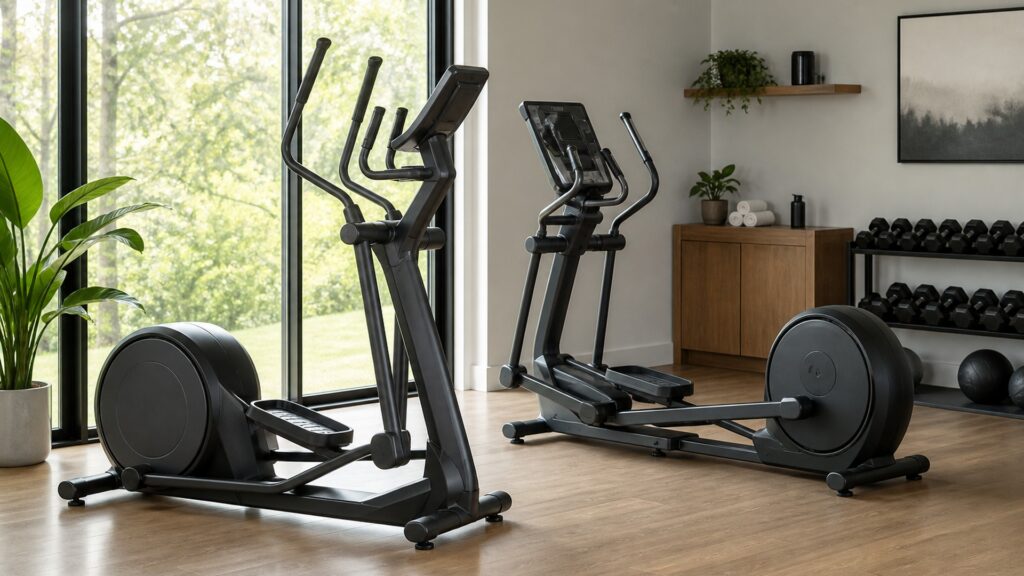
When to Use Front Drive Ellipticals Instead of Rear Drive Ellipticals

Use a front drive elliptical instead of a rear drive elliptical when the front-mounted housing, shorter frame style, and slightly more climbing-oriented feel fit the user's space and workout preferences. Rear drive designs can feel smooth and open, but they often take more floor length.

The better choice depends on room shape, stride feel, step-up height, maintenance tolerance, and the workouts the user expects to repeat. Front drive is a strong candidate when compact placement matters and the user likes the motion after a real test.

By: Review Streets Research Lab
Updated: October 6, 2026
Explainer · 8-12 min read
front drive ellipticals explainer hero image for Review Streets
What You'll Learn

When A Front Drive Elliptical Is The Better Fit

A practical decision path for choosing a front drive elliptical over a rear drive design.

  • How room layout can favor front drive machines
  • Why stride feel should decide more than drive location
  • Where step-up height and ceiling clearance matter
  • How rails, rollers, and maintenance differ by design
  • When rear drive may still be the better choice

Tip: Test the stride, setup, and controls together before judging the machine from one specification.

Definitions

Key Concepts Behind Front Drive Ellipticals Instead of Rear Drive Ellipticals

These concepts connect the front drive layout to the workout details that matter for home use.

Front Drive Elliptical

A front drive elliptical places the flywheel and main drive housing in front of the user.

  • Example: a home elliptical with the large housing ahead of the pedals
  • Check: confirm footprint and pedal travel in the actual room
  • Limit: front drive does not guarantee better comfort

Rear Drive Elliptical

A rear drive elliptical places the drive mechanism behind the user.

  • Example: a longer machine with a rear flywheel housing
  • Check: compare total length and stride feel
  • Limit: rear drive may need more floor space

Footprint Fit

Footprint fit is whether the machine's full length, width, and use zone fit the room.

  • Example: placing a front drive model in a smaller workout corner
  • Check: measure the machine and the movement area
  • Limit: compact footprint still needs clearance

Stride Feel

Stride feel is how the pedal path feels through the whole motion.

  • Example: a slightly climbing feel versus a flatter glide
  • Check: test both designs at normal workout pace
  • Limit: spec sheets cannot fully predict feel

Step-Up Clearance

Step-up clearance combines pedal height with user height and ceiling height.

  • Example: checking whether a basement ceiling is high enough
  • Check: measure the highest pedal point
  • Limit: shorter frame length does not always mean lower height

Maintenance Access

Maintenance access is how easy it is to clean rails, inspect rollers, and reach key parts.

  • Example: wiping exposed rails on a front drive model
  • Check: review routine care before buying
  • Limit: maintenance varies by model quality

Tip: The best signal is how the machine feels across a full workout, not one isolated feature.

Space

Choose Front Drive When Floor Length Is Tight

Front drive ellipticals often appeal to home users because the design can fit a full stride into a shorter frame. That can help in spare rooms, apartments, or workout corners.

  • Measure full machine length.
  • Leave room to mount and step off safely.
  • Check pedal travel, not just frame size.

Front drive makes sense when the whole use zone fits better.

Feel

Pick The Motion You Can Repeat Comfortably

Some users like the slightly climbing feel common on front drive designs. Others prefer the longer, flatter glide often associated with rear drive machines.

  • Try both at a normal cadence.
  • Notice whether the motion feels forced.
  • Compare comfort after several minutes, not several seconds.

The best design is the one the user will actually keep using.

Clearance

Check Height As Carefully As Length

A front drive model may save floor length but still raise the user high enough to create ceiling issues. That matters in basements and low-ceiling rooms.

  • Measure step-up height.
  • Add the user's height at the top of the stride.
  • Leave comfortable overhead margin.

A machine that fits the floor can still fail the room.

Upkeep

Consider Rails, Rollers, And Cleaning

Many front drive ellipticals use exposed rails and rollers. These parts can work well, but they need clean contact surfaces and proper alignment.

  • Look for smooth roller travel.
  • Check how easy the rails are to clean.
  • Listen for rattles during faster movement.

Maintenance should fit the user's patience and schedule.

Alternative

Use Rear Drive When The Glide Feels Better

Rear drive ellipticals remain a strong choice when the user has enough room and prefers the motion. The extra length can be worthwhile if it creates a smoother, more natural stride for that person.

  • Do not reject rear drive only because it is longer.
  • Compare stability and noise.
  • Choose comfort over category assumptions.

Rear drive wins when its feel justifies the space.

Quick Reality Check

Where Front Drive Wins And Where Rear Drive May Win

The decision should come from fit, feel, and maintenance rather than drive location alone.

Front Drive Wins When

The room favors a shorter frame style.

The user likes the motion and can maintain the rails and rollers.

Rear Drive May Win When

The user has enough floor length and prefers a flatter glide.

The rear drive model feels smoother or more stable during testing.

Common Myths

Misconceptions About Front Drive Versus Rear Drive Ellipticals

Neither drive position is automatically best for every home.

Front drive is always the compact choice

It can be shorter, but width, pedal travel, and clearance still matter.

Rear drive is always smoother

Many rear drive machines feel smooth, but model quality and user fit decide the result.

The drive location tells you the whole workout feel

Rails, linkages, resistance, and frame stiffness also shape the motion.

A smaller machine is always easier to live with

Noise, stability, step-up height, and maintenance can matter as much as length.

Tip: Treat broad claims as a reason to check the real machine more closely.

FAQ

Frequently Asked Questions About Front Drive Versus Rear Drive Ellipticals

Short answers for practical elliptical buying and setup decisions.

When should I choose front drive?

Choose front drive when it fits the room better and the stride feels comfortable during a real test.

When should I choose rear drive?

Choose rear drive when you have the space and prefer its glide, stability, or overall feel.

Is front drive better for apartments?

It can be, but noise, weight, floor protection, and clearance still need checking.

What should I compare first?

Compare stride feel, footprint, step-up height, stability, and maintenance access.

What is the practical takeaway?

Use front drive when compact placement and tested comfort beat the rear drive alternative.

Bottom Line

Use a front drive elliptical instead of a rear drive elliptical when its footprint, stride feel, and setup fit the room and user better.

Rear drive remains worth considering when space is available and the glide feels more comfortable.

Next Steps

Go Deeper or Compare Your Options

Use these Review Streets paths to compare related categories and practical next decisions.