
Grip Surface
Grip surface is the texture and contact area between the hand and equipment.
- Example: a textured glove palm on a dumbbell handle
- Check: see whether the surface improves control
- Limit: more padding can reduce feel
Grip accessories work by changing how the hand connects to a bar, handle, cable, dumbbell, or bodyweight surface. They can add friction, reduce slipping, protect skin, change wrist position, or help a lifter hold heavier loads for certain exercises.
The useful question is not whether grip accessories make every workout better. The question is which grip problem they solve, whether they fit the movement, and whether they support training without hiding a technique or strength issue.
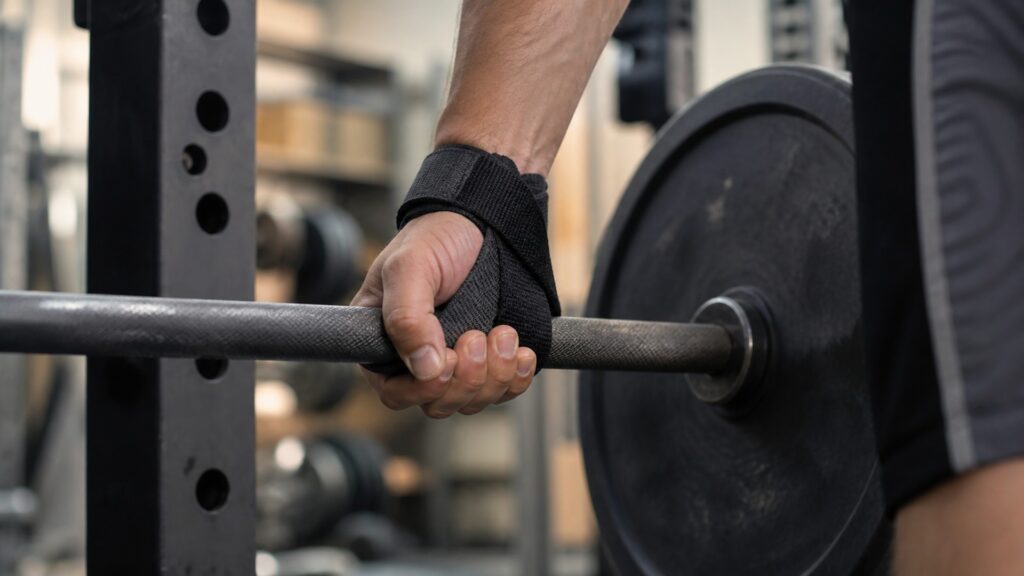
A practical look at straps, gloves, wraps, pads, chalk, and handles in strength training.
Tip: Judge the product by the job it performs during real workouts, not by the feature list alone.
These concepts clarify the practical details readers should check before choosing fitness gear.
Grip surface is the texture and contact area between the hand and equipment.
Lifting straps connect the hand to a bar or handle so the grip is less likely to fail first.
Wrist support helps limit unwanted wrist movement during certain lifts.
Skin protection reduces friction, pinching, or rubbing on the hand.
A friction aid improves contact between the hand and surface.
A handle attachment changes the shape or angle the user grips.
Tip: The most useful feature is the one that removes a real training problem without adding new friction.
The hand is often the smallest contact point in a lift. Accessories can make that contact more secure, more comfortable, or more specific to the exercise.
The accessory should solve a clear contact problem.
Lifting straps are useful when the target muscles can continue but the hands cannot hold the load. They are common in pulling and hinge movements.
Straps should support the lift without replacing all grip training.
Wrist wraps, gloves, pads, and grips often get grouped together, but they are not interchangeable. Each changes the lift in a different way.
Matching the accessory to the job prevents confusion.
Padding and support can make training more comfortable, but they can also reduce feedback from the equipment. The tradeoff matters for control and technique.
The accessory should improve the lift, not hide problems.
Grip accessories work best when they are chosen for a clear exercise, load, or volume need. They do not need to be worn for every movement.
Selective use keeps the accessory useful.
Grip tools can make training more comfortable and controlled, but they do not solve every issue.
They reduce slipping, skin irritation, or grip failure in specific lifts.
They can let target muscles receive enough work when hands fatigue first.
They can hide weak grip or poor setup if used constantly.
They do not replace sound technique or appropriate loading.
More grip help is not always better.
Straps are a tool when grip is not the target of the set.
Gloves can protect skin, but they may not improve control.
Wraps support position but do not fix pain or poor technique.
Chalk improves friction, while straps help hold the load.
Tip: Strong claims should lead to closer inspection, not automatic trust.
Short answers for practical buying and training decisions.
They change friction, comfort, support, or hand position during training.
Use straps when grip limits a pulling or hinge exercise before the target muscles are trained.
They solve different problems. Gloves add protection, while chalk improves friction.
They can reduce direct grip work if used all the time, so selective use matters.
Choose the accessory for the specific grip problem, not for every exercise by default.
Grip accessories work by changing the connection between the hand and the equipment.
They are most useful when they solve a specific problem such as slipping, skin irritation, wrist support, or grip fatigue.
Use these Review Streets paths to compare related categories and practical next decisions.
Explore the grip accessory category.
Review how grip tools affect workout quality.
Compare related gym accessory categories.
Choose a retailer
Prices checked regularly. We may earn a commission at no cost to you.