
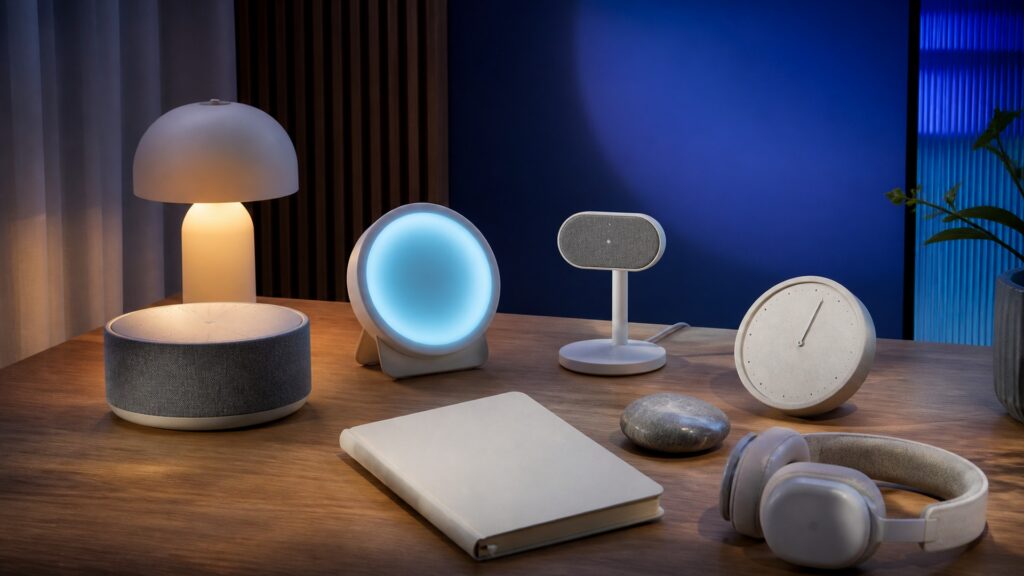
Mental wellness products act through several pathways rather than one mechanism. An audio program guides attention, a sound or light device changes sensory input, a biofeedback tool displays a body signal, a journal structures reflection, and a timer or reminder supports routine.
These products can make a practice easier to begin or repeat, but they do not guarantee calm, sleep, insight, or symptom relief. Content quality, sensory preference, privacy, measurement limits, user engagement, instructor qualifications, and clinical context all influence whether the tool fits.