
What Makes Meditation Devices Different from Sleep Aids

Meditation devices are typically used while awake to guide attention, pace breathing, provide sensory cues, or display physiological feedback during a practice. Sleep aids are used before or during the sleep period to change light, sound, temperature, comfort, timing, or another sleep-related pathway.

The categories overlap when calming audio, breathing guidance, or a wearable becomes part of a wind-down routine. The key distinction is the intended outcome: training or supporting a waking mental practice versus increasing sleep opportunity or changing conditions that affect sleep. Evidence must match that specific claim.

By: Review Streets Research Lab
Updated: August 13, 2026
Explainer · 8-12 min read
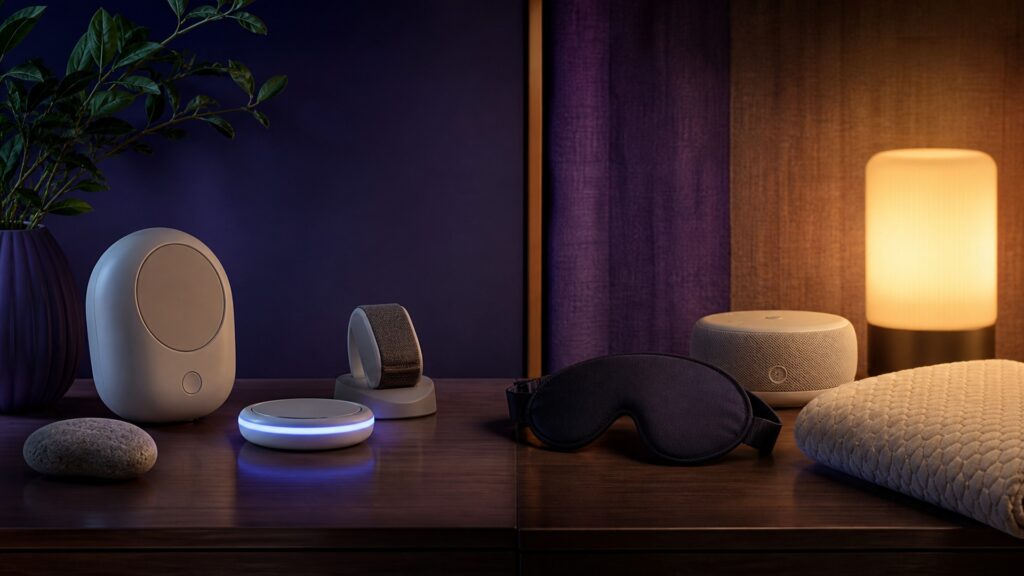
People-free comparison of meditation timer and breathing-feedback device with sleep mask, sound machine, and bedside light
What You'll Learn

Practice Support Versus Sleep-Condition Support

Compare the products through intended use, timing, active mechanism, feedback, operating period, and the boundary between relaxation and sleep treatment.

  • Why intended outcome matters more than product shape
  • How guided attention differs from environmental control
  • Where biofeedback belongs in a meditation loop
  • Why relaxation does not guarantee sleep
  • How overnight use changes comfort and safety needs
  • When neither product should delay evaluation

Tip: Read the concept as part of a system, then connect it back to the use case.

Definitions

Key Concepts That Define What Makes Meditation Devices Different from Sleep Aids

These definitions connect the main idea to the variables, limits, and practical signals readers need to compare options.

Guided Attention

Instructions or cues that direct focus during a waking practice

  • System role: Defines many meditation-device functions
  • Decision use: Follow guided attention when comparing the relevant input and output
  • Boundary: Guided Attention does not represent every factor in the result

Pacing Cue

A repeated sound, light, or vibration used to time breathing or attention

  • Why it matters: Structures session rhythm
  • Observation: Changes in pacing cue should be interpreted across comparable conditions
  • Caution: Treat pacing cue as one signal rather than a complete conclusion

Biofeedback Loop

A measured signal displayed so the user can observe and adjust practice

  • Primary function: Turns physiology into training feedback
  • Comparison point: Check the stated range and method used for biofeedback loop
  • Constraint: Context can change how biofeedback loop affects the outcome

Sleep Opportunity

The time and conditions allowed for sleep

  • Practical meaning: Defines the window sleep aids try to support
  • Buyer check: Ask how the product establishes or controls sleep opportunity
  • Limit: A specification for sleep opportunity needs real-use context

Environmental Sleep Aid

A product that changes light, sound, temperature, humidity, or comfort

  • Working effect: Acts on the bedroom rather than attention alone
  • Feedback: Repeated observations make environmental sleep aid more interpretable
  • Uncertainty: Technique and conditions can alter the apparent result

Sleep-Onset Association

A repeated cue or routine linked with the transition toward sleep

  • Decision relevance: Can support consistency without guaranteeing sleep
  • Use case: Connect sleep-onset association with a defined action or comparison
  • Scope: Keep claims about sleep-onset association inside the intended-use boundary

Tip: Keep the definitions connected; the strongest answer usually comes from the whole system, not one term.

Practice

Use Cues to Structure Waking Attention

Timers, audio, light, vibration, and guided sequences help organize a deliberate practice while the user remains engaged.

  • Choose the practice type
  • Control sensory intensity
  • Allow easy stopping

The device supports the exercise; it does not perform meditation for the user.

Training

Observe a Signal and Adjust the Practice

Some devices estimate breathing, movement, or heart-related patterns and convert them into sounds, graphics, or scores.

  • Know what is measured
  • Expect artifact
  • Avoid diagnostic conclusions

Biofeedback trains a response to information rather than directly creating sleep.

Environment

Change Conditions Before or During Sleep

Masks, sound machines, lighting, bedding, temperature tools, and humidity devices reduce specific environmental barriers or reinforce routine.

  • Match the product to the disruption
  • Consider overnight comfort and noise
  • Maintain water-contact devices carefully

A sleep aid should target the mechanism interfering with sleep opportunity.

Transition

Recognize Products That Serve Both Routines

Calming audio or paced breathing may be used as meditation and as a wind-down cue, but relaxation and sleep onset remain distinct outcomes.

  • Define which outcome is being judged
  • Avoid stimulating feedback at bedtime
  • Track daytime as well as nighttime effects

One feature can belong to two pathways without proving both claims.

Safety

Respect Symptoms, Evidence, and Overnight Risk

Mindfulness can be uncomfortable for some people, while sleep aids may create heat, sound, light, entanglement, hygiene, medication, or next-day effects.

  • Follow intended-use instructions
  • Avoid delaying care
  • Stop when distress or impairment increases

Neither consumer category is a universal solution for insomnia or mental illness.

Quick Reality Check

Different Jobs With an Overlapping Wind-Down Zone

Meditation tools support a waking skill; sleep aids alter conditions or routines around sleep, even when both products promote relaxation language.

Where Meditation Devices Help

Guidance, pacing, and feedback can reduce setup friction and structure a chosen attention or breathing practice.

A consistent practice cue may support a wind-down routine when it remains tolerable and non-stimulating.

Where Sleep Aids Help

Environmental products can reduce specific light, sound, temperature, humidity, or comfort barriers.

Neither category establishes the cause of persistent insomnia, breathing disruption, severe sleepiness, anxiety, or other significant symptoms.

Common Myths

Misconceptions About What Makes Meditation Devices Different from Sleep Aids

Common shortcuts and misunderstandings can make the topic seem simpler than it is.

Any product that relaxes you is automatically a sleep aid

Relaxation may support a bedtime transition, but sleep also depends on opportunity, circadian timing, continuity, environment, health, substances, and other factors. A calming session does not guarantee faster or more restorative sleep.

Meditation devices work passively while the user does nothing

Timers, cues, guidance, and biofeedback organize a practice, but the user still attends, notices, redirects, or adjusts. Passive exposure may be pleasant without producing the same training process or outcome.

Sleep aids treat the underlying cause of insomnia

Masks, sound, light, temperature, or comfort products can reduce specific barriers, yet insomnia may involve behavior, timing, medication, pain, breathing, mental health, or other factors requiring a different evaluation. The intended use and real.

Biofeedback scores show whether someone is ready to sleep

A score reflects selected signals and an algorithm under particular conditions. It cannot summarize circadian timing, sleep pressure, thoughts, medication, environment, or every cause of alertness, and feedback itself may become stimulating.

Tip: Treat strong claims as starting points for comparison, not final answers.

FAQ

Frequently Asked Questions About What Makes Meditation Devices Different from Sleep Aids

Concise answers to common questions readers may have after the main explanation.

Can a meditation device be used at bedtime?

Yes, when its cues are calming, the practice remains comfortable, and screens, alerts, or performance feedback do not increase alertness. Judge the bedtime effect separately from whether the device supports meditation skill.

Which sleep aids work without electronics?

Masks, curtains, bedding, earplugs, positioning supports, written routines, and environmental changes may address particular barriers without connected electronics. Fit, hygiene, safety, and the actual source of disruption still determine usefulness.

Is a breathing pacer a meditation device or a sleep aid?

It is primarily a pacing tool; its category depends on intended use and outcome. During waking practice it supports attention or breathing training, while at bedtime it may serve as a routine cue.

When should products give way to professional sleep evaluation?

Seek qualified guidance for persistent insomnia, loud snoring with pauses, gasping, severe daytime sleepiness, unusual movements, worsening mental-health symptoms, or impaired safety despite adequate opportunity and sensible environmental or routine adjustments.

Bottom Line

Meditation devices structure a waking practice through guidance, pacing, or feedback; sleep aids change conditions or routines around the sleep period.

Choose by intended outcome, test the direct mechanism, avoid equating relaxation with sleep treatment, and escalate persistent distress or impairment beyond consumer products.

Next Steps

Go Deeper or Compare Your Options

Use these Review Streets paths to connect the explainer to related categories, comparisons, and next decisions.

Why Mindfulness Matters

Mindfulness involves attending to present-moment experience with less automatic judgment and reactivity.

How Mental Wellness Products Works

Mental wellness products may guide attention, change light or sound, provide physiological feedback, structure reflection, or cue a routine.

Quick Summary

What Makes Meditation Devices Different from Sleep Aids Explained

  • Meditation devices support active waking practice.
  • Sleep aids target sleep opportunity or conditions.
  • Relaxation and sleep are related but distinct.
  • Biofeedback scores measure selected signals.
  • Persistent symptoms need an appropriate care pathway.