How Passenger Vans Work

A passenger van combines a road vehicle with a cabin designed around several rows of occupants. Its powertrain turns the wheels, its suspension supports the loaded body, and its brakes slow the combined mass. Inside, seats, restraints, doors, and ventilation make that movement usable for people rather than simply providing an enclosed space.

The systems interact. Adding passengers and bags increases the load the running gear must carry, while changing a seating layout can affect access, luggage space, and attachment requirements. Understanding those connections is more useful than treating seat count as a complete description of the van.

By: Review Streets Research Lab
Updated: October 6, 2026
Explainer · 8-12 min read
passenger vans explainer hero image for Review Streets
What You'll Learn

Connect the Wheels to the Occupied Cabin

Follow the systems that turn a large road vehicle into group transport.

  • How power reaches the road
  • What suspension and brakes do with a changing load
  • How seats and restraints connect occupants to the vehicle
  • Why door access and rear ventilation need their own equipment
  • Why seats, luggage volume, and weight limits are different measures

Tip: Check the exact configuration. Vans with the same model name can have different powertrains, seating layouts, and cabin equipment.

Definitions

Six Systems Behind Passenger Transport

Each system has a distinct job, even when several share the same body.

Powertrain

The powertrain supplies and transmits the force that moves the van.

  • Example: an engine and transmission driving the wheels through the driveline
  • Check: the fitted propulsion and drive layout
  • Limit: body shape alone does not identify the powertrain

Suspension

Suspension supports the body while allowing controlled movement between the wheels and vehicle.

  • Example: springs compressing as occupants board
  • Check: the vehicle and load specifications
  • Limit: a softer ride does not mean unlimited carrying capacity

Braking system

The braking system produces the forces used to reduce speed or hold the vehicle as designed.

  • Example: wheel brakes slowing the loaded van
  • Check: the operating instructions and service condition
  • Limit: additional passengers do not make stopping conditions identical to an empty van

Seat anchorage

A seat anchorage is the engineered attachment connecting a seat to the vehicle.

  • Example: a removable seat locked into its designated mounting positions
  • Check: the exact seat installation instructions
  • Limit: a seat resting on the floor is not a secured passenger position

Restraint system

A restraint system helps keep an occupant in the intended position during sudden movement or a crash.

  • Example: a correctly used seat belt at a designated seat
  • Check: belt routing, fit, and equipment condition
  • Limit: airbags supplement rather than replace seat belts

Rear climate equipment

Rear climate equipment distributes conditioned or ventilating air to the passenger area behind the front seats.

  • Example: rear outlets serving several seating rows
  • Check: the equipment and controls actually fitted
  • Limit: front-seat comfort does not establish airflow in every row

Tip: Separate what the vehicle can carry from how its cabin accommodates the people being carried.

Propulsion

The Powertrain Moves the Van Through Its Tires

In an engine-powered van, the engine produces torque and the transmission and driveline deliver it to the driven wheels. A battery-electric version uses one or more electric motors and an electric drive arrangement. In either case, tire contact with the road turns wheel force into vehicle motion. Passenger seating does not determine which wheels are driven or which propulsion system is installed.

  • Identify the engine or electric drive fitted.
  • Check the drive layout for the exact vehicle.
  • Use its instructions for starting, selecting drive, and parking.

Two similar-looking passenger vans can therefore have different controls, fueling or charging needs, and traction characteristics.

Load support

Suspension and Brakes Work on the Whole Loaded Vehicle

The body carries the cabin and its occupants, while the suspension supports that weight over the wheels and controls movement. Springs and dampers have different jobs: springs support load and permit travel, while dampers control the resulting motion. Brakes then slow the mass that is actually moving. A group arriving with heavy luggage changes that mass even if every item fits behind the last row.

  • Include people and baggage in the load.
  • Observe total and axle limits.
  • Allow for the loaded van when maneuvering and stopping.

Ford’s loading guidance distinguishes vehicle weight ratings from the number of available seats. An open seat is not proof that more weight can be added.

Reference: Ford vehicle loading guidance.

Occupant support

Seats Need Attachments as Well as Cushions

A passenger seat provides a supported position, but its connection to the vehicle is essential. Fixed or removable seats must use the intended attachments, and restraints must work with the installed arrangement. Where removal is supported, reinstalling the seat involves the prescribed locking and checking steps. Different-looking clips or a nearly matching floor position should never be treated as evidence of compatibility.

  • Use the specified seating positions.
  • Follow the exact installation checks for removable seats.
  • Keep restraints accessible and free from obvious damage.

The seat and belt form part of an occupant-protection arrangement. Moving one component without checking the others can defeat the intended setup.

Reference: Ford removable-seat installation instructions, NHTSA restraint and airbag guidance.

Passenger access

Doors and Aisles Make the Seating Usable

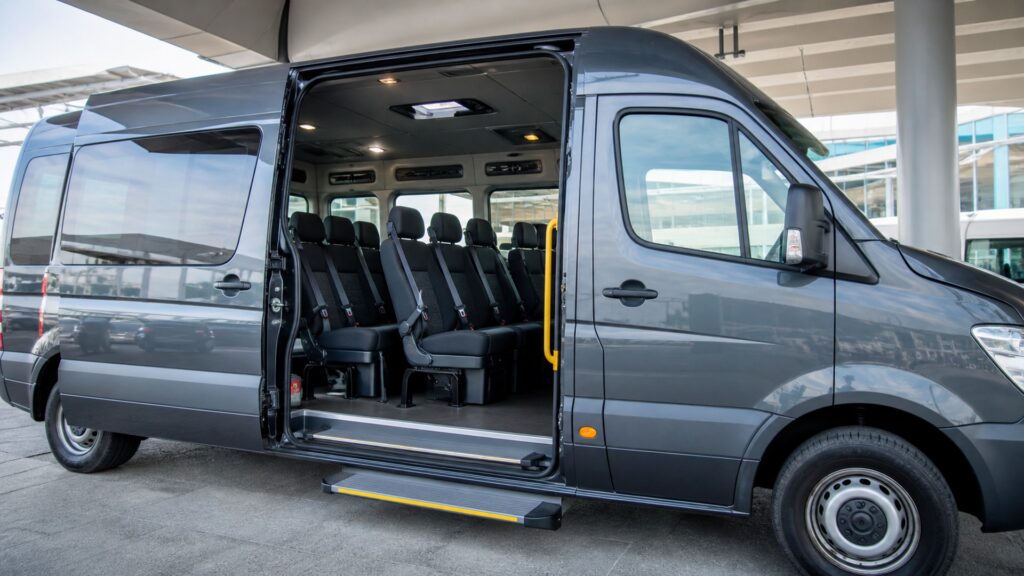
A row of seats is useful only if passengers can reach it. The entrance, steps, handholds, aisle, and space around the seats form an access path through the parked van. Luggage placed in that path can undermine an otherwise workable layout. Consider a shuttle with cases behind the rear row: the same bags moved into the aisle create a very different boarding and exit arrangement.

  • Trace the path to each occupied row.
  • Keep entrances and exits clear.
  • Match access arrangements to the passengers using them.

Door size alone does not establish accessibility. Passengers needing adapted access require an appropriately equipped vehicle.

Cabin services

Rear Airflow Has to Reach Rear Occupants

A long cabin cannot be judged from the driver’s position alone. Depending on the equipment, additional outlets, fans, ducts, and controls help distribute heating or cooling to the rear. Inspect the installed arrangement and try its controls from the relevant positions. Bags or equipment can obstruct an outlet even when the heating or cooling unit itself works correctly.

  • Identify rear vents and their controls.
  • Check airflow in occupied rows.
  • Keep luggage clear of outlets and controls.

Ford’s configuration guide illustrates how passenger equipment varies with the selected vehicle and options. Verify the fitted equipment rather than assuming every example of a model is identical.

Reference: Ford Transit equipment guide.

Quick Reality Check

Space and Weight Answer Different Questions

An apparently roomy cabin can still reach a carrying limit.

Cabin arrangement

Where each occupant sits and how they reach that position.

Where bags fit without blocking access or equipment.

Vehicle loading

The combined mass of occupants, baggage, and fitted equipment.

Whether the total and axle loads remain within the applicable limits.

Common Myths

Misconceptions About Passenger-Van Systems

Similar bodywork can hide important differences.

All passenger vans use the same drive layout

Propulsion and driven wheels depend on the specific vehicle.

An empty seat always means spare load capacity

Baggage and equipment also contribute to vehicle and axle loads.

A removable seat can be attached anywhere

Use only the positions and installation method specified for that vehicle and seat.

Front air conditioning serves every row equally

Rear distribution depends on the installed equipment and cabin arrangement.

Tip: Use specifications for the actual occupied configuration, including permanent equipment.

FAQ

Questions About How Passenger Vans Work

Clarify what the main systems contribute.

Does a passenger body require a combustion engine?

No. Passenger accommodation and propulsion are separate characteristics; check the exact vehicle.

Why does loading change the way a van feels?

Added mass and its placement affect the loaded vehicle. Stay within its limits and adapt driving to the conditions.

Can removing seats increase cargo room?

It may, where removal is supported, but additional floor space does not raise the vehicle’s weight ratings.

What holds a removable seat in place?

Its designated attachments and locking mechanism. Follow the exact vehicle and seat instructions and required checks.

Why inspect the rear cabin separately?

Access, airflow, restraints, and luggage accommodation can differ substantially from what the driver experiences.

Bottom Line

A passenger van works by combining a load-carrying road vehicle with an engineered occupied cabin.

Power, suspension, brakes, seats, restraints, and cabin services need to suit the same group and load.

Next Steps

Go Deeper or Compare Your Options

Use these Review Streets paths to compare related categories and practical next decisions.