Why Passenger Vans Operating Function Matters

A passenger van earns its place by moving a group through a complete trip: reaching the pickup point, boarding, storing luggage, traveling comfortably, and getting everyone out at the destination. Operating function is how well the vehicle supports that sequence. A van with enough seats can still work poorly if access is awkward, bags block the cabin, or its height rules out the regular parking location.

Evaluate the van with a representative group and load, not just an empty cabin. Door placement, seating layout, climate controls, driver visibility, and luggage access become much easier to judge when they are connected to the route the vehicle will actually serve.

By: Review Streets Research Lab
Updated: October 6, 2026
Explainer · 8-12 min read
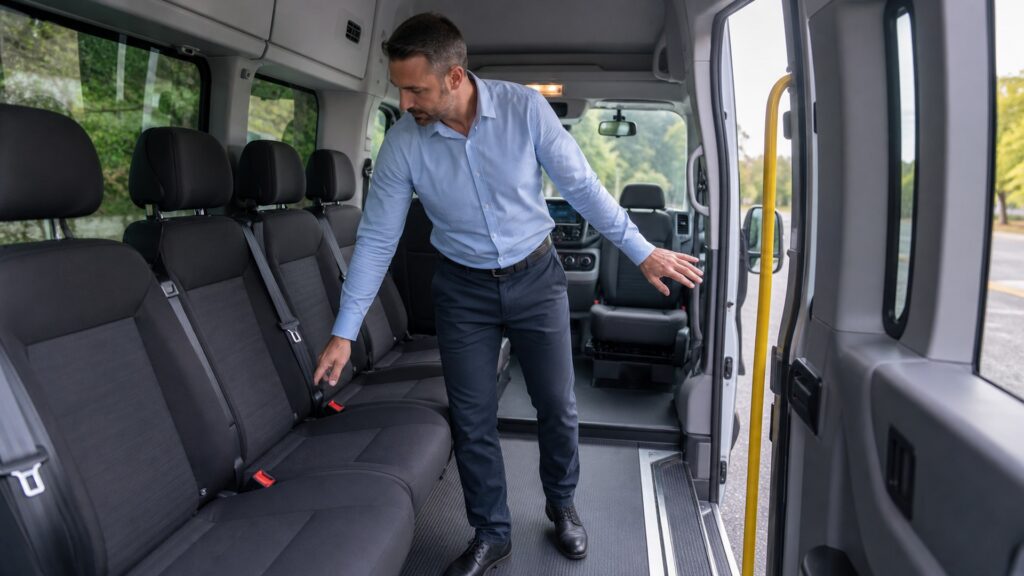
passenger vans explainer hero image for Review Streets
What You'll Learn

Follow the Passenger Trip from Curb to Destination

Look at the repeated tasks that determine whether group transport runs smoothly.

  • How boarding access affects each stop
  • Why seating and baggage need a combined plan
  • What rear-cabin ventilation and controls contribute
  • How vehicle dimensions shape the route
  • Why arrival and the next departure belong in the same assessment

Tip: Rehearse one representative trip, including the bags and access needs it will involve.

Definitions

Terms for a Usable Passenger Service

These ideas describe the journey rather than isolated equipment claims.

Boarding access

Boarding access is the path passengers use from the pickup surface to their seats.

  • Example: stepping through the side door and reaching a rear row
  • Check: step height, handholds, and the actual passenger's needs
  • Limit: a wide opening alone does not establish accessibility

Cabin circulation

Cabin circulation is the space available for passengers to move through the parked vehicle.

  • Example: reaching a rear seat without climbing over bags
  • Check: aisle and seat access in the intended layout
  • Limit: empty-cabin room can disappear when luggage is added

Occupied configuration

The occupied configuration is the van's arrangement with its required seats, people, and luggage in place.

  • Example: a shuttle loaded for its usual airport trip
  • Check: both available space and applicable weight limits
  • Limit: a maximum cargo-volume figure may describe seats removed

Rear-cabin climate control

Rear-cabin climate control supplies heating, cooling, or ventilation to occupants behind the front row.

  • Example: air distribution to the rear seating area
  • Check: what is fitted and how passengers or the driver operate it
  • Limit: a comfortable driver's seat does not prove the rear rows are comfortable

Route clearance

Route clearance is the space the vehicle needs through entrances, parking areas, and maneuvering points.

  • Example: the height needed to enter a regular garage
  • Check: actual overall dimensions including added equipment
  • Limit: a familiar route for a car may not suit a taller van

Turnaround

Turnaround is the work needed after one trip to prepare the vehicle for the next.

  • Example: unloading bags, checking the cabin, and preparing the next pickup
  • Check: time, access, and responsibility for each task
  • Limit: a short drive can still require substantial time between departures

Tip: Evaluate the van with the layout and load that the service will use most often.

Pickup

The Trip Starts Before the Engine Moves the Group

A pickup point has to accommodate both the van and the people approaching it. The passenger entrance may open beside a curb, a narrow walkway, or a busy loading area. Check where people can wait, how the door opens, and whether passengers can reach their seats without crossing the vehicle's movement path. A different stopping location can sometimes solve a problem that a larger van would not.

  • Try the entrance at a representative pickup location.
  • Check steps and handholds with the intended passengers.
  • Leave time for boarding assistance where needed.

For passengers who need adapted access, arrange a suitable vehicle and qualified assessment; do not infer accessibility from roof height or door width alone.

Reference: NHTSA adapted-vehicle planning guidance.

Cabin arrangement

Seat and Luggage Plans Have to Work Together

An airport run is a useful example: a seat may be available for every traveler, yet the last row leaves too little room for their cases. The solution is to choose an appropriate occupied arrangement and vehicle, not to fill an aisle with bags. Consider when luggage will be loaded and unloaded as well as where it will sit during travel. Check the load limits for that configuration.

  • Plan the group and baggage together.
  • Keep entrances and movement routes clear.
  • Use suitable storage and restraints for carried items.

Compare specifications that describe the intended seat layout. A cargo-space figure for an empty cabin answers a different question.

During travel

Judge the Rear Cabin from the Rear Cabin

The driver can be comfortable while a rear passenger lacks useful airflow or has difficulty hearing necessary information. Inspect the fitted ventilation outlets, controls, lighting, and seating space from the rows people will occupy. Consider the longest routine journey and seasonal conditions. The aim is a cabin that supports the trip without requiring repeated stops to fix avoidable discomfort.

  • Check rear ventilation and temperature controls as fitted.
  • Assess usable legroom and access with seats occupied.
  • Keep luggage away from outlets and controls.

Ford's Transit configuration guide illustrates that passenger equipment depends on the selected vehicle and options. Verify the exact van rather than relying on a model name.

Reference: Ford Transit configuration and equipment guide.

Route

The Vehicle Must Fit the Stops as Well as the Road

A high roof can make the interior easier to use while preventing access to a low parking structure. A long body may need more room at a hotel entrance or turnaround. Check the actual vehicle dimensions, mirrors, and fitted equipment against the places it must visit. Review driver sightlines and reversing arrangements before assigning a regular route.

  • Measure height including installed roof equipment.
  • Check the tightest recurring entrances and turns.
  • Choose pickup points that allow orderly loading and departure.

A route trial can reveal a clearance or access problem before it disrupts a journey with passengers aboard.

Arrival

Unloading and Resetting Determine the Next Departure

A transfer does not end when the van parks. Passengers need to leave, luggage needs to reach them, and the cabin needs checking before another group boards. Work backward from the next scheduled departure to allow for those tasks. If equipment must be rearranged, follow its instructions and verify the new arrangement before use; do not assume that frequent changes are effortless.

  • Plan access to the luggage being unloaded.
  • Check for belongings, damage, and obstructions.
  • Allow time to restore the required seating and load arrangement.

A useful van makes the complete cycle repeatable, including the small tasks between trips.

Quick Reality Check

An Empty-Cabin Demonstration Versus a Real Trip

The same vehicle can feel very different once its ordinary assignment is present.

What an empty inspection shows

Door openings, basic seating layout, and available controls.

A starting point for measuring dimensions and identifying equipment.

What a trip rehearsal adds

Whether the actual group can board and store its belongings.

How the vehicle fits its stops and how long unloading and reset take.

Common Myths

Misconceptions About Passenger-Van Usability

A single capacity figure cannot describe the whole journey.

The most seats always provide the most useful service

The intended group also needs baggage space, access, and a load within the vehicle's limits.

A high roof solves every access problem

Step height, door opening, seating arrangement, and individual needs still matter.

Front air conditioning proves rear comfort

Check the actual equipment and airflow where rear passengers sit.

Trip time is just driving time

Boarding, baggage handling, unloading, and preparation for the next trip also take time.

Tip: Compare a complete cycle of use rather than one attractive interior feature.

FAQ

Questions About Passenger-Van Operating Function

Answers for shuttle trips, family travel, and group outings.

What is the most useful first check?

Describe a typical trip with its people, luggage, access needs, and stops. Then test the vehicle against that description.

Should I choose the tallest roof?

Choose enough usable interior room while checking the clearance limits on your actual route.

What if the group size changes frequently?

Use only supported seating arrangements and plan how changes will be performed and checked. Include the time and storage needed for removed equipment.

Why inspect the rear controls?

Passengers may rely on equipment that is not obvious from the driver's seat. Confirm its presence and operation.

How do I compare two vans with the same seat count?

Rehearse boarding, luggage placement, cabin use, parking, and unloading in each. Equal seat counts do not guarantee equal practicality.

Bottom Line

Operating function matters because a passenger van must support the whole trip, from boarding and baggage storage to arrival and the next departure.

Test the occupied cabin and regular route together. The best arrangement is the one that handles the actual group without repeated improvisation.

Next Steps

Go Deeper or Compare Your Options

Use these Review Streets paths to compare related categories and practical next decisions.