
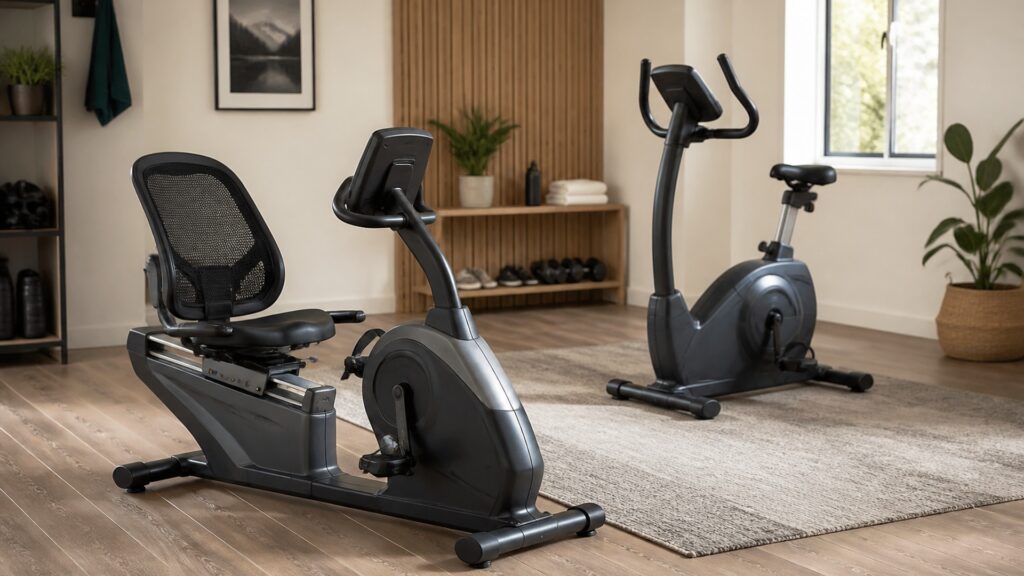
How Recumbent Exercise Bikes Work

Recumbent exercise bikes work by placing the rider in a reclined seated position with pedals out in front of the body. The seat, backrest, crank, resistance system, and console work together to create supported indoor cycling.

The design reduces balance demand compared with upright cardio machines, but fit still matters. Seat distance, pedal reach, resistance feel, and mounting access determine whether the bike feels comfortable enough for repeated workouts.

By: Review Streets Research Lab
Updated: October 6, 2026
Explainer · 8-12 min read
recumbent exercise bikes explainer hero image for Review Streets
What You'll Learn

How Recumbent Exercise Bikes Turn Seated Pedaling Into Cardio

A practical look at seat position, pedals, resistance, controls, and access.

  • Why the rider sits back instead of leaning forward
  • How seat adjustment changes pedaling comfort
  • Where resistance creates workout effort
  • Why entry and exit design matter
  • What to test before choosing a recumbent bike

Tip: Match the machine to the workout the user will repeat, then test comfort at real pace.

Definitions

Key Concepts Behind Recumbent Exercise Bikes

These concepts connect the equipment design to comfort, setup, and repeated workout use.

Recumbent Position

A recumbent position lets the user sit back with the legs pedaling forward.

  • Example: cycling with back support instead of leaning over handlebars
  • Check: adjust the seat before judging comfort
  • Limit: support does not guarantee the right fit

Seat Adjustment

Seat adjustment changes the distance between the user and the pedals.

  • Example: sliding the seat until the knee stays slightly bent
  • Check: test the range for the intended user
  • Limit: poor adjustment can make pedaling uncomfortable

Back Support

Back support is the seat structure that helps hold the torso during riding.

  • Example: a ventilated backrest on a home recumbent bike
  • Check: sit for several minutes, not only briefly
  • Limit: support still needs good posture

Pedaling Resistance

Pedaling resistance controls how hard the user must push the pedals.

  • Example: magnetic resistance increasing during an interval
  • Check: try several levels while seated
  • Limit: harder resistance is not always better

Console Control

Console control is how easily the user starts, adjusts, and tracks a ride.

  • Example: changing resistance without leaving the seat position
  • Check: use controls during a normal cadence
  • Limit: many programs can still be confusing

Mounting Access

Mounting access is how easily the user can sit down and stand up from the bike.

  • Example: a step-through frame with handles near the seat
  • Check: practice entry and exit safely
  • Limit: access varies widely by model

Tip: A useful cardio machine is the one whose motion, controls, and setup fit the user.

Position

The Rider Sits Back With Pedals In Front

The defining feature is the reclined seated position. The rider pedals forward from a supported seat rather than standing or leaning over handlebars.

  • Check backrest comfort.
  • Adjust the seat before testing.
  • Keep the hips settled on the seat.

The seated position shapes the whole experience.

Fit

Seat Distance Controls Pedaling Comfort

The seat must place the rider close enough to pedal smoothly without crowding the knees. Poor adjustment can make a good bike feel wrong.

  • Keep a slight knee bend at extension.
  • Try several seat positions.
  • Make sure adjustment is easy to lock.

Fit starts with seat position.

Effort

Resistance Turns Pedaling Into A Workout

The resistance system controls how hard the rider has to push. Smooth resistance lets the bike support easy rides, steady cardio, and harder intervals.

  • Try several resistance levels.
  • Check whether changes feel smooth.
  • Use programs only if they are easy to follow.

Resistance gives the seated motion training range.

Access

Entry And Exit Are Part Of The Design

Many people choose recumbent bikes because mounting can be easier than climbing onto taller machines. The frame and handles should support safe entry and exit.

  • Check step-through space.
  • Use handles near the seat.
  • Avoid cramped placement near walls.

Access matters before and after every ride.

Controls

The Console Should Be Easy From The Seat

The rider should be able to start, change resistance, and read basic metrics without leaving a comfortable position.

  • Reach controls without twisting.
  • Read the screen from normal posture.
  • Use quick start during a test ride.

Good controls keep the ride simple.

Quick Reality Check

Where Recumbent Exercise Bikes Help And Where They Have Limits

The seated design supports many users, but it is not the answer for every workout.

Where They Help

They reduce balance demand with a seated position.

They can support comfortable steady cardio at home.

Where They Have Limits

They do not provide standing stride or upper-body work.

Poor seat fit can still make riding uncomfortable.

Common Myths

Misconceptions About How Recumbent Exercise Bikes Work

Seated cardio still depends on fit and resistance.

The seat makes fit automatic

Seat distance, back support, and pedal reach still need adjustment.

Recumbent bikes are only easy

Resistance can make the workout demanding.

Any model will feel comfortable

Seat shape and adjustment range vary widely.

Console features matter most

Fit and resistance feel matter before programs.

Tip: Use broad claims as a reason to test the actual machine more carefully.

FAQ

Frequently Asked Questions About Recumbent Exercise Bikes

Short answers for practical cardio equipment decisions.

What makes a bike recumbent?

The rider sits in a reclined supported position with pedals in front.

What should I adjust first?

Adjust the seat so the legs can pedal smoothly with a slight knee bend.

Can recumbent bikes provide hard workouts?

Yes, if the resistance range is strong and smooth enough.

Who may prefer a recumbent bike?

Users who want seated support and lower balance demand may prefer one.

What is the practical takeaway?

A recumbent exercise bike works well when seat fit, resistance, and access support repeated rides.

Bottom Line

Recumbent exercise bikes work by combining a supported seat, forward pedals, adjustable resistance, and easy controls for seated cardio.

The best model is the one that fits the rider's body, room, and workout routine.

Next Steps

Go Deeper or Compare Your Options

Use these Review Streets paths to compare related categories and practical next decisions.