How Right-Angle Drills Works

Right-angle drills are compact power tools engineered around a 90-degree gear transmission system, allowing rotational force to change direction within a confined housing. While their exterior appears straightforward, the internal mechanics—particularly the bevel or hypoid gear arrangement—are often misunderstood. Many assume the angled head simply redirects the bit, when in reality it involves precise torque transfer, load distribution, and reinforced gearing to maintain performance in tight spaces.


This explainer examines the internal gearbox configuration, motor alignment, torque redirection process, and structural components that enable right-angle operation. By the end, readers will understand how mechanical force travels through the tool, how the 90-degree head functions under load, and how the system is engineered for controlled drilling in constrained environments.

By: Review Streets Research Lab
Updated: April 20, 2026
Explainer · 8–12 min read
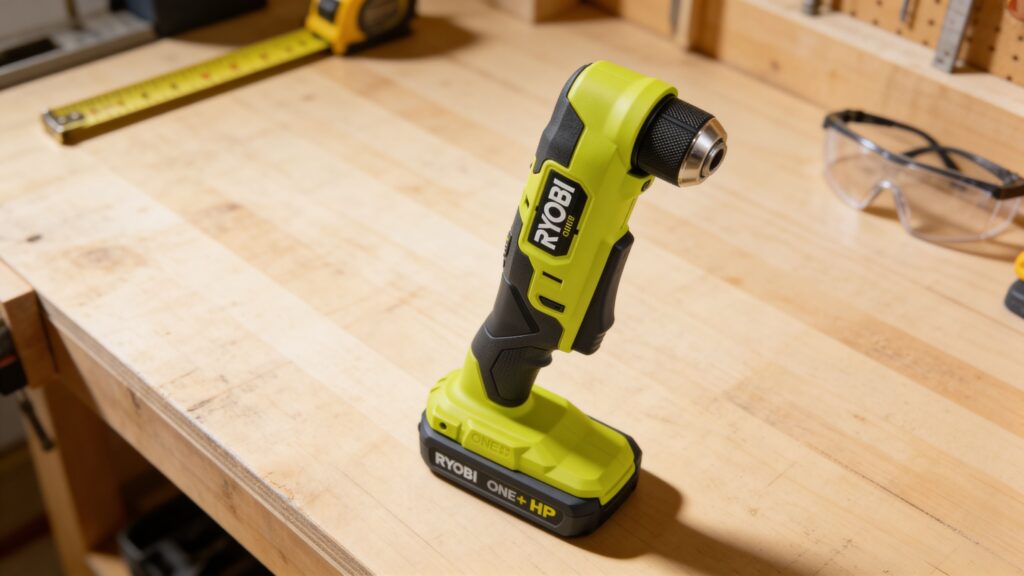
Close-up of a right-angle drill showing compact 90-degree gearbox design drilling into wood in a tight corner workspace
What You’ll Learn

How Right-Angle Drills Work

A focused breakdown of the internal 90-degree drive system, explaining how rotational force is redirected, supported, and controlled within a compact right-angle housing.

  • How the motor aligns with a perpendicular gearbox assembly
  • How bevel or hypoid gears redirect torque at ninety degrees
  • How gear tooth engagement maintains smooth rotational force transfer
  • Why reinforced housings manage side loads in confined drilling
  • How torque multiplication occurs within compact gear reductions
  • What causes vibration, backlash, and mechanical energy loss
  • How spindle support bearings stabilize angled rotational output

Tip: Visualize the power path as a straight motor shaft turning a perpendicular gear set that redirects force while preserving rotational continuity.

Definitions

Key Parts That Make a Right-Angle Drill Work

Understanding the internal drive system requires clarity on how each mechanical component redirects, supports, and stabilizes rotational force within a compact angled housing.

Motor Assembly

The motor generates rotational force along a straight shaft. In a right-angle configuration, that rotation feeds directly into a perpendicular gear set rather than a straight spindle.

  • Alignment: Mounted inline with the primary drive shaft
  • Output speed: High RPM designed for later gear reduction
  • Heat flow: Dissipated through the housing under sustained load

Right-Angle Gear Set

A pair of interlocking gears—often bevel or hypoid—redirect rotational energy ninety degrees while maintaining torque continuity through meshed gear teeth.

  • Tooth geometry: Transfers force smoothly across angled contact surfaces
  • Torque redirection: Changes rotational axis without interrupting motion
  • Load transfer: Distributes stress across multiple gear teeth

Gear Reduction Stage

Before torque reaches the angled head, internal reduction gears slow motor speed and multiply rotational force to maintain usable drilling power.

  • Speed conversion: High RPM becomes controlled spindle rotation
  • Torque multiplication: Increases twisting force at the output
  • Mechanical balance: Coordinates reduction with angled redirection

Spindle and Output Shaft

The output shaft sits perpendicular to the motor axis, receiving redirected torque and transmitting it directly to the bit interface.

  • Perpendicular orientation: Positioned at a ninety-degree angle to the motor
  • Rotational stability: Supported by internal bearings to limit wobble
  • Force delivery: Channels multiplied torque to the drilling point

Bearings and Support Structure

Bearings stabilize both the motor shaft and angled spindle, reducing friction and controlling side loads created by offset drilling forces.

  • Radial support: Keeps shafts centered under rotational stress
  • Axial control: Manages forward thrust during drilling
  • Friction reduction: Preserves energy within the drive system

Housing and Gear Case

The outer structure encloses and aligns internal components, maintaining gear mesh precision while resisting torsional and side-loading forces.

  • Structural rigidity: Prevents gear misalignment under load
  • Heat conduction: Draws thermal energy away from gears
  • Protection: Shields moving parts from debris and contamination

Tip: A right-angle drill functions as a coordinated system where straight-line motor rotation is reduced, redirected, stabilized, and delivered through a perpendicular spindle.

Power Path

How Rotational Force Is Redirected Inside a Right-Angle Drill

A right-angle drill is defined by an internal drive path that changes the axis of rotation inside the head. Understanding that path explains how torque remains continuous through a 90-degree turn.

  • The motor produces rotation along a straight primary drive shaft
  • Reduction gearing converts high RPM into higher torque output
  • A bevel or hypoid gear set redirects rotation to a perpendicular axis
  • Bearings stabilize the angled spindle against radial and thrust loads
  • The output shaft transfers redirected torque directly to the bit interface

When any element in this chain shifts—gear mesh, bearing support, or housing rigidity—the redirected output becomes less stable and less efficient under load.

Motors

How Motor Output Is Conditioned for an Angled Drive System

The motor generates speed and baseline torque, but a right-angle layout depends on how that output is managed before it reaches the angled head. The motor’s behavior sets the thermal and mechanical limits of the entire drive line.

  • Higher motor speed requires predictable reduction stages to avoid gear shock
  • Torque ripple and start-up load influence how smoothly gears remain engaged
  • Heat generated in the motor propagates into the gear case and bearings

In operation, motor consistency determines whether the right-angle gear set receives steady input or intermittent loading that increases wear.

Gearing

How the 90-Degree Gear Set Transfers Torque Without Losing Alignment

The defining mechanism is the angled gear interface that converts rotation from one axis to another while maintaining tooth contact under load. Small differences in geometry and support change how smoothly torque moves through the head.

  • Bevel gear teeth transmit force across an angled contact surface
  • Hypoid arrangements shift the contact path to handle offset loading
  • Backlash affects how quickly torque engages during direction changes
  • Lubrication maintains a protective film that reduces friction and wear

As the gear set stays aligned under stress, the drill maintains predictable rotation instead of chatter, vibration, or mechanical drag.

Heat Management

How Heat Builds in Compact Gearcases and Affects Drive Efficiency

Right-angle heads concentrate gears, bearings, and lubrication in a small volume, so heat rises quickly when friction increases. Temperature changes alter clearances, lubricant viscosity, and overall mechanical losses.

  • Gear tooth sliding generates heat at the contact boundary under load
  • Bearing friction increases as side loads rise on the angled spindle
  • Lubricant thins as temperature climbs, changing film strength and drag

As internal temperatures climb, more input energy is consumed by friction, leaving less available as controlled rotation at the output.

User Control

Why the Right-Angle Head Changes Load Paths and Handling Dynamics

With the output axis offset from the motor, drilling forces generate different reaction loads through the housing. These load paths influence stability, vibration, and how precisely the bit tracks in confined spaces.

  • Off-axis torque creates lateral reaction forces that the housing must resist
  • Side loading transfers into bearings, affecting spindle stability and runout
  • Gear backlash can be felt as subtle engagement delay under changing load

When the structure, bearings, and gear engagement remain stable, the tool’s output feels controlled because the drive line stays aligned under real drilling forces.

Quick Reality Check

Where Right-Angle Drills Help — and Where They Strain

A grounded look at how the 90-degree drive system enables access in tight areas while introducing mechanical trade-offs under sustained load.

Strength in Tight Access

The perpendicular head allows drilling in confined framing bays, joist cavities, and cabinet interiors where straight-line tools cannot align with the work surface.

By redirecting torque through a bevel gear set, the tool maintains rotational continuity even when the motor body cannot sit directly behind the bit.

Mechanical Trade-Offs Under Load

The 90-degree gear interface introduces additional friction and side loading compared to a straight drive, increasing internal stress during heavy drilling.

As torque rises, angled gear teeth and spindle bearings absorb lateral forces that can elevate heat and reduce overall mechanical efficiency.

FAQ

Frequently Asked Questions About How Right-Angle Drills Work

Concise explanations of common right-angle drill mechanics, including torque redirection, gearcase behavior, heat buildup, and the structural forces created by an angled head.

What actually redirects rotation inside a right-angle drill?

A right-angle drill uses an internal gear pair—typically bevel or hypoid gears—to change the axis of rotation by ninety degrees. The motor drives a primary shaft, and the meshed gear teeth transfer torque to a perpendicular output shaft while bearings keep the gear mesh aligned under load.

Why can right-angle drills feel different under the same load?

The angled head adds mechanical interfaces that influence friction, backlash, and bearing loading. Small differences in gear reduction, tooth geometry, and housing stiffness change how smoothly torque transfers through the 90-degree gear mesh, which affects how consistently the output spindle maintains speed as resistance rises.

What does the 90-degree gearbox change compared to straight drives?

Redirecting torque introduces side loads that a straight drive largely avoids, so the gearcase must support both twisting force and lateral reaction forces. That means the head relies more heavily on bearing support and precise gear alignment, and energy losses from friction can be more noticeable as load increases.

Why does the head get warm during sustained drilling?

Heat builds where friction concentrates: gear tooth contact, bearing surfaces, and lubricant shear inside the compact gearcase. As temperature rises, lubricant viscosity changes and clearances expand slightly, which can increase mechanical losses and alter the feel of engagement, especially when the spindle is absorbing steady side loading.

What causes vibration or a “chattery” feel at the bit?

Vibration can come from gear backlash, uneven tooth engagement, or spindle support that is reacting to side loads. When the gear mesh momentarily unloads and re-engages, the system can feel like it pulses, and any runout in the output shaft is amplified because the head is offset from the motor’s centerline.

Why does a right-angle head sometimes seem to bind?

Binding is often the result of combined load paths: torque demand increases while side forces push on the output bearings and gear mesh. If the bit angle creates additional lateral force, the spindle can see higher bearing friction, and the gear teeth can experience heavier sliding contact, which increases drag through the head.

How does the output stay stable when the motor is offset?

Stability comes from rigid housing alignment and bearing placement that centers the output shaft and controls thrust. The drive path is engineered so the motor’s rotation is reduced, redirected, and then supported at multiple points, keeping the perpendicular spindle aligned even as drilling forces push the head sideways.

What matters most for consistent right-angle drilling behavior?

Consistency depends on the whole drive system staying aligned under load: gear reduction, the 90-degree gear mesh, bearing support, and lubrication working together. When these elements remain stable, torque transfers smoothly; when one element shifts from heat or side loading, the output may feel less steady even if rotation continues.

Tip: When output feels inconsistent, trace the drive path—motor input, reduction stage, 90-degree gear mesh, bearing support, and heat effects—to identify where friction or misalignment is being introduced.

FAQ

Frequently Asked Questions About How Right-Angle Drills Work

Short, mechanism-focused answers to common questions about 90-degree gearcases, torque transfer, side loading, and heat behavior in compact heads.

What actually determines how “powerful” a right-angle drill feels?

It is the combined drive system: motor input, reduction gearing, the 90-degree gear mesh, bearing support, and heat-related friction. When side loads rise in tight drilling angles, additional drag in the gearcase can reduce spindle speed even if the motor continues producing rotation.

Does higher speed always mean faster drilling at the bit?

Not always. Output speed depends on the reduction ratio and how efficiently the angled gear set stays engaged under load. If friction increases from side loading or heat, the system can lose effective speed at the spindle even when motor RPM remains high.

What does the 90-degree gearcase change mechanically?

The gearcase redirects torque across two axes, which introduces lateral reaction forces that straight drives largely avoid. That shifts more demand onto bearing support, housing stiffness, lubrication, and gear tooth contact, all of which influence friction, vibration, and stability under sustained drilling resistance.

Why does the head slow down or feel strained under load?

As resistance rises, the angled gear mesh and output bearings absorb both torque and side forces, increasing friction and heat within the compact head. Higher temperature changes lubricant behavior and clearances, and the resulting drag can reduce the spindle’s effective speed even when the motor continues turning.

When should low gear vs high gear be used?

Low gear increases torque at the spindle by reducing output speed through greater reduction, which helps when material resistance is high. High gear preserves higher spindle speed with less torque multiplication, and performance depends more on stable gear engagement and controlled side loading during the cut.

What’s the practical advantage of a brushless motor here?

Brushless systems generally deliver smoother controlled rotation and higher efficiency, which reduces waste heat in the motor stage. In a right-angle layout, less heat upstream can reduce thermal load on the gearcase, helping the angled gear mesh and bearings operate with more consistent lubrication and lower drag.

Why can the output wobble or vibrate in tight drilling?

Wobble can result from runout in the output shaft, bearing wear, or housing flex that changes alignment under side load. Vibration can also come from backlash and changing tooth contact in the 90-degree gear mesh, where load transitions create subtle engagement pulses that transmit to the bit.

What matters more for consistency: gearing or support structure?

Both are interdependent. Gear geometry determines how torque transfers across the angle, while bearings and the housing keep the gear mesh aligned under side loading. If support structure allows movement, even well-designed gears can run with higher friction, creating heat and inconsistency at the output spindle.

Tip: When behavior changes under load, trace the chain from gear reduction to 90-degree mesh alignment to bearing drag, since each stage can add friction and heat.

Bottom Line

Right-angle drills redirect torque through a 90-degree gear system. Motor output is reduced, transferred through angled gears, stabilized by bearings, and delivered along a perpendicular spindle, with alignment and friction shaping overall mechanical behavior under load.

Once you understand how rotation is redirected and supported inside the head, changes in heat, vibration, and load response become easier to interpret as predictable mechanical effects.

Next Steps

Explore Lists, Comparisons, and Buying Guidance

With the internal mechanics clarified, these sections help you evaluate real-world right-angle drill categories and feature differences with greater context.

Right-Angle Drill Lists

Curated roundups organized by use case, size class, and torque range to help you see how different right-angle drill types are grouped.

Right-Angle Drill Comparisons

Structured breakdowns that examine differences in gearing layouts, head size, motor configuration, and load behavior across similar tool formats.

Right-Angle Drill Buying Guides

In-depth guides explaining how specifications, gear design, ergonomics, and thermal limits translate into practical trade-offs during real drilling work.

Quick Summary

How Right-Angle Drills Work

  • Motor rotation is redirected through a 90-degree gear interface
  • Reduction gears convert high speed into usable drilling torque
  • Bevel or hypoid gears maintain torque continuity across axes
  • Bearings stabilize the perpendicular spindle against side loads
  • Heat and friction influence efficiency within the compact gearcase