
Mixing Insert
A mixing insert breaks up powder as the liquid moves during shaking.
- Example: a wire ball or plastic grid inside the bottle
- Check: see whether powder clumps remain after shaking
- Limit: some thick mixes still need more time
Shaker bottles work by giving powders, liquids, and mix-ins enough movement and disruption to break up clumps inside a portable bottle. The bottle, lid seal, mixing ball or grid, measurement marks, and mouth opening all affect how well the drink mixes and how easy it is to clean afterward.
A good shaker bottle is not just a cup with a lid. It should seal securely, mix protein or electrolyte powders efficiently, pour or drink cleanly, and avoid trapping residue in hard-to-clean corners.
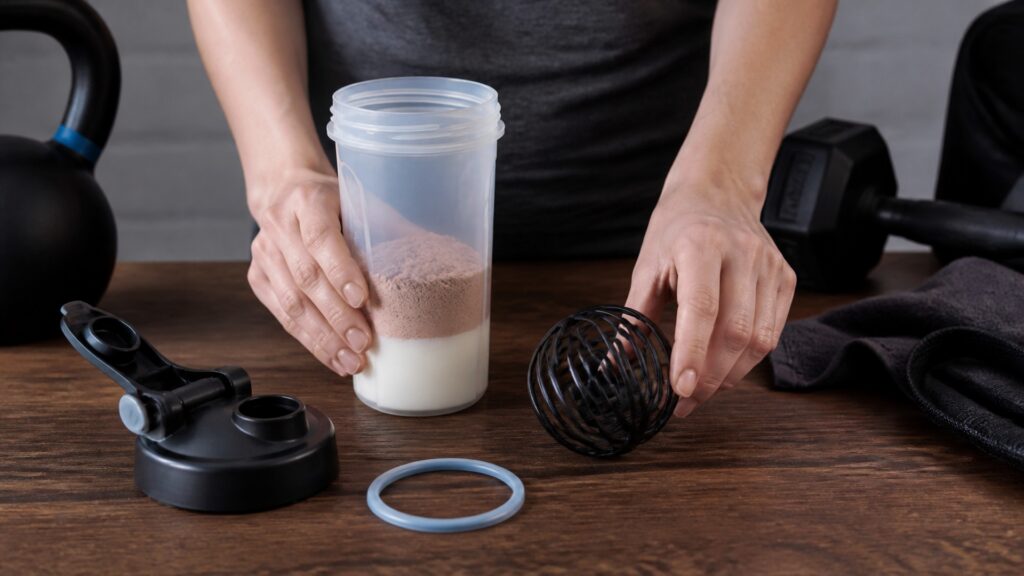
A practical look at bottle shape, mixing inserts, seals, measurements, drinking lids, and cleaning.
Tip: Judge the gear by the problem it solves during the workout, not by the size of the feature list.
These concepts keep the decision tied to real training conditions, comfort, and setup.
A mixing insert breaks up powder as the liquid moves during shaking.
A seal prevents liquid from leaking through the lid, cap, or threads.
Bottle shape affects how liquid moves and how easy the bottle is to clean.
Measurement marks help portion water, milk, or mix volume.
The mouth opening affects filling, drinking, pouring, and cleaning.
Residue control is how well the bottle avoids trapped powder, odor, and film.
Tip: The right hydration setup is the one that stays comfortable, accessible, and clean enough to use repeatedly.
A shaker bottle works by forcing liquid and powder to move quickly inside a closed container. The more effectively the liquid breaks through dry pockets, the smoother the drink becomes.
Mixing depends on motion, space, and powder type.
Mixing inserts create extra disruption as the bottle moves. Wire balls, screens, and grids help powder disperse instead of sticking together.
The insert improves mixing but cannot fix every powder.
Shaking creates movement and pressure against the lid. A good shaker bottle needs a secure cap, clean threads, and a reliable seal so the user can shake confidently.
Leak resistance is central to the design.
Marks on the side make it easier to add the right amount of water, milk, or electrolyte mix. They are especially useful when taste and texture depend on liquid volume.
Measurements make repeat mixing easier.
Protein, milk, and electrolyte mixes can leave odor or film if they sit too long. Smooth interiors, removable inserts, and simple lids make cleanup easier.
A shaker bottle works best when it is easy to clean every time.
Shaker bottles make powder drinks more convenient, but they are still simple mixing tools.
They mix powders without a blender.
They make portioning and transport easier.
They may not fully smooth thick or gritty formulas.
They need cleaning soon after use to avoid odor and residue.
Better mixing comes from design and use, not just shaking harder.
The insert, shape, and empty space affect clumping.
Seals can wear, loosen, or collect residue.
Some formulas remain gritty or thick by nature.
Protein and milk residues become harder to clean when left sitting.
Tip: A hydration pack is useful only when it makes drinking easier without creating new friction.
Short answers for practical training and gear decisions.
It moves through the liquid and helps break up powder clumps.
Liquid first often helps reduce dry powder sticking to the bottom.
Odor usually comes from residue left in the bottle, lid, insert, or seal.
They are useful for everyday portioning but may not be perfectly precise.
A shaker bottle works best when it seals well, mixes with enough movement, and cleans easily.
Shaker bottles work by combining a sealed bottle, mixing insert, and shaking space to disperse powders into liquid.
The best designs reduce clumps, leaks, spills, and residue without making cleanup complicated.
Use these Review Streets paths to compare related categories and practical next decisions.
Explore the shaker bottle category.
See how bottle design affects workout use.
Compare another hydration gear system.
Choose a retailer
Prices checked regularly. We may earn a commission at no cost to you.