
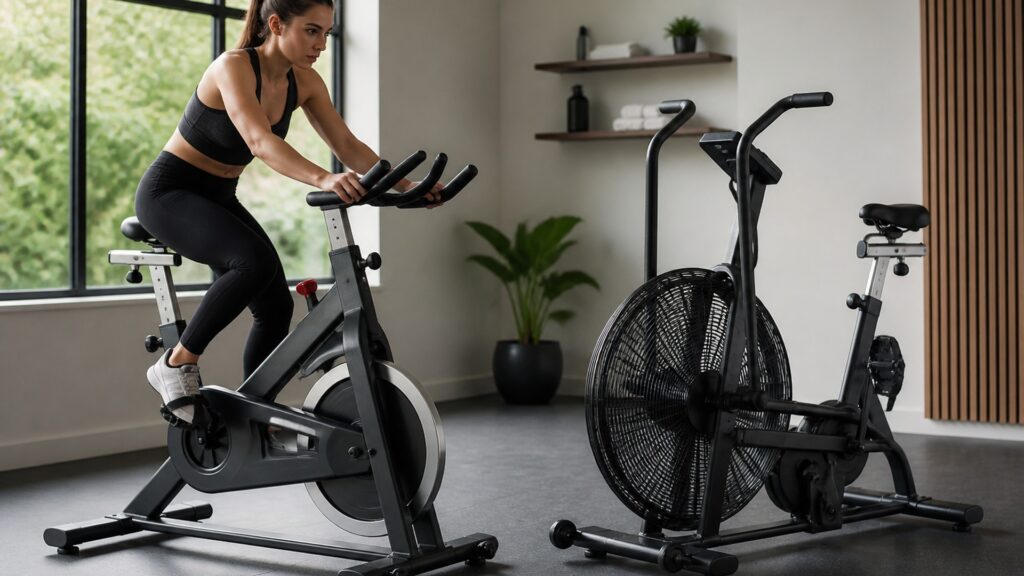
How Spin Bikes Work

Spin bikes work by pairing an indoor cycling frame with an adjustable saddle, handlebars, a flywheel, and resistance control. The rider pedals from a forward-leaning cycling position while changing cadence and resistance to shape the workout.

The design is built for class-style riding, steady cardio, and intervals. Fit still matters: saddle height, handlebar reach, pedal feel, and resistance smoothness determine whether the bike feels controlled and repeatable.

By: Review Streets Research Lab
Updated: October 6, 2026
Explainer · 8-12 min read
spin bikes explainer hero image for Review Streets
What You'll Learn

How Spin Bikes Turn Indoor Cycling Into A Workout

A practical look at rider position, flywheel feel, resistance, cadence, and setup.

  • Why the bike uses an indoor cycling posture
  • How the flywheel changes pedal feel
  • Where resistance creates workout effort
  • Why cadence and controls matter
  • What to adjust before riding

Tip: Adjust the machine first, then judge the workout at the pace and resistance the user will actually repeat.

Definitions

Key Concepts Behind Spin Bikes

These concepts connect the equipment design to comfort, setup, and workout use.

Spin Bike Position

Spin bike position places the rider over a saddle and handlebar setup similar to indoor cycling classes.

  • Example: leaning slightly forward while pedaling
  • Check: adjust saddle and handlebar height before judging comfort
  • Limit: poor fit can make the ride uncomfortable

Flywheel Feel

Flywheel feel is how the bike carries momentum through each pedal stroke.

  • Example: a weighted flywheel smoothing out cadence
  • Check: pedal at slow and moderate speeds
  • Limit: heavy feel is not automatically better

Resistance Control

Resistance control changes how hard the pedals are to turn.

  • Example: turning a knob for a simulated climb
  • Check: confirm changes are smooth and predictable
  • Limit: some systems need calibration or maintenance

Cadence

Cadence is how quickly the rider pedals, usually measured in revolutions per minute.

  • Example: holding a steady rhythm during intervals
  • Check: see whether the console or app shows cadence
  • Limit: cadence is useful only when paired with effort

Riding Posture

Riding posture is how the rider's hips, back, shoulders, and hands align on the bike.

  • Example: standing briefly during a climb-style interval
  • Check: avoid reaching too far for the bars
  • Limit: aggressive posture may not suit every rider

Workout Role

Workout role is the job the bike fills in a routine.

  • Example: interval rides, class-style workouts, or steady cardio
  • Check: match the bike to the rides the user will repeat
  • Limit: one bike may not fit every cardio preference

Tip: The right cardio machine is the one whose position, resistance, and controls fit the routine.

Frame

The Bike Holds A Cycling Position

A spin bike places the rider over a saddle and handlebar setup that supports indoor cycling. The position can feel more athletic than a recumbent or upright casual bike.

  • Adjust saddle height.
  • Set handlebar reach.
  • Keep posture controlled.

Fit starts with the frame contact points.

Flywheel

The Flywheel Carries Pedal Momentum

The flywheel helps create a continuous pedal feel. Its weight and resistance system influence how smooth or forceful the ride feels.

  • Pedal slowly and moderately.
  • Listen for roughness.
  • Check whether the feel stays controlled.

Flywheel feel shapes the ride.

Resistance

Resistance Changes The Workload

Resistance makes pedaling easier or harder. Spin bikes often use knob or magnetic controls to simulate climbs, intervals, or steady efforts.

  • Try small changes.
  • Confirm resistance is predictable.
  • Know how to reduce effort quickly.

Smooth resistance keeps hard work controlled.

Cadence

Cadence Gives The Ride Structure

Cadence helps the rider pace the session. Some bikes show cadence directly; others rely on feel or connected apps.

  • Check whether cadence is displayed.
  • Pair speed with resistance.
  • Avoid chasing numbers without comfort.

Cadence is useful when it guides effort.

Setup

The Bike Needs Adjustment Before Each Rider

Spin bikes are highly adjustable because riders vary. Poor setup can make the bike feel uncomfortable or unstable.

  • Set saddle height and fore-aft position.
  • Adjust handlebars.
  • Check pedal straps or clips.

A good ride starts before pedaling hard.

Quick Reality Check

Where Spin Bikes Help And Where They Have Limits

Spin bikes are useful for cycling-style workouts, but they are not for every cardio preference.

Where They Help

They support cadence and resistance-based riding.

They work well for class-style sessions and intervals.

Where They Have Limits

They require saddle and handlebar fit.

They do not provide seated back support like a recumbent bike.

Common Myths

Misconceptions About How Spin Bikes Work

Indoor cycling still depends on fit and control.

A heavier flywheel always means better rides

Flywheel feel matters, but resistance design and fit matter too.

Any setup is fine

Saddle and handlebar adjustments change comfort and control.

Spin bikes are only for hard classes

They can also support steady cardio when resistance is controlled.

More resistance is always better

Resistance should match the rider's goal and ability.

Tip: Test the actual fit and motion before trusting category claims.

FAQ

Frequently Asked Questions About Spin Bikes

Short answers for practical cardio equipment decisions.

What makes a spin bike different?

It is built for indoor cycling posture, cadence work, and adjustable resistance.

What should I adjust first?

Set saddle height, saddle position, and handlebar reach before riding hard.

Can spin bikes support intervals?

Yes. They are often used for cadence and resistance intervals.

Do spin bikes need apps?

No, but apps or consoles can help track cadence, resistance, and ride structure.

What is the practical takeaway?

A spin bike works best when fit, flywheel feel, and resistance control match the rider's workouts.

Bottom Line

Spin bikes work by combining an indoor cycling frame, flywheel momentum, adjustable resistance, and rider-controlled cadence.

The best ride comes from correct setup and smooth resistance changes.

Next Steps

Go Deeper or Compare Your Options

Use these Review Streets paths to compare related categories and practical next decisions.