How Strength Training Equipment Works

Strength training equipment works by creating resistance that the user must control through a movement pattern. Barbells, dumbbells, racks, benches, plates, cables, and machines differ in how they load the body, guide or free the path, and let the user progress over time.

The practical explanation is mechanical. A rack changes setup and safety options, a barbell links both hands to one load, dumbbells allow independent paths, plates control load jumps, benches change body angle, and cables keep tension through a pulley path.

By: Review Streets Research Lab
Updated: September 2, 2026
Explainer · 8-12 min read
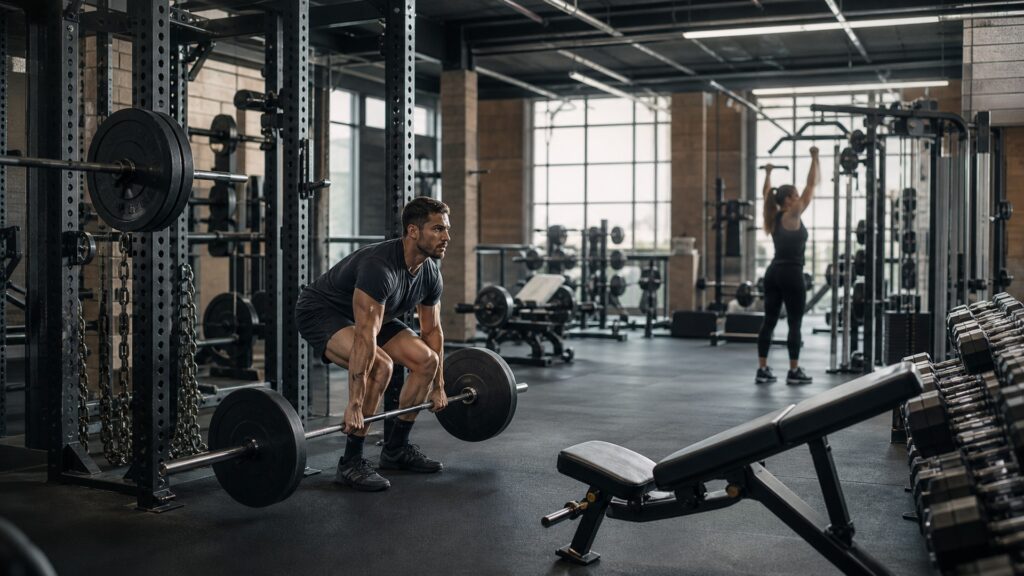
strength training equipment explainer hero image for Review Streets
What You'll Learn

How Resistance, Stability, Adjustment, and Progression Shape Strength Equipment

Strength training equipment works through resistance source, load path, stability demand, setup, safety margin, adjustment, and progression increments.

  • Why free weights and guided machines create different control demands
  • How racks, safeties, hooks, and benches change setup
  • Why load increments matter for progressive overload
  • How cables and pulleys change resistance direction
  • Where stability can be useful or limiting
  • Why equipment cannot replace technique or coaching

Tip: Name the condition the gear changes before trusting a feature list.

Definitions

Key Concepts That Define Strength Training Equipment

Resistance source is where the load comes from, such as plates, a weight stack, cables, bands, or bodyweight. The remaining concepts explain the variables that change real training use.

Resistance source

Resistance source is where the load comes from, such as plates, a weight stack, cables, bands, or bodyweight.

  • It shapes how force is applied.
  • Different sources change setup and progression.
  • The source does not guarantee better results.

Load path

Load path is the route the resistance follows during the exercise.

  • Barbells and dumbbells require more user control.
  • Machines and Smith bars constrain more of the path.
  • The right path depends on the movement goal.

Stability demand

Stability demand is how much the user must control position while moving the load.

  • Free weights usually demand more stabilization.
  • Machines reduce some control requirements.
  • Too much instability can limit useful loading.

Progression increment

Progression increment is the smallest practical change in load or difficulty.

  • Small jumps help progressive overload.
  • Large jumps can force poor technique.
  • Adjustable equipment varies widely.

Setup margin

Setup margin is the space, safety, and adjustment room needed before a lift begins.

  • Rack height, bench angle, safeties, and floor space matter.
  • Poor setup can make good equipment frustrating.
  • Heavy lifting needs more margin.

Range of motion

Range of motion is the distance and position through which the body and load move.

  • Benches, racks, cables, and machines can expand or limit it.
  • Useful range depends on control and goal.
  • Painful range needs caution.

Tip: Load path is the route the resistance follows during the exercise.

Resistance

Equipment Starts by Creating a Load to Move

Strength tools differ first by resistance source. Plates, dumbbells, stacks, cables, bands, and bodyweight each create a different loading experience.

  • Plates allow clear load changes.
  • Dumbbells separate left and right sides.
  • Weight stacks change quickly.
  • Bands increase tension as stretched.
  • Bodyweight depends on leverage.

Strength equipment works by defining the resistance.

Path Control

Some Tools Guide the Movement and Others Leave It to the User

A barbell, dumbbell, cable, Smith machine, and selectorized machine do not ask for the same movement control.

  • Barbells connect both hands to one implement.
  • Dumbbells allow independent paths.
  • Machines guide more of the route.
  • Cables pull toward the pulley.
  • Guidance can help or limit depending on the exercise.

The load path changes the training effect.

Setup and Safety

Racks and Benches Turn Loads Into Usable Stations

Heavy strength training often depends on setup. Hooks, safeties, bench angles, uprights, and floor space determine whether the user can start and end the lift sensibly.

  • Safety arms help failed reps stop higher than the floor.
  • Bench angles change pressing and rowing positions.
  • Rack height affects unracking.
  • Spotter access matters.
  • Ceiling and floor strength can limit home gyms.

Equipment works only when setup supports the lift.

Progression

Small Adjustments Make Training Easier to Progress

Strength training needs ways to change demand. Equipment that allows small, repeatable changes makes progression more practical.

  • Microplates allow smaller barbell jumps.
  • Adjustable dumbbells vary by increment.
  • Cable stacks may jump too much for small muscles.
  • Bench angle can change difficulty.
  • Tempo and range can progress when load cannot.

Progression depends on adjustment details.

Limits

Equipment Does Not Lift for the User

Good equipment can improve options, but technique, programming, recovery, and judgment still determine whether training is productive.

  • Machines do not guarantee safety.
  • Free weights do not automatically build better strength.
  • Heavy loads need appropriate skill.
  • Pain changes exercise selection.
  • Coaching can matter for complex lifts.

Strength equipment works when mechanics match the user's training task.

Quick Reality Check

Where Strength Training Equipment Helps and Where It Needs Context

The useful explanation is practical: what the gear or concept changes, when that change matters, and where claims need restraint.

What This Clarifies

It shows which real running or lifting condition strength training equipment changes.

It helps readers judge claims by mechanism, setup, conditions, and user context.

What It Cannot Prove

It cannot guarantee performance, safety, injury prevention, recovery, or health outcomes.

It cannot replace qualified coaching or medical guidance for pain, symptoms, or individualized training decisions.

Common Myths

Misconceptions About Strength Training Equipment

Common shortcuts and misunderstandings can make the topic seem simpler than it is.

Strength Training Equipment works the same for every user

The useful answer changes with body, route, terrain, weather, session length, training age, and tolerance.

More features mean better gear

Extra data, storage, cushion, traction, or adjustment only helps when it solves the actual workout problem.

A product can guarantee safety or results

Gear can support better decisions, but it cannot control traffic, fatigue, technique, recovery, weather, or individual response.

One good run proves the setup

A single run gives feedback, while repeated use across conditions reveals fit, durability, and limits.

Comfort language is enough to explain the category

Good explanations need the actual mechanism: contact, carry, sensing, visibility, load path, resistance, or setup.

Tip: For strength training equipment, keep the explanation tied to the route, movement, load, setup, or condition being changed.

FAQ

Frequently Asked Questions About Strength Training Equipment

Concise answers to common questions readers may have after the main explanation.

Which mechanism should guide decisions about strength training equipment?

Start with the condition being changed: ground contact, carry stability, route feedback, awareness, weather, resistance path, or setup margin.

Does this guarantee better performance or safety?

No. It can support better choices, but general fitness content cannot guarantee safety, recovery, injury prevention, or results.

What should readers compare first?

Compare the mechanism and use context before comparing price, brand language, or feature count.

How should someone test the decision?

Test one variable during ordinary training before relying on it for long runs, hard sessions, races, or heavy lifts.

When should someone get qualified guidance?

Qualified help matters for pain, symptoms, medical concerns, complex programming, major form changes, or heavy lifting technique.

Bottom Line

Strength Training Equipment matters when it changes a specific running or strength-training condition.

The better decision follows mechanism, fit, setup, environment, and evidence limits instead of treating gear as a shortcut around training judgment.

Next Steps

Go Deeper or Compare Your Options

Use these related explainers to continue the Review Streets fitness decision path around strength training equipment.

Quick Summary

Strength Training Equipment Explained

  • Why free weights and guided machines create different control demands
  • How racks, safeties, hooks, and benches change setup
  • Why load increments matter for progressive overload
  • How cables and pulleys change resistance direction
  • Claims about safety, injury prevention, recovery, or performance need limits.