
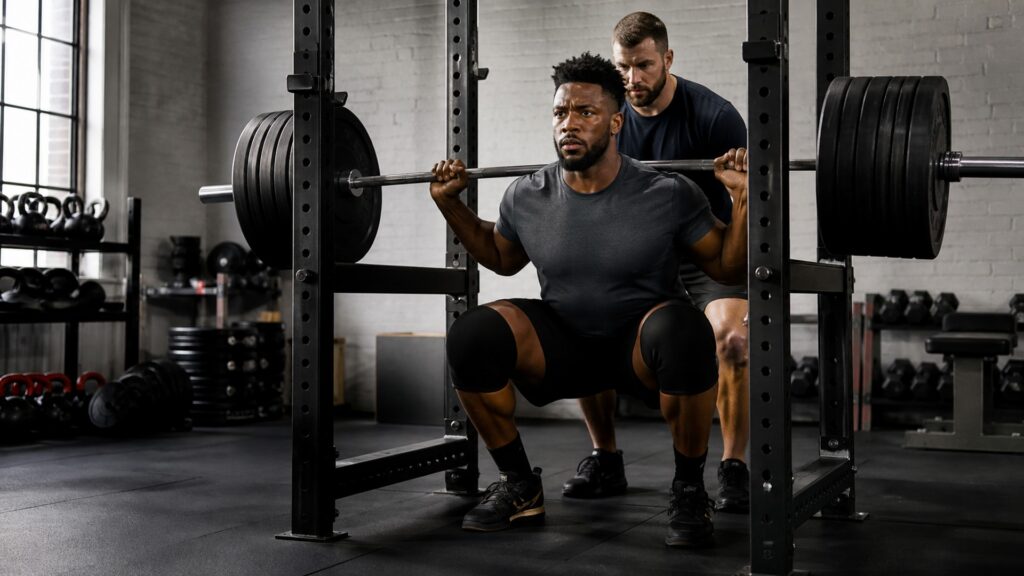
Why Power Racks Matter

Power racks matter because heavy barbell training needs a controlled place to start, finish, and recover from a missed lift. The frame, uprights, j-hooks, safety arms, and hole spacing all change how the user sets up the movement.

A rack does not make lifting safe by itself, but it creates options that squat stands or open floor space may not provide. The useful question is how much setup margin, failed-rep management, and exercise range the training plan requires.

By: Review Streets Research Lab
Updated: September 2, 2026
Explainer · 8-12 min read
power racks explainer hero image for Review Streets
What You'll Learn

How a Rack Turns a Barbell Into a Controlled Station

Power racks matter when uprights, j-hooks, safeties, spacing, walkout room, and attachment options change barbell setup and training margin.

  • Why uprights and j-hooks control starting position
  • How safety arms change failed-rep planning
  • Why hole spacing and rack height affect setup precision
  • Where rack stability matters under heavy loading
  • How attachments expand training without replacing basics
  • Why technique and judgment still decide whether a lift belongs there

Tip: Judge the equipment by the training job it changes, then compare features.

Definitions

Key Concepts That Define Power Racks

A power rack is a framed strength station that supports a barbell on adjustable hooks and usually allows safeties to be set inside or around the frame. The remaining concepts define the variables that change actual use.

Power rack

A power rack is a framed strength station that supports a barbell on adjustable hooks and usually allows safeties to be set inside or around the frame.

  • It creates a repeatable start position for squats, presses, and pulls.
  • It can add pull-up and attachment options.
  • The rack still requires correct setup.

J-hooks

J-hooks are the supports that hold the bar before a lift begins.

  • Their height controls unracking position.
  • Poor placement can make a lift awkward before the first rep.
  • Liner quality affects bar contact.

Safety arms

Safety arms or pins catch the bar above the floor when a lift fails or is set down.

  • They need to be placed below the intended range but high enough to help.
  • They are most useful when the user practices the setup.
  • They do not replace good judgment.

Hole spacing

Hole spacing is the distance between adjustment points on the uprights.

  • Closer spacing can improve hook and safety placement.
  • Large gaps may force compromises.
  • Bench press setup often exposes spacing issues.

Walkout space

Walkout space is the room needed to unrack a bar and settle into position.

  • Squats need enough depth and floor clearance.
  • Too little space makes heavy lifts harder to control.
  • Home gyms must account for walls and storage.

Attachment compatibility

Attachment compatibility is whether the rack accepts safeties, pull-up bars, dip stations, cable systems, or storage add-ons.

  • It can extend usefulness.
  • Attachments add cost and footprint.
  • Compatibility varies by upright size and hole pattern.

Tip: J-hooks are the supports that hold the bar before a lift begins.

Setup

The Rack Controls Where the Bar Starts

Power racks matter because heavy lifts start before the first rep. Hook height, bench position, and rack depth shape the lifter's first movement.

  • A squat starts with the bar at shoulder height.
  • Bench press setup depends on hook and safety height.
  • Poor unracking wastes energy.
  • Consistent setup supports consistent technique.
  • Home spaces need room around the frame.

A rack matters because setup changes the lift.

Safeties

Failed Reps Need a Planned Landing Zone

Safeties are the defining rack advantage for many lifters. They create a place for the bar to stop if the rep does not finish.

  • Safety height must match the lift.
  • Pins and straps feel different under the bar.
  • Spotter arms help outside the rack.
  • Practice matters before heavy attempts.
  • Safeties reduce some risks but do not remove them.

Failed-rep planning is a rack job.

Stability

A Rack Has to Stay Still Under Real Use

Rack weight, footprint, bracing, floor contact, and anchoring determine whether the frame feels stable during racking, pull-ups, and attachments.

  • Tall racks need ceiling clearance.
  • Pull-ups can reveal wobble.
  • Plate storage can add mass.
  • Bolting may improve stability.
  • Cheap hardware can loosen.

The frame has to support the work without becoming the problem.

Training Range

Attachments Can Expand the Station

A rack can host pull-ups, bands, landmines, cables, dips, and storage, but attachments should serve exercises the user actually performs.

  • Pull-up bars add vertical work.
  • Band pegs alter resistance curves.
  • Cable add-ons need space and smooth pulleys.
  • Storage keeps plates nearby.
  • Attachments can crowd the rack.

Expansion is useful only when it improves the plan.

Limits

A Rack Does Not Fix Poor Lifting Decisions

Power racks provide structure, but they cannot choose load, technique, range of motion, or whether the user should attempt a lift.

  • Heavy loads require appropriate skill.
  • Pain changes exercise selection.
  • Spotters may still matter.
  • Safeties need correct placement.
  • Coaching helps complex barbell lifts.

A rack adds margin; it does not replace judgment.

Quick Reality Check

Where Power Racks Helps and Where It Needs Context

The useful answer follows the actual mechanism, setup, and training condition rather than a generic upgrade claim.

What This Clarifies

It explains what power racks changes in real training.

It gives readers practical comparison criteria without overstating outcomes.

What It Cannot Prove

It cannot guarantee performance, recovery, injury prevention, safety, or health outcomes.

Heavy rack setup, failed-rep planning, and barbell technique still call for coaching or professional input when the situation is beyond ordinary product comparison.

Common Myths

Misconceptions About Power Racks

Common shortcuts and misunderstandings can make the topic seem simpler than it is.

Power Racks works the same for everyone

The useful choice depends on body size, skill, setup, environment, goal, and tolerance.

More equipment automatically means better training

Extra features help only when they solve a specific movement, setup, or feedback problem.

A product can guarantee results or safety

Gear can support training decisions, but it cannot control technique, fatigue, progression, recovery, or risk.

Comfort proves the mechanism is correct

A tool can feel good while still being poorly matched to the goal.

One setup choice replaces coaching or judgment

Complex lifts, stroke changes, pain, and symptoms need more context than a product page can provide.

Tip: For power racks, follow the mechanism before accepting broad gear claims.

FAQ

Frequently Asked Questions About Power Racks

Concise answers to common questions readers may have after the main explanation.

Which mechanism should guide decisions about power racks?

Start with the physical job: load support, resistance path, grip, stability, vision, buoyancy, propulsion, or stroke feedback.

Does this guarantee better results?

No. It can support better training decisions, but it cannot guarantee performance, safety, recovery, or injury prevention.

What should readers compare first?

Compare the mechanism, fit, setup, adjustment range, durability, and training context before brand claims.

How should someone test it?

Test the setup during ordinary training before using it for heavy attempts, races, long sessions, or technical work.

When is qualified help useful?

Qualified coaching or medical guidance matters for complex technique, pain, symptoms, injury concerns, or individualized programming.

Bottom Line

Power Racks matters when it changes a specific movement, setup, feedback, or progression problem.

The best decision matches mechanism, fit, training context, and evidence limits instead of treating equipment as a shortcut.

Next Steps

Go Deeper or Compare Your Options

Use these related explainers to continue the Review Streets fitness decision path around power racks.

Quick Summary

Power Racks Explained

  • Why uprights and j-hooks control starting position
  • How safety arms change failed-rep planning
  • Why hole spacing and rack height affect setup precision
  • Where rack stability matters under heavy loading
  • Claims about safety, injury prevention, recovery, or performance need limits.